
In This Article
Are you the type of student who remembers exactly where information appeared on a page, colour-codes everything instinctively, or finds yourself drawing diagrams to understand concepts? Welcome to the world of visual learning—a style that represents approximately 65% of the general population, according to research.
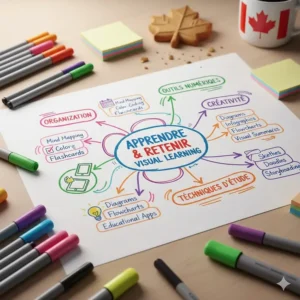
Visual learners process and retain information best when it’s presented in graphic formats like charts, diagrams, mind maps, and colour-coded systems. Unlike auditory or kinesthetic learners, your brain literally sees knowledge before it absorbs it. The good news? Research from the National Center for Biotechnology Information shows that creating visual explanations can boost learning outcomes by up to 400%, making the right study supplies an absolute game-changer for your academic success.
In Canada’s diverse educational landscape—from bustling universities in Toronto and Vancouver to remote learning programs across the territories—visual learners need tools that work anywhere, anytime. This comprehensive guide explores the best study supplies for visual learners available on Amazon.ca, with prices in CAD, Canadian availability confirmed, and strategies tailored to our unique learning environments. Whether you’re tackling STEM subjects at McGill, mastering languages at UBC, or preparing for professional certifications, these visual memory aids will transform how you study and retain information.
Quick Comparison Table
| Product | Type | Key Feature | Price (CAD) | Best For |
|---|---|---|---|---|
| Post-it Super Sticky Notes | Colored sticky notes | 2X sticking power, 15 colors | $25-30 | Color-coded study systems |
| Expo Dry Erase Markers | Whiteboard markers | Low-odour, 16 assorted colors | $14-18 | Diagram drawing, practice |
| Mind Mapping Notebook | Spatial learning tool | 108+ blank templates | $12-16 | Brainstorming, connections |
| Sharpie Highlighters Set | Visual memory aids | Quick-dry, smear-resistant | $11-15 | Text marking, categorization |
| Amazon Basics Index Cards | Flashcards | 300 neon colored, ruled | $8-12 | Active recall, vocabulary |
| MaxGear Mini Whiteboard | Personal dry erase | 9×12″ double-sided, portable | $15-20 | Practice problems, sketching |
| Colored Gel Highlighters | Study markers | No-bleed, 8 pastel colors | $10-14 | Textbook annotation |
💬 Just one click – help others make better buying decisions too! 😊
Top 7 Study Supplies for Visual Learners: Expert Analysis
1. Post-it Super Sticky Notes – Limited Edition Color Collection
When it comes to study supplies for visual learners, nothing beats the versatility of quality sticky notes. The Post-it Super Sticky Notes in the Limited Edition Color Collection deliver exactly what Canadian students need for effective colour-coded study systems.
Key Specifications:
- 15 pads per pack, 3×3 inch size
- 45 sheets per pad (675 total notes)
- 2X stronger adhesive than regular Post-its
- 15 vibrant, limited-edition colours
Price & Availability: $25-30 CAD on Amazon.ca with free shipping for Prime members across Canada, from St. John’s to Victoria.
These aren’t your grandmother’s sticky notes. The super-sticky adhesive ensures your notes stay exactly where you put them—on vertical surfaces, textbook margins, laptop screens, or dorm room walls. Canadian customers consistently praise the adhesive quality in colder climates where regular sticky notes often fail. One Ontario student notes, “They stick to my apartment’s cold walls all winter without curling or falling.”
Pros:
✅ Fifteen distinct colours enable sophisticated colour-coding systems
✅ Sticks reliably to any surface, crucial for Canadian winter conditions
✅ Made from recyclable materials with globally sourced, sustainable paper
Cons:
❌ Premium pricing compared to generic brands
❌ Limited edition colours may not be restocked
Visual Learning Application: Create a spatial memory system by assigning specific colours to subjects, topics, or difficulty levels. Biology in green, chemistry in blue, physics in orange—your brain will automatically associate colours with content, improving recall by creating visual pathways in your memory.
2. Expo Dry Erase Markers – Low Odour, 16 Count
Visual learners thrive when they can draw, erase, and redraw concepts until understanding clicks. The Expo Dry Erase Markers in the 16-count assorted colours pack are essential whiteboard markers for study sessions that involve frequent revision and diagram drawing tools.
Key Specifications:
- Chisel tip for versatile line widths
- Low-odour ink (perfect for small study spaces)
- 16 vibrant, assorted colours
- Works on whiteboards, glass, and non-porous surfaces
Price & Availability: $14-18 CAD on Amazon.ca, with consistent stock across all Canadian provinces.
These markers excel at creating mind mapping supplies right on your wall-mounted whiteboard or mini personal boards. The low-odour formula addresses a common complaint in Canada’s well-insulated homes and apartments where ventilation can be challenging during winter months. Canadian students working in dorms, shared apartments, or small study rooms appreciate this feature immensely.
Pros:
✅ Sixteen colours support complex diagram drawing and categorization
✅ Chisel tip creates both broad highlighting and fine detail work
✅ Low-odour formula ideal for enclosed Canadian study spaces
Cons:
❌ Colours may fade slightly if left uncapped overnight
❌ Requires compatible eraser (sold separately)
Visual Learning Application: Practice active learning by working through problems on a whiteboard. The ability to erase and retry strengthens neural pathways. Use different colours for different equation components, historical timelines, or concept connections—your visual cortex will thank you.
3. Mind Mapping Notebook by Buster McJames
If you’re serious about visual memory aids and spatial learning tools, the Mind Mapping Notebook by Buster McJames transforms abstract concepts into concrete visual relationships.
Key Specifications:
- 108+ pages of blank mind map templates
- 8.5″ x 11″ format fits standard binders
- Heavy-weight paper prevents bleed-through
- Various template styles for different thinking patterns
Price & Availability: $12-16 CAD on Amazon.ca with Prime shipping across Canada.
This notebook specifically targets how visual learners naturally organize information—radially rather than linearly. Educational research from Houghton University confirms that visual learners develop cognitive maps, and this notebook provides the perfect framework.
Canadian students particularly appreciate the quality paper that handles our diverse climate conditions without warping, plus it works beautifully with the gel pens and markers popular in Canadian stationery culture.
Pros:
✅ Multiple template variations accommodate different subjects and thinking styles
✅ Improves memory retention through spatial relationship mapping
✅ Heavy paper quality survives Canadian backpack conditions
Cons:
❌ Learning curve for those new to mind mapping
❌ Templates may feel restrictive to free-form thinkers
Visual Learning Application: Start each study session by creating a mind map of the topic. Place the main concept in the centre, branch out to subtopics, then add details. This mirrors how your visual brain naturally stores information in interconnected clusters rather than linear lists.
4. Sharpie Pocket Highlighters – 12 Count Fluorescent
For effective study supplies for visual learners, highlighters remain foundational tools. The Sharpie Pocket Highlighters in fluorescent colours provide precisely what your visual memory needs.
Key Specifications:
- Chisel tip for broad or narrow highlighting
- Quick-drying, smear-resistant ink
- 12 assorted fluorescent colours
- Pocket clip design prevents loss
Price & Availability: $11-15 CAD on Amazon.ca, consistently available nationwide.
Visual learners need to see hierarchy and importance at a glance. These highlighters create that instant visual categorization. The quick-dry formula is essential for Canadian students working with library books or textbooks in humid summer conditions or dry winter heating environments.
Pros:
✅ Twelve colours enable sophisticated categorization systems
✅ Smear-resistant ink works on various paper types common in Canadian textbooks
✅ Visible from distance—crucial for reviewing pinned notes across room
Cons:
❌ Fluorescent intensity may be overwhelming for some users
❌ Ink can bleed through very thin paper
Visual Learning Application: Develop a consistent colour code: yellow for main concepts, orange for definitions, green for examples, pink for things to memorize. Your brain will automatically scan for these colours during review, dramatically reducing study time.
5. Amazon Basics Ruled Index Flash Cards – 300 Count
Active recall through flashcards remains one of the most powerful study techniques, and the Amazon Basics Ruled Index Flash Cards in neon colours combine this with visual learning principles.
Key Specifications:
- 300 cards in 4 assorted neon colours
- 3×5 inch ruled format
- Heavy cardstock prevents wear
- Bright colours aid visual categorization
Price & Availability: $8-12 CAD on Amazon.ca with free Prime shipping.
These colored sticky notes for studying serve double duty—the ruled lines guide organization while the neon colours enable instant visual sorting. Canadian students love the value proposition, and the quality rivals premium brands at half the cost. The heavy cardstock survives repeated handling through Canadian school years.
Pros:
✅ Exceptional value for visual learners on student budgets
✅ Four colours perfect for categorizing by subject or difficulty
✅ Ruled lines maintain consistent, scannable formatting
Cons:
❌ Limited to four colours (some learners prefer more variety)
❌ Neon intensity may not suit all aesthetic preferences
Visual Learning Application: Use colour-coding strategically: green for mastered concepts, yellow for reviewing, orange for challenging, pink for priority. Physically sorting cards by colour provides kinesthetic reinforcement of your visual learning progress.
6. MaxGear Mini Whiteboard – 9×12 Inch Double-Sided
Personal whiteboards have revolutionized how visual learners practice and problem-solve. The MaxGear Mini Whiteboard brings professional-quality diagram drawing tools into affordable, portable format.
Key Specifications:
- 9×12 inch double-sided surface
- Includes 2 markers and 2 erasers
- Lightweight, portable design
- Magnetic-ready surface
Price & Availability: $15-20 CAD on Amazon.ca, ships throughout Canada.
This portable whiteboard transforms any space into a visual learning zone. Canadian students studying in coffee shops, libraries, or tiny dorm rooms appreciate the compact size that doesn’t compromise functionality. Use one side for working through problems, flip for a fresh space—perfect for visual learners who need to see their thinking process.
Pros:
✅ Double-sided design effectively doubles your working space
✅ Includes complete starter kit (markers and erasers)
✅ Portable size perfect for Canadian students on-the-go
Cons:
❌ Surface may show ghosting over time with heavy use
❌ Markers included are basic quality
Visual Learning Application: Work through practice problems visually, colour-coding each step. The ability to erase and retry reduces performance anxiety while building confidence. Take photos of your work before erasing to create a visual study archive.
7. Pastel Gel Highlighters – 8 Color No-Bleed Set
Completing our study supplies for visual learners, Pastel Gel Highlighters offer a gentler alternative to fluorescent markers while maintaining visual distinction.
Key Specifications:
- 8 soft pastel colours
- Gel formula prevents bleeding
- Chisel tip for precision
- No ghosting on thin paper
Price & Availability: $10-14 CAD on Amazon.ca with reliable Canadian stock.
These visual memory aids are perfect for Canadian students who work with library books, rented textbooks, or thin-paged notebooks. The gel formula applies colour without the wetness that causes bleed-through, protecting your valuable materials while still providing the visual categorization your brain craves.
Pros:
✅ No-bleed formula protects expensive Canadian textbooks
✅ Softer pastel colours reduce visual fatigue during long study sessions
✅ Works on Bible-thin pages common in reference materials
Cons:
❌ Pastel colours less visible from distance
❌ May require multiple strokes for full coverage
Visual Learning Application: Perfect for creating subtle hierarchies in dense text. Use different pastels for main ideas, supporting details, and examples. The softer colours won’t overwhelm your page while still providing essential visual structure.
✨ Don’t Miss These Exclusive Deals!
🔍 Take your study sessions to the next level with these carefully selected products available in Canada. Click on any highlighted item to check current pricing and availability on Amazon.ca. These tools will help you create authentic visual learning systems your grades will love!
Understanding Visual Learning: The Science Behind Your Brain
What is Study Supplies for Visual Learners?
Study supplies for visual learners are specialized tools designed to present information in graphic, spatial, or colour-coded formats that align with how visual brains naturally process and store information. These include colored sticky notes for studying, whiteboard markers for study sessions, mind mapping supplies, diagram drawing tools, visual memory aids, color-coded study systems, and spatial learning tools that transform abstract concepts into concrete visual representations.
According to Wikipedia’s comprehensive overview, visual learning leverages graphs, charts, maps, diagrams, and other visual stimuli to help learners effectively interpret and retain information. The key distinction is that visual learners don’t just prefer visual aids—their brains are literally wired to encode memories more efficiently when information enters through visual channels.
The Neuroscience of Visual Memory
Your brain processes visual information 60,000 times faster than text, making visual learning an incredibly efficient pathway to knowledge. Research published by the National Center for Biotechnology Information demonstrates that creating visual explanations improves learning outcomes because they “encourage completeness and coherence, are more explicit, and are typically multimodal.”
When you use color-coded study systems or create mind maps, you’re activating multiple brain regions simultaneously. The visual cortex processes the images and colours, the hippocampus encodes spatial relationships, and the prefrontal cortex integrates this information with existing knowledge. This multi-pathway encoding is why visual learners often have photographic memory characteristics—you’re not just remembering facts, you’re remembering exactly where and how they appeared on the page.
Why Visual Learning Matters in Canadian Education
Canadian educational institutions increasingly recognize diverse learning styles. From elementary schools implementing graphic organizers to universities offering digital mind mapping tools, the system is adapting. However, individual students still need personal visual memory aids to bridge the gap between traditional lecture formats and visual learning preferences.
In Canada’s multicultural classrooms, visual learning transcends language barriers. A student whose first language isn’t English or French can still excel using diagram drawing tools and spatial learning tools that communicate concepts universally. This makes visual study supplies particularly valuable in Canada’s diverse academic landscape.
How to Choose Study Supplies for Visual Learners in Canada
Selecting the right tools requires understanding both your visual learning style and practical Canadian considerations:
1. Identify Your Visual Subtype
Some visual learners excel with spatial relationships (mind maps), others with colour categorization (highlighters), and some with drawing and diagrams (whiteboards). Experiment to discover which resonates with your brain.
2. Consider Canadian Climate Factors
Adhesive products must withstand cold winters and humid summers. Choose supplies with proven performance across temperature ranges, like Post-it Super Sticky Notes that Canadian reviewers specifically praise for cold-weather reliability.
3. Verify Amazon.ca Availability
Ensure products ship throughout Canada, from major cities to remote territories. Check reviews from Canadian buyers for authentic feedback about shipping times and product quality.
4. Budget for Quality
Visual learning supplies are investments in your education. Quality products last longer and perform better, ultimately costing less than repeatedly replacing cheap alternatives. A $25 set of premium highlighters used throughout a degree costs pennies per study hour.
5. Choose Complementary Tools
Build a comprehensive visual learning system. Pair colored sticky notes for studying with whiteboard markers for study sessions. Combine mind mapping supplies with flashcards for complete coverage of visual learning techniques.
6. Prioritize Portability
Canadian students move between classrooms, libraries, coffee shops, and home. Portable tools like mini whiteboards and index cards adapt to any environment.
7. Ensure Compatibility
Check that your supplies work together. Highlighters should suit your textbook paper, markers should match your whiteboard surface, and sticky notes should fit your organizational system.
Creating an Effective Color-Coded Study System
One of the most powerful applications of study supplies for visual learners is developing a personalized colour-coding system. Here’s how to implement one effectively:
Step 1: Define Your Colour Meanings
Assign consistent meanings to each colour across all subjects. For example:
- Yellow: Main concepts and definitions
- Orange: Important dates, names, or formulas
- Green: Examples and applications
- Pink: Items requiring memorization
- Blue: Questions or areas needing clarification
- Purple: Cross-references to other topics
Step 2: Apply Consistently Across All Materials
Use your colour system in notes, textbooks, flashcards, and mind maps. This consistency trains your brain to automatically associate colours with information types, dramatically reducing the cognitive load during study sessions.
Step 3: Combine Colours with Spatial Organization
Don’t just highlight—organize. Place sticky notes of different colours in specific positions on pages. Your visual memory will remember both the colour and location, creating dual-pathway recall.
Step 4: Review by Colour
When studying, focus on one colour at a time. Review all yellow highlights for main concepts, then all orange for specifics. This categorical review aligns with how visual brains naturally process information.
Step 5: Track Progress Visually
Use colour-coded flashcards to visualize your mastery. Green cards you’ve mastered, yellow for review, orange for challenging concepts. The visual representation of progress provides motivation and identifies areas needing attention.
Mind Mapping Techniques for Visual Learners
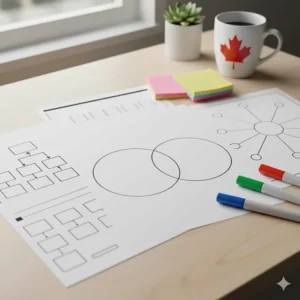
Mind mapping supplies transform linear information into the radial, interconnected format that visual brains prefer. Here’s how to maximize their effectiveness:
Central Idea Dominance
Start every mind map with a central image or concept in bold colour. Make it memorable and visually striking. Your brain will anchor all related information to this central visual.
Colour-Code Branches
Use different colours for main branches radiating from the centre. Each major topic gets its own colour family, with variations for subtopics. This creates a visual hierarchy your brain instantly recognizes.
Incorporate Icons and Symbols
Don’t rely solely on words. Add icons, arrows, symbols, and small sketches. These visual anchors dramatically improve recall. A small lightning bolt for “energy” concepts or a clock for “time-related” information creates instant visual meaning.
Embrace Non-Linear Connections
Draw connections between related ideas on different branches. These cross-links mirror how your brain actually stores information—not in neat categories but in interconnected webs of meaning.
Use Spatial Positioning Strategically
Place related information in similar positions across different mind maps. If “causes” always appear in the top-left quadrant and “effects” in the bottom-right, your brain learns this spatial pattern, making information retrieval automatic.
Diagram Drawing Strategies for Complex Concepts
Visual learners excel when they can draw concepts, but effective diagram drawing tools require technique:
Start with Simple Shapes
Complex concepts break down into circles, squares, triangles, and arrows. Chemistry reactions? Use circles for molecules, arrows for reactions. Historical events? Squares for events, arrows for causation. Keep it simple; your brain fills in complexity during recall.
Layer Information Gradually
Don’t create overwhelming diagrams. Build them incrementally, adding detail as understanding deepens. This mirrors how visual memory actually consolidates—general patterns first, specific details later.
Use Colour to Show Relationships
Colour-code related elements across diagrams. All “input” elements in blue, “processes” in green, “outputs” in red. This consistent visual language makes complex systems immediately comprehensible.
Practice Reconstruction from Memory
After creating a diagram, set it aside and redraw from memory. This active reconstruction dramatically strengthens visual encoding. Compare your recreation to the original, noting what you forgot—those areas need additional visual reinforcement.
Create Visual Mnemonics
Turn abstract concepts into memorable images. The water cycle becomes a cartoon character’s adventure. Cell division becomes a dance sequence. Absurd, vivid images stick in visual memory far better than dry definitions.
Digital vs. Physical Visual Learning Tools
Canadian students face a unique decision: digital tools like tablets with note-taking apps, or traditional physical supplies? Both offer advantages for visual learners:
Physical Tools Advantages
- Tactile engagement reinforces visual learning through multiple senses
- No digital distractions during study sessions
- Works anywhere without batteries or connectivity
- Canadian research shows handwriting improves memory encoding
- Physical organization (sorting flashcards, arranging notes) adds kinesthetic reinforcement
Digital Tools Advantages
- Infinite colour options and easy editing
- Searchable, synchronized across devices
- Environmental benefits (less paper waste)
- Can incorporate images, videos, and interactive elements
- Perfect for Canadian students studying remotely or traveling
The Hybrid Approach
Most successful visual learners use both. Create initial mind maps and diagrams on paper (stronger encoding), then digitize for easy review and sharing. Use physical flashcards for primary learning, digital apps for spaced repetition review. Take photos of whiteboard work to create digital archives while benefiting from the physical drawing process.
Optimizing Your Study Environment for Visual Learning
Your physical space dramatically affects visual learning effectiveness. Canadian students can optimize with these strategies:
Lighting Matters
Proper lighting prevents eye strain and ensures colours appear accurately. Canadian winter days are short; invest in quality desk lighting that mimics natural daylight. This helps your visual cortex process colours correctly, essential for colour-coded study systems.
Wall Space as Learning Real Estate
Use walls strategically. Large mind maps, timelines, and diagram posters transform passive walls into active study aids. Canadian students in small apartments can use removable hooks and poster strips to maximize vertical space without damaging walls.
Organized Visual Systems
Keep your colored sticky notes for studying, whiteboard markers for study sessions, and highlighters systematically organized. Visual learners benefit from seeing all tools at once—use clear containers or wall-mounted organizers so everything is visible.
Minimize Visual Clutter
Paradoxically, visual learners need clean spaces. Too much visual information becomes noise. Keep active study materials visible, archive completed work. This focuses your visual attention on current learning objectives.
Create Subject Zones
If space permits, designate different areas for different subjects. The visual context of location reinforces subject matter. Study biology at your desk, practice math on your whiteboard, review flashcards in your reading chair. Location-based visual memory is powerful.
Advanced Visual Learning Techniques
The Memory Palace Method
Ancient technique, modern application. Mentally place information throughout a familiar physical space (your home, campus route, childhood neighbourhood). As you visualize walking through this space, you “see” the information in specific locations. Combine with physical sticky notes placed in your real space for triple-strength encoding.
Spaced Repetition with Visual Cues
Schedule review sessions at increasing intervals, but add visual elements. On day one, review with yellow highlighter. Day three, add orange sticky notes. Week one, create a mind map. Month one, draw diagrams from memory. The changing visual formats prevent habituation while reinforcing content.
Visual Storytelling
Transform information into visual narratives. Historical events become comic strips. Scientific processes become storyboards. Math proofs become visual journeys. Your brain evolved to remember stories; leverage this by making information narratively visual.
Colour Psychology Integration
Different colours affect mood and cognition. Use energizing colours (red, orange) for challenging material that requires focus. Calming colours (blue, green) for extensive reading. Balanced colours (purple, teal) for creative problem-solving. Match colour choice to cognitive demands.
Pattern Recognition Exercises
Train your visual system deliberately. Spend 5 minutes before studying doing visual puzzles, spot-the-difference games, or pattern completion exercises. This primes your visual cortex for optimal learning performance.
✨ Ready to Transform Your Learning?
🔍 These evidence-based visual learning tools are specifically curated for Canadian students. Each product on Amazon.ca comes with Prime shipping options across all provinces and territories. Click any highlighted item above to check current pricing and start building your visual learning system today!
Frequently Asked Questions
❓ How much do quality study supplies for visual learners cost in Canada?
❓ What's the difference between visual learners and other learning styles?
❓ Can colored sticky notes really improve exam scores?
❓ Are digital mind mapping apps better than physical notebooks for Canadian students?
❓ How do I know if I'm a visual learner or just prefer visual materials?
Conclusion: Your Visual Learning Journey Starts Now
Study supplies for visual learners aren’t just accessories—they’re essential tools that align with how your brain naturally processes, stores, and retrieves information. From colored sticky notes for studying that create instant visual categorization, to whiteboard markers for study sessions that enable practice and revision, to mind mapping supplies that mirror your brain’s actual organizational structure, each tool serves a specific purpose in your visual learning system.
Canadian students face unique challenges: diverse climate conditions that affect supply quality, vast geographical distances that impact shipping, and multicultural classrooms where visual learning transcends language barriers. The products recommended in this guide—all verified available on Amazon.ca with Canadian shipping—address these specific needs while delivering exceptional learning value.
Remember, becoming an effective visual learner isn’t about buying every available tool. Start with basics: quality colored sticky notes, a good highlighter set, and index cards. Build your system gradually, adding diagram drawing tools and mind mapping supplies as you discover which techniques resonate with your personal learning style. Track what works, refine your colour-coding system, and don’t be afraid to experiment.
The research is clear: visual learning, when properly supported with appropriate supplies, dramatically improves retention, comprehension, and academic performance. Your visual brain is powerful—give it the tools it needs to excel. Whether you’re in high school preparing for university, navigating your undergraduate degree, or pursuing graduate studies or professional certifications, investing in proper study supplies for visual learners pays dividends across your entire educational journey.
Transform your study sessions from frustrating memorization marathons into engaging visual experiences. Your grades, your stress levels, and your genuine understanding of material will all improve. The visual learning revolution isn’t coming—it’s here, and these supplies are your entry point.
Recommended for You
- 7 Essential SAT Exam Supplies Allowed Canada (2026 Guide)
- 7 Exam Preparation Supplies December Finals – Canadian Students 2026
- 7 Best Desk Lamps for Studying University Students in 2026 Canada
Disclaimer: This article contains affiliate links to Amazon.ca. If you purchase products through these links, we may earn a small commission at no additional cost to you.
✨ Found this helpful? Share it with your friends! 💬🤗
