
In This Article
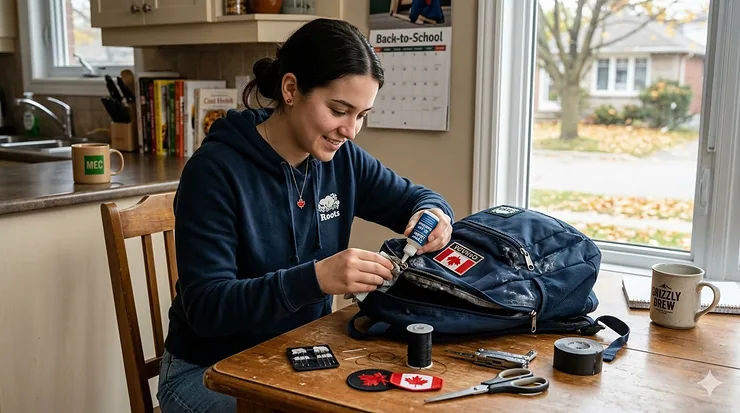
Every September, Canadian students head back to school with backpacks slung over their shoulders—but by January, those trusty bags often show signs of wear. A broken zipper here, a torn strap there, and suddenly you’re facing the dilemma: repair or replace?
Canada recently became the first country in North America to enact federal right to repair laws through Bills C-244 and C-294, which passed in late 2024. These amendments to the Copyright Act empower Canadians to fix their belongings without facing legal barriers, making this the perfect time to embrace repair culture.
Rather than tossing that $80 JanSport into the landfill, you can extend its life for a fraction of the cost. Whether you’re dealing with a stubborn zipper, fraying straps, or fabric tears, this comprehensive guide will walk you through how to repair school backpack Canada residents actually use—with real products available from Amazon.ca and Canadian retailers.
The average Canadian family spends between $100-$200 annually on school supplies, and backpacks represent a significant portion of that budget. Learning basic repair skills not only saves money but also teaches students valuable lessons about sustainability and resourcefulness—skills they’ll carry into adulthood.
Quick Comparison Table
| Repair Type | Difficulty Level | Average Cost (CAD) | Time Required | Best Product |
|---|---|---|---|---|
| Zipper Repair | Easy | $15-$25 | 15-30 minutes | GEAR AID Zipper Repair Kit |
| Fabric Patches | Easy | $10-$20 | 10-20 minutes | Tenacious Tape Patches |
| Strap Reinforcement | Moderate | $12-$18 | 20-40 minutes | Nylon Webbing Kit |
| Buckle Replacement | Easy | $8-$15 | 5-15 minutes | BuckleGear Repair Kit |
| Seam Repair | Moderate | $5-$12 | 30-60 minutes | Heavy-Duty Thread Kit |
💬 Just one click – help others make better buying decisions too! 😊
Top 7 Backpack Repair Products: Expert Analysis
1. GEAR AID Zipper Repair Kit
The GEAR AID Zipper Repair Kit is a comprehensive solution available on Amazon.ca that includes multiple zipper sliders, a sewing kit, and instructions for performing emergency zipper repairs.
Key Specifications:
- Includes 6 slider sizes (#3, #5, #8, #10 coil and Vislon)
- Seam ripper and sewing supplies included
- Compatible with most backpack zipper types
Price Range: $18-$25 CAD
This kit is the gold standard for zipper repairs in Canada. The product is widely available from Canadian outdoor retailers at approximately $18 CAD, making it accessible for most families.
Canadian customers consistently praise this kit for its versatility. One Ontario parent shared that she fixed three different backpacks with a single kit, saving over $150 CAD in replacement costs. The comprehensive instructions make it suitable even for repair novices.
✅ Pros:
- Multiple slider sizes cover virtually all backpack zippers
- Includes all necessary tools in one package
- Professional-quality repairs possible at home
❌ Cons:
- Requires basic sewing skills for some repairs
- Slightly higher price point than basic fixes
2. Tenacious Tape Repair Patches by GEAR AID
Tenacious Tape represents the Swiss Army knife of fabric repair. This ultra-aggressive adhesive tape bonds permanently to nylon, vinyl, and most backpack materials without requiring sewing or heat.
Key Specifications:
- Available in 3″×20″ strips or 1.5″×60″ rolls
- Multiple colours (black, clear, olive green, coyote)
- Waterproof and machine washable after 24 hours
Price Range: $9-$15 CAD
This weatherproof tape features an ultra-aggressive adhesive that won’t peel off when applied to technical fabrics, and becomes machine washable after 24 hours. Canadian outdoor enthusiasts have been using this product for decades—one customer reported a patch lasting nearly 23 years.
Available at MEC, Bass Pro Shops Canada, and Amazon.ca, this product delivers professional results without professional skills. Simply clean the surface, apply the patch with firm pressure, and you’re done.
✅ Pros:
- No sewing or special tools required
- Works on multiple fabric types
- Extremely durable and long-lasting
❌ Cons:
- Visible on certain coloured backpacks
- Requires 24-hour curing time before washing
3. 8-Piece Nylon Repair Patch Set
For quick fixes on torn fabric, these self-adhesive nylon patches offer an economical solution that’s perfect for school backpacks. Available in multiple sizes, they’re specifically designed for outdoor gear repair.
Key Specifications:
- 8 pieces measuring 7.87″ × 5.9″ each
- Self-adhesive, waterproof construction
- Pre-cut for convenient application
Price Range: $12-$18 CAD
These patches excel at covering larger tears or reinforcing high-stress areas before they fail. Canadian customers appreciate that they work equally well on backpacks, lunch bags, and winter jackets—making them a versatile addition to any household repair kit.
The black colour blends well with most school backpacks, and the generous size means you can cut custom shapes for specific repairs. Teachers have reported using these to repair classroom book bags, extending their life by multiple school years.
✅ Pros:
- Large size covers substantial damage
- Self-adhesive eliminates sewing
- Multi-purpose for various gear
❌ Cons:
- Limited colour options
- May not adhere well to heavily worn fabric
4. BuckleGear Backpack Repair Kit (27 Pieces)
When straps break or buckles snap, BuckleGear’s comprehensive kit provides replacement hardware that actually improves on original components. This kit has gained popularity among Canadian outdoor educators and camp counsellors.
Key Specifications:
- 27 pieces including buckles, webbing, and tri-glides
- Heavy-duty plastic construction
- Assorted sizes for different strap widths
Price Range: $15-$22 CAD
Beyond simple repairs, this kit allows you to customize and upgrade backpack straps. Many Canadian parents use it to add adjustable chest straps to basic school backpacks, improving weight distribution and comfort for their children.
The webbing included is military-grade nylon, significantly stronger than most original backpack straps. While assembly requires basic hand-sewing skills, the instructions are clear and the results professional-grade.
✅ Pros:
- Comprehensive hardware selection
- Upgrades weak original components
- Excellent value for multiple repairs
❌ Cons:
- Requires sewing for webbing attachment
- Learning curve for first-time users
5. FixnZip Zipper Replacement Solution
The FixnZip offers a revolutionary approach to zipper repair that doesn’t require removing the old zipper. This Canadian-available product has become popular in schools because of its speed and simplicity.
Key Specifications:
- Three sizes (small, medium, large)
- Works with coil and vislon zippers
- No sewing required
Price Range: $20-$26 CAD
FixnZip is available through Walmart.ca at approximately $25.54 CAD, though stock varies by location. This product shines in situations where the zipper slider has worn out but the teeth remain intact.
Installation takes literally 60 seconds—you simply slide the FixnZip onto the existing zipper track. Canadian school administrators have used these for repairing dozens of lost-and-found backpacks, giving them new life for donation programs.
✅ Pros:
- Fastest zipper repair method
- No tools or sewing required
- Works on most zipper types
❌ Cons:
- Slightly visible on the zipper
- Won’t fix severely damaged teeth
6. Heavy-Duty Fabric Adhesive by Gorilla
For seam repairs and fabric bonding, Gorilla’s fabric adhesive provides industrial-strength bonding that withstands the rough-and-tumble of school life. It’s particularly effective for reinforcing stress points before they tear completely.
Key Specifications:
- 4 fl oz bottle
- Clear drying formula
- Washable and flexible when cured
Price Range: $8-$14 CAD
This adhesive works wonders on areas where sewing isn’t practical—like the corners of book pockets or along the edges of laptop compartments. Canadian seamstresses recommend it as a complement to stitching, not a replacement, for maximum durability.
Apply it to seams showing early signs of separation, let it cure overnight, and you’ve prevented a small problem from becoming a large one. It’s particularly useful for synthetic fabrics common in budget backpacks.
✅ Pros:
- Prevents problems before they start
- Clear formula blends invisibly
- Strong bond on synthetic materials
❌ Cons:
- Requires overnight curing
- Can be messy if over-applied
7. Tear-Aid Fabric Repair Patches (Type A)
Tear-Aid Type A patches represent the premium end of fabric repair, offering nearly invisible repairs that feel like the original material. Popular with Canadian hikers and outdoor enthusiasts, they’ve found a second life in school backpack repair.
Key Specifications:
- Type A formula for fabrics
- Includes reinforcement filament for edge tears
- Ultra-thin construction
Price Range: $15-$22 CAD
These repair patches are constructed from an exceptionally tough, abrasion-resistant elastomer that will hold water and air while being puncture and tear resistant even under pressure. The flexibility allows patches to conform to irregular surfaces without restricting movement.
Canadian customers particularly appreciate that these patches stretch with the fabric rather than creating a stiff spot. For backpacks used in harsh winter conditions, this flexibility prevents the patch from cracking in cold temperatures—a common problem with cheaper alternatives.
✅ Pros:
- Nearly invisible when properly applied
- Extremely durable in Canadian weather
- Flexible and conforms to fabric movement
❌ Cons:
- Premium pricing
- Requires careful surface preparation
✨ Don’t Miss These Exclusive Deals!
🔍 Take your backpack repair game to the next level with these carefully selected products available in Canada. Click on any highlighted item to check current pricing and availability on Amazon.ca. These tools will help you create durable repairs your family will appreciate all school year!
Understanding the Right to Repair Movement in Canada
The Right to Repair concept aims to allow consumers to choose any repairer they wish and calls for manufacturers to make parts, tools, and information available to both consumers and repair professionals.
For Canadian students and parents, this legislative shift carries practical significance beyond abstract policy. Canada is the first country in North America to enact a federal law that allows right to repair while protecting consumers and third-party repair shops from copyright infringement violations.
What This Means for School Supplies
The right to repair movement extends beyond electronics to everyday items like backpacks. While backpacks don’t contain software locks, the cultural shift toward repairability influences how manufacturers design products and honor warranties.
Major backpack brands operating in Canada are responding to this movement. Several companies now offer repair parts directly to consumers—a practice that was uncommon just five years ago. This means finding replacement buckles, zippers, and webbing for specific backpack models has become significantly easier.
Educational Value
Teaching children to repair their belongings rather than immediately replacing them instills valuable life skills. Canadian educators increasingly incorporate repair skills into environmental studies curricula, recognizing that sustainable consumption starts with simple fixes.
Consider the math: if a student uses one backpack throughout high school instead of buying a new one every two years, that’s three fewer backpacks in landfills and approximately $240 CAD saved over four years. Multiply that across Canada’s 5.8 million students, and the environmental and economic impact becomes substantial.
Step-by-Step Guide: Common Backpack Repairs
Repairing a Broken Zipper
Materials Needed:
- Zipper repair kit
- Pliers
- Scissors
- Seam ripper (if replacing entire zipper)
Process:
- Assess the Damage: Determine if the slider, teeth, or both need replacement
- Remove Old Slider: Use pliers to gently remove the metal stops at the top of the zipper
- Install New Slider: Thread the new slider onto the zipper teeth from the top
- Replace Stops: Use new top stops from your repair kit or carefully reattach the old ones
- Test Thoroughly: Zip up and down multiple times to ensure smooth operation
Pro Tip: Canadian winters can make zippers stiff. Apply a small amount of graphite lubricant (pencil lead works!) to keep zippers gliding smoothly in cold weather.
Patching Holes and Tears
Materials Needed:
- Fabric patch (Tenacious Tape or similar)
- Isopropyl alcohol
- Scissors
- Cotton swabs
Process:
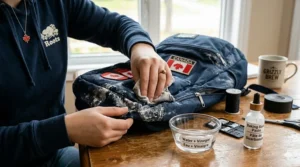
- Clean the Area: Use isopropyl alcohol to remove dirt and oils from around the tear
- Trim Loose Threads: Cut away any fraying to create a clean edge
- Cut Patch to Size: Make it at least 1.25 cm larger than the tear on all sides
- Round the Corners: This prevents edges from catching and peeling
- Apply with Pressure: Firmly press the patch, working from centre outward to eliminate air bubbles
- Cure Time: Wait 24 hours before heavy use or washing
Canadian Climate Consideration: In winter, let the backpack warm to room temperature before applying patches. Adhesives don’t bond well to cold surfaces.
Reinforcing or Replacing Straps
Materials Needed:
- Nylon webbing
- Heavy-duty thread
- Needle or sewing machine
- Lighter (for sealing webbing ends)
Process:
- Measure Carefully: Cut webbing 5 cm longer than needed to allow for overlap
- Seal the Ends: Carefully melt webbing edges with a lighter to prevent fraying
- Position Correctly: Align the new webbing over the damaged area with 2.5 cm overlap on each end
- Box Stitch: Sew a square pattern with an X through the middle at each attachment point for maximum strength
- Test Load: Hang the backpack with books inside to verify the repair
Safety Note: When sealing webbing with flame, work in a ventilated area and keep water nearby.
Backpack Zipper Repair Kit: Choosing the Right One
Not all zipper repair kits suit Canadian needs equally. When shopping on Amazon.ca, consider these factors:
Size Compatibility
Backpack zippers typically range from #3 (smallest) to #10 (largest). Quality repair kits include slider coils in sizes #3, #5, #8, and #10, covering most backpack applications. School backpacks usually use #5 or #8 zippers, while larger travel packs might require #10.
Coil vs. Vislon vs. Metal
- Coil zippers (most common on school backpacks): Flexible, lightweight, and easy to repair
- Vislon zippers (medium-duty): More durable than coil, slightly heavier
- Metal zippers (heavy-duty): Strongest but heaviest, rarely used on school bags
Most comprehensive repair kits include sliders for coil and Vislon types, providing versatility for multiple repairs across different backpacks.
Canadian Availability and Shipping
Order from Canadian sellers or Amazon.ca to avoid cross-border delays and duties. Products ship from Canadian warehouses typically arrive within 3-7 business days, while international orders can take 2-4 weeks and incur unexpected fees.
MEC, Bass Pro Shops Canada, and The Outfitters stock GEAR AID products with immediate in-store pickup options in major cities—ideal when you need repairs before Monday morning.
Patch Holes in School Bag: Material Matters
Different backpack fabrics require different patching approaches. Understanding your material ensures repairs that last.
Nylon (Most Common)
The workhorse of backpack construction, nylon accepts most adhesive patches readily. Self-adhesive patches like Tenacious Tape bond aggressively to nylon’s smooth surface. For best results:
- Clean thoroughly with isopropyl alcohol
- Apply patches to the interior when possible for neater appearance
- Use nylon-specific repair tape for strongest bond
Canvas
Canvas backpacks require slightly different treatment. The textured surface means adhesive patches may not bond as strongly. Consider:
- Iron-on patches for larger repairs
- Sewing patches on for permanent repairs
- Using fabric glue around edges to supplement adhesive patches
Polyester
Similar to nylon but slightly less receptive to adhesives. Polyester backpacks benefit from:
- Roughening the surface slightly with fine sandpaper before patching
- Using patches specifically formulated for synthetic fabrics
- Longer curing times (48 hours instead of 24)
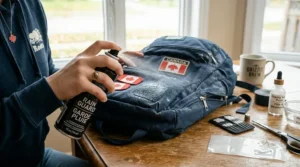
Reinforcing Backpack Straps: Prevention and Repair
Shoulder straps endure tremendous stress—a fully loaded school backpack can weigh 9-13 kg. Proactive reinforcement prevents breakdowns.
High-Stress Points
The most vulnerable areas include:
- Attachment Points: Where straps connect to the pack body
- Adjustment Hardware: Buckles and tri-glides experience constant friction
- Seams: Thread gradually weakens under cyclical loading
Preventive Reinforcement
Before straps fail completely:
- Apply fabric adhesive to seams showing early fraying
- Add bar-tack stitching at attachment points (requires sewing machine)
- Replace worn buckles before they break completely
Repair Techniques
For straps already showing damage:
Light Damage (fraying but still functional):
- Trim loose threads
- Apply Tenacious Tape along the length of affected area
- Coat with fabric adhesive for extra durability
Moderate Damage (partial tears or significant wear):
- Cut away damaged section
- Splice in new webbing with 5 cm overlap
- Use box-and-X stitching pattern for strength
Severe Damage (complete separation):
- Replace entire strap with new webbing
- Ensure proper length and adjustment range
- Reinforce both ends with multiple rows of stitching
Lifetime Warranty School Supplies: Worth the Investment?
Several major backpack brands offer lifetime warranties, but understanding the terms reveals important nuances for Canadian consumers.
JanSport’s Lifetime Warranty
JanSport warrants products to the original owner against manufacturing defects in materials and workmanship for the lifetime of the product, available in the United States and Canada. However, “lifetime” refers to the product’s expected lifespan, not the owner’s lifetime.
What’s Covered:
- Defective zippers, buckles, and fabrics
- Seam failures from workmanship issues
- Hardware malfunctions
What’s Not Covered:
- Normal wear and tear
- Damage from misuse or accidents
- Faded colours or degraded materials from age
Canadian Process: Ship the backpack to JanSport’s warranty centre (customers pay shipping to the centre, JanSport pays return shipping if covered under warranty). For Canadian residents, contact 1-800-501-3054 ext. 2567.
Real Cost: Shipping a backpack from Canada to California can cost $15-$30 CAD. For minor repairs, DIY fixes often prove more economical.
Osprey’s All Mighty Guarantee
Osprey will repair any damage or defect for any reason free of charge, and if unable to repair, will replace the product. This industry-leading warranty applies to their packs used for school, travel, and outdoor activities.
Advantages Over JanSport:
- Covers virtually any issue
- Exceptionally customer-friendly interpretation
- High-quality repairs even for old products
Considerations for School Use: While Osprey makes excellent daypacks, their school-oriented bags typically cost $80-$150 CAD—2-3 times the price of comparable JanSport or generic brands. The warranty adds value but doesn’t eliminate the initial cost barrier.
The Economics of Warranty Repairs
Scenario 1: $60 CAD backpack with lifetime warranty
- Shipping to repair centre: $20 CAD
- Wait time: 2-4 weeks
- Potential need for interim backpack: $30 CAD
- Total effective cost of “free” repair: $50 CAD
Scenario 2: DIY repair with kit
- Repair kit: $18 CAD
- Time investment: 30 minutes
- Total cost: $18 CAD, immediate solution
For many Canadian families, especially those outside major cities, warranty repairs make the most sense for catastrophic failures rather than routine maintenance.
Right to Repair Student Supplies: Legislative Changes
Canada’s amendments to the Copyright Act through Bills C-244 and C-294 mark a pivotal shift in the country’s intellectual property framework, designed to empower consumers and enable businesses to legally diagnose, repair, and ensure interoperability.
Impact on School Supplies
While these laws primarily target electronics with digital locks, they create a cultural shift affecting all consumer products:
Manufacturer Responsibilities (developing):
- Some companies now provide repair manuals
- Replacement parts becoming more available
- Third-party repair services face fewer legal barriers
Consumer Benefits:
- Reduced fear of voiding warranties through self-repair
- Growing market for repair parts and tools
- Educational resources for DIY repairs expanding
Teaching Repair Skills
The Competition Bureau Canada notes that students repairing their laptops before exam time demonstrates the practical importance of repair rights. This principle extends to all school supplies—teaching children to maintain and repair their belongings instills responsibility and environmental awareness.
Canadian schools are incorporating repair workshops into sustainability programs. Some high schools offer after-school “fix-it clinics” where students learn basic repair skills from volunteers, addressing everything from torn backpacks to broken binders.
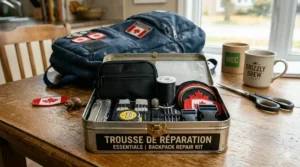
Maintenance vs Replacement: Making the Right Choice
Not every damaged backpack merits repair. Evaluate these factors before deciding:
Repair Makes Sense When:
- The damage is localized: Single broken zipper or torn seam
- The backpack fits well: Proper size and comfortable for the student
- Overall condition remains good: No widespread fabric degradation
- Sentimental value exists: First-day-of-school backpack, gifts from relatives
- Cost-effectiveness: Repair cost under 50% of replacement cost
Replacement Makes Sense When:
- Multiple simultaneous failures: Zippers, straps, and fabric all compromised
- Size no longer appropriate: Child has outgrown the backpack
- Severe fabric degradation: Nylon becoming brittle or delaminating
- Modern features needed: Older pack lacks laptop sleeve or water bottle pockets
- Safety concerns: Reflective materials worn away, straps dangerously weakened
The 50% Rule
If repairs exceed half the cost of a comparable new backpack, replacement usually offers better value. However, consider non-monetary factors:
- Environmental impact: Every repair prevented means one less backpack in landfills
- Learning opportunity: Repair projects teach valuable skills
- Emotional attachment: Some items hold meaning beyond their utilitarian function
Warranty Claim Process: Navigating Canadian Systems
Filing warranty claims in Canada involves specific steps regardless of the brand.
Documentation Requirements
Proof of Purchase: Keep receipts or order confirmations. Many Canadian retailers email receipts automatically—search your inbox before assuming you’ve lost documentation.
Photos: Take clear images showing the defect from multiple angles. Include overall context shots and close-ups of the specific issue.
Model Information: Note the exact model name and number, typically found on tags inside the main compartment.
JanSport Canada Process
- Download warranty form: Available at jansport.ca
- Complete form: Include detailed description of the problem
- Package securely: Use appropriately sized box with padding
- Ship to California: Address provided on warranty form
- Track package: Retain tracking number for reference
- Wait for assessment: Typically 2-4 weeks for evaluation and return
Canadian Contact: 1-800-501-3054 ext. 2567 (Monday-Friday, 8 AM-4:30 PM CT)
Osprey Canada Process
- Visit Osprey website: Navigate to warranty section
- Submit online form: Upload photos and provide details
- Receive assessment: Osprey evaluates whether to repair or replace
- Ship if approved: They may send a prepaid shipping label
- Receive repair/replacement: Generally faster turnaround than JanSport
Gregory Mountain Products Canada
Gregory recommends customers in Canada needing repair or warranty service visit their Contact Us page or call 1-855-475-1625. They prefer to repair products whenever possible to extend lifespan and reduce environmental impact.
Provincial Consumer Protection Laws
Canadian consumer rights extend beyond manufacturer warranties. Provincial consumer protection acts provide additional coverage:
Ontario Consumer Protection Act: Goods must be durable for a reasonable time given the price and nature of the item.
Quebec Consumer Protection Act: Particularly strong, requiring goods to be fit for normal use for a reasonable duration.
If a backpack fails prematurely due to manufacturing defects, these laws may provide recourse even if manufacturer warranty has expired or claim was denied.
Durability vs Repairability: Design Considerations
When purchasing a new backpack, balance initial durability against long-term repairability.
Highly Durable But Difficult to Repair
Some backpacks use welded seams and integrated components that resist initial damage but can’t be repaired when they eventually fail:
- Welded/bonded construction: Stronger than stitching but impossible to separate for repairs
- Proprietary hardware: Custom buckles and zippers with no generic replacements
- Integrated padding: Foam permanently attached to fabric panels
Example: Premium technical daypacks with waterproof welded seams. Excellent for outdoor adventures, but a single puncture often renders them unrepairable.
Moderately Durable But Highly Repairable
Traditional construction methods sacrifice some initial strength for long-term maintainability:
- Stitched seams: Can be opened and re-sewn
- Standard hardware: Uses common sizes available from repair kits
- Modular design: Components attach separately, allowing individual replacement
Example: Classic JanSport and Dakine backpacks. They may show wear sooner but remain repairable for many years.
The Ideal Balance
Look for backpacks that combine:
- Durable materials: Ballistic nylon or Cordura fabric
- Quality stitching: Reinforced at stress points but still accessible
- Standard components: YKK zippers, common buckle sizes
- Modular construction: Straps and pockets attach with replaceable stitching
Seasonal Maintenance for Canadian Backpacks
Canada’s dramatic seasonal changes demand specific maintenance approaches.
Fall/Winter Preparation (September-November)
Pre-Season Inspection:
- Check all seams for summer wear
- Test zippers and apply lubricant before cold weather stiffens them
- Reinforce any weak points before they fail under winter stress
Winter Protection:
- Apply water-resistant treatment to fabric
- Store in climate-controlled space overnight (extreme cold degrades adhesives and plastics)
- Clean salt stains promptly—road salt accelerates fabric degradation
Spring/Summer Maintenance (March-August)
Post-Winter Assessment:
- Thoroughly clean interior and exterior
- Check for winter damage (salt corrosion on hardware, UV damage to fabric)
- Replace any components that barely survived winter
Summer Storage (if not in use):
- Clean completely and dry thoroughly
- Store in cool, dry location away from direct sunlight
- Leave compartments open to prevent mildew
FAQ
❓ How much does it cost to professionally repair a backpack in Canada?
❓ Which backpack brands offer the best warranty for Canadian students?
❓ Can I repair a backpack zipper without sewing in Canada?
❓ Where can I buy backpack repair supplies in Canada?
❓ How long should a quality school backpack last in Canada?
Conclusion: Empowering Canadian Students Through Repair
Learning how to repair school backpack Canada families actually use represents more than just a money-saving technique—it embodies the values Canadians increasingly embrace around sustainability, self-sufficiency, and consumer rights.
The tools and knowledge shared in this guide empower you to tackle most backpack repairs confidently. Whether addressing a stubborn zipper, reinforcing weak straps, or patching unexpected tears, you now have practical solutions available from Canadian retailers and tested by Canadian families.
Canada’s recent right to repair legislation removes barriers that previously made repairs unnecessarily difficult, creating an environment where fixing things becomes easier and more socially accepted. This cultural shift benefits students who learn valuable skills while saving families money and reducing environmental waste.
Start with simple repairs—patching a small hole or replacing a slider costs under $20 CAD and takes minutes. As your confidence grows, tackle more complex projects. Each successful repair reinforces the lesson that our possessions have value worth preserving.
The backpack your child carried on their first day of kindergarten can potentially serve them through elementary school with proper care and timely repairs. That continuity creates memories and teaches responsibility more effectively than any textbook lesson.
Recommended for You
- 7 Smart Ways: Buying Used Textbooks and Supplies Canada 2026
- 7 Best Fair Trade School Supplies in Canada 2026 (Ethical Guide)
- 7 Best Plastic-Free School Supplies Canada 2026
Disclaimer: This article contains affiliate links to Amazon.ca. If you purchase products through these links, we may earn a small commission at no additional cost to you.
✨ Found this helpful? Share it with your friends! 💬🤗
