
In This Article
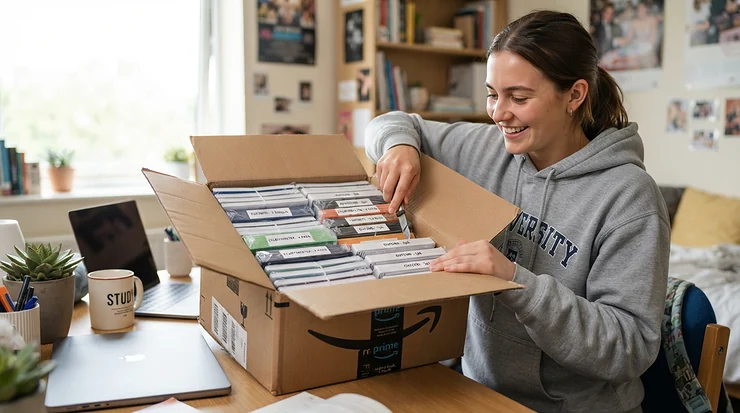
Hilroy exercise books bulk pack deals are multi-book bundles of Hilroy’s stitched, three-hole-punched notebooks. They come as 4-packs, 8-packs, 20-packs, or classroom cases of 24 to 48 books. They lower the cost per book compared with grabbing singles off a shelf, and they suit teachers, parents, and anyone stocking up for a full school year.

Every September, Canadian households repeat the same ritual: a supply list arrives, the cart fills, and the total climbs faster than anyone expected. The humble exercise book is one of the few line items where smart buying pays off, because you’ll use every single one.
It’s also a very Canadian product. In its look at how the iconic Hilroy notebook gets made, the Globe and Mail reports that the company’s Mississauga, Ontario plant can turn out a notebook in about 45 seconds. It also notes that ACCO Brands acquired Hilroy in 2012. So when you buy a Hilroy exercise books multi-pack, you’re buying a piece of the country’s school routine.
This guide does the legwork for you. I compared seven real pack formats listed on Amazon.ca, from a thrifty 8-pack to a 48-book classroom case. Each one is broken down by page count, ruling, and likely use, then run through a price-per-book comparison. You’ll also find back-to-school shopping lists and a classroom bulk purchasing playbook.
A quick note on method. Prices below are ranges in Canadian dollars, observed at the time of research and subject to change. Review commentary reflects aggregated public ratings only. I have not handled these products myself, so the analysis rests on specs, listings, and published review data.
What Are Hilroy Exercise Books Bulk Pack Deals?
Think of them as the wholesale-lite version of the school scribbler. The covers are light, the stitching holds, and the pages are ruled for handwriting practice. The pack size is what changes. Smaller packs suit one student. Cases of 24 or 48 suit a teacher, a daycare, a learning centre, or a parent council running a supply drive.
Quick Comparison Table: 7 Hilroy Exercise Books Multi-Pack Options
| Product | Pack Size | Pages per Book | Ruling | Price Range (CAD) | Best For |
|---|---|---|---|---|---|
| Hilroy 11184 | 20-pack | 80 | 7 mm with margin | C$25–C$35 | Everyday classroom stock |
| Hilroy Canada 120080 | 8-pack | 32 | 7 mm with margin | Under C$15 | Lowest cost per book |
| Hilroy 12102 | 4-pack | 40 | 7 mm ruled | C$7–C$10 | Small families, mid-year top-ups |
| Hilroy 11185 | 20-pack | 80 | 8 mm with margin | C$25–C$35 | Younger writers |
| Hilroy Recycled 12901R | Case of 24 | 72 | 8 mm with margin | C$55–C$70 | Eco-minded classrooms |
| Hilroy 12150R | Case of 48 | 72 | Half plain, half ruled | Check current price | Junior art-and-writing blocks |
| Hilroy 13121 | Box of 30 | 80 | Wide ruled, one subject | Check current price | Departmental or school-wide orders |
Look at the table sideways and a pattern emerges. The two 20-packs sit in the sweet spot, with 80 pages each at a modest per-book cost. The 8-pack wins on sticker price per book but gives you the thinnest books. The recycled cases cost more per book, and you’re paying for specialized ruling and recycled content rather than raw volume. If you only skim one thing, skim this: match the ruling and page count to the child’s grade first, then shop for the pack size.
💬 Just one click — help others make better buying decisions too!😊
Top 7 Hilroy Exercise Books Bulk Pack Deals: Expert Analysis
1. Hilroy 11184 — the 20-pack workhorse for whole classrooms
The Hilroy 11184 is the Stitched Exercise Book 20-pack, and it’s the format most teachers picture when they think “bulk”. Its standout trait is balance: enough books to cover a term, with enough pages in each to last.
Each book measures about 27.6 × 21.3 cm (roughly 10-7/8 × 8-3/8 inches) and carries 80 pages (40 sheets) ruled at 7 mm with a margin. The pack arrives in assorted blue, pink, green, and yellow covers. That colour mix is more useful than it sounds. Assign one colour per subject and a quick glance across a desk tells a teacher which scribbler is open.
The three-hole punching means the books slide into a standard binder when a student wants to file a finished unit. For a 28-student classroom, one 20-pack plus an 8-pack covers a full subject rotation with a few spares.
Based on the listing data, I couldn’t verify individual review text for this exact pack. What is verifiable is that it belongs to the same Hilroy family that earns strong ratings elsewhere on the platform. Treat the review picture as incomplete and check the current rating before you buy.
Pros:
- ✅ 80 pages per book means fewer mid-term refills
- ✅ Assorted colours help subject-coding
- ✅ Three-hole punched for binder use
Cons:
- ❌ Colour mix is assorted, not selectable
- ❌ Covers are light and need care in backpacks
Price range: around C$25–C$35, or roughly C$1.25–C$1.75 per book. That’s strong value for an 80-page book.

2. Hilroy Canada 120080 — lowest sticker cost per book
The Hilroy Canada 120080 is the 8-pack of 32-page books, and its pitch is simple: cheap, light, and plentiful. If your priority is covering many short assignments without spending much, this is the pack to watch.
Each book has 32 pages (16 sheets), 7 mm ruling with a margin, and three-hole punching in assorted colours. On paper, 32 pages is thin. In practice, that is exactly what many primary and middle-school tasks need: a spelling list, a short writing exercise, a quick maths drill. A thick book often goes half-used and wasted.
This is the pack with the best review picture I could confirm. At the time of research, the Amazon.ca listing showed a 4.8 out of 5 average across thousands of ratings, around 3,600. Reviewers on comparable retail pages tend to describe these as dependable, classic Canadian scribblers. They are not fancy, and no one pretends they are.
Be honest about the trade-off, though. Thin books fill quickly, so a heavy-writing subject like English may burn through two or three per term. For maths drills or French vocabulary, they are close to ideal.
Pros:
- ✅ Lowest cost per book in this roundup
- ✅ Highly rated by a very large buyer base
- ✅ Light enough for small backpacks
Cons:
- ❌ Only 32 pages limits heavy-writing subjects
- ❌ Assorted colours can’t be chosen
Price range: under C$15 at the time of research, which usually works out to about C$1 per book or less. Check current price, since single-digit deals shift often.
3. Hilroy 12102 — the 40-page 4-pack for small households
The Hilroy 12102 is the flexible, low-commitment option. It’s a 4-pack of 40-page (20-sheet) stitched books, 7 mm ruled and three-hole punched, in assorted colours.
Four books won’t feed a classroom, and that’s the point. For a family with one or two kids, a pack of this size is easier to store and less likely to end up as a mystery stash in a closet. The 40-page count gives a student a little more runway than the 32-page version before a fresh book is needed.
What the spec sheet won’t tell you is that single 4-packs at retail are often priced near the same per-book rate as the larger packs once you factor in store promotions. That makes this a decent “just in case” buy when a teacher announces a surprise subject in October.
Public retail listings for similar Hilroy 4-packs carry mostly positive customer comments, echoing the same theme: reliable stitching and clean ruling. I could not verify Amazon.ca review text for this exact model, so check the page before ordering.
Pros:
- ✅ Handy size for one- or two-child households
- ✅ Extra pages compared to the 32-page option
- ✅ Easy mid-year top-up purchase
Cons:
- ❌ Higher cost per book than the large packs
- ❌ Not enough for a full classroom
Price range: around C$7–C$10, which works out to roughly C$1.75–C$2.50 per book. It’s fair, not spectacular, and best treated as a convenience buy.
4. Hilroy 11185 — 8 mm ruling for younger hands
The Hilroy 11185 looks almost identical to its 7 mm sibling, and the difference is exactly what makes it useful. It’s a 20-pack of 80-page books with 8 mm ruling and a margin, in blue, pink, green, and yellow.
An extra millimetre sounds trivial, but it matters when a seven-year-old is still learning letter height and spacing. In general, wider ruling gives early writers more room to form letters, and it is also friendlier to children who write large or have fine-motor challenges. By Grade 5 or 6, many students are comfortable moving to the narrower line.
Each book is about 27.6 × 21.2 cm, three-hole punched, and sold as a 20-pack. A primary teacher buying for 24 students could split this pack with a 4-pack and still have a few books left for repairs and lost work.
I could not confirm review text for this specific listing. Stationery shoppers generally praise the consistent quality across Hilroy ruling variants, so the sensible move is to read the current Amazon.ca reviews before committing.
Pros:
- ✅ Wider lines suit early handwriting practice
- ✅ 80 pages per book keeps replacements low
- ✅ Same pack size and structure as the 7 mm version
Cons:
- ❌ Older students may find the spacing too wide
- ❌ Assorted colours only
Price range: around C$25–C$35, or about C$1.25–C$1.75 per book. Same value tier as its 7 mm cousin.
5. Hilroy Recycled 12901R — case of 24 with recycled content
The Hilroy Recycled 12901R is the sustainability pick. It’s a case of 24 stitched books with 72 pages (36 sheets), 8 mm ruling with a margin, and a red cover. The sheet size is about 18 × 23 cm (7-1/8 × 9-1/8 inches).
That smaller format is a quiet advantage. The books fit easily in primary-grade desks and smaller backpacks. A uniform red cover also makes this a one-subject-per-colour classroom system: red for French, say, with other cases covering other subjects.
The listing frames this as a classroom bulk pack, and the recycled family it belongs to is described as using paper and cover made with post-consumer recycled content. Listings in that family displayed a 4.2 out of 5 rating across a small base of about 76 ratings at the time of research. That’s decent but thin, so read recent reviews rather than relying on the average.
This is not the cheapest route per book. You’re paying for the recycled content, the 8 mm ruling, and the case packaging. For a school with an environmental policy, though, that premium can be easy to justify.
Pros:
- ✅ Recycled-content paper and cover
- ✅ Compact size fits small desks
- ✅ Uniform colour simplifies subject coding
Cons:
- ❌ Higher cost per book than the 20-packs
- ❌ Rating base is small
Price range: roughly C$55–C$70 for the case, or about C$2.30–C$2.90 per book. A fair price for a recycled-content classroom case, not a bargain-bin one.

6. Hilroy 12150R — half plain, half ruled, case of 48
The Hilroy 12150R is the specialist. It’s a yellow-covered recycled stitched book with 72 pages (36 sheets), in a half-plain, half-ruled layout. It’s sold as a case of 48 (with a case of 24 also offered).
The top half of each page is plain for drawing, and the bottom half is lined for writing. That’s the classic early-primary format for story illustration, science sketches, and “draw it, then describe it” activities. A teacher running a weekly journal block can use one book per student for months.
The Amazon.ca listing states that paper and cover contain 30% post-consumer recycled content. Canadian Tire’s own product page for this model also lists it as made in Canada and recyclable, which is useful if provenance matters to your school.
At 48 books, this is firmly a school-level purchase. Few families need that many, but a primary teaching team or a daycare network could split a case easily.
I could not verify enough review text on this exact case to summarize sentiment. Check the page for current feedback.
Pros:
- ✅ Plain-and-ruled layout suits early primary work
- ✅ 30% post-consumer recycled content
- ✅ Large case lowers purchase frequency
Cons:
- ❌ Too specialized for upper grades
- ❌ Case of 48 is overkill for most households
Price range: check current price. Expect roughly double the case of 24, so per-book cost should stay in the same neighbourhood as the other recycled books.
7. Hilroy 13121 — box of 30 one-subject notebooks for school-wide orders
The Hilroy 13121 is the biggest single buy here. It’s listed as a box of 30 one-subject wide-ruled notebooks, about 10-1/2 × 8 inches, three-hole punched, with 80 pages each.
This format is aimed at departments and whole-school stock rooms. A box of 30 handles a full classroom with a few spares, and the 80-page count suits subjects with steady note-taking, such as social studies or science.
One honest caution: the listing title does not make the binding obvious, and one-subject notebooks can be coil or stitched. Check the product images and description before ordering, because binding affects how the book lies flat, how it travels, and whether pages tear out cleanly.
Review text for this box wasn’t verifiable in my research, so confirm the current rating, binding, and seller details before buying.
Pros:
- ✅ 30-book box covers a full class
- ✅ 80 pages suits steady note-taking
- ✅ Three-hole punched for binder integration
Cons:
- ❌ Binding type needs checking before purchase
- ❌ Large upfront spend for individual families
Price range: check current price. Do the per-book math before ordering, using the formula in the price-per-book section below.
Practical Usage Guide: Setting Up a Bulk Pack Without Waste
Buying in bulk only saves money if the books actually get used. A bulk order can go wrong fast when it turns into a mystery tower in the supply closet.
Step 1: Label before you distribute. Write the student’s name and subject on the front cover the day the books arrive. Some Hilroy covers include a space for exactly this. Labelling later takes longer and invites mix-ups.
Step 2: Assign colours to subjects. With assorted-colour packs like the Hilroy 11184 and Hilroy Canada 120080, pick a colour rule on day one. Blue for maths, green for science, pink for language arts. Colour-coding speeds up transitions and helps kids find the right book alone.
Step 3: Store the spares flat. Stitched books stay neater stored flat in a bin or on a shelf, away from damp spots. Avoid stuffing them upright into overfull drawers, which crinkles covers.
Step 4: Rotate stock. Use the oldest books first. Paper can yellow slightly after long storage, and mixed stock confuses students.
Step 5: Plan the 30-day check. In the first month, count what’s been used. If a classroom burned through twice as many 32-page books as expected, shift the next order toward the 80-page option. That one adjustment can cut mid-term reordering.
Common mistakes in the first 30 days: opening every pack at once, labelling only the front cover, and forgetting a reserve of 10 to 15% for lost or damaged books. Keep a small buffer, and the rest of the year runs smoother.
Real-World Scenarios: Matching Packs to Real Buyers
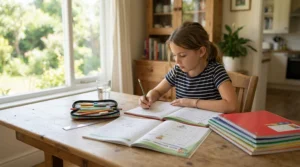
These profiles are illustrative reasoning examples, not testimonials.
Scenario A: A Grade 3 teacher with 26 students
Budget: around C$100–C$150 for notebooks. Environment: shared supply cupboard. Frequency: daily writing. Best match: one Hilroy 11185 20-pack (8 mm ruling for developing handwriting) plus an Hilroy Canada 120080 8-pack for drills and quick tasks. That covers 28 books with a small buffer, and it keeps most of the budget available for other supplies.
Scenario B: A family with three kids, Grades 1, 4, and 7
Budget: around C$40–C$60 for the year. Environment: home storage, backpacks. Best match: one Hilroy 11184 20-pack as the base stock, one Hilroy 12102 4-pack as a mid-year top-up. The Grade 1 child uses wider-ruled books from a separate purchase, if the teacher’s list asks for them. The older kids split the 7 mm books.
Scenario C: A parent council running a school-wide supply drive
Budget: a pooled amount of several hundred dollars. Environment: central storage and distribution. Best match: a Hilroy Recycled 12901R case for primary rooms, a Hilroy 12150R case for plain-and-ruled blocks, and a Hilroy 13121 box for upper grades. The reasoning is simple: concentrate buying in cases and boxes, then redistribute by grade.
Problem → Solution Guide: Five Common Bulk-Buying Headaches
Problem 1: “The supply list says 8 mm, and I bought 7 mm.”
Check the ruling line in the listing before buying. The Hilroy 11184 is 7 mm and the Hilroy 11185 is 8 mm. Same size, same pack, different lines.
Problem 2: “My child finished the book in three weeks.”
You likely bought a 32-page option for a high-writing subject. Swap in an 80-page book next time, such as the Hilroy 11184.
Problem 3: “I don’t know which book is for which subject.”
Use colour coding from day one. Assorted packs make this easy, and cases with uniform colours like the Hilroy Recycled 12901R let a teacher assign one colour per subject.
Problem 4: “I bought too many and storage is a mess.”
Pick a pack size close to real demand. Families rarely need a case of 48, and a Hilroy 12102 4-pack covers a mid-year surprise.
Problem 5: “Covers are getting tattered by November.”
Light covers are part of the product’s design. A binder, a book sleeve, or a simple zip pouch helps. For fully loose notebooks, the three-hole punching lets you move finished books into a binder for protection.
How to Choose Hilroy Exercise Books Multi-Pack Options
- Match ruling to age. In general, 8 mm suits early primary, and 7 mm suits older students. Check the school’s supply list first.
- Count the pages you’ll actually use. A 32-page book suits short tasks. An 80-page book suits steady writing. Estimate the term’s volume before choosing.
- Pick the pack size to your real demand. Buying 48 when you need 12 just moves money into a closet.
- Decide whether recycled content matters. The recycled lines cost more per book but suit schools with sustainability goals.
- Check the binding and size. Stitched books lie flatter and last longer than flimsy alternatives, and the 10-7/8 × 8-3/8 inch size fits standard binders.
- Compare cost per book and per page. Page count can erase a cheap sticker price. Do the math.
- Read recent reviews. Ratings change. Look for recurring complaints about cover damage, stitching, or listing accuracy.
Price-Per-Book Comparison: What the Math Says
Price-per-book comparison is the single most useful habit in bulk shopping. Pack prices look comparable until you divide by the number of books and pages. As CBC’s explainer on unit pricing puts it, a unit price lets you compare similar products sold in different sizes. The idea comes from groceries, but it works just as well for notebooks.
| Product | Price Range | Books | Approx. Cost per Book | Pages per Book | Best For |
|---|---|---|---|---|---|
| Hilroy 11184 | C$25–C$35 | 20 | C$1.25–C$1.75 | 80 | Best overall value |
| Hilroy 11185 | C$25–C$35 | 20 | C$1.25–C$1.75 | 80 | Younger writers |
| Hilroy Canada 120080 | Under C$15 | 8 | About C$1 or less | 32 | Short tasks and drills |
| Hilroy 12102 | C$7–C$10 | 4 | C$1.75–C$2.50 | 40 | Small top-ups |
| Hilroy Recycled 12901R | C$55–C$70 | 24 | C$2.30–C$2.90 | 72 | Eco-minded classrooms |
Here is the interpretation. The two 20-packs deliver the lowest cost per page, around 1.6 to 2.2 cents, because they combine a modest unit price with 80 pages. The Hilroy Canada 120080 is cheapest per book but gives only 32 pages, so its per-page cost lands in a similar range. The Hilroy 12102 costs more per book and per page. The Hilroy Recycled 12901R is the premium option, and you’re paying for recycled content and uniform packaging. For most households, the 80-page 20-pack is the value anchor.
Do this math yourself with the current listing price: divide pack price by number of books, then by pages per book. Then compare.
Common Mistakes When Buying Bulk Exercise Books
Mistake 1: Chasing the lowest sticker price. A cheaper pack with 32-page books can cost more per page than an 80-page pack. Divide, don’t guess.
Mistake 2: Ignoring ruling. The Hilroy 11184 and Hilroy 11185 look nearly identical, and one wrong digit in the model number means a return.
Mistake 3: Overbuying. The case of 48 in the Hilroy 12150R is for schools. A family storing 48 books will still be finding them next June.
Mistake 4: Skipping the supply list. Teachers sometimes specify ruling, page count, or even colour. Check first.
Mistake 5: Trusting an old price. Deals change daily, and listing prices shift. Treat any price as a snapshot and check current price before buying.
Mistake 6: Forgetting spares. A 10 to 15% reserve prevents emergency trips mid-term.

Hilroy Exercise Books vs Store-Brand and Alternative Notebooks
Hilroy competes with store brands and cheaper generic scribblers. The right pick depends on how much you value consistency.
| Factor | Hilroy 11184 (20-pack) | Generic Unruled/Store Brand | Spiral Notebooks |
|---|---|---|---|
| Binding | Stitched | Often stitched | Coil |
| Hole punching | 3-hole | Varies | Often perforated |
| Page count | 80 | Often 40 | 70–200 |
| Typical Cost per Book | C$1.25–C$1.75 | Around C$0.80–C$1.50 | Around C$2–C$5 |
| Best For | Classroom daily use | Lowest cost | Heavy note-taking |
A generic unruled 25-pack of 40-page books at retail runs around C$20, which is cheaper per book than most Hilroy packs. The catch is pages: it gives you half the pages and no ruling. Spiral notebooks cost more per book, though they handle heavy use. The Hilroy 11184 lands in the middle: stitched, punched, and reasonably priced. For cost-conscious buyers, this is a solid compromise.
Classroom Bulk Purchasing: A Guide for Teachers and Schools
Classroom bulk purchasing has a rhythm. Teachers need books early, budgets close late, and storage is limited. A few rules help.
Order in one go, then reserve. Buy enough for each student plus a 10 to 15% buffer. The Hilroy 11184 and Hilroy 11185 20-packs scale easily: two packs cover 40 students.
Pool across classrooms. Cases such as the Hilroy Recycled 12901R (24 books) and Hilroy 12150R (48 books) work best when several rooms share one order.
Use cost per page as your yardstick. The Consumers Council of Canada has long argued that unit pricing helps shoppers compare fairly, and the logic extends to school budgets. A purchasing committee that compares per-page cost rather than pack price will usually spot the best deal quickly.
Check supply policies. Some districts require specific vendors, and some allow reimbursed purchases. Confirm before ordering.
Plan delivery. Large cases are heavy. A 20-pack of 80-page books ships at roughly 3 kg, so confirm someone can carry the box.
Back-to-School Shopping Lists by Grade Band
Back-to-school shopping lists are only useful if they match the book to the child. These are illustrative quantities, not rules, so always defer to the teacher’s list.
Kindergarten to Grade 2: Wide-ruled or half-plain books. Consider the Hilroy 12150R (if your school buys cases) or a smaller pack with 8 mm ruling such as the Hilroy 11185. Roughly 4 to 8 books for the year.
Grades 3 to 5: 7 or 8 mm ruling, 32 to 80 pages. A mix of the Hilroy Canada 120080 (short tasks) and Hilroy 11184 (steady writing). About 6 to 10 books.
Grades 6 to 8: 7 mm ruling, 80 pages, three-hole punched for binder use. The Hilroy 11184 is the anchor, plus a Hilroy 12102 4-pack for top-ups. About 8 to 12 books.
High school: Many students move to binders and loose-leaf, but exercise books still cover quick subjects, drafts, and rough work. A Hilroy 11184 20-pack shared among siblings can cover a lot.
Parents shopping Hilroy notebooks for back to school get the best savings when they buy one larger pack and share it across kids rather than buying several small packs.
Features That Actually Matter (And Those That Don’t)
What matters:
- Ruling width. It affects handwriting practice more than any other feature.
- Page count. It determines how often you restock.
- Three-hole punching. It adds binder compatibility at no extra cost.
- Stitched binding. It keeps pages in place and lets books lie flat.
- Recycled content. It’s meaningful if your school or household has sustainability goals.
What matters less:
- Cover colour. Useful for sorting but not for learning.
- Decorative graphics. Cover art is charming, but it doesn’t change the paper.
Cover art does carry cultural weight, though. As CTV News reported, the company apologized after glossy-covered notebooks showed a Canadian map missing Newfoundland and Cape Breton, and it said it was fixing the artwork. The takeaway for buyers is modest: cover details can change between print runs, so don’t buy on cover art alone.

FAQ
❓ What size are Hilroy exercise books in the 20-pack?
❓ Which Hilroy multi-pack is best for a Grade 2 classroom?
❓ How do I compare bulk pack prices fairly?
❓ Are there recycled Hilroy exercise books in bulk?
❓ How many Hilroy exercise books does a school year need?
Conclusion
The best Hilroy exercise books bulk pack deals aren’t the ones with the biggest box or the lowest sticker price. They’re the ones that match the ruling, page count, and pack size to how the books will be used.
For most Canadian families and teachers, the Hilroy 11184 is the safest all-round pick, with 80 pages per book and a strong per-book price. Primary classrooms should consider the Hilroy 11185 for its wider lines. Budget-minded buyers drilling short tasks will like the Hilroy Canada 120080, which also has the strongest verified review base. Schools with sustainability goals can look to the Hilroy Recycled 12901R and the Hilroy 12150R, and large departments can price out the Hilroy 13121.
Before you click, do three things: check the ruling, divide the price by books and pages, and check current price. Your pencil case, your wallet, and your future self in March will thank you.
✨ Ready to stock up smart?
🛒 Compare the packs above, pick the one that matches your grade band, and check current pricing and availability on Amazon.ca before you buy. A little planning now means a lot fewer supply-closet scrambles later!
Recommended for You
- Hilroy Exercise Books For Elementary School: 7 Best Picks 2026
- Composition Notebooks Multi-Pack Deals: 7 Best Buys For 2026
- Wide Ruled Composition Notebooks: 7 Best Picks For 2026
Disclaimer: This article contains affiliate links. As an Amazon Associate, I earn from qualifying purchases. If you purchase products through these links, we may earn a small commission at no additional cost to you.
✨ Found this helpful? Share it with your friends! 💬🤗
