In This Article
Back-to-school shopping doesn’t have to mean supporting sweatshops or environmental destruction. More Canadian families are discovering that choosing fair trade school supplies creates real positive change while getting quality products their kids actually need.
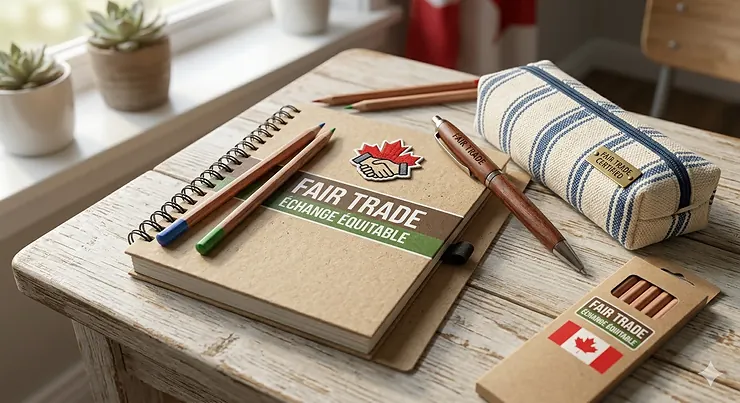
Fair trade school supplies guarantee that the workers who made your child’s backpack earned fair wages in safe conditions. Unlike conventional products where manufacturing often happens in exploitative conditions, certified fair trade items follow strict standards set by organizations like Fairtrade International, which ensures workers have the right to join independent unions, receive minimum wages, and work without forced or child labour.
The movement has gained incredible momentum in Canada. According to Fairtrade Canada’s Fair Trade Schools program, schools can become Fair Trade designated by incorporating fair trade principles into classroom instruction, including education about the stance against child labour. This shift reflects growing awareness among Canadian parents about supply chain transparency and ethical consumption.
I’ve spent weeks researching products available on Amazon.ca, reading Canadian customer reviews, and comparing certifications. What emerged is clear: you don’t have to sacrifice quality or break the bank to shop ethically. The products I’m sharing range from budget-friendly options under $30 CAD to premium items that’ll last through multiple school years.
Quick Comparison Table: Top Fair Trade School Supplies
| Product | Type | Price (CAD) | Certification | Best For |
|---|---|---|---|---|
| Terra Thread Earth Backpack | Organic cotton backpack | $95-130 | Fair Trade, GOTS, B Corp | High school students |
| Fjällräven Kånken Classic | Durable backpack | $82-146 | Recycled materials | All ages |
| STATE Bags Kane Kids | Give-back backpack | $88-125 | B Corp certified | Elementary students |
| Oxford Recycled Notebooks | 100% recycled paper | $12-18 (2-pack) | Recycled content | Note-taking |
| Mintra Recycled Notebooks | Bagasse paper | $22-28 (3-pack) | 100% recycled | Budget option |
| Pilot B2P Pens | Recycled plastic | $15-20 (pack) | 89% recycled | Writing |
| tentree Organic Backpack | Plant-based materials | $95-140 | Climate neutral | Eco-conscious teens |
💬 Just one click – help others make better buying decisions too! 😊
Top 7 Fair Trade School Supplies: Expert Analysis
1. Terra Thread Earth Backpack – The Fair Trade Champion
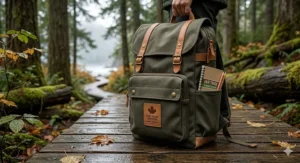
The Terra Thread Earth Backpack stands as the gold standard for ethically made school bags available in Canada. Made from 14-oz certified organic cotton canvas, this workhorse backpack checks every ethical box while delivering exceptional durability.
Key Specifications:
- GOTS (Global Organic Textile Standard) certified organic cotton
- Manufactured in Fair Trade Certified factories in India
- Laptop compartment fits up to 15″ screens
- Carbon neutral shipping
- B Corporation certified company
Price Range: $95-130 CAD (varies by colour and retailer)
Terra Thread backpacks are made from organic cotton grown by family farmers in India and manufactured in Fair Trade Certified factories. For every bag sold, the company donates meals through Feeding America, creating impact beyond just ethical manufacturing.
Canadian customers consistently praise the canvas quality. One Toronto reviewer mentioned: “After two years of daily use by my teenager, this bag still looks nearly new. The thick organic cotton holds up better than any synthetic backpack we’ve owned.”
Pros:
✅ Multiple certifications (Fair Trade, GOTS, B Corp)
✅ Exceptional durability with heavy-duty canvas
✅ Gender-neutral designs in 14+ colour options
Cons:
❌ Higher upfront cost than conventional backpacks
❌ Limited waterproofing (organic cotton is water-resistant, not waterproof)
Best for: High school and university students who need a durable, ethical laptop backpack
2. Fjällräven Kånken Classic Backpack – The Sustainable Icon
Since 1978, the Fjällräven Kånken has been the backpack that refuses to go out of style. While not traditionally fair trade certified, Fjällräven’s commitment to sustainability and transparency makes it a strong ethical choice for Canadian families.
Key Specifications:
- Made from durable Vinylon F fabric (dirt and water-resistant)
- 16L capacity
- Ergonomic shoulder straps with removable seat pad
- Reflective logo for safety
- Available in 40+ colours
Price Range: $82-146 CAD on Amazon.ca
The Swedish brand operates under strict European manufacturing standards audited by the Business and Social Compliance Initiative (BSCI). They’ve committed to phasing out PFCs (per- and polyfluorinated chemicals) and use recycled polyester in many products.
One Vancouver parent shared: “We bought the Kånken mini for our kindergartener three years ago. It’s been through rain, snow, mud – everything Canadian weather throws at it – and still looks fantastic.”
Pros:
✅ Extremely durable with lifetime reputation
✅ Water-resistant material wipes clean easily
✅ Timeless design retains resale value
Cons:
❌ No specific fair trade certification
❌ Smaller capacity may not suit older students
Best for: Elementary to middle school students needing a reliable, long-lasting backpack
3. STATE Bags Kane Kids Backpack – The Give-Back Champion
STATE Bags revolutionizes ethical school supplies through their innovative give-back model. As a Certified B Corporation, STATE donates a fully packed backpack to an American child in need for every bag purchased.
Key Specifications:
- Made from 600-denier recycled polyester
- Interior lining from recycled plastic bottles
- Water-resistant coating
- Customizable with embroidered initials
- Multiple organizational pockets
Price Range: $88-125 CAD (available at Anthropologie Canada and Well.ca)
B Corporation certification requires companies to meet rigorous standards for social and environmental performance, with a minimum score of 80 out of 200 points. STATE Bags earned this certification by demonstrating commitment to workers, community impact, and environmental responsibility.
The brand manufactures in China under BSCI certification, ensuring ethical working conditions. A Calgary mother noted: “The quality surprised me. The recycled materials feel more durable than my kids’ previous synthetic backpacks, and knowing we helped another child feels good.”
Pros:
✅ Direct social impact through one-for-one giving
✅ Personalization options make it special
✅ Water-resistant and machine-washable
Cons:
❌ Limited availability in Canadian stores
❌ Higher price point than non-certified brands
Best for: Parents who want measurable social impact alongside quality products
4. Oxford Recycled Spiral Notebooks – The Eco-Friendly Essential
For everyday note-taking, Oxford Recycled Notebooks deliver professional quality at an accessible price point while keeping materials out of landfills.
Key Specifications:
- 100% recycled paper content
- College-ruled format
- 80 sheets (160 pages) per notebook
- Sturdy kraft covers
- Available in 2-packs
Price Range: $12-18 CAD for 2-pack on Amazon.ca
These notebooks prove that sustainable doesn’t mean sacrificing performance. The recycled paper handles both pen and pencil smoothly, with minimal ink bleed-through. A McGill University student shared: “I’ve used these for three semesters. The pages hold up to highlighters and gel pens without ghosting, which is rare for recycled paper.”
Pros:
✅ Truly affordable eco-friendly option
✅ Widely available across Canadian retailers
✅ Paper quality exceeds expectations
Cons:
❌ Kraft brown covers may not appeal to all students
❌ Not specifically fair trade certified (environmental focus)
Best for: Budget-conscious families seeking recycled paper products
5. Mintra 100% Recycled Notebooks – The Zero-Waste Winner
Mintra Recycled Notebooks take sustainability to another level using bagasse paper – the residue left when sugarcane is crushed to extract sugar.
Key Specifications:
- Covers made from recycled kraft paper
- Paper made from sugarcane waste (bagasse)
- Vegetable oil-based ink
- 100 sheets per notebook
- 3-pack format
Price Range: $22-28 CAD for 3-pack on Amazon.ca
The covers are made of recycled kraft paper, the paper is made of bagasse (the usually wasted residue left when sugarcane is crushed), and the ink is made of vegetable oil, creating a genuinely circular product. One Edmonton teacher mentioned: “I ordered these for my classroom. The students love the smooth covers for decorating, and the paper quality rivals traditional notebooks.”
Pros:
✅ Multiple waste streams diverted from landfills
✅ Innovative use of agricultural byproducts
✅ Excellent value for money
Cons:
❌ Limited colour variety
❌ Slight pulp texture may bother some users
Best for: Environmentally conscious students and teachers
6. Pilot B2P Recycled Pens – The Sustainable Writing Tool
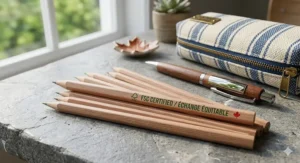
Pilot B2P (Bottle-to-Pen) transformed the humble pen by creating it from 89% recycled plastic water bottles, proving everyday items can embrace circular economy principles.
Key Specifications:
- 89% recycled plastic bottles
- Retractable ballpoint design
- Smooth G2 gel ink
- Available in multiple colours
- Refillable cartridges
Price Range: $15-20 CAD per pack on Amazon.ca
Each B2P pen diverts approximately one plastic water bottle from oceans and landfills. The smooth-writing gel ink matches Pilot’s conventional pens in performance. A Simon Fraser University professor shared: “I’ve tested countless pens. The B2P writes as smoothly as any premium gel pen while solving a real environmental problem.”
Pros:
✅ Tangible impact (one bottle per pen)
✅ Refillable design extends lifespan
✅ Comfortable grip for extended writing
Cons:
❌ Slightly higher cost than basic pens
❌ Not traditional fair trade (environmental certification)
Best for: Students and professionals seeking sustainable writing instruments
7. tentree Organic Backpack – The Climate Champion
tentree became a Canadian success story by planting 10 trees for every product sold while maintaining carbon neutral certification since 2020.
Key Specifications:
- Made from organic cotton and recycled polyester blend
- Ethically manufactured in Vietnam
- Climate neutral certified
- Padded laptop compartment
- Adjustable straps
Price Range: $95-140 CAD
tentree is a B Corporation certified brand that plants 10 trees for every item sold, with a commitment to plant 1 billion trees by 2030. Their partner factories comply with strict ethical codes prohibiting forced labour, child labour, and discrimination while ensuring safe working environments and fair wages.
A Winnipeg customer noted: “The quality exceeded expectations. The blend of organic cotton and recycled materials creates a backpack that’s both durable and lightweight. Knowing we contributed to reforestation makes every school day feel meaningful.”
Pros:
✅ Measurable environmental impact (10 trees planted)
✅ Climate neutral operations
✅ Canadian-designed with global ethics
Cons:
❌ Some styles sell out quickly in Canada
❌ Premium pricing compared to conventional options
Best for: Eco-conscious teens and young adults who value climate action
✨ Don’t Miss These Exclusive Deals!
🔍 Take your back-to-school shopping to the next level with these carefully selected products available in Canada. Click on any highlighted item to check current pricing and availability on Amazon.ca. These ethically made supplies will help you create authentic positive change while getting your family ready for school!
Understanding Fair Trade Certification in Canada
Fair trade represents more than feel-good marketing – it’s a rigorous certification system that transforms global supply chains. When you see a fair trade label on school supplies, it guarantees specific standards were met throughout production.
Core Fair Trade Principles
According to Wikipedia’s comprehensive overview of Fairtrade International, fair trade standards for small farmers’ organizations include requirements for democratic decision-making, ensuring producers have a say in how fair trade premiums are invested. For hired labour situations, standards seek to ensure employees receive decent wages and may join unions and bargain collectively, with plantations required to ensure there is no forced or child labour.
The certification covers environmental sustainability too. Fair trade certified commodities must adhere to sustainable agro-ecological practices, including reduction of chemical fertilizer use, prevention of erosion, and protection of forests.
Labour Standards That Protect Workers
Fair trade goes beyond wages. Standards require no physical, sexual, psychological or verbal harassment or abuse, no employees under age 15 or under completion age for compulsory education (whichever is higher), safe and healthy workplace settings to prevent accidents, and regular work weeks not exceeding 48 hours.
These aren’t suggestions – they’re verified through independent audits. FLOCERT inspects and certifies producer organizations in more than 70 countries across Europe, Asia, Africa, and Latin America.
The B Corporation Movement: Raising the Ethical Bar
While fair trade focuses primarily on agricultural products and manufacturing standards, B Corporation certification takes a holistic view of business impact.
What Makes a Company B Corp Certified?
As detailed in Wikipedia’s article on B Corporation certification, B Corporation certification requires companies to meet rigorous social and environmental standards, with companies needing to score at least 80 out of 200 points on an assessment covering:
- Governance: Transparency, accountability, stakeholder engagement
- Workers: Compensation, benefits, training, workplace safety
- Community: Diversity, economic impact, civic engagement
- Environment: Climate impact, waste management, resource conservation
- Customers: Product impact, ethical marketing, data privacy
As of March 2025, there are 9,576 certified B Corporations across 160 industries in 102 countries, creating a global movement of businesses balancing profit with purpose.
Canadian-Made vs. Fairly Traded: Understanding the Difference
Not all ethical school supplies come from the same place, and understanding the distinctions helps make informed choices.
Canadian Manufacturing Benefits
Locally manufactured options support Canadian jobs while reducing transportation emissions. Products made in Canada automatically comply with federal labour laws, including minimum wage standards, workplace safety regulations, and union rights.
However, “Made in Canada” alone doesn’t guarantee fair wages or environmental sustainability. Companies can still use unsustainable materials or maintain minimal labour standards while technically complying with Canadian law.
Fair Trade’s Global Impact
Fair trade certification focuses on developing countries where workers face exploitation risks. Fair trade products come from small farmer organizations or companies with hired labor in countries with low to medium development status in Africa, Asia, Oceania, Latin America and the Caribbean.
This system directly addresses global inequality by ensuring marginalized producers receive fair compensation and working conditions. For school supplies like cotton backpacks, tea-based inks, or sustainably sourced materials, fair trade creates measurable impact in source communities.
The Best of Both Worlds
Some Canadian companies combine domestic operations with fair trade sourcing. tentree, for example, designs products in Canada while ethically manufacturing overseas and maintaining transparent supply chains.

Supply Chain Transparency: Why It Matters
Traditional school supply shopping operates on opacity. Most families have no idea where their child’s backpack was made, who sewed it, or whether those workers earned living wages.
The Hidden Cost of Cheap School Supplies
Conventional school supplies compete primarily on price, creating a race to the bottom. Manufacturers cut costs through:
- Below-minimum wages in countries with weak labour enforcement
- Dangerous working conditions (poor ventilation, long hours, no safety equipment)
- Child labour in regions with inadequate oversight
- Environmental shortcuts (toxic dyes, unregulated waste disposal)
Research from Colorado State University’s Center for Fair & Alternative Trade found that Fairtrade certification promotes worker empowerment through collective capacity building and enabling rights, following a trade unionist strategy that considers rights of association and collective bargaining as essential.
How Transparent Brands Operate Differently
Ethical brands publish factory names, conduct third-party audits, and maintain living wage commitments. Terra Thread, for instance, lists exactly which Fair Trade Certified factory produces each product and shares impact reports.
Shopping Guide: How to Choose Fair Trade School Supplies in Canada
Making ethical choices becomes easier with a clear framework. Here’s how to evaluate products:
Step 1: Identify Recognized Certifications
Look for logos from Fair Trade USA, Fairtrade International, GOTS (Global Organic Textile Standard), or B Corporation. These represent third-party verification, not just company claims.
Step 2: Research Brand Values
Visit company websites to read sustainability reports and supply chain information. Legitimate ethical brands publish detailed information about manufacturing partners and labour practices.
Step 3: Check Canadian Availability
Verify products ship to Canada and review shipping costs. Some ethical brands only ship within the US, creating barriers for Canadian families.
Step 4: Read Canadian Customer Reviews
Focus on reviews from Canadian buyers mentioning shipping times, customs fees, and product durability in Canadian conditions (especially for backpacks facing harsh winter weather).
Step 5: Calculate True Cost
Compare not just purchase price but cost-per-use. A $120 CAD ethical backpack lasting five years costs $24 annually, while a $40 conventional backpack replaced yearly costs the same – plus environmental and social costs.
Step 6: Consider the Complete Package
Evaluate materials, manufacturing, shipping methods, and packaging. Some products use fair trade materials but ship in excessive plastic packaging.
Step 7: Support Canadian Retailers
When possible, purchase from Canadian retailers offering ethical products. This supports local businesses while ensuring easier returns and customer service.
Price Comparison: Fair Trade vs. Conventional Options
| Category | Conventional | Fair Trade/Ethical | Price Difference |
|---|---|---|---|
| Backpack | $35-60 CAD | $80-140 CAD | +$45-80 CAD |
| Notebooks (pack of 3) | $8-12 CAD | $15-28 CAD | +$7-16 CAD |
| Pens (pack of 12) | $6-10 CAD | $15-20 CAD | +$9-10 CAD |
| Pencil Case | $5-8 CAD | $12-18 CAD | +$7-10 CAD |
The initial investment runs approximately $75-125 CAD higher for a complete ethical school supply package. However, durability often means these products outlast conventional alternatives by 2-3x, ultimately saving money.
Environmental Impact: Beyond Labour Rights
Fair trade certification increasingly includes environmental standards, recognizing the interconnection between worker welfare and ecological sustainability.
Sustainable Materials in School Supplies
Organic cotton production uses 88% less water and 62% less energy than generic cotton production while avoiding toxic pesticides. For backpacks, this means healthier soil, cleaner water, and safer working conditions for farmers.
Recycled materials keep plastics out of oceans and reduce extraction of virgin resources. Each Pilot B2P pen diverts one plastic bottle from landfills, while recycled notebooks save trees and reduce manufacturing emissions.
Carbon Neutral Shipping
Several brands now offer carbon-neutral shipping to Canada, offsetting transportation emissions through verified climate projects. tentree, for example, maintains climate neutral certification across their entire operation.
Teaching Kids About Ethical Consumption
Back-to-school shopping creates perfect opportunities to discuss values with children and teens.
Age-Appropriate Conversations
Elementary (Ages 5-10): Explain that fair trade means “making sure people who make our stuff get paid fairly and work in safe places.” Compare to fairness on the playground – everyone deserves respect and safety.
Middle School (Ages 11-13): Discuss global connections. “Your backpack was sewn by someone’s parent in India. Fair trade means that parent earned enough money to send their own kids to school.”
High School (Ages 14-18): Explore systemic issues. Discuss how conventional supply chains create poverty cycles, while fair trade and B Corp certification represent systemic solutions.
Hands-On Learning
Visit Fairtrade Canada’s website together to explore educational materials available in both French and English for students aged 5-16, covering topics from basic fair trade principles to how Fairtrade makes a difference for gender equality.
Some schools pursue Fair Trade School designation, creating community-wide commitment to ethical consumption.
Common Myths About Fair Trade School Supplies
Myth 1: “Fair trade products cost too much for regular families.”
Reality: While upfront costs run higher, superior durability often makes fair trade options more economical long-term. Additionally, many ethical brands offer sales and back-to-school promotions.
Myth 2: “Fair trade only applies to coffee and chocolate.”
Reality: Fair trade certification covers textiles, with nearly 75,000 cotton farmers in developing countries obtaining fair trade certification by 2015. School supplies increasingly use certified materials.
Myth 3: “B Corp is just greenwashing.”
Reality: B Corporation certification requires companies to score at least 80 out of 200 points and undergo third-party verification, with companies required to recertify every three years.
Myth 4: “Canadian regulations make fair trade unnecessary.”
Reality: Most school supplies are manufactured overseas where Canadian labour laws don’t apply. Fair trade certification fills this regulatory gap.
Where to Buy Fair Trade School Supplies in Canada
Online Retailers
Amazon.ca: Largest selection of certified products with customer reviews and Prime shipping. Search specifically for fair trade, B Corp, or GOTS certified items.
Ten Thousand Villages: Canadian fair trade retailer with locations across the country and online shopping. Specializes in handmade products from artisan cooperatives.
Well.ca: Canadian health and wellness retailer carrying STATE Bags and other ethical brands with free shipping over $35 CAD.
Anthropologie Canada: Carries STATE Bags and select ethical brands with Canadian pricing in CAD.
Physical Stores
Eco-Conscious Boutiques: Many Canadian cities have local stores specializing in sustainable products. Search for “ethical boutique [your city]” or “eco-friendly store [your city].”
University Bookstores: Many university bookstores now carry sustainable school supply lines, including recycled notebooks and fair trade bags.
The Future of Ethical School Supplies in Canada
The Canadian market for fair trade and ethically made products continues expanding rapidly. Several trends are shaping the future:
Increased Transparency Technology
Blockchain-based supply chain tracking allows consumers to scan QR codes and see exactly where products originated, who made them, and what certifications apply.
Circular Economy Models
More brands are introducing take-back programs where old backpacks and supplies are recycled into new products, creating closed-loop systems.
Living Wage Commitments
Beyond minimum wages, forward-thinking brands commit to living wages – enough for workers to meet basic needs including food, shelter, healthcare, and education.
Climate Accountability
With Canada’s commitment to climate targets, expect more brands offering carbon-neutral or carbon-negative school supplies.
FAQ: Fair Trade School Supplies in Canada
❓ What's the difference between fair trade and organic certification for school supplies?
❓ Are fair trade school supplies available in physical Canadian stores?
❓ How much more do fair trade school supplies cost compared to conventional options in Canada?
❓ Does fair trade certification guarantee no child labour in school supply manufacturing?
❓ Can schools in Canada become Fair Trade designated?
Conclusion: Making Ethical Choices for Canadian Students
Fair trade school supplies represent more than shopping decisions – they’re investments in a more equitable global economy. Every ethically made backpack, recycled notebook, and sustainably sourced pen creates measurable impact for workers, communities, and the environment.
The Canadian market offers more options than ever before. From the comprehensive fair trade certification of Terra Thread backpacks to the innovative give-back model of STATE Bags, from recycled paper notebooks to pens made from ocean-bound plastic, ethical alternatives exist for every school supply need.
Yes, initial costs run higher. The $95-140 CAD for an ethical backpack versus $35-60 CAD for a conventional option represents real money for Canadian families. But when you calculate cost-per-use over five years instead of one, factor in superior durability, and consider the social and environmental impact of your purchase, the value equation shifts dramatically.
Beyond economics, these choices teach children powerful lessons. When kids understand their backpack was sewn by workers earning living wages in safe conditions, when they learn their notebooks keep forests standing and emissions low, when they see companies balancing profit with purpose through B Corp certification – they internalize that commerce can create positive change.
Canadian families don’t have to choose between quality, affordability, and ethics. The products in this guide prove all three coexist. Start with one item – perhaps an ethical backpack or recycled notebooks. As you experience the quality and feel the impact, expand from there.
Fair trade isn’t perfect. Certification systems have limitations, not all products carry labels, and access barriers remain for some families. But it represents substantial progress toward supply chains that respect human dignity, protect the environment, and create sustainable livelihoods.
This back-to-school season, consider shopping with values. Your choices matter more than you might think.
Recommended for You
- 7 Best Plastic-Free School Supplies Canada 2026
- 7 Best Times to Buy School Supplies Canada Clearance 2026
- 7 Complete First Semester University Supplies Canada 2026
Disclaimer: This article contains affiliate links to Amazon.ca. If you purchase products through these links, we may earn a small commission at no additional cost to you.
✨ Found this helpful? Share it with your friends! 💬🤗
