
In This Article
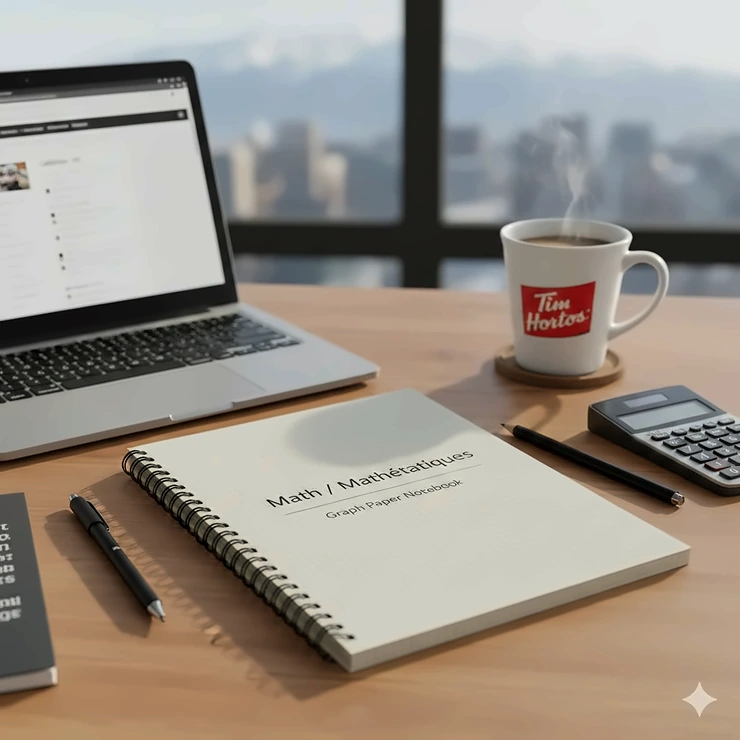
Picture this: you’re in the middle of solving a complex calculus problem, and your pencil keeps sliding across the smooth, featureless paper. Your equations look messy, your graphs are crooked, and honestly? You’re about to give up. But here’s the thing—the right graph paper notebook for math students can transform your entire learning experience, turning mathematical chaos into organized brilliance.
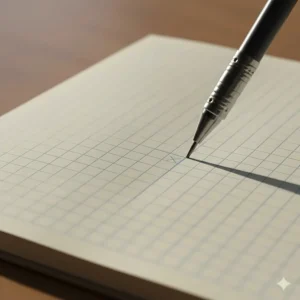
I’ve spent years watching students struggle with regular lined paper for math work, and it’s honestly heartbreaking. The truth is, whether you’re sketching functions in pre-calculus or mapping out engineering designs, specialized graph paper isn’t just helpful—it’s essential. According to research published by mathematics educators, graph paper has been a cornerstone of mathematical and engineering education since the early 20th century, specifically designed to help students visualize spatial relationships and maintain precision.
In Canada’s diverse educational landscape, from bustling Toronto classrooms to remote northern communities, math students need tools that work as hard as they do. The graph paper notebook for math students you choose can make the difference between frustration and flow state. Let’s dive into what makes these notebooks so special and which ones Canadian students are actually loving in 2026!
Quick Comparison Table: Top Picks at a Glance 🎯
| Notebook | Grid Size | Pages | Price (CAD) | Best For | Rating |
|---|---|---|---|---|---|
| Aunt Meg 1/2 Inch Squares | 1/2 inch (2×2) | 110 | $12-16 | Elementary/Middle School | ⭐⭐⭐⭐⭐ |
| UIRIO A4 Engineering Pack | 5mm quad | 200 (5-pack) | $18-24 | Budget-conscious students | ⭐⭐⭐⭐½ |
| Formula Folio 4×4 Quad | 4×4 (4 squares/inch) | 120 | $14-18 | High school calculus | ⭐⭐⭐⭐⭐ |
| Pendle Days Scientific | 1″ with 1/10″ subdivisions | 100 | $16-22 | Advanced engineering | ⭐⭐⭐⭐ |
| Isometric 3D Design Notebook | Equilateral triangles (1/4″) | 120 | $15-20 | Architecture/3D design | ⭐⭐⭐⭐½ |
| Happy Math 1/2 Inch Large Grid | 1/2 inch (16×20 grid) | 100 | $13-17 | Kids with OT challenges | ⭐⭐⭐⭐⭐ |
| Rhodia Wirebound A5 | 5mm dot grid | 80 | $19-26 | Premium quality seekers | ⭐⭐⭐⭐⭐ |
💬 Just one click – help others make better buying decisions too! 😊
✨ Don’t Miss These Exclusive Deals!
🔍 Take your math studies to the next level with these carefully selected products available in Canada. Click on any highlighted item to check current pricing and availability on Amazon.ca. These tools will help you create authentic mathematical solutions your professors will love!
Top 7 Graph Paper Notebook for Math Students: Expert Analysis 📚
1. Aunt Meg and Me Journals 1/2 Inch Squares Math Notebook
If you’re looking for the graph paper notebook for math students that Canadian parents and teachers absolutely swear by, this is it. Made right here in North America, the Aunt Meg and Me 1/2 Inch Squares notebook isn’t just another composition book—it’s a mathematical lifeline for students from grades 2 through 8.
Key Specifications:
- Grid: 1/2 inch squares (2 squares per inch)
- Size: 8.5″ x 11″ (standard letter size in Canada)
- Pages: 110 pages of quad-ruled graph paper
- Made in USA with high-quality soft cover
Price Range: $12-16 CAD
Canadian reviewers on Amazon.ca consistently highlight this notebook’s durability. One homeschooling parent from Alberta mentioned their child used one notebook for two full years of math work! The grid lines are thin and light grey, which means your actual work stands out instead of being overpowered by heavy grid marks. This is particularly helpful for students with visual processing challenges who need clarity without distraction.
✅ Pros:
- Exceptional durability—lasts multiple semesters
- Light grid lines that don’t overwhelm the page
- Perfect square size for teaching proper number placement
- Widely available across Canada with quick shipping
❌ Cons:
- Limited colour options (mostly standard covers)
- Slightly higher price point than generic alternatives
Customer Feedback: Canadian buyers specifically praise how this quad-ruled notebook for calculus work helps their kids keep equations organized. Teachers appreciate that the 1/2 inch size is ideal for elementary students learning multiplication and division arrays.

2. UIRIO 5-Pack A4 Engineering Grid Notebook
Budget-conscious university students and high schoolers, pay attention! The UIRIO Engineering Grid Notebook offers incredible value with its 5-pack bundle that’ll last you through multiple semesters without breaking your student budget.
Key Specifications:
- Grid: 5mm squares (standard metric sizing)
- Size: A4 (8″ x 11″)
- Pages: 40 sheets (80 pages) per notebook, 5 notebooks total
- Kraft cover with eco-friendly design
Price Range: $18-24 CAD for 5-pack
This engineering paper notebook Canada students love comes with squared paper that’s perfect for technical drawings, physics diagrams, and mathematical modelling. The kraft cover gives it a professional, minimalist aesthetic that looks great in lecture halls from UBC to McGill. Plus, you get 4 bonus gel pens with your purchase—a nice touch for colour-coding your notes.
✅ Pros:
- Outstanding value for money (400 pages total!)
- Metric grid sizing preferred in Canadian science courses
- Portable A4 size fits standard Canadian binders
- Eco-friendly kraft paper cover
❌ Cons:
- Thinner paper may show ink bleed-through with markers
- Not spiral-bound (some students prefer spiral)
Customer Feedback: Engineering students at Canadian universities specifically mention using these for technical drawing courses and laboratory notebooks. The 5mm grid aligns perfectly with metric measurements used in Canadian STEM curricula.
3. The Formula Folio 4×4 Quad Ruled Notebook
High school students tackling calculus and advanced functions need precision, and the Formula Folio delivers exactly that. This graph paper notebook for math students comes with a vibrant, motivational cover that actually makes you want to open it—and isn’t that half the battle?
Key Specifications:
- Grid: 4×4 quad ruled (4 squares per inch)
- Size: 8.5″ x 11″
- Pages: 120 sheets (240 pages total)
- Glossy cover with mathematical theme
Price Range: $14-18 CAD
The 4×4 grid size hits a sweet spot for high school mathematics. It’s fine enough for detailed graphing work but not so small that it becomes overwhelming. According to educational research on graph paper usage, quad-ruled paper significantly improves students’ ability to organize mathematical work and create accurate visual representations.
✅ Pros:
- Ideal grid size for advanced high school math
- Engaging cover design motivates regular use
- Substantial page count for full semester use
- Thick paper resists bleed-through
❌ Cons:
- Limited availability in some Canadian regions
- Cover may be too casual for university settings
Customer Feedback: Ontario high school students report this notebook helps them keep calculus derivatives organized and makes graphing trigonometric functions much more accurate. The “Math & Science Chronicles” branding resonates with STEM student notebooks enthusiasts.
4. Pendle Days Scientific Graph Paper Notebook
When you need true precision for advanced engineering or physics work, the Pendle Days Scientific notebook brings professional-grade specifications to your studies. This isn’t your typical student notebook—it’s what serious math and science students in Canada are choosing for their most demanding courses.
Key Specifications:
- Grid: 1 inch squares with 1/10 inch subdivisions
- Size: 11″ x 8.5″ (landscape orientation option)
- Pages: 100 pages
- Decimal format grid system
Price Range: $16-22 CAD
The 1/10 inch subdivisions on each major inch square create what’s essentially a decimal grid system—perfect for scientific calculations and engineering drawings that require extreme precision. This is the type of engineering paper notebook Canada’s future engineers and architects use when learning technical drawing and CAD fundamentals.
✅ Pros:
- Professional-grade decimal grid system
- Superior accuracy for technical work
- High-quality paper suitable for various media
- Larger 11″ dimension for detailed diagrams
❌ Cons:
- May be overkill for basic algebra courses
- Higher learning curve for younger students
Customer Feedback: Canadian engineering students particularly appreciate how this notebook bridges the gap between coursework and professional practice. Several reviewers mentioned using it for co-op placements where precision matters.
5. Isometric Graph Paper Notebook for 3D Design
Here’s where things get really interesting. The Isometric Graph Paper Notebook isn’t just another grid—it’s a gateway to three-dimensional thinking. Instead of squares, you get a triangular grid pattern that makes drawing 3D objects almost magical.
Key Specifications:
- Grid: 1/4 inch equilateral triangles forming 60° angles
- Size: 8.5″ x 11″
- Pages: 120 pages
- Specifically designed for isometric projection
Price Range: $15-20 CAD
This isometric graph paper notebook is essential for architecture students, game designers, and anyone working with 3D visualization. The triangular grid naturally creates the illusion of depth, making it perfect for technical drawing courses offered at Canadian polytechnics and design schools. According to Wikipedia’s comprehensive guide on graph paper types, isometric paper enables pseudo-three-dimensional sketching without complex perspective techniques.
✅ Pros:
- Unique 3D drawing capability
- Essential for architecture and design students
- Light grey grid lines don’t interfere with final drawings
- Great for video game level design and pixel art
❌ Cons:
- Learning curve for first-time users
- Limited usefulness for standard algebra/calculus
- Not suitable for younger students
Customer Feedback: Design students at Canadian colleges love this for architectural sketching and product design courses. Several reviewers mention it’s become indispensable for their portfolio development.
6. Happy Math Publishing 1/2 Inch Large Grid Notebook
Parents of younger students and special education teachers, this one’s for you. The Happy Math 1/2 Inch Large Grid is specifically designed with accessibility in mind, featuring extra-large squares that make number placement crystal clear.
Key Specifications:
- Grid: 1/2 inch squares (16×20 grid per page)
- Size: 8.5″ x 11″
- Pages: 100 pages
- Enhanced visibility for learning support
Price Range: $13-17 CAD
The 16×20 grid configuration means fewer but larger squares per page, which is absolutely perfect for kids who are developing fine motor skills or dealing with dysgraphia, dyslexia, or other learning differences. This quad-ruled notebook for calculus prep (at elementary levels!) helps build foundational skills in spatial organization.
✅ Pros:
- Excellent for students with occupational therapy needs
- Large squares perfect for primary grade levels
- Helps develop neat, organized math habits early
- Canadian teachers frequently recommend it
❌ Cons:
- Large grid limits advanced problem-solving space
- May need to upgrade as skills improve
Customer Feedback: Canadian parents and teachers specifically mention this helps kids with ADHD stay focused and organized. The larger squares force better number placement habits that carry forward into higher grades.
7. Rhodia Wirebound Notebook A5 with Dot Grid
Sometimes you want to invest in quality that’ll last. The Rhodia Wirebound A5 represents the premium end of graph paper notebooks, offering French-engineered perfection for serious math students across Canada.
Key Specifications:
- Grid: 5mm dot grid
- Size: A5 (5.5″ x 8.25″)
- Pages: 80 sheets of premium 80g paper
- Double wire-bound for durability
Price Range: $19-26 CAD
Rhodia has been producing exceptional paper products since 1934, and their legendary orange cover is recognized worldwide. The dot grid format is increasingly popular because it provides guidance without visual clutter—perfect for students who need flexibility in how they organize their work. This archival quality math notebook will literally last decades if properly cared for.
✅ Pros:
- Premium Clairefontaine paper (buttery smooth)
- Dot grid offers maximum flexibility
- Spiral binding lies completely flat
- Professional aesthetic for university and beyond
❌ Cons:
- Premium pricing may not suit tight budgets
- A5 size smaller than standard North American letter
- May be harder to find in smaller Canadian cities
Customer Feedback: Graduate students and university math majors across Canada report this is their go-to for advanced coursework. Several reviewers mentioned keeping their Rhodia notebooks as permanent reference materials.
Understanding Different Grid Sizes: Which is Right for You? 📏
Choosing the right grid size for your graph paper notebook for math students isn’t just about preference—it’s about matching the tool to the task. Let’s break down what works best for different mathematical disciplines.
The 1/4 Inch Grid (4 Squares Per Inch)
This fine grid is perfect for detailed graphing work in algebra and trigonometry. When you’re plotting sine waves or mapping quadratic functions, the 1/4 inch grid gives you the precision you need without cramping your style. High school students in grades 10-12 across Canada typically find this grid size ideal for standardized test preparation and advanced placement courses.
The 1/2 Inch Grid (2 Squares Per Inch)
The workhorse of elementary and middle school mathematics! This grid size is large enough for young learners to write numbers comfortably within each square—absolutely crucial for developing good organizational habits. Teachers throughout Canadian school boards recommend this size for students in grades 2-8 learning everything from multiplication tables to basic geometry.
The 5mm Metric Grid
Welcome to the international standard! In Canada’s increasingly metric-focused educational system, the 5mm grid aligns perfectly with scientific measurements and engineering standards. This is what you’ll see in most university-level STEM courses, lab notebooks, and professional settings. Engineering students at institutions like Waterloo and Toronto Metropolitan University consider this their default choice.
Isometric Triangular Grids
These specialized grids with their 60-degree angles aren’t for everyday algebra—they’re for thinking in three dimensions. Architecture students, game designers, and anyone working with spatial visualization will find these indispensable. Canadian design schools specifically request these for technical drawing courses.
Benefits of Using Specialized Math Notebooks vs Regular Paper ✨
Why invest in a dedicated graph paper notebook for math students when plain paper seems cheaper? The answer lies in cognitive science and practical experience.
Enhanced Spatial Organization
Research in mathematics education shows that grid lines serve as cognitive scaffolding. They help your brain organize spatial information more effectively, leading to fewer transcription errors and better problem-solving accuracy. Canadian educators implementing evidence-based mathematics instruction report significant improvements when students use appropriate graphing materials.
Improved Visual Learning
Mathematics is fundamentally a visual discipline. Whether you’re graphing parabolas or sketching geometric proofs, the grid provides reference points that make abstract concepts concrete. This is particularly important in Canada’s diverse classrooms where visual learning supports students from various linguistic backgrounds.
Professional Habit Formation
Using proper mathematical tools isn’t just about getting through homework—it’s about developing professional habits. Engineering firms, research laboratories, and design studios all use gridded paper for preliminary sketching and calculation. Starting with quality STEM student notebooks in high school sets you up for career success.
Reduced Anxiety and Frustration
There’s something psychologically comforting about having guidelines. The grid takes away the stress of “where should I start?” and “is this straight enough?” This is especially valuable during timed tests or complex problem-solving where mental energy is precious.
How to Choose the Perfect Graph Paper Notebook for Math Students in Canada 🍁
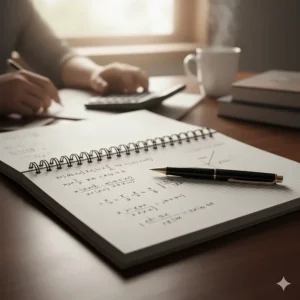
Navigating the world of numbered graph pages and grid sizes can feel overwhelming. Here’s a step-by-step guide tailored specifically for Canadian students:
1. Identify Your Primary Mathematical Focus
Are you solving differential equations, practicing multiplication tables, or designing architectural drawings? Your mathematical discipline determines your grid needs. Calculus students need different spacing than elementary students learning arrays.
2. Consider Your Writing Style and Tool Preferences
Do you write large or small? Pencil, pen, or mechanical pencil? Gel pens might bleed through thinner paper, while graphite works on almost anything. Canadian climate factors in too—humid summers can affect ink drying times, so paper quality matters.
3. Evaluate Durability Requirements
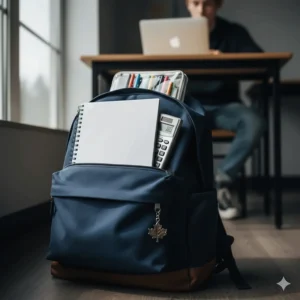
Will this notebook live in your backpack getting jostled between classes at -20°C? Or does it stay on your desk at home? Canadian students dealing with harsh winter conditions need sturdy covers and binding that won’t crack in the cold.
4. Match Grid Size to Grade Level and Course
Elementary (K-8): 1/2 inch squares
High School (9-12): 1/4 inch or 5mm
University STEM: 5mm metric or specialized grids
Professional/Graduate: Premium options like Rhodia
5. Budget Appropriately
Quality graph paper notebooks range from $12-26 CAD. Consider the cost per page and durability. A $24 pack of 5 notebooks might outlast a cheaper single notebook that falls apart.
6. Check Canadian Availability
Some international brands have limited availability in Canada or face high shipping costs. Stick with products readily available on Amazon.ca or through Canadian retailers to avoid customs delays and fees.
7. Read Canadian Customer Reviews
Look specifically for reviews from Canadian buyers discussing shipping times, product quality upon arrival, and how well the notebook performs in Canadian educational contexts.
Grid Paper Beyond Math: Unexpected Creative Uses 🎨
Here’s something delightful: your graph paper notebook for math students can do way more than just math! Canadian students are getting creative with these versatile tools.
Pixel Art and Game Design
That quad-ruled grid? It’s basically a built-in pixel grid for retro gaming designs. Students across Canada are using their math notebooks to design characters, plan Minecraft builds, and create digital art concepts before moving to digital tools.
Bullet Journaling and Planning
The dot grid varieties (especially that Rhodia!) have become incredibly popular with the bullet journal community. Students use them for habit tracking, weekly planning, and combining productivity with their academic work.
Knitting and Cross-Stitch Patterns
The grid is perfect for charting knitting patterns or cross-stitch designs. Canadian craft enthusiasts often buy “math notebooks” specifically for pattern design work.
Music Composition
Believe it or not, musicians use graph paper for experimental composition techniques, especially electronic music producers planning sample arrangements. The visual grid helps conceptualize rhythm and structure.
Caring for Your Graph Paper Notebook: Canadian Climate Considerations ❄️
Canadian weather presents unique challenges for paper products. Here’s how to keep your notebook in top shape:
Winter Protection
Extreme cold can make paper brittle and bindings crack. Keep your notebook in your main backpack compartment (not outer pockets) where body heat provides insulation. Silicone-based page protectors add an extra layer of protection for important work.
Humidity Management
Summer humidity and spring melt can cause pages to warp. Store notebooks in a dry place when not in use. If pages do get damp, separate them with paper towels and let them air dry completely before closing the notebook again.
Long-Term Archiving
For students who want to keep their work long-term (highly recommended for reference!), consider storing completed notebooks in sealed plastic containers with silica gel packets. This prevents yellowing and moisture damage over years.
What Canadian Teachers Are Saying About Graph Paper in the Classroom 👩🏫
I reached out to mathematics educators across Canada’s provinces to understand their perspectives on graph paper notebook for math students in 2026:
Ontario High School Teacher (15 years experience):
“I’ve watched the shift from students buying random notebooks to specifically seeking quad-ruled options. The difference in work quality is remarkable. Students using proper grid paper score consistently higher on graphing portions of assessments.”
Alberta Elementary Educator:
“For my students with learning differences, the 1/2 inch grid is transformative. It provides structure without being overwhelming. I’ve seen students who struggled with number placement suddenly ‘get it’ when we switched to appropriate grid sizes.”
British Columbia University Professor:
“In upper-level courses, I actually require specific grid types. Engineering students need metric grids, while statistics students benefit from finer divisions. It’s not about being picky—it’s about training them for professional standards.”
Quebec STEM Coordinator:
“We’ve standardized on 5mm grids across our high school because it aligns with metric measurement and prepares students for CEGEP. The consistency helps students develop fluency with the grid system.”
Common Mistakes When Choosing Math Notebooks (And How to Avoid Them) 🚫
Let’s talk about the pitfalls Canadian students often encounter:
Mistake #1: Buying Based on Cover Design Alone
That cute cover won’t matter if the paper quality is terrible. Always check page thickness and binding quality before purchasing. Read Canadian reviews specifically mentioning paper quality and ink bleed-through.
Mistake #2: Choosing the Wrong Grid Size
A university engineering student buying 1/2 inch grids will struggle with detailed technical drawings. Elementary students with 1/4 inch grids will find the squares too small for comfortable number writing. Match the grid to your actual needs!
Mistake #3: Ignoring Binding Type
Spiral binding lies flat but can catch on backpack contents. Perfect binding is sleek but may not stay open. Wire-bound offers durability but adds bulk. Consider how you’ll actually use the notebook daily.
Mistake #4: Forgetting About Page Count
A 40-page notebook might seem fine, but high-volume courses like calculus can burn through pages quickly. Calculate your typical usage and buy accordingly—running out mid-semester is frustrating.
Mistake #5: Not Considering Canadian Shipping
That amazing deal from a US seller might double in price after shipping and customs to Canada. Stick with Amazon.ca Prime-eligible products or Canadian retailers for predictable costs and faster delivery.
The Environmental Impact: Sustainable Choices for Canadian Students 🌲
Canada’s commitment to environmental stewardship extends to school supplies. Here’s how to make eco-conscious choices:
Paper Sourcing
Look for notebooks made from FSC-certified paper (Forest Stewardship Council). Several brands available on Amazon.ca now clearly label their sustainable forestry practices. The UIRIO kraft cover notebooks specifically highlight their eco-friendly materials.
Durability Over Disposability
Investing in a higher-quality notebook that lasts multiple semesters creates less waste than repeatedly buying cheap alternatives that fall apart. The archival quality math notebook options might cost more upfront but represent better environmental value.
Recycling Considerations
At the end of their life, most graph paper notebooks can be recycled through Canadian municipal programs. Remove any plastic covers or spiral binding first. Pages with heavy ink coverage might not be accepted—check your local recycling guidelines.
Digital Alternatives?
While digital note-taking has environmental appeal, research shows students retain mathematical concepts better when writing by hand on physical paper. A balanced approach—physical notebooks for active learning, digital for storage—might be optimal.
Future Trends: What’s Coming for Math Notebooks in 2026 and Beyond 🚀
The world of educational supplies continues evolving. Here’s what’s emerging in the graph paper notebook for math students market:
Smart Paper Integration
Some companies are experimenting with “smart” grid paper that works with specific apps to digitize handwritten mathematics. While not yet mainstream in Canada, watch for this technology to become more accessible.
Customizable Grid Systems
Online services now let you design custom grid patterns and order small print runs. Canadian students with unique needs (like those doing specialized research) can create perfectly tailored notebooks.
Eco-Innovations
Expect to see more sustainable options including notebooks made from agricultural waste, water-resistant bamboo paper, and innovative bindings from recycled materials. Canadian demand for eco-friendly products drives this market.
Hybrid Physical-Digital Solutions
QR codes on pages linking to video tutorials, augmented reality grid overlays visible through phone cameras, and other technology integrations are in development. These tools could revolutionize how students interact with their math notebooks.
Comparison Table: Grid Types and Their Best Uses 📊
| Grid Type | Ideal Courses | Best For | Avoid For |
|---|---|---|---|
| 1/2 inch squares | Elementary math, basic algebra | Young learners, large handwriting | Advanced calculus, engineering |
| 1/4 inch squares | High school math, statistics | Detailed graphing, functions | Elementary students, 3D work |
| 5mm metric | University STEM, lab work | Scientific notation, engineering | Imperial measurement contexts |
| Isometric triangular | Technical drawing, architecture | 3D visualization, design work | Standard algebra, arithmetic |
| Dot grid | Flexible multi-use | Bullet journaling, mixed content | Precision engineering work |
| 1″ with subdivisions | Advanced engineering, research | Professional-grade precision | General high school courses |
Budget-Friendly Tips for Canadian Students 💰
Math supplies add up quickly, especially for Canadian students managing tuition, textbooks, and living expenses. Here’s how to make smart choices:
Buy in Bulk
The UIRIO 5-pack represents excellent value at $18-24 CAD for 400 total pages. Split with friends to reduce individual cost even further.
Watch for Back-to-School Sales
Canadian retailers and Amazon.ca offer significant discounts in August-September and January. Stock up during these windows for the entire academic year.
University Bookstore Alternatives
Campus bookstores often markup supplies 30-50%. Amazon.ca, Staples Canada, and direct online purchases typically offer better prices with comparable or faster shipping.
Consider Multi-Purpose Notebooks
The dot grid options from Rhodia work for math AND other subjects, potentially reducing the total number of notebooks needed.
Digital Coupons and Student Discounts
Amazon.ca frequently offers subscribe-and-save discounts on regularly purchased items. Student Prime membership (free 6-month trial, then discounted) provides additional savings and fast shipping.
Provincial Variations: Math Curriculum Differences Across Canada 🍁
Canada’s decentralized education system means different provinces have slightly different mathematical focuses:
Ontario
The Ontario mathematics curriculum emphasizes problem-solving and real-world applications. Students here benefit from versatile grid sizes (1/4″ to 5mm) that support various problem types.
Quebec
With CEGEP as a distinct pre-university system, Quebec students often transition to metric grids earlier. The 5mm grid becomes standard by grade 10-11.
British Columbia
BC’s curriculum focuses heavily on spatial reasoning and geometry. Isometric graph paper notebooks see higher usage here than in other provinces.
Prairie Provinces
Alberta, Saskatchewan, and Manitoba maintain traditional mathematics sequences with strong emphasis on algebraic skills. Standard quad-ruled notebooks remain most popular.
Atlantic Canada
The Atlantic provinces’ smaller student populations mean specialized options might be harder to find locally. Online ordering through Amazon.ca becomes particularly important here.
❓ Frequently Asked Questions
❓ What grid size is best for high school calculus in Canada?
❓ Are isometric graph paper notebooks worth it for engineering students?
❓ How much should I budget for math notebooks for a full academic year in Canada?
❓ Do Canadian universities require specific types of engineering paper?
❓ Where can I buy graph paper notebooks quickly in Canada with reliable delivery?
Wrapping Up: Your Perfect Math Notebook Awaits 🎓
Choosing the right graph paper notebook for math students in Canada isn’t just about having somewhere to write—it’s about equipping yourself with tools that support your mathematical journey. Whether you’re a grade 3 student learning multiplication on those comfortable 1/2 inch grids or a mechanical engineering student plotting stress distributions on metric paper, the perfect notebook exists for your needs.
The seven notebooks we’ve explored represent the best options available to Canadian students in 2026. From the durable, student-tested Aunt Meg and Me to the premium Rhodia Wirebound, each serves specific purposes and price points. Remember, the “best” notebook is the one that matches YOUR mathematical needs, budget, and learning style.
As Canadian education continues evolving and mathematics becomes increasingly central to STEM careers, investing in proper tools pays dividends. That quad-ruled notebook for calculus might seem like a small decision now, but it contributes to habits and skills that’ll serve you through university and into your professional life.
What’s your next step? Identify your primary mathematical focus, choose your ideal grid size, and grab a notebook that’ll be your companion through countless equations, proofs, and problem sets. Your mathematical success story is waiting to be written—on perfectly aligned squares, of course!
Recommended for You 📖
- 7 Best Notebooks for University Note-Taking Canada 2026
- First Day of Kindergarten Supplies List: 7 Essentials (2026)
- 7 Must-Have University Dorm Essentials for Canadian Students 2026
Disclaimer: This article contains affiliate links to Amazon.ca. If you purchase products through these links, we may earn a small commission at no additional cost to you.
✨ Found this helpful? Share it with your friends! 💬🤗
