
In This Article
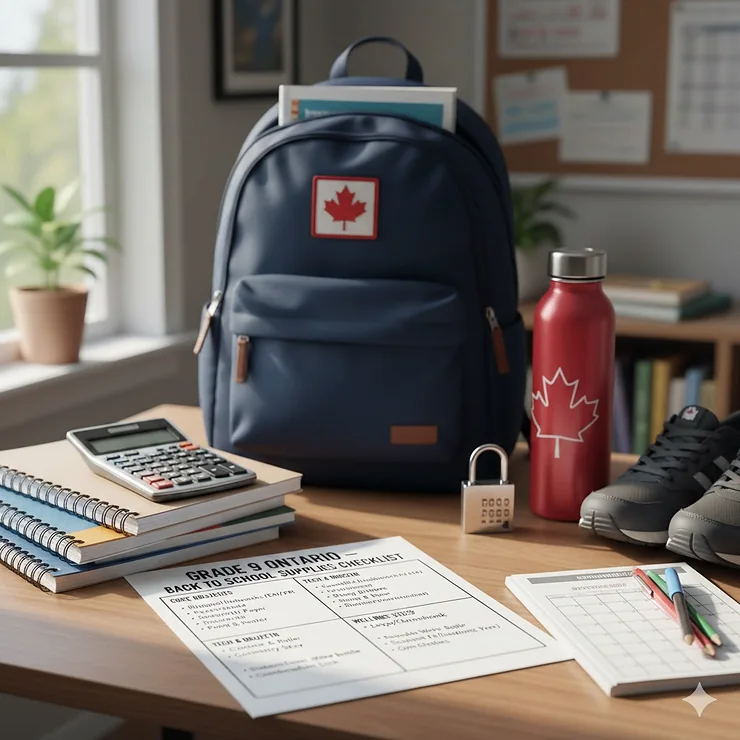
Starting Grade 9 marks a significant milestone in your academic journey. You’re not just entering high school—you’re stepping into a whole new world of learning expectations, multiple teachers, and yes, those infamous lockers you’ve seen in movies. The transition from elementary to secondary school in Ontario comes with unique challenges that require proper preparation and the right tools.
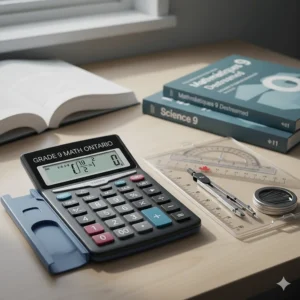
The back to school supplies checklist grade 9 Ontario differs substantially from what you needed in Grade 8. According to the Ontario Ministry of Education’s policy framework, Grade 9 students typically complete eight courses throughout the year, each with its own set of requirements and organizational demands. You’ll be juggling subjects like de-streamed Mathematics (MTH1W), English, Science, Geography, and French as a Second Language—all while navigating between classrooms and managing your time effectively.
Canadian students spend an average of $300-$500 on school supplies annually, but smart shopping can significantly reduce these costs. This comprehensive guide will help you identify exactly what you need, avoid unnecessary purchases, and ensure you’re fully prepared for the first year high school supplies list requirements across Ontario school boards. We’ve researched real products available on Amazon.ca, verified Canadian pricing, and consulted with Ontario teachers to bring you this definitive checklist.
Quick Comparison Table: Essential vs Optional Supplies
| Supply Category | Essential Items | Optional Items | Average Cost (CAD) |
|---|---|---|---|
| Binders & Organization | 5-7 binders (1.5″-2″), dividers, duo-tangs | Expandable folders, subject tabs | $40-$70 |
| Writing Tools | Pens (blue/black), pencils, erasers | Mechanical pencils, gel pens | $15-$30 |
| Technology | Scientific calculator | Graphing calculator, laptop | $25-$150 |
| Locker Essentials | Combination lock, mirror | Shelf organizer, magnetic accessories | $20-$60 |
| Paper Products | Loose-leaf, notebooks (3-5) | Index cards, sticky notes | $20-$40 |
💬 Just one click – help others make better buying decisions too! 😊
Top 7 Back to School Supplies for Grade 9: Expert Analysis
1. Davis Group Premium Economy 2-Inch D-Ring Binders (Pack of 6)
When it comes to the binder organization system grade 9, you need durability and capacity. The Davis Group Premium Economy Binders stand out as a Canadian-made solution that perfectly balances quality and affordability.
Key Specifications:
- 2-inch D-ring capacity (holds 475 sheets)
- Made from 100% recycled board (85% post-consumer waste)
- Clear interior pockets for document storage
- Full-width spine label holders
Price Range: $30-$35 CAD for 6-pack Canadian Availability: In stock, ships from Amazon Fulfillment
Canadian customers consistently praise these binders for their robust construction and eco-friendly materials. One Ontario high school student noted they survived an entire school year of daily use without ring breakage—a common problem with cheaper alternatives.
✅ Pros:
- Canadian-made quality
- D-ring design allows papers to lay flat
- Color variety for subject organization
❌ Cons:
- No clear front pocket for cover sheets
- Slightly heavier than plastic alternatives
2. Texas Instruments TI-84 Plus CE Color Graphing Calculator
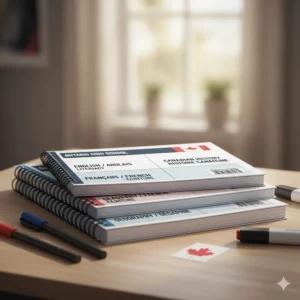
What teachers require grade 9 Ontario often includes a scientific calculator, but investing in a graphing calculator like the TI-84 Plus CE prepares you for advanced courses through Grade 12.
Key Specifications:
- High-resolution color display
- Rechargeable battery (lasts up to one month)
- 6x memory of standard TI-84 Plus
- Pre-loaded apps for geometry and statistics
Price Range: $121-$140 CAD Canadian Availability: Multiple sellers on Amazon.ca
This calculator is approved for SAT, ACT, and AP exams, making it a long-term investment. Ontario teachers recommend it for students planning to take Advanced Functions or Calculus in later grades.
✅ Pros:
- Rechargeable battery eliminates AAA costs
- Color-coded equations improve comprehension
- 30% lighter than previous models
❌ Cons:
- Higher upfront cost
- Learning curve for first-time graphing calculator users
3. JanSport Big Student Backpack
High school transition supplies must include a reliable backpack that can handle heavy textbooks, binders, and a laptop. The JanSport Big Student is purpose-built for secondary students.
Key Specifications:
- 34-litre capacity
- Two main compartments with pleated front pocket
- Padded laptop sleeve (fits 15″ laptops)
- Ergonomic S-curve shoulder straps
Price Range: $45-$75 CAD depending on colour/pattern Canadian Availability: Various colours in stock
Canadian high schoolers love this backpack for its durability—many report using the same JanSport throughout all four years of high school. The lifetime warranty adds peace of mind.
✅ Pros:
- Lifetime warranty from JanSport
- Multiple compartments for organization
- Water-resistant bottom panel
❌ Cons:
- No water bottle pockets on exterior
- Limited laptop protection (sleeve only)
4. LockerMax 3-Shelf Hanging Locker Organizer by Abra Company
Locker supplies for grade 9 are crucial for staying organized between classes. The LockerMax organizer transforms chaotic locker spaces into efficient storage solutions.
Key Specifications:
- Adjustable 22″-38″ tall (fits full and half lockers)
- Pockets on both sides for accessories
- Holds up to 45 lbs total weight
- PVC-free, eco-friendly fabric
Price Range: $35-$45 CAD Canadian Availability: Ships from Canadian sellers
One Toronto student shared that this organizer eliminated the “locker avalanche” problem entirely. The elastic bands secure textbooks firmly, preventing items from falling when the door opens.
✅ Pros:
- Removable shelf inserts for washing
- Converts to 2-shelf for half-size lockers
- Durable enough to last all four years
❌ Cons:
- Requires sturdy locker hooks for installation
- Takes up vertical space (less room for hanging items)
5. Amazon Basics #2 Woodcased Pencils (Pack of 30)
Subject-specific supplies grade 9 always include pencils for math, science diagrams, and standardized tests. The Amazon Basics pencils offer unbeatable value for Canadian students.
Key Specifications:
- Pre-sharpened HB lead
- Latex-free erasers
- Cedar wood construction
- 30-count value pack
Price Range: $5-$8 CAD Canadian Availability: Amazon.ca Prime eligible
These pencils consistently receive praise from Canadian teachers and students for smooth writing and minimal breakage. At roughly $0.20 per pencil, they’re perfect for lending to classmates without worry.
✅ Pros:
- Excellent value for bulk quantity
- Pre-sharpened saves time
- Reliable Amazon Basics quality
❌ Cons:
- Basic design (no grip features)
- Erasers wear down quickly with heavy use
6. Five Star Spiral Notebooks (3-Subject, College Ruled)
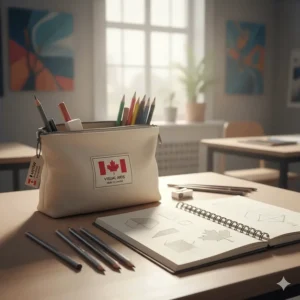
School board recommendations Ontario emphasize organization across multiple subjects. Five Star 3-subject notebooks consolidate three classes into one durable binding.
Key Specifications:
- 150 sheets (300 pages total)
- Spiral Lock wire prevents coil snags
- Water-resistant covers
- Perforated sheets for clean removal
Price Range: $8-$12 CAD each Canadian Availability: Multiple colours available
Ontario students appreciate the divider pockets between subjects, which eliminate the need to carry multiple notebooks. The reinforced edges withstand an entire semester of backpack abuse.
✅ Pros:
- Spiral Lock prevents snags on clothing/bags
- Divider pockets keep handouts organized
- College-ruled prepares students for university
❌ Cons:
- Heavier than single-subject notebooks
- Cannot rearrange page order like binders
7. Casio FX-991ES PLUS Scientific Calculator
For students not ready to invest in graphing calculators, the Casio FX-991ES PLUS meets teacher supply list requirements for Grade 9 Ontario mathematics and science courses.
Key Specifications:
- Natural textbook display shows fractions and roots as they appear in textbooks
- 417 functions including matrix calculations
- Dual-powered (solar + battery backup)
- Covers Grade 9-11 curriculum requirements
Price Range: $18-$28 CAD Canadian Availability: Amazon.ca Prime eligible
This calculator is specifically designed for secondary school students and appears on many Ontario teachers’ recommended lists. Canadian buyers note its exceptional value compared to graphing alternatives.
✅ Pros:
- Solar power extends battery life indefinitely
- Natural display improves learning
- Affordable for budget-conscious families
❌ Cons:
- Cannot create graphs for visual learners
- Will need upgrading for Grade 12 advanced courses
Understanding Ontario Grade 9 Requirements: What’s Mandatory?
The Ontario Ministry of Education sets clear expectations for Grade 9 students through its curriculum framework. According to the Ontario Schools, Kindergarten to Grade 12: Policy and Program Requirements, students must complete specific compulsory courses that shape what back to school supplies checklist grade 9 Ontario should include. The ministry’s comprehensive policy document, updated in December 2024, outlines all program requirements for publicly funded schools across the province.
Core Course Requirements
Grade 9 students in Ontario take five compulsory subjects: English (ENG1D or ENG1P), Mathematics (MTH1W—the new de-streamed course), Science (SNC1D or SNC1W), Geography (CGC1D or CGC1P), and French as a Second Language. According to Wikipedia’s overview of Education in Ontario, secondary schools in the province teach adolescents in grades 9–12, with approximately two million children enrolled across all grades as of 2021. Each subject has unique supply needs that we’ll explore in detail.
The De-Streaming Impact
Ontario’s recent de-streaming initiative means all students take the same Grade 9 Math and English courses, eliminating the previous academic and applied streams. According to Statistics Canada, while governments fund most public school operations, Canadian families incur out-of-pocket expenses for school supplies and activities. This change affects your supply list because mixed-ability classrooms often use more collaborative learning tools, requiring additional organizational systems.
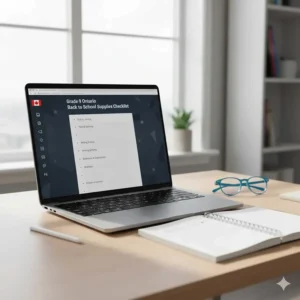
Subject-Specific Supply Breakdown
📐 Mathematics (MTH1W)
Essential Items:
- Scientific or graphing calculator (non-programmable for tests)
- Graph paper (quad-ruled preferred)
- Ruler with metric measurements
- Protractor and compass set
- Dedicated math notebook or binder section
Ontario’s de-streamed math curriculum emphasizes problem-solving and collaborative work. Many teachers allow calculator use for homework but require basic computation skills during assessments.
📝 English
Essential Items:
- 1.5″ binder with dividers for literature, writing, grammar, and media studies
- College-ruled loose-leaf paper
- Highlighters (multiple colours for annotation)
- Duo-tang folders for unit work
- Pocket dictionary (many teachers still require physical copies)
English teachers across Ontario emphasize annotation skills. Invest in quality highlighters that won’t bleed through dictionary-thin novel pages.
🔬 Science
Essential Items:
- Lab-safe goggles (some schools provide these)
- Lab coat or old button-up shirt
- Waterproof notebook or binder for lab work
- Pencil crayons for diagrams
- Calculator for chemistry calculations
Safety equipment requirements vary by school board. Check with your specific school before purchasing goggles or lab coats—many provide them to ensure consistent safety standards.
🌍 Geography
Essential Items:
- Atlas (physical or digital access)
- Coloured pencils/markers for map work
- Clear ruler for scale measurements
- Dedicated notebook for case studies
- USB drive for digital mapping projects
Geography courses increasingly incorporate GIS (Geographic Information Systems) technology. Ensure you have reliable digital storage for project files.
🇫🇷 French as a Second Language
Essential Items:
- French-English dictionary (Collins or Larousse recommended)
- Verb conjugation reference chart
- Dedicated notebook with dividers for vocabulary, grammar, and reading
- Highlighters for gender/tense marking
- Index cards for vocabulary flashcards
Locker Organization Strategies That Actually Work
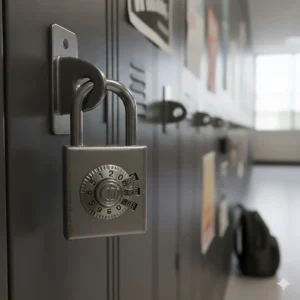
Locker supplies for grade 9 go beyond just a shelf and mirror. Your locker becomes your personal storage hub between classes, and efficient organization saves valuable transition time.
The 30-Second Rule
Aim to retrieve supplies and close your locker within 30 seconds. This requires strategic organization:
Top Shelf: Infrequently needed items (gym clothes on non-gym days, spare supplies)
Middle Section: Current day’s textbooks and binders organized by morning/afternoon classes
Bottom Area: Backpack, lunch bag, outdoor shoes
Door Organizers: Magnetic mirror, hooks for jackets, dry-erase board for reminders
Magnetic Accessories
Standard Ontario school lockers are metal, making magnetic accessories incredibly useful. Consider:
- Magnetic pencil cup for writing tools
- Magnetic whiteboard for schedule tracking
- Magnetic hooks for bags and outerwear
- Magnetic locker light for early morning classes
Colour-Coding System
Assign each subject a specific colour and maintain consistency across:
- Binder/folder colour
- Notebook cover
- Textbook cover (if allowed)
- Locker shelf section
This system enables “grab-and-go” efficiency when rushing between classes.
Budget-Friendly Shopping Strategies for Canadian Families
Timing Your Purchases
July-Early August: Best deals on generic supplies (notebooks, pens, paper)
Late August: Clearance prices on remaining stock
September: Avoid this period—prices return to regular levels
Post-Christmas Sales: Excellent time to stock up for second semester
Where to Shop in Canada
Dollar Stores: Basics like pens, pencils, erasers, rulers (quality varies)
Walmart/Staples: Mid-range options with price matching
Amazon.ca: Best for brand-name items and bulk purchases
Costco: Unbeatable prices for large quantities (great for sharing with siblings)
Canadian families can save 30-40% by combining these sources strategically rather than buying everything at one retailer.
Tax-Free Shopping Periods
Some provinces offer PST exemption periods in August. Check your provincial government website for specific dates—this can save 7-8% on your total purchase.
Digital Tools and Technology Requirements
Laptop or Tablet?
Ontario schools increasingly use Google Classroom, Microsoft Teams, and other digital platforms. While not always mandatory in Grade 9, approximately 60% of students report using a personal device regularly.
Minimum Specifications for Ontario High School:
- Processor: Intel i3 or equivalent
- RAM: 4GB minimum (8GB recommended)
- Storage: 128GB SSD
- Battery life: 6+ hours
- Operating system: Windows 10/11, macOS, or ChromeOS
School-Provided vs Personal Devices
Many Ontario school boards offer device loan programs. Check with your school before purchasing—you might access a Chromebook or tablet at no cost.
Essential Apps and Software
Most Ontario schools provide:
- Microsoft Office 365 (free for students)
- Google Workspace for Education
- Various educational platforms (D2L, Brightspace, etc.)
Ensure your device can run these platforms smoothly.
Teacher Supply List Requirements: What to Expect
Teacher supply list requirements vary by subject and individual teacher preference. However, Ontario teachers commonly request:
First Week Expectations
Bring to Every Class:
- Binder or notebook dedicated to that subject
- Writing tools (pen and pencil minimum)
- Homework from previous class
- Charged device (if applicable)
Optional but Appreciated
- Box of tissues (shared classroom resource)
- Hand sanitizer
- Dry-erase markers (if teacher uses individual whiteboards)
- Disinfectant wipes
Many Ontario teachers create Amazon wish lists for classroom supplies. Contributing is optional but helps under-resourced classrooms.
Common Grade 9 Supply Mistakes to Avoid
Mistake #1: Buying Everything at Once
Purchase basics first, then wait for specific teacher requirements. You’ll avoid buying items you don’t need and save money for subject-specific materials.
Mistake #2: Cheap Binders
Budget binders with thin rings break within weeks. Invest in quality binders—they’ll last all year and prevent the frustration of scattered papers.
Mistake #3: Ignoring Locker Dimensions
Measure your locker before purchasing organizers. Standard Ontario school lockers are 12″ wide, but depth varies. A misfitting organizer becomes useless.
Mistake #4: Overpacking Your Backpack
Only carry what you need for that day. Use your locker between classes to swap materials—your back will thank you.
Mistake #5: Skipping Labels
Label everything with your name and homeroom. Lost-and-found bins overflow with identical supplies. Permanent marker on each item prevents costly replacements.
Specialized Programs and Their Supply Needs
French Immersion
Additional requirements include:
- French-French dictionary (more advanced than FSL)
- French literature anthology
- More extensive vocabulary notebooks
- Access to French media (magazines, podcasts)
STEM Programs
Science, technology, engineering, and mathematics focused programs often require:
- Graphing calculator (mandatory, not optional)
- USB drive with minimum 16GB storage
- Scientific notebook with grid pages
- Drafting tools for technical drawings
Arts Programs
Visual arts, drama, or music programs add:
- Sketchbooks or sheet music folders
- Specialized tools (varies by discipline)
- Portfolio case for artwork
- Digital camera or smartphone for documentation
Sustainability and Eco-Friendly Options
Canadian students increasingly prioritize environmental responsibility. Consider these sustainable swaps:
Recycled Content Products
- Binders from 85%+ post-consumer recycled materials
- Notebooks with FSC-certified paper
- Pencils from sustainable forestry programs
Reusable Alternatives
Instead of: Single-use plastic folders Use: Durable poly folders that last multiple years
Instead of: Disposable pens Use: Refillable pens with replaceable ink cartridges
Instead of: Paper notebooks Use: Digital note-taking apps (with teacher approval)
Repair and Reuse
Before discarding broken items:
- Reinforce binder rings with tape
- Sharpen pencils to the absolute end
- Donate gently used items to school swap programs
- Pass down supplies to younger siblings
Health and Safety Considerations
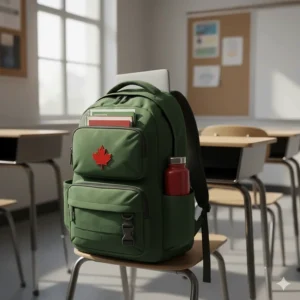
Backpack Weight Guidelines
The Canadian Chiropractic Association recommends students carry no more than 10% of their body weight to prevent musculoskeletal strain and postural problems. For a 130-lb (59kg) student, that’s a maximum of 13 lbs (5.9kg). Research shows that students carrying heavier backpacks have a 50% higher risk of back pain, with over 50% of Canadian youth experiencing at least one back pain episode during their school years.
Solutions:
- Use lockers between classes
- Opt for digital textbooks when available
- Distribute weight evenly in backpack
- Choose ergonomic backpacks with padded straps
Allergen Awareness
Many Ontario schools are nut-free environments. Avoid:
- Peanut butter in lunch containers
- Granola bars with nut warnings
- Shared snacks containing allergens
Check your school’s specific policies during orientation.
Hand Hygiene Supplies
Post-pandemic, many students carry:
- Personal hand sanitizer (60%+ alcohol)
- Disinfectant wipes for shared desk surfaces
- Face masks (optional but recommended during flu season)
Preparing for Unexpected Costs
Budget an additional $50-$100 for unexpected expenses throughout the year:
Potential Additional Costs:
- Field trip fees ($20-$50 per trip)
- Specialized course materials (cooking ingredients, art supplies)
- School fundraisers and events
- Replacement of lost/broken items
- Athletic equipment for tryouts
- Yearbook purchases
Ontario schools must provide alternatives for students unable to afford additional costs. Never let financial concerns prevent participation—speak with guidance counsellors about available support.
Organizational Apps and Tools for Grade 9
Digital Planners
Google Calendar: Free, syncs across devices, shareable with parents
myHomework: Purpose-built for students, tracks assignments and due dates
Notion: Customizable workspace for notes and planning
Note-Taking Apps
Microsoft OneNote: Free with school Office 365, excellent for organizing subjects
Google Keep: Simple, colour-coded notes perfect for quick reminders
Notability (iOS): Premium app for handwritten notes on iPad
Time Management
Forest: Gamifies focus time by growing virtual trees
Focus To-Do: Combines Pomodoro technique with to-do lists
Todoist: Sophisticated task management with priority levels
Provincial Variations Across Ontario
While the Ontario curriculum is standardized, regional differences affect supply lists:
Northern Ontario Schools
- Greater emphasis on outdoor education equipment
- May require winter gear storage solutions
- Limited access to same-day delivery (order supplies early)
GTA (Greater Toronto Area) Schools
- Higher likelihood of BYOD (Bring Your Own Device) requirements
- More competitive academic programs with specialized supply needs
- Easier access to specialty stores for unique items
Rural Ontario Schools
- Often smaller locker sizes
- May share textbooks more frequently (reducing costs)
- Strong community swap programs for used supplies
❓ Frequently Asked Questions
❓ What is the average cost of back to school supplies checklist grade 9 Ontario in 2026?
❓ Do I need a graphing calculator for grade 9 math in Ontario?
❓ How should I organize my locker for grade 9 efficiency?
❓ What supplies are specific to Ontario Grade 9 French programs?
❓ Are school supply costs tax-deductible in Ontario?
Conclusion: Your Grade 9 Success Starts Here
The transition to high school represents more than just a change in building—it’s a fundamental shift in how you approach learning, organization, and personal responsibility. This back to school supplies checklist grade 9 Ontario guide has equipped you with everything needed to start strong.
Remember that the perfect supply list balances preparation with flexibility. Start with essential items, then adapt based on specific teacher requirements during the first week. Quality matters more than quantity—seven well-organized binders beat fifteen disorganized ones every time.
Canadian families save hundreds of dollars by shopping strategically, combining major retailers with dollar stores for basics, and waiting for teacher-specific requirements before purchasing specialty items. The investment you make in proper organization systems during first year high school supplies list preparation pays dividends throughout all four years of secondary school.
Most importantly, your success in Grade 9 depends far more on your effort and attitude than having the “perfect” supplies. These tools simply make your academic journey smoother. Focus on building strong study habits, effective time management, and positive relationships with teachers—these skills matter more than any calculator or binder.
Ontario’s education system provides exceptional opportunities for motivated students. Combine this supply checklist with dedication to learning, and you’re setting yourself up for an outstanding high school experience.
Recommended for You
- 7 Best Waterproof School Supplies for Canadian Winter 2026
- 7 Best French Immersion School Supplies Canada 2026
- OSSLT Exam Supplies Allowed List Ontario: 7 Must-Have Items 2026
Disclaimer: This article contains affiliate links to Amazon.ca. If you purchase products through these links, we may earn a small commission at no additional cost to you.
✨ Found this helpful? Share it with your friends! 💬🤗
