

In This Article
It’s 11 p.m. the night before your CEGEP oral exam, and you’re staring at a stack of loose-leaf notes that look like they survived a windstorm. Sound familiar? Every cégep student in Quebec eventually learns the same lesson the hard way: the content of your presentation matters, but so does the container it arrives in. A crumpled folder or a poster board held together with tape doesn’t just look unprofessional — it quietly chips away at your confidence right as you’re walking up to face your evaluator. This guide is built around one goal: helping you choose a presentation folder for CEGEP oral exams that actually holds up under exam-day pressure, from the first handshake to the last question period. We researched real, currently available products — twin-pocket folders, padfolios, view binders, poster boards, and the small accessories that round out a polished oral exam kit — and paired every pick with honest, sourced analysis instead of recycled marketing copy. Whether you’re prepping for a French Literature synthesis, a Psychology case presentation, or a Nursing care-plan defence, what follows is a practical, evidence-based way to walk into that room looking like you’ve got this handled. As defined by the Fédération des cégeps, CEGEPs are Quebec’s unique first stage of higher education, and oral exams are baked into programs across nearly every discipline — so this isn’t a one-time purchase, it’s gear you’ll likely use for two to three years.
What Is a Presentation Folder for CEGEP Oral Exams?
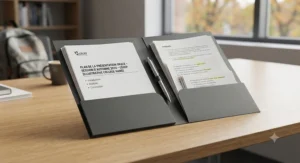
A presentation folder for CEGEP oral exams is a document holder — typically a two-pocket paper folder, a zippered padfolio, or a ring binder — used to organize notes, rubrics, printed slides, and reference material for an oral evaluation at a Quebec collège d’enseignement général et professionnel. Unlike a generic school folder, it’s chosen specifically to project organization and professionalism to an evaluator during a graded, high-stakes speaking assessment.
Quick Comparison Table
| Product | Type | Price Range (CAD) | Best For |
|---|---|---|---|
| Oxford Twin-Pocket Folders | Paper folder | C$15–C$25 (box of 25) | Budget-conscious students, first-year cégep |
| JAM Paper Linen Presentation Folder | Paper folder | C$20–C$35 (multi-pack) | Polished single-use look, humanities exams |
| Case-it Executive Zipper Padfolio (PAD-40) | Padfolio/binder | C$40–C$60 | Multi-semester use, technical/nursing programs |
| Avery Durable View 3-Ring Binder (17014) | View binder | C$10–C$18 | Bulky material, appendices, group projects |
| Elmer’s Tri-Fold Foam Display Board | Poster board | C$12–C$20 | Visual aid presentations, science/social science |
| Logitech Wireless Presenter R400 | Clicker/pointer | C$45–C$65 | Slide-based oral exams, digital visual aids |
| Oxford Index Cards, 4×6, 500-Count (40178) | Cue cards | C$18–C$28 | Timed exams, memorized delivery, Q&A prep |
Looking at the table, there’s a clear pattern: budget buyers gravitate toward Oxford Twin-Pocket Folders because they solve the “keep my printed pages from getting creased” problem for under C$1 per folder once split from the box, while multi-semester students lean toward the Case-it Executive Zipper Padfolio because it survives a full CEGEP program instead of one exam cycle. Notice, too, that not everyone needs a folder at all — if your evaluator asked for a poster or slide deck, the Elmer’s Tri-Fold Foam Display Board or Logitech Wireless Presenter R400 solves a completely different problem than paper storage does.
💬 Just one click — help others make better buying decisions too!😊
Top 7 Presentation Folders & Supplies for CEGEP Oral Exams: Expert Analysis
1. Oxford Twin-Pocket Folders — cheapest way to look organized
The textured-paper construction is the standout here: it hides fingerprints, creases, and the general wear-and-tear of being shoved into a backpack between classes, which is exactly what happens to most cégep students’ folders by exam week. Each folder holds up to 100 letter-size sheets split across two pockets (50 per side), with a die-cut business card slot on the interior flap — useful if your program expects you to attach a cover sheet or ID slip. Based on the spec comparison with plain manila folders, the textured paper stock is the meaningful upgrade: it resists the soft “fuzzing” and tearing at the pocket edges that cheap gloss folders develop after a few uses. This is the pick for first-year students who don’t yet know how many oral exams their program will actually throw at them, or for anyone buying folders by the box to colour-code multiple courses at once. Reviewers consistently note that the die-cut business card holder is a nice touch but flimsy under repeated use, and that the paper stock — while sturdy for its price point — isn’t rated for anything heavier than standard printer paper. If you need to carry a laptop or a poster tube alongside your notes, this isn’t your folder.
Pros:
- ✅ Extremely low cost per folder when bought by the box
- ✅ Textured paper resists smudges and visible wear
- ✅ Available in multiple colours for course colour-coding
Cons:
- ❌ No zipper or closure — pages can slip out if dropped
- ❌ Business card slot tears with repeated use
Priced around C$15–C$25 for a box of 25, this is the best value pick if you only need one or two exam cycles out of it — just don’t expect it to survive a full CEGEP program.
2. JAM Paper Linen Presentation Folder — upscale texture without the padfolio price
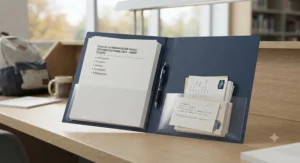
What most buyers overlook about linen-textured folders is that the surface finish alone changes how an evaluator perceives the document the moment it hits the table — it reads as “stationery” rather than “school supply,” even though the underlying construction is still a simple two-pocket paper folder. It holds a comparable amount of paper to a standard Oxford folder, but the linen finish and richer colour saturation (navy, burgundy, black) give it a noticeably more formal look. Here’s what to weigh: this is a cosmetic upgrade, not a structural one, so if your real problem is durability across a whole semester, spend the money elsewhere. It’s the right call for a one-shot, high-visibility oral exam — a final capstone presentation, a scholarship interview tied to your DEC, or a defence in front of a panel rather than a single professor — where the visual impression matters as much as the organization. Aggregated feedback on linen-finish folders in this category tends to praise the colour depth and finish, while noting that, like most paper folders, the corners can bend if tossed loose into a backpack rather than a bag with a flat pocket.
Pros:
- ✅ Linen texture and saturated colour reads as more formal
- ✅ Interior card slot keeps a business card or name tag secure
- ✅ Sold in multi-packs, so you can standardize colour across a group project
Cons:
- ❌ Premium look but no more structural durability than basic folders
- ❌ Corners crease easily without a protective bag
Expect to pay in the C$20–C$35 range for a multi-pack, which works out to roughly C$3–C$6 per folder — a fair trade for the polish if you’re only presenting once or twice.
3. Case-it Executive Zipper Padfolio (PAD-40) — the one-and-done upgrade for a whole DEC
This is the product that actually earns the word “investment” in this list. The faux-leather zippered padfolio includes a removable 3-ring binder, an internal letter-size writing pad, and a firm, structured shape that — unlike a soft paper folder — won’t buckle or warp when you’re holding it one-handed while walking to the exam room. On paper this means you get file storage, note-taking space, and a rigid presentation surface in a single object, which matters when you’re juggling a printed rubric, cue cards, and a laptop bag on exam morning. The zipper closure is the functional upgrade over every folder on this list: nothing falls out, even if you drop it, and the removable binder means you can swap in a fresh set of dividers each semester without buying a new padfolio. Based on real customer feedback for this category of padfolio, users highlight the “opens flat” hinge design and the elastic strap closure as genuinely useful day-to-day, while a recurring complaint is that faux-leather padfolios in this price bracket can develop peeling or cracking at the fold lines after roughly a year of heavy daily use — worth knowing if you’re hoping for a four-year lifespan rather than a two-year DEC.
Pros:
- ✅ Zippered closure means nothing falls out, ever
- ✅ Removable 3-ring binder works across multiple semesters
- ✅ Structured shape stays flat and professional on a table
Cons:
- ❌ Faux leather can crack at fold lines after heavy year-long use
- ❌ Bulkier and heavier than a simple paper folder
At around C$40–C$60, the Case-it Executive Zipper Padfolio costs more than four boxes of paper folders — but if you’ve got two more years of oral exams ahead of you, the cost-per-use math tips heavily in its favour.
4. Avery Durable View 3-Ring Binder (17014) — the flexible workhorse for bulky material
The standout feature is the customizable clear overlay on the front, back, and spine — you can slide in a printed title page or table of contents, which is a small detail that reads as noticeably more polished than a plain plastic cover. With 1-inch slant rings rated for roughly 250 sheets, this binder holds far more than any paper folder, which matters if your oral exam requires a full appendix of sources, data tables, or a written report to accompany your spoken presentation. Key spec worth knowing: the rings are back-mounted rather than spine-mounted, so pages actually lie flat when the binder is open on a table — no fighting with curled pages while an evaluator is trying to follow along. This is the right call for group presentations or programs (Social Science, Business, Commerce) where the oral component is paired with a substantial written deliverable, since a binder with dividers organizes multiple sub-sections far better than a folder ever could. Reviewers of durable view binders in this line frequently mention the tear-resistant hinge as the main reason they outlast basic binders, while some report that the interior pockets, while nonstick and archival-safe, are a bit shallow for anything thicker than standard paper.
Pros:
- ✅ Customizable clear cover for a title page insert
- ✅ Back-mounted rings keep pages lying flat
- ✅ Handles far more material than any paper folder
Cons:
- ❌ Bulkier and heavier to carry than a folder
- ❌ Interior pockets too shallow for thick inserts
At roughly C$10–C$18 per binder, it’s one of the most affordable ways on this list to handle a genuinely large volume of material without upgrading to a full padfolio.
5. Elmer’s Tri-Fold Foam Display Board — the standard for visual-aid-heavy exams
If your oral exam format calls for a physical poster rather than slides, this is essentially the industry default, and for good reason: the lightweight foam core is rigid enough to stand upright unsupported on a table, self-standing thanks to its tri-fold shape, while still being light enough to carry across campus without strain. The 36-by-48-inch surface opens flat for maximum layout space and folds down to a compact 36-by-24-inch panel for transport — a meaningful practical detail when you’re navigating narrow cégep hallways and crowded elevators between classes. What the spec sheet won’t tell you, but generations of students and reviewers note, is that the smooth white surface takes markers, printed cutouts, and glue-stick photos cleanly, but ballpoint pen and certain permanent markers can bleed through thin sections if you press too hard. This is squarely the pick for Biology, Environmental Science, and Social Science courses where a stand-alone visual display is the assignment’s centrepiece rather than a supporting prop. Aggregated buyer sentiment on tri-fold foam boards is largely positive on rigidity and ease of setup, with the most common complaint being that the corners are prone to denting if the board is stored improperly or transported without protection.
Pros:
- ✅ Self-standing tri-fold design needs no extra support
- ✅ Folds flat and compact for easy transport
- ✅ Smooth surface works well with markers, print-outs, and glue
Cons:
- ❌ Corners dent easily without protective transport
- ❌ Some markers bleed through thinner sections
Typically priced around C$12–C$20, this is inexpensive enough to treat as a one-semester consumable rather than something you need to preserve for years.
6. Logitech Wireless Presenter R400 — advancing slides without breaking eye contact
This one’s a slight departure from paper-based organizers, but for any CEGEP oral exam built around a slide deck, it solves a problem no folder can: it lets you move around the room and maintain eye contact with your evaluator instead of hunching over a laptop trackpad to change slides. The 2.4GHz USB receiver requires zero software installation — plug it in and it works, which matters enormously on exam day when you don’t want to be troubleshooting drivers in front of a panel. Key spec worth understanding in practice: the built-in red laser pointer has a genuinely useful range for a classroom-sized room, letting you highlight a specific graph or data point on a projected slide without walking up to the screen and turning your back on your audience. This is the pick for programs where PowerPoint or Google Slides is the default format — Business, Computer Science, and many Humanities courses — and where composure and stage presence are explicitly part of the grading criteria. Reviewers of this class of clicker consistently praise the intuitive, by-feel button layout that lets you advance slides without looking down, while some note that the receiver, if misplaced, is easy to lose since it’s a small separate USB dongle rather than something built into the device itself.
Pros:
- ✅ Plug-and-play USB receiver, no software needed
- ✅ Laser pointer lets you highlight slides from a distance
- ✅ Frees you to move and maintain eye contact with evaluators
Cons:
- ❌ Small USB receiver is easy to misplace
- ❌ Adds nothing if your exam doesn’t involve slides at all
Priced in the C$45–C$65 range, it’s a reasonable one-time purchase if you know slide-based presentations are a recurring part of your program rather than a one-off requirement.
7. Oxford Index Cards, 4×6, 500-Count (40178) — the low-tech tool that saves oral exams
Don’t underestimate this one: the standout feature is simply the card stock weight — sturdy enough to survive being shuffled, fanned, and gripped by slightly sweaty hands without going limp, which happens more than students expect once nerves kick in. At 4-by-6 inches, these are noticeably larger than standard 3-by-5 study flashcards, giving you enough room to write a full talking point or key statistic in legible handwriting rather than cramming tiny text you can’t read under exam lighting. Here’s what to weigh: index cards are not a folder replacement, they’re a companion tool — used correctly, they hold your key talking points, transition phrases, and anticipated Q&A answers so you’re not reading verbatim from a script, which most CEGEP oral exam rubrics penalize. Reviewers consistently mention the blank-front, ruled-back layout (or vice versa depending on the pack) as flexible for both outline notes and full sentences, while a few note that at 500 cards per pack, most students only need a fraction of that count for a single exam — making this better value if you’re buying for multiple courses or a full semester. Punch a hole in the corner and thread a binder ring through your working set to guarantee your cards can’t fall out of order mid-presentation.
Pros:
- ✅ Sturdy stock holds up under nervous hands
- ✅ Larger 4×6 size means more legible handwriting per card
- ✅ Bulk pack covers multiple courses and exams
Cons:
- ❌ Far more cards than needed for a single exam
- ❌ No built-in ring — you supply your own binder ring
At around C$18–C$28 for the full 500-count pack, the effective cost per exam is negligible once you divide it across a semester or two.
Visual Aid Preparation: A Practical Usage Guide
Buying the folder is the easy part; setting it up so it actually works under exam pressure is where most students drop the ball. Start the night before, not the morning of: print your material, hole-punch or slot it into your chosen organizer, and do a dry run of pulling out each section in the order your presentation actually flows. A common first-30-days mistake is treating the folder as a junk drawer — stuffing in old assignments, unrelated handouts, and half-finished drafts until you can’t find the one page you actually need mid-answer. Instead, use tabs or coloured sticky flags to mark your introduction, your main visual aid, and your conclusion so you can flip to any section in under three seconds while an evaluator is watching. If you’re using a poster board like the Elmer’s Tri-Fold Foam Display Board, do your layout in pencil first, keep text blocks large enough to read from six feet away, and transport it flat rather than rolled — foam board creases don’t come out. If your program allows digital slides, pair them with the Logitech Wireless Presenter R400 and practice advancing slides without looking down at the clicker; fumbling with an unfamiliar remote mid-sentence is a surprisingly common way students lose composure. Maintenance-wise, a quick wipe-down of a padfolio’s exterior and a check that all rings or zippers still close smoothly, done once per semester, keeps your kit exam-ready without a last-minute scramble.
Real-World Scenarios: Matching Your Setup to Your Presentation
Picture three students walking into the same building on exam day with three completely different setups — and all three are making the right call for their situation. Consider a first-semester Social Science student giving a five-minute current-events summary once per course: buying a C$50 padfolio for that would be overkill, so a single Oxford Twin-Pocket Folder covers it for under two dollars. Now consider a Nursing student presenting a full care-plan defence with printed assessment forms, a rubric copy, and reference sheets, three or four times per semester across two years — for that workload, the Case-it Executive Zipper Padfolio or the Avery Durable View 3-Ring Binder earns its keep because the cost amortizes across a dozen or more presentations. Finally, picture a Science student defending a research poster at an end-of-term symposium: no folder solves that problem at all — what they actually need is the Elmer’s Tri-Fold Foam Display Board, possibly alongside a slim folder just for their notes and Q&A prep material. The lesson across all three: match the tool to your program’s actual presentation format and frequency, not to whatever looks impressive on a shelf.
Problem → Solution: Fixing Common CEGEP Presentation Folder Mistakes
Even good gear gets misused. Here are the recurring pain points and what actually fixes them. Problem: pages fall out mid-walk because a paper folder has no closure — solution: switch to a zippered option like the Case-it Executive Zipper Padfolio, or at minimum, secure loose folders in a bag rather than carrying them bare. Problem: a poster board arrives creased or dented because it was rolled or crammed into a locker — solution: transport the Elmer’s Tri-Fold Foam Display Board flat, ideally in a dedicated portfolio case or held vertically against a backpack rather than horizontally under other books. Problem: cue cards get shuffled out of order during a nervous moment — solution: use ring-bound or hole-punched cards like the Oxford Index Cards set with a binder ring threaded through the corner, so the sequence physically can’t scramble. Problem: an evaluator can’t find your material fast during Q&A because nothing is labelled — solution: tab your sections in advance, as covered above, rather than trying to label on the fly. None of these fixes cost much money; they cost a bit of planning the week before your exam instead of the morning of.
How to Choose a Presentation Folder for CEGEP Oral Exams
- Match it to your presentation frequency. One-off exam? A basic paper folder is enough. Multiple oral evaluations per semester across two years? A durable padfolio or binder pays for itself.
- Check your program’s actual format. Confirm whether you’re presenting from printed notes, a poster, or slides — that decision changes whether you need a folder, a display board, or a clicker at all.
- Prioritize closure over capacity. A folder that holds 200 sheets but has no zipper is riskier on exam day than one that holds 50 sheets securely.
- Consider transport, not just storage. If you’re walking between buildings in a Quebec winter, a rigid, closed padfolio protects contents from snow and slush far better than an open folder.
- Factor in reusability across your DEC. Look at cost-per-semester, not just sticker price — a C$50 padfolio used for six exams over two years costs less per use than six C$20 disposable folders.
- Don’t skip the small accessories. Index cards, tabs, and a spare pen matter as much as the folder itself once you’re actually standing in front of an evaluator.
Presentation Folder vs Poster Board vs Presentation Binder: Which Do You Actually Need?
These three product categories solve different problems, and mixing them up is one of the most common (and avoidable) prep mistakes cégep students make. A presentation folder — like the Oxford Twin-Pocket Folders or JAM Paper Linen Presentation Folder — is built to protect and organize printed pages you’ll reference or hand to an evaluator; it’s compact, cheap, and disposable by design. A poster board, such as the Elmer’s Tri-Fold Foam Display Board, is a standalone visual aid meant to be seen from a distance, not read up close, and it plays no role in organizing your notes at all. A presentation binder, whether the flexible Avery Durable View 3-Ring Binder or the structured Case-it Executive Zipper Padfolio, sits in between: it organizes more material than a folder can hold, often with tabs or dividers, and it’s built to survive repeated use rather than one exam. The practical takeaway is that many CEGEP programs actually call for two of these at once — a poster or slide deck as the visual centrepiece, paired with a folder or binder for your own reference notes and any printed rubric the evaluator hands back.
✨ Don’t Miss These Exclusive Deals!
🔍 Take your CEGEP oral exam prep to the next level with these carefully selected products. Click on any highlighted item to check current pricing and availability. These tools will help you create a genuinely professional presentation your evaluators — and your GPA — will thank you for!
Oral Exam Grading Criteria: What CEGEP Evaluators Actually Look For
Here’s the honest truth most students don’t hear until after their first oral exam: organization and materials management are almost never listed as their own line item on a rubric, but they quietly influence nearly every category that is. Academic rubrics used for oral presentations, including formats referenced by McGill University’s presentation grading guide, typically score across categories like subject knowledge, organization, clarity of visuals, mechanics, and nonverbal delivery — and a well-organized folder or binder directly supports at least three of those. If you’re fumbling through loose pages to find your next point, your “organization” score drops even if your content is strong; if your visual aid is a creased poster or a squinting-required slide, your “visuals” score takes the hit regardless of how good the underlying data is. Evaluators also tend to weight nonverbal delivery heavily — eye contact, composure, confident movement — all of which get easier when you’re not physically wrestling with your materials. The practical implication: a good presentation folder for CEGEP oral exams isn’t cheating the rubric, it’s removing friction so your actual preparation and knowledge can show through cleanly, instead of getting diluted by an avoidable logistics problem.
Professional Appearance for Evaluators: Why First Impressions Matter
Evaluators form an impression before you say a single word — the moment you set your materials on the table. A worn, mismatched folder with pages sticking out sends a subtle signal of disorganization before your content ever gets a chance to prove otherwise, while a clean padfolio or a crisp linen folder does quiet work in your favour, signalling that you take the exam seriously. This isn’t about buying the most expensive item on this list; a well-kept Oxford Twin-Pocket Folder presented cleanly beats a scuffed, overstuffed padfolio every time. What actually matters is consistency between your materials and your delivery: a professional-looking folder paired with confident, well-organized speech reinforces the same message twice, while a mismatch — polished folder, disorganized delivery, or vice versa — can read as inconsistent. Reviewers and instructors alike, across the sources we consulted for this piece, converge on the same point: professional appearance is a supporting signal, not a substitute for preparation, but it’s a signal that costs almost nothing to get right if you plan even a day ahead.
Features That Actually Matter (And Those That Don’t)
Marketing copy on office supply listings loves to highlight things that barely affect your actual exam performance. A closure mechanism that keeps pages from spilling out — that matters. A brand name embossed on faux leather — that doesn’t. Rigid construction that keeps a padfolio flat on a table without flopping open — that matters, especially if you’re presenting standing up and gesturing with your hands. A dozen extra interior pockets you’ll never use — mostly marketing filler that adds bulk and weight for no real benefit. Genuine paper capacity that matches your actual document count, rather than an inflated “holds 500 sheets!” claim you’ll never approach — that matters for choosing the right size binder or folder without overpaying. And colour options, while nice for course colour-coding, are cosmetic rather than functional — pick a colour that helps you stay organized across multiple classes, not one that simply looks good on a shelf.
What to Expect: Real-World Performance on Exam Day
On paper, every product on this list sounds solid — here’s what actually happens once you’re standing in a cégep classroom with your heart rate up. A basic paper folder performs fine right up until you set it down slightly too hard on a table edge, at which point a loose pocket can spill a page or two; keep it closed and carried flat, and this rarely happens. A padfolio like the Case-it Executive Zipper Padfolio genuinely does open flat and stay put once unzipped, which matters more than it sounds like when you’re trying to glance at notes without visibly fumbling. A foam poster board like the Elmer’s Tri-Fold Foam Display Board stands on its own on most standard classroom tables, though narrower or angled desks can make it wobble slightly — worth testing in the actual room beforehand if you can. And a clicker like the Logitech Wireless Presenter R400 works exactly as expected the vast majority of the time, provided you’ve tested the USB receiver on the actual exam-room computer in advance rather than assuming it’ll pair instantly with unfamiliar hardware.
Common Mistakes When Buying a Presentation Folder or Poster Board
The single most common mistake is buying at the very last minute — often the night before — which removes any margin for a defective zipper, a bent poster board corner from rushed shipping, or a clicker that needs a firmware update before it works properly. A close second is buying based on looks alone: an attractive but flimsy folder that can’t survive being carried in a backpack all day isn’t actually solving your problem. Students also frequently underestimate how much material they’ll actually need to carry, buying a slim folder when their program’s format calls for a full appendix, or overbuying a bulky binder for what turns out to be a five-minute, notes-only presentation. Finally, a genuinely avoidable mistake: not testing equipment — poster boards, clickers, or even a zipper on a padfolio — in advance, so the first time you discover a problem is in front of the person grading you.
Long-Term Cost & Maintenance
Thinking in cost-per-use rather than sticker price changes the calculus considerably. A box of Oxford Twin-Pocket Folders at roughly C$20 for 25 units costs under a dollar per folder — genuinely hard to beat for a single semester, but if you need a fresh folder every time because the old one wears out, that cost creeps up across a full DEC. The Case-it Executive Zipper Padfolio, at roughly C$50, amortizes to a few dollars per use if you’re presenting six or more times across two years, and it requires essentially no maintenance beyond an occasional wipe-down and checking the zipper track for debris. The Avery Durable View 3-Ring Binder sits in the middle: inexpensive up front, and its main maintenance need is periodically checking that the rings still close flush, since misaligned rings are the most common failure point on any ring binder. Across the board, the biggest long-term cost driver isn’t the product itself — it’s replacement frequency, so a slightly pricier item that survives your full program often ends up cheaper than repeatedly replacing a bargain option.

FAQ
❓ What kind of folder should I bring to a CEGEP oral exam?
❓ Do CEGEP oral exams require a poster board?
❓ Is a padfolio worth the extra cost for CEGEP students?
❓ How should I organize notes for an oral exam presentation?
❓ Does the appearance of my presentation folder actually affect my grade?
Conclusion
There’s no single “best” presentation folder for CEGEP oral exams — there’s only the right tool for your specific program, presentation frequency, and format, and hopefully this guide has made that choice easier to see clearly. If you’re a first-year student with one exam ahead of you, an Oxford Twin-Pocket Folder does the job for pocket change. If you’re staring down two more years of Nursing case defences or Business presentations, the Case-it Executive Zipper Padfolio or Avery Durable View 3-Ring Binder will pay for itself many times over. And if your exam calls for a visual centrepiece rather than paper storage at all, the Elmer’s Tri-Fold Foam Display Board or Logitech Wireless Presenter R400 solves that specific problem instead. As the University of Waterloo’s Writing and Communication Centre notes about managing presentation nerves, preparation is the single biggest lever you actually control — and having your materials organized, protected, and ready to go the night before is one of the simplest, most concrete ways to put that preparation into practice. Whatever you choose, the goal is the same: fewer distractions, more composure, and a setup that lets your actual knowledge — the thing you spent the semester building — do the talking.
🎯 Ready to Walk Into Your Exam Prepared?
📋 Pick the option from this guide that matches your program and presentation load, check current pricing and availability, and get it organized well before exam week. A little preparation now means one less thing to worry about when it’s your turn to present.
Recommended for You
- 7 Best Noise-Cancelling Headphones for CEGEP Library Study (2026)
- French-English Dictionary for CEGEP Students: 7 Picks (2026)
- Best Daily Planner for CEGEP Students Canada: 7 Picks (2026)
Disclaimer: This article contains affiliate links. As an Amazon Associate, I earn from qualifying purchases. If you purchase products through these links, we may earn a small commission at no additional cost to you.
✨ Found this helpful? Share it with your friends! 💬🤗
