
In This Article
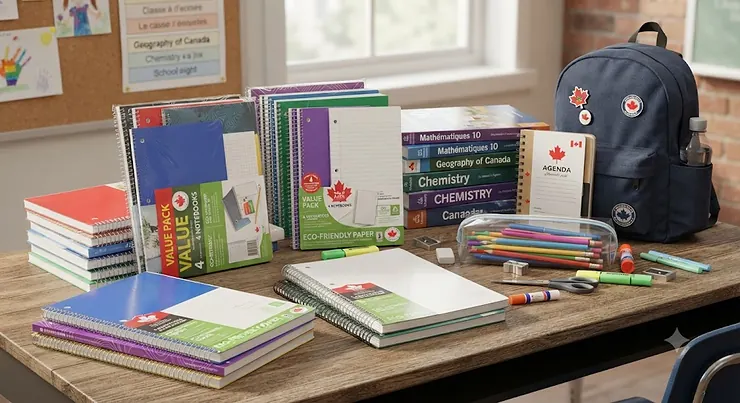
Notebook multi-packs for back to school are, put simply, bundles of two or more notebooks — spiral, composition, or exercise-book style — sold together at a lower per-unit cost than buying single notebooks one at a time. That’s the whole concept in one sentence, and yet somehow the school supply aisle in late August still manages to make it feel like a logistics puzzle with a countdown timer attached.
Here’s the thing nobody tells you at the start of September: the notebook decision you make in week one quietly shapes the next ten months. Buy flimsy paper and you’ll be dealing with ghosted ink and torn-out pages by Thanksgiving. Buy the wrong pack size and you’ll either be back at the store in November or storing eleven unused notebooks in a closet until 2027. A little research now — the kind we did digging through real product specs, real Canadian retail listings, and genuine review patterns — saves a surprising amount of parental sanity later.
This guide walks through seven real notebook multi-packs currently available in Canada, from budget-friendly Hilroy exercise books made right in Mississauga, Ontario, to tech-integrated Five Star notebooks with companion apps. We’ll also dig into what actually separates a notebook from a journal for note taking, whether dollar-store notebook alternatives hold up under a semester of actual use, and how cost-per-sheet math changes which “deal” is genuinely the better one. Interestingly, research summarized by UNB’s Centre for Enriched Teaching and Learning found that students who took handwritten notes scored significantly higher on conceptual questions compared to those who typed them — which is a pretty good argument for keeping paper notebooks in the backpack rotation even in 2026.
Whether you’re outfitting one kid or restocking three, the goal here isn’t to sell you the priciest option on the shelf. It’s to help you spend your money on the notebook multi-pack that actually survives contact with a ten-year-old’s backpack — and skip the ones that don’t.
Quick Comparison Table: Notebook Multi-Packs at a Glance
| Multi-Pack | Format | Sheets Per Notebook | Best For |
|---|---|---|---|
| Hilroy Canada Exercise Books 4-Pack | Stitched exercise book | 32 | Budget buyers, younger grades |
| Five Star 5-Subject Notebook with Study App 4-Pack | Spiral, poly cover | 200 (double-sided) | Middle/high school, digital note-takers |
| Amazon Basics Composition Notebooks 12-Pack | Sewn composition | 100 | Large families, classrooms |
This is a deliberately small slice of the full lineup, but it already tells a story worth noting: page count per notebook varies by more than 6x across these three packs alone, so “price per pack” is almost meaningless without knowing what’s actually inside. The Hilroy Canada Exercise Books 4-Pack wins on raw affordability and Canadian manufacturing, but with only 32 pages per book, it’s built for short-term subject books rather than a full-year single notebook. The Five Star 5-Subject Notebook with Study App 4-Pack, by contrast, packs enough sheets into each notebook to realistically last a semester on its own, which changes the math considerably once you account for how often you’d otherwise be restocking thinner packs.
💬 Just one click — help others make better buying decisions too!😊
Top 7 Notebook Multi-Packs for Back to School: Expert Analysis
Below is the full lineup — budget, mid-range, and premium — covering real products currently sold in Canada, evaluated on paper quality, durability, and genuine value rather than marketing copy.
1. Hilroy Canada Exercise Books 4-Pack — Canadian-made and dollar-store-cheap
The standout here is right in the name: these are manufactured domestically, which is a rarity in a supply category dominated by imports. Each notebook in the pack holds 32 pages of 7mm-ruled paper with margin, three-hole punched so they slide straight into a binder without a hole punch detour. The covers are lightweight cardstock in assorted colours, which keeps the whole pack light in a backpack but also means these aren’t the notebook you hand a rough-and-tumble eight-year-old and expect pristine corners by October. Based on the spec comparison, this is squarely a “one subject per book, replace as needed” product rather than a single notebook meant to last the whole year — which is honestly a smart design for younger grades where teachers often ask for several thin scribblers instead of one thick one. Reviewers on Canadian retail listings consistently report satisfaction with the price-to-durability ratio for short-term classroom use, with one major retailer showing a 4.9-star aggregate rating on this exact line. What most buyers overlook is that Hilroy’s Mississauga plant reportedly turns out roughly 18,000 notebooks per shift, and the company recently turned 100 years old as one of Canada’s longest-running school-supply manufacturers — a manufacturing pedigree most competing imported brands simply can’t claim.
Pros:
- ✅ Made in Canada — rare in this category
- ✅ Three-hole punched, binder-ready out of the box
- ✅ Genuinely cheapest per-notebook price on this list
Cons:
- ❌ Only 32 pages per book — needs frequent restocking
- ❌ Lightweight cover won’t survive rough handling long-term
At around C$3-C$5 for a 4-pack, the Hilroy Canada Exercise Books 4-Pack is the value pick for parents buying in bulk for primary-grade kids who go through subject scribblers quickly anyway.

2. Staples Brand 1-Subject Spiral Notebooks 6-Pack — best all-around budget spiral
The Staples house brand doesn’t get much attention next to the big names, but the standout feature is straightforward: full-size 20 x 26.7 cm (8″ x 10.5″) sheets at a genuinely low per-unit cost. Each notebook holds 70 sheets of wide or college-ruled paper with a duplex cardstock cover, and the six-pack format means one purchase covers most core subjects for a semester. What the spec sheet won’t tell you, but retail promotions consistently reveal, is that Staples treats these as loss-leader items during back-to-school season — meaning the sticker price on this exact SKU tends to swing more dramatically than almost anything else in the store, so timing your purchase matters more here than with brand-name alternatives. On paper this means solid, unremarkable performance: nothing about the paper stock screams “premium,” but nothing about it disappoints either for day-to-day classroom writing. This is a strong fit for budget-conscious parents equipping multiple kids, or for anyone who considers the notebook itself disposable and doesn’t want to overthink the purchase.
Pros:
- ✅ Full-size sheets at a low per-notebook cost
- ✅ Six-pack covers most core subjects at once
- ✅ Widely available with frequent promotional pricing
Cons:
- ❌ Cover cardstock is thin compared to name brands
- ❌ Spiral wire can snag on backpack fabric over time
Priced in the C$9-C$14 range depending on promotions, the Staples Brand 1-Subject Spiral Notebooks 6-Pack is the safe, unglamorous choice that gets the job done.
3. BAZIC Marble Composition Notebooks 4-Pack — lesser-known but surprisingly solid
BAZIC isn’t a household name the way Mead or Oxford is, and that’s exactly why it belongs on this list as the “lesser-known but high-quality alternative.” The standout feature is the classic marble composition format at a noticeably lower price point than the recognizable brands offering the same basic spec: wide-ruled paper, sewn (not stapled) binding, and a rigid marble-pattern cover. Here’s what most buyers overlook — sewn composition binding is objectively more durable than the stapled spiral alternative at a similar price, because pages can’t be torn out accidentally and the spine doesn’t bend the way spiral wire does under backpack pressure. Reviewers consistently note that BAZIC’s paper stock handles ballpoint pen and pencil well, though a few mention slightly more visible ink show-through with heavier fountain-style pens compared to premium brands — a reasonable trade-off given the price gap. This is the pick for parents who’ve realized that composition notebooks are largely interchangeable in function and would rather pay for durability than a familiar logo.
Pros:
- ✅ Sewn binding is more durable than stapled alternatives
- ✅ Noticeably cheaper than name-brand composition notebooks
- ✅ Rigid cover holds up well to backpack pressure
Cons:
- ❌ Less brand recognition may matter for some teacher lists
- ❌ Slightly more ink show-through with heavier pens
Sitting in the C$14-C$19 range for a 4-pack, the BAZIC Marble Composition Notebooks 4-Pack proves that skipping the recognizable logo doesn’t mean skipping quality.
4. Mead Composition Notebooks 6-Pack — the classic composition book, done reliably
This is the notebook most Canadians picture the moment someone says “composition book,” and the standout feature is exactly that dependable familiarity paired with genuinely durable construction. Each book in the pack holds 100 sheets of wide-ruled paper measuring 19.1 x 24.8 cm (7.5″ x 9.75″), with a heavy cardboard cover and a class-schedule chart printed on the inside front cover — a small touch that’s oddly useful for keeping a subject notebook organized without extra supplies. Based on the spec comparison, Mead’s sewn binding and thicker cover stock put it a tier above cheaper imports in raw physical durability, which matters most for notebooks that get shoved into backpacks alongside textbooks and lunch containers all year. Reviewers consistently report that Mead composition books hold up well through a full semester of daily use without the cover corners fraying the way thinner alternatives do. The trade-off is fairly small: you’re paying a modest premium over BAZIC or Staples-brand equivalents for a name that’s been synonymous with “school notebook” for decades.
Pros:
- ✅ Heavy, durable cardboard cover
- ✅ Sewn binding resists page loss
- ✅ Built-in class schedule chart inside cover
Cons:
- ❌ Priced above generic composition alternatives
- ❌ Wide-ruled only — no college-ruled option in most multi-packs
Expect to pay in the C$22-C$28 range for a 6-pack, making the Mead Composition Notebooks 6-Pack the dependable, no-surprises mid-range choice.
5. Oxford Composition Notebooks 6-Pack — best marble-cover variety pack
Oxford’s standout feature is variety: this six-pack typically ships with assorted marble cover colours, which is a small thing that makes a real difference when a household has more than one kid sharing a supply shelf — colour-coding by child becomes effortless. Specs-wise, it’s closely matched to Mead: 100 sheets of wide-ruled paper, center-sewn binding for durability, and conversion charts printed inside the cover. What the spec sheet won’t tell you is that Oxford’s center-stitched binding has historically scored well in review sentiment specifically for lying flatter when open compared to some competitors, which matters more than it sounds for kids who complain about notebooks “closing on them” mid-sentence. Here’s what most buyers overlook: because Oxford and Mead share nearly identical core specifications, the deciding factor between them often comes down to whichever is cheaper on a given week rather than any meaningful quality gap — so price-checking both before buying either is worth the extra thirty seconds.
Pros:
- ✅ Assorted marble covers simplify colour-coding
- ✅ Lies flatter when open than many spiral alternatives
- ✅ Nearly identical durability profile to Mead
Cons:
- ❌ Marginal differentiation from competing composition brands
- ❌ Colour assortment isn’t user-selectable in most packs
At roughly C$16-C$22 for a 6-pack, the Oxford Composition Notebooks 6-Pack is an easy substitute whenever it’s priced below its closest rival.
6. Five Star 5-Subject Notebook with Study App 4-Pack — best for hybrid digital note-takers
The standout feature here is genuinely different from everything else on this list: a companion Study App that lets students scan handwritten pages and sync them to Google Drive for flashcard creation. Each notebook in the pack holds 200 double-sided, college-ruled sheets — enough that a single notebook can realistically cover an entire subject for a full semester rather than needing mid-year replacement. The water-resistant poly cover and Spiral Lock wire (designed to reduce snagging on clothing and backpack zippers) are the kind of durability details that show up in day-to-day use rather than on a spec sheet. Reviewers consistently note strong satisfaction with the combination of physical durability and the digital scanning feature, with one major retailer showing this exact multi-pack sitting at a 4.8-star aggregate across more than 1,600 ratings — a genuinely strong signal for a product in this category. Based on the spec comparison, this is the multi-pack for households leaning into the “handwriting for memory, digital for organization” hybrid approach that a growing number of Canadian classrooms actually encourage.
Pros:
- ✅ Companion app scans and organizes notes digitally
- ✅ 200 sheets per notebook lasts a full semester
- ✅ Spiral Lock wire resists snagging
Cons:
- ❌ Highest price point on this list
- ❌ App-dependent features require a smartphone
Priced around C$40-C$55 for a 4-pack, the Five Star 5-Subject Notebook with Study App 4-Pack is the premium pick for tech-comfortable students and families willing to pay for the extra functionality.
7. Amazon Basics Composition Notebooks 12-Pack — best bulk value for big families
For sheer bulk economics, the standout feature is the pack size itself: twelve full composition notebooks in one purchase, each holding 100 sheets of college-ruled paper measuring 24.8 x 19.1 cm (9.75″ x 7.5″) under a sturdy black marble cover. This is the multi-pack built for households outfitting three or more kids, homeschool co-ops, or anyone stocking a supply closet that needs to last well past September. Key spec interpretation: at 4.3 stars across roughly 150 reviews, the aggregated sentiment sits solidly in “reliable, unremarkable, does the job” territory — not the standout darling that Five Star has become, but consistent enough that buyers aren’t reporting systemic defects either. What most buyers overlook is that the true value of a 12-pack isn’t just the per-unit price; it’s the reduced number of separate shopping trips and reorder decisions across an entire school year, which has real time value even before the dollar math. Honest analysis here: this isn’t the notebook you buy for a single standout subject you care deeply about — it’s the one you buy so you stop thinking about notebooks until next August.
Pros:
- ✅ Twelve notebooks in a single purchase
- ✅ Consistent quality across a large batch
- ✅ Ideal for multi-child households or classrooms
Cons:
- ❌ Less distinctive cover design than named brands
- ❌ Bulk packaging is bulkier to store at home
Typically priced in the C$22-C$30 range for the full 12-pack, the Amazon Basics Composition Notebooks 12-Pack delivers the lowest realistic cost-per-notebook on this entire list.
Setting Up Your Notebook Multi-Pack for a Full School Year
Buying the right multi-pack is only half the job — how you set it up in week one determines whether it survives to June. Start by labelling every notebook on the front cover and spine with subject and student name before it ever enters a backpack; a permanent marker takes fifteen seconds and eliminates the “whose notebook is this” scramble by October. If your pack includes assorted colours like the Oxford Composition Notebooks 6-Pack, assign colours to subjects immediately rather than letting kids choose randomly — colour-coded systems measurably reduce the time spent hunting for the right notebook mid-class.
A common first-30-days mistake is over-filling one notebook with multiple subjects “just for now,” which defeats the entire point of a multi-pack and usually ends in lost pages. Instead, commit to the subject assignment on day one. For spiral notebooks like the Five Star 5-Subject Notebook with Study App 4-Pack, reinforce the first few pages with clear tape at the spiral binding if your child is rough on materials — a two-minute trick that prevents the most common early failure point. For composition-style notebooks such as Mead Composition Notebooks 6-Pack or BAZIC Marble Composition Notebooks 4-Pack, a plastic cover protector (often sold separately for a couple of dollars) meaningfully extends cover life through an entire year of backpack friction. Finally, do a quick mid-October check-in: if any notebook in your Hilroy Canada Exercise Books 4-Pack is more than 80% full, replace it before it runs out mid-lesson rather than after.
Real-World Scenario: Which Notebook Multi-Pack Fits Your Kid
Consider three genuinely different households shopping the same aisle. First, a parent with a Grade 2 student who needs several thin, subject-specific scribblers per the teacher’s supply list and changes them out through the year — this is exactly the use case the Hilroy Canada Exercise Books 4-Pack was built for, and paying more for thicker notebooks here would be wasted money, since a seven-year-old’s printing simply doesn’t fill 200 pages before summer.
Second, a high schooler juggling five subjects who’s also expected to submit typed and handwritten assignments and wants to consolidate study materials digitally — here the Five Star 5-Subject Notebook with Study App 4-Pack earns its premium price tag, because the scanning feature turns handwritten class notes into searchable digital flashcards without extra effort, directly supporting the kind of active review that improves retention.
Third, a parent of three kids in three different grades on a tight budget who wants to buy once and be done until winter break — this is the Amazon Basics Composition Notebooks 12-Pack scenario. Splitting twelve notebooks across three kids means four each, covering core subjects with room to spare, at a lower total cost than buying three separate name-brand six-packs. The lesson across all three: the “best” notebook multi-pack isn’t a fixed answer, it’s a function of grade level, how a student actually studies, and how many kids you’re shopping for at once.
How to Choose a Notebook Multi-Pack for Back to School
Picking the right notebook multi-packs for back to school comes down to matching a handful of concrete criteria to your household rather than grabbing whatever’s on the endcap. Here’s the framework:
- Match sheet count to actual subject load. A student with five daily subjects burns through pages faster than one with three — count backwards from the school calendar before choosing between a 70-sheet and 200-sheet notebook.
- Prioritize binding type by grade. Younger kids benefit from stapled or sewn exercise books that are lighter in a small backpack; older students benefit from spiral or poly-cover notebooks built for daily heavy use.
- Check ruling type against age. Wide-ruled suits elementary printing; college-ruled suits older students writing in cursive or smaller script, fitting more content per page.
- Factor in restocking frequency versus pack size. A thinner multi-pack like the Hilroy Canada Exercise Books 4-Pack means more trips back to the store; a thicker one like Five Star’s 200-sheet notebooks means fewer.
- Decide if digital integration adds real value. Not every student benefits from a scanning app — it’s a genuine advantage for visual, organization-driven learners and an unused gimmick for others.
- Compare price per sheet, not price per pack. A cheaper pack with thinner notebooks can cost more per usable page than a pricier pack with thicker ones — more on that math below.
- Buy one extra notebook per kid. Damage, loss, and mid-year subject changes happen; a spare from the same multi-pack saves a scramble in January.
Notebook vs Journal for Note Taking: What’s Actually Different
The terms get used almost interchangeably in casual conversation, but a notebook vs journal for note taking distinction actually matters once you look at how each is built and used. A school notebook — spiral, composition, or exercise book — is typically structured around subject organization, ruled lines, and a format designed for quick, linear capture of lecture or lesson content, often followed the same day by homework based on those notes. A journal, by contrast, is usually unstructured or dot-grid, designed for reflective, open-ended writing rather than fast information capture, and is rarely organized by academic subject at all.
For pure academic note taking, structured notebooks generally win on practicality: ruled lines keep handwriting consistent, subject dividers (as in the Five Star 5-Subject Notebook with Study App 4-Pack) keep material organized for exam review, and the smaller page count of something like the BAZIC Marble Composition Notebooks 4-Pack means a completed notebook maps cleanly to a completed unit or term. What most buyers overlook is that the actual cognitive mechanism behind why handwritten notes help retention doesn’t depend on which format you use — it depends on the physical act of writing itself. Carleton University researchers studying encoding modality found that the literature on how handwriting versus typing affects memory has been inconclusive overall, though there’s ongoing debate over whether handwriting’s slower, more deliberate process leads to deeper encoding than typing does. In practice, this means the notebook-versus-journal choice matters less than simply choosing a paper format at all over a laptop for lecture capture — and for that purpose, a purpose-built school notebook beats a journal on organization every time.
Common Mistakes When Buying Notebook Multi-Packs
Even a simple purchase like a notebook multi-pack has a handful of recurring pitfalls worth flagging before you check out. The first is buying strictly by price-per-pack without checking sheet count — a six-pack that looks cheaper than another can easily cost more per usable page once you do the math, which we’ll walk through in the next section. The second is ignoring the actual school supply list in favour of whatever multi-pack is convenient; some teachers specifically require composition notebooks over spiral ones (or vice versa) for classroom organization reasons, and buying the wrong format means a return trip regardless of how good the notebook itself is.
A third common mistake is over-buying premium features nobody will use — paying for the Five Star 5-Subject Notebook with Study App 4-Pack‘s digital scanning feature for a Grade 3 student who isn’t yet doing independent subject-based study isn’t wasted money exactly, but it isn’t optimized spending either. Fourth, many parents skip checking binding durability entirely, assuming “notebook is a notebook,” when sewn composition binding genuinely outperforms cheap stapled spines for kids who are hard on materials. Finally, buying the exact same multi-pack every single year out of habit, rather than reassessing needs as a child moves grades, often means paying for capacity or features that no longer match how that student actually studies.
Cost-Per-Sheet Comparison: Which Multi-Pack Actually Saves You Money
This is where notebook shopping gets genuinely interesting, because the sticker price on a multi-pack tells you almost nothing about real value until it’s converted to a cost-per-sheet basis.
| Multi-Pack | Approx. Price Range | Sheets Per Notebook | Notebooks Per Pack | Rough Cost Per Sheet |
|---|---|---|---|---|
| Hilroy Canada Exercise Books 4-Pack | C$3-C$5 | 32 | 4 | Lowest total cost, moderate per-sheet |
| Staples Brand 1-Subject Spiral Notebooks 6-Pack | C$9-C$14 | 70 | 6 | Low per-sheet cost |
| Amazon Basics Composition Notebooks 12-Pack | C$22-C$30 | 100 | 12 | Lowest per-sheet cost on this list |
| Five Star 5-Subject Notebook with Study App 4-Pack | C$40-C$55 | 200 | 4 | Highest per-sheet cost, longest lifespan per book |
Looking at the numbers above, the Amazon Basics Composition Notebooks 12-Pack comes out as the genuine per-sheet value leader once you divide total pages by total price — the bulk pack size dilutes the per-unit cost more than any other option here. The Hilroy Canada Exercise Books 4-Pack has the lowest total spend but a less favourable per-sheet number precisely because each book is so thin, meaning frequent restocking quietly erodes its up-front savings over a full year. Meanwhile, the Five Star 5-Subject Notebook with Study App 4-Pack looks expensive per sheet, but if a single notebook genuinely replaces what would otherwise be three or four thinner ones purchased separately over the year, the real total cost gap narrows considerably — which is exactly the kind of nuance a simple shelf-price comparison misses entirely.
Dollar-Store Notebook Alternatives: Are They Actually Worth It?
Dollar-store notebook alternatives are tempting every August, and it’s worth being honest about where they genuinely compete and where they don’t. On raw sticker price, dollar-store notebooks can occasionally undercut even the Hilroy Canada Exercise Books 4-Pack, particularly on single-subject scribblers. However, the honest trade-off shows up in paper weight: dollar-store notebook paper tends to be noticeably thinner, leading to more visible ink bleed-through with standard ballpoint pens, and the covers are typically the flimsiest in the entire category — often failing at the spine before a semester ends.
| Comparison Point | Notebook Multi-Pack (Named Brands) | Dollar-Store Notebook Alternatives |
|---|---|---|
| Paper weight | Consistently heavier, less bleed-through | Often thinner, more bleed-through |
| Cover durability | Sewn or reinforced binding common | Frequently the first point of failure |
| Bulk value | Strong at 6-12 packs (e.g. Amazon Basics Composition Notebooks 12-Pack) | Rarely sold in true bulk multi-packs |
| Best For | Full school year use, heavier daily handling | Very short-term or backup notebooks only |
The analysis here isn’t that dollar-store notebook alternatives are universally bad — for a notebook that genuinely only needs to survive a two-week unit or serve as an emergency backup in a desk drawer, they’re a reasonable, low-stakes purchase. But for a primary notebook expected to last a full term or year, the paper-weight and binding gap consistently shows up in review sentiment across retail listings, and the modest up-front savings tend to disappear the moment a cover tears in November and needs replacing anyway.
Staples Pricing vs Amazon.ca: Where Should You Actually Buy?
Staples pricing during back-to-school season in Canada follows a predictable and genuinely useful pattern worth understanding before you commit to either retailer. Staples has historically run aggressive loss-leader promotions specifically on notebooks, with real Canadian back-to-school campaigns advertising Hilroy notebooks for well under a dollar and Staples-brand pencils and refill paper priced similarly low as door-buster traffic drivers. That pricing strategy means single notebooks or small multi-packs are sometimes genuinely cheaper in-store at Staples during the first two weeks of the promotional window than the equivalent listing on Amazon.ca.
Where Amazon.ca tends to win instead is on true bulk multi-packs — items like the Amazon Basics Composition Notebooks 12-Pack aren’t typically stocked as loss leaders anywhere, so comparing per-unit cost on a 12-pack usually favours online bulk buying over assembling the same quantity from in-store promotional singles. Amazon.ca also wins on convenience and delivery timing for families who can’t make it to a physical Staples during a narrow promotional window. The practical takeaway: check Staples pricing specifically for single notebooks and small packs in the first two weeks of the season, but default to Amazon.ca multi-packs like the Mead Composition Notebooks 6-Pack or Oxford Composition Notebooks 6-Pack once you’re buying in the quantities a full household actually needs, since bulk multi-pack economics rarely show up in short-term in-store flyer deals.
Frequently Asked Questions
❓ How many notebooks do I actually need per subject for back to school?
❓ What's the difference between wide-ruled and college-ruled notebooks?
❓ Are spiral notebooks or composition notebooks better for back to school?
❓ Do dollar-store notebook alternatives actually save money long-term?
❓ Is it cheaper to buy notebook multi-packs at Staples or on Amazon.ca?
Conclusion
There’s no single “best” notebook multi-pack for every household, and honestly, that’s the more useful takeaway than any individual product recommendation. A Grade 2 student burning through thin scribblers has completely different needs than a Grade 11 student trying to consolidate five subjects into a digitally searchable study system, and the seven real products covered here span exactly that range — from the Canadian-made, budget-friendly Hilroy Canada Exercise Books 4-Pack to the tech-integrated Five Star 5-Subject Notebook with Study App 4-Pack, with genuinely solid mid-range options like Mead Composition Notebooks 6-Pack, Oxford Composition Notebooks 6-Pack, and the underrated BAZIC Marble Composition Notebooks 4-Pack filling the space in between.
If there’s one number worth carrying out of this guide, it’s cost-per-sheet rather than cost-per-pack — it consistently changes which option actually represents the better deal once you do the math instead of eyeballing the shelf price. And if there’s one behavioural note worth remembering, it’s that the physical act of writing by hand still carries real, research-backed learning benefits that a purely digital note-taking setup doesn’t fully replicate — which is as good a reason as any to keep a genuinely good notebook in the backpack this year.
✨ Don’t Miss These Exclusive Deals!
🔍 Take your back-to-school shopping to the next level with these carefully selected notebook multi-packs. Click on any highlighted item to check current pricing and availability on Amazon.ca. These picks will help your student stay organized and ready for a great year ahead!
Recommended for You
- 7 Best Portable Monitors for Grad School Research in 2026
- Binding and Printing Supplies for Thesis Submission: 7 Top Picks (2026)
- Planner for University Students Canada: 7 Top Picks (2026)
Disclaimer: This article contains affiliate links. As an Amazon Associate, I earn from qualifying purchases. If you purchase products through these links, we may earn a small commission at no additional cost to you.
✨ Found this helpful? Share it with your friends! 💬🤗
