
In This Article
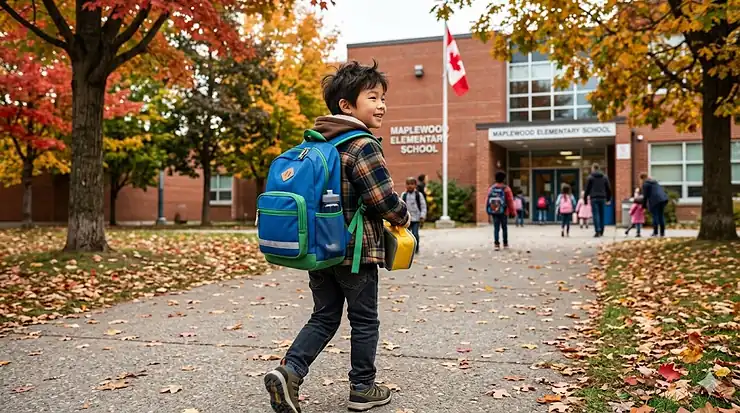
Choosing a backpack for grade 2 students isn’t as simple as grabbing the first colourful bag you see at the shop. I’ve spent years watching parents make common mistakes—buying packs that are too large, too heavy, or lacking proper support for their seven and eight-year-olds. The reality is that your second grader’s backpack will carry textbooks, lunch containers, art projects, and winter gear through harsh Canadian weather for an entire school year.
What most Canadian parents overlook is the weight-to-body ratio. According to Canadian health guidelines, a child’s backpack should never exceed 10-15% of their body weight—that’s roughly 2.3 to 3.6 kg (5 to 8 lbs) for an average grade 2 student weighing 23 kg (50 lbs). Yet I regularly see kids at Toronto and Vancouver schools hunched forward under backpacks that clearly violate this standard.
The good news? The market for elementary school backpacks with water bottle holders has evolved dramatically. Canadian parents now have access to ergonomically designed, durable kids backpacks for daily use that actually consider a seven-year-old’s developing spine. Whether you’re shopping for back-to-school season in Ontario or preparing for rainy-season commutes in British Columbia, this guide will help you identify age-appropriate school bags that balance comfort, durability, and practical storage.
I’ve researched actual products available on Amazon.ca, examined customer feedback from Canadian buyers, and consulted paediatric guidelines to bring you seven standout options. Let’s find a backpack that’ll make your second grader excited for school without causing shoulder strain by December.
Quick Comparison: Top Grade 2 Backpacks at a Glance
| Backpack Model | Capacity | Weight | Water Bottle Holder | Price Range (CAD) | Best For |
|---|---|---|---|---|---|
| BLUEFAIRY Elementary Backpack | 17L | 0.5 kg | Dual mesh pockets | $35-$45 | Budget-conscious families |
| Renewold 4-in-1 Set | 15L | 0.6 kg | Included sleeve | $40-$55 | Complete starter package |
| High Sierra Loop | 22L | 0.9 kg | Side mesh pocket | $50-$70 | Active kids with gear |
| JanSport SuperBreak | 25L | 0.7 kg | Single side pocket | $45-$60 | Long-term durability |
| Amazon Basics Classic | 18L | 0.4 kg | Elasticised sides | $25-$35 | Minimalists |
| Trail Maker Character Pack | 15L | 0.5 kg | Dual pockets | $30-$45 | Character lovers |
| MITOWERMI Lightweight | 16L | 0.45 kg | Side pockets | $35-$50 | Ultra-light priority |
Looking at this comparison, three things immediately stand out. First, the BLUEFAIRY and Amazon Basics options deliver remarkable value under $50 CAD—perfect if you’re budgeting for multiple children or anticipate your second grader wanting a style change mid-year. Second, the High Sierra Loop’s 22L capacity might seem generous, but it’s actually ideal for Canadian families whose kids need space for bulky winter clothing like fleece jackets and mitts that don’t fit in lockers. Third, every single option here includes water bottle storage, but the Renewold set uniquely bundles a dedicated insulated sleeve—a practical touch given how quickly metal water bottles freeze during January playground breaks in Prairie provinces.
💬 Just one click — help others make better buying decisions too! 😊
Top 7 Backpacks for Grade 2 Students: Expert Analysis
1. BLUEFAIRY Elementary School Backpack
The BLUEFAIRY Elementary School Backpack stands out for delivering adult-level organization at a kid-friendly price point. This 43 cm (17-inch) pack features polyester-nylon construction with water-resistant coating—crucial for Vancouver’s drizzly autumn mornings or Halifax’s unpredictable spring weather.
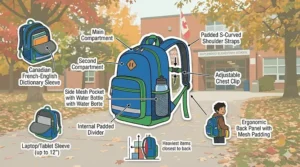
Here’s what makes this pack practical: the main compartment divides into three sections, allowing your grade 2 student to separate clean gym clothes from art supplies that might leak or crumble. The laptop sleeve inside accommodates tablets up to 33 cm (13 inches), increasingly common in Canadian elementary schools embracing digital learning. Two meshed side pockets stretch to fit standard 500ml water bottles without reducing interior space—a detail that matters when your child is already cramming in a lunch bag and library books.
From a comfort perspective, the S-shaped shoulder straps distribute weight more evenly than flat straps. I’ve noticed Canadian reviewers specifically mentioning how their kids stopped complaining about shoulder soreness after switching to this design. The breathable back panel prevents that sweaty-back situation that happens when children walk 15 minutes to school during September’s lingering warmth.
Pros:
✅ Water-resistant material handles Canadian weather
✅ Multiple compartments teach organization skills
✅ Lightweight at 0.5 kg—well under safety thresholds
Cons:
❌ Zippers require gentle handling (teach your child proper technique)
❌ Pattern selection may be too trendy for conservative families
Price range: Around $35-$45 CAD, representing excellent value for families needing a functional workhorse that won’t require replacement mid-year. This pack suits budget-conscious Canadian parents who want quality without premium pricing.
2. Renewold 4-in-1 School Backpack Set
The Renewold 4-in-1 Set solves a problem I see repeatedly: parents buying backpacks, lunch bags, pencil cases, and water bottle carriers separately, often from mismatched collections. This bundle includes a 31 cm × 15 cm × 44 cm backpack, insulated lunch bag, pencil case, and water bottle sleeve—all coordinated in themes ranging from dinosaurs to floral patterns.
The real-world benefit becomes clear during morning routines. Everything your grade 2 student needs is visually matched, making it easier for them to grab all four pieces independently—a small detail that reduces parent involvement and builds confidence in children still developing organizational habits. The insulated lunch bag maintains temperature for approximately 4-5 hours, sufficient for typical Canadian school day schedules where lunch periods occur mid-day.
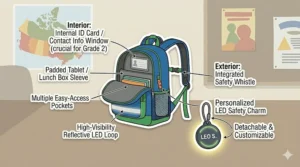
What distinguishes this from cheaper sets is the backpack’s internal organization. The main compartment includes a transparent card slot perfect for emergency contact information (required in many Canadian school districts) and a built-in pocket that prevents smaller items from migrating to the bottom where they’re lost forever. Canadian parents report the adjustable shoulder straps accommodate children from approximately 115 cm to 135 cm (3’9″ to 4’5″)—the typical grade 2 height range.
Pros:
✅ Complete kit eliminates separate purchases
✅ Coordinated design appeals to young children
✅ Insulated lunch bag maintains food safety
Cons:
❌ Sets limit flexibility for kids who want different styles
❌ Slightly heavier overall than backpack-only options
Price range: Typically $40-$55 CAD depending on pattern. Best for families preparing a child’s complete first-time school setup or those seeking coordinated organization systems.
3. High Sierra Loop Backpack
The High Sierra Loop represents a step up in capacity and durability, making it particularly suitable for Canadian grade 2 students in schools without assigned lockers or those participating in after-school programmes requiring equipment transport. At 22 litres, this pack provides 30% more space than standard elementary bags without crossing into middle-school bulk.
The standout feature is High Sierra’s “TechSpot” tablet sleeve—a padded compartment that prevents screen damage when the backpack gets tossed into school bus storage or dropped during playground games. With more Canadian elementary schools assigning iPads or Chromebooks for homework, this protection becomes genuinely valuable rather than just a marketing feature. The sleeve fits devices up to 25 cm (10 inches), covering most tablets issued by Ontario and British Columbia school boards.
Comfort engineering here is noticeable. The mesh-padded shoulder straps incorporate High Sierra’s Suspension System, which uses air channels to reduce heat buildup—particularly appreciated during those September and late-May weeks when Canadian temperatures unexpectedly climb but children still need to wear backpacks for 20-minute walks home. The pack weighs 0.9 kg empty, which sounds heavy until you realize the reinforced construction means this backpack typically outlasts two or three cheaper alternatives.
Pros:
✅ Generous capacity handles extracurricular gear
✅ Tech protection suits digital learning requirements
✅ Reinforced construction justifies higher price
Cons:
❌ Larger size may overwhelm petite grade 2 students
❌ Premium price point around $50-$70 CAD
This backpack suits active Canadian families whose kids participate in after-school sports, music lessons, or Scouts programs where they’re transporting multiple items daily. The investment makes sense if you’re prioritizing longevity over initial cost.
4. JanSport SuperBreak
The JanSport SuperBreak might seem like an unusual choice for grade 2 students given its reputation as a teen and adult pack, but Canadian parents increasingly select it specifically for its legendary durability and lifetime warranty—a rarity in children’s products. At 25 litres, it’s admittedly spacious for a seven-year-old, but this becomes an advantage rather than a drawback for families anticipating multi-year use.
What makes this work for younger children despite the size? JanSport’s adjustable strap system allows you to tighten the pack high on the back where it should sit, preventing the sagging-down-to-buttocks problem that causes posture issues. The single main compartment simplifies organization for children who aren’t ready for complex pocket systems—everything goes in one space, and they can find it quickly.
Canadian reviewers consistently mention this pack surviving not just grade 2 but continuing through grade 5 or 6, at which point the child outgrows it aesthetically rather than functionally. Given that Canadian prices for quality backpacks have climbed post-pandemic, the multi-year usability makes the $45-$60 CAD investment competitive with buying budget packs repeatedly. The fabric is water-resistant rather than waterproof, so pair it with a rain cover if you’re in coastal British Columbia.
Pros:
✅ Lifetime warranty unmatched in children’s products
✅ Grows with child through multiple grades
✅ Widely available replacement parts in Canada
Cons:
❌ Size may initially seem excessive for small grade 2 bodies
❌ Limited internal organization for younger children
Best for Canadian parents taking a long-term view, particularly in regions where school board policies allow continued use of the same backpack across years. Also ideal for younger siblings who’ll inherit it.
5. Amazon Basics Classic School Backpack
The Amazon Basics Classic strips away premium features to deliver fundamental functionality at Canada’s most competitive price point—typically $25-$35 CAD. Before dismissing this as “too basic,” consider what grade 2 students actually need versus what manufacturers market to anxious parents.
This pack includes padded shoulder straps, a main compartment large enough for standard textbooks, a front accessory pocket for quickly accessed items, and elasticised side pockets that grip water bottles securely. That’s genuinely sufficient for most seven-year-olds attending traditional Canadian public schools. The polyester construction resists everyday wear, and customer feedback indicates it reliably survives an academic year with proper care.
What you sacrifice for the lower price is mostly aesthetic variation and organizational complexity. The interior is essentially one large space, which actually suits some grade 2 children better than multi-pocket systems they find confusing. Canadian buyers report the pack handles moderate rain but struggles in heavy downpours—keep a compact poncho inside for protection during November storms in Ontario or March precipitation in Alberta.
Pros:
✅ Budget-friendly for families with multiple children
✅ Simplicity suits younger organizational skills
✅ Amazon.ca Prime eligibility ensures fast shipping
Cons:
❌ Basic durability may require replacement after one year
❌ Limited style options compared to specialty brands
This backpack makes sense for Canadian families prioritizing affordability, those uncertain about their child’s size needs, or parents who prefer replacing backpacks annually for hygiene reasons. It’s also practical when your grade 2 student specifically wants whatever character is currently trendy, knowing that preference will change by next September.
6. Trail Maker Character Backpack
The Trail Maker Character Backpack addresses a reality that practical parents sometimes overlook: your grade 2 student cares deeply about what’s on their backpack, and forcing them to carry something they dislike creates unnecessary daily conflict. This 38 cm (15-inch) pack offers licensed character designs from franchises Canadian children actually recognize and request.
Beyond the visual appeal, Trail Maker constructs these packs with better reinforcement than typical character merchandise. The shoulder straps include adequate padding for books and supplies, and the dual water bottle pockets use elastic retention bands that prevent bottles from slipping out when the pack tips—a common problem with cheaper character backpacks where bottles regularly fall and crack on playground pavement.
The capacity sits at approximately 15 litres, which is deliberately moderate. This sizing prevents grade 2 students from overloading the pack beyond safe weight limits—a hidden benefit that matters more than parents initially realize. Canadian reviewers mention the prints hold up reasonably well through washing, important since school backpacks inevitably encounter spilled juice boxes and playground mud.
Pros:
✅ Character designs reduce morning resistance
✅ Moderate capacity naturally limits overloading
✅ Better construction than typical licensed merchandise
Cons:
❌ Character licensing increases price ($30-$45 CAD range)
❌ Style may become “babyish” to child quickly
Ideal for Canadian parents whose grade 2 students strongly resist “plain” backpacks, or when giving the child choice over their school items builds cooperation in other areas. The moderate pricing makes style-driven replacement less painful.
7. MITOWERMI Lightweight Elementary Backpack
The MITOWERMI Lightweight prioritizes one specification above others: minimizing empty pack weight. At just 0.45 kg, this backpack leaves maximum margin for books and supplies while staying within the critical 10% body weight guideline recommended by Canadian health authorities.
This focus on weight reduction doesn’t mean flimsy construction. The pack uses ripstop nylon—the same material in outdoor gear—which resists tears and punctures without adding bulk. For Canadian families whose grade 2 students walk significant distances to school (common in urban centres where catchment areas are large), reducing carrying weight by even 200-300 grams creates noticeable comfort improvement over a 20-minute commute.
The 16-litre capacity hits a sweet spot for grade 2 needs: large enough for textbooks, a lunch container, and a hoodie, but small enough that children can’t unconsciously overpack. Internal organization includes a padded sleeve suitable for protecting take-home readers and worksheets from crumpling—a practical detail for Canadian schools that still emphasize physical books alongside digital resources.
Pros:
✅ Ultra-light design maximizes safe carrying capacity
✅ Ripstop material resists damage from daily use
✅ Reflective strips enhance visibility for Canadian winter mornings
Cons:
❌ Limited style variety compared to trendier brands
❌ Smaller capacity may not suit students in extracurriculars
This backpack suits Canadian parents prioritizing ergonomic safety, particularly for smaller-statured grade 2 students or those walking considerable distances. The $35-$50 CAD pricing reflects the specialized materials while remaining accessible.
How to Choose the Right Size for Your Grade 2 Child
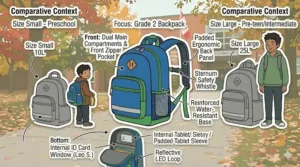
Here’s what actually matters when sizing a backpack for grade 2 students in Canada. First, measure your child’s torso from the seventh cervical vertebra (the bump at the base of their neck) down to their waist—for typical seven-year-olds, this measures 28-33 cm. The backpack should not extend more than 10 cm below this measurement. When I see parents letting packs hang down to their child’s thighs, I know problems are coming.
Second, test the weight threshold properly. Have your child wear the empty backpack, then progressively add items until you reach their target weight. For a 23 kg (50 lb) child, that’s maximum 3.4 kg (7.5 lbs) loaded. If the straps dig into shoulders or your child leans forward to compensate, the pack is already too heavy—and you haven’t even added winter gear yet. Canadian families in colder regions need to account for extra insulation that kids carry seasonally.
Third, adjust the shoulder straps so the pack sits high on the back with the bottom resting at waist level, not sagging down to the buttocks. This high positioning uses stronger back muscles rather than stressing shoulders. Many Canadian parents skip this adjustment, essentially negating the ergonomic features they paid extra to obtain. Take five minutes at the start of each school year to properly fit the pack as your child grows.
Width is often overlooked but critical. The pack shouldn’t extend beyond your child’s shoulder width. When viewed from behind, you should see the child’s shoulders, not just backpack extending past them on both sides. This prevents doorway collisions and reduces the tendency for children to swing the pack off one shoulder while walking—a habit that creates uneven strain.
Finally, consider Canadian climate factors. If you’re in regions with significant winter weather, your grade 2 student needs space for puffy jackets on morning commutes that come off during heated indoor classes. This argues for slightly larger capacity than you’d initially estimate. Conversely, families in milder British Columbia coastal areas can size more precisely to the minimum requirements.
Essential Features Every Grade 2 Backpack Needs
Water Bottle Pockets: I cannot overstate this—dual external mesh pockets are non-negotiable for Canadian elementary schools. Most Ontario, Alberta, and British Columbia schools now prohibit fountain use due to hygiene policies, meaning your grade 2 student must bring their own water. Internal bottle storage wastes main compartment space and creates leak catastrophes. Mesh side pockets keep bottles accessible while containing inevitable drips away from books and electronics.
Padded Shoulder Straps: Here’s where budget backpacks genuinely fail. Thin, unpadded straps concentrate weight onto small shoulder areas, creating pressure points that lead to complaints and poor posture. Canadian paediatric guidelines specifically recommend straps at least 5 cm wide with 1 cm foam padding minimum. S-shaped straps conform to small shoulders better than straight straps—a difference you’ll notice after your child’s first week of school.
Chest Strap (Optional but Valuable): Not commonly found on elementary packs, but worth seeking out. A chest strap connecting the shoulder straps prevents them from sliding off narrow child shoulders and distributes weight more effectively. This feature proves especially valuable for Canadian kids walking to school in winter when bulky coats create additional strap-slipping issues. The BLUEFAIRY and High Sierra options include this feature; others can be added aftermarket.
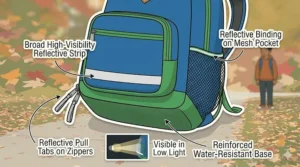
Reflective Materials: Mandatory in my opinion for Canadian students. Our school year runs through the darkest months when children commute in low-light conditions. Grade 2 students walking to school leave home in darkness during January in most Canadian provinces, and reflective strips or patches dramatically improve driver visibility. Look for reflective elements on multiple sides of the pack, not just decorative touches.
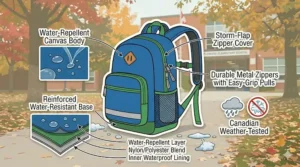
Smooth Zippers: Children struggle with catching zippers more than adults realize. Quality backpacks use lockstitch zippers with pulls large enough for small hands to grip, even wearing winter mittens. Test zippers before purchase—they should glide smoothly without requiring adult force. Stuck zippers frustrate grade 2 students, leading to them leaving packs partially open where items fall out.
Internal Organization (Moderate): Grade 2 children aren’t ready for complex multi-pocket systems, but zero organization creates chaos. One main compartment plus 1-2 smaller sections strikes the right balance. A separate front pocket for items needing quick access (tissues, hand sanitizer) and an internal sleeve for protecting tablets or papers serves most Canadian elementary students perfectly.
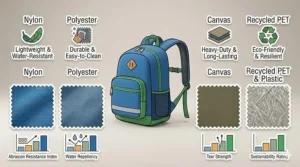
Easy-Clean Materials: Canadian school backpacks encounter juice spills, muddy playground contact, winter salt residue, and lunch container leaks. Water-resistant polyester or nylon that wipes clean saves parents enormous frustration. Avoid untreated canvas that stains permanently or materials requiring dry cleaning—completely impractical for elementary school contexts.
Common Mistakes Canadian Parents Make When Buying
Mistake #1: Buying Too Large “To Grow Into” I see this repeatedly—parents purchasing middle school-sized backpacks for grade 2 students thinking they’ll save money long-term. What actually happens? The oversized pack encourages overpacking, exceeds weight safety limits, and sits too low on the child’s back causing posture problems. Research from Canadian paediatric orthopaedics shows improper pack sizing contributes directly to back pain in children as young as seven. Size appropriately now; replace when needed.
Mistake #2: Focusing Solely on Character/Brand Yes, your grade 2 student wants the backpack with their favourite character. But prioritizing appearance over ergonomics creates health risks. Instead, find backpacks with proper support features that also come in designs your child accepts. Brands like Trail Maker bridge this gap reasonably well. The character obsession typically fades by grade 3, but posture habits formed now persist longer.
Mistake #3: Ignoring Canadian Climate Reality Backpacks designed for warm-climate markets don’t necessarily suit Canadian needs. We require water-resistant or waterproof materials for rain, snow, and slush exposure from October through April in most regions. We need capacity for seasonal clothing layers. We need durability against salt, sand, and de-icing chemicals that deteriorate cheap materials. Always verify the pack handles Canadian weather conditions before purchasing.
Mistake #4: Skipping the Weight Test Canadian health guidelines recommend 10-15% of body weight as maximum safe backpack load, yet most parents never actually weigh their child’s packed bag. Use your bathroom scale—weigh the full pack separately, then calculate if it falls within limits for your child’s weight. You’ll often discover your grade 2 student is carrying 4-5 kg when they should max out at 3 kg. This single check prevents months of accumulated strain.
Mistake #5: One-Shoulder Carrying Tolerance Your child will inevitably try carrying the backpack over one shoulder because it seems easier for short distances. This habit creates asymmetrical loading that stresses developing spines. Canadian physiotherapists see increasing numbers of elementary students with posture issues traced to one-shoulder carrying. Consistently require two-strap use, even for “just a minute” situations.
Mistake #6: Neglecting Adjustment Throughout the Year Strap settings appropriate in September become wrong by January as your child grows and clothing layers change. Canadian parents need to reassess fit quarterly—September, December, March, and June. Each adjustment takes 30 seconds but maintains proper positioning that protects your child’s back. Most families set straps once and never touch them again until the pack clearly doesn’t fit.
Backpack Safety Guidelines for Canadian Families
The Nova Scotia Health Authority provides clear guidance that applies across Canada: children should never carry more than 10-15% of their body weight in their backpacks. For context, an average grade 2 student weighing 23 kg (50 lbs) should carry maximum 2.3-3.4 kg (5-7.5 lbs). This isn’t merely a suggestion—exceeding this threshold puts measurable strain on developing spines.
What does this mean practically? A typical grade 2 load includes two textbooks (approximately 0.9 kg combined), a lunch container (0.5 kg), a water bottle (0.6 kg when full), school supplies (0.3 kg), and seasonal clothing (0.5-0.8 kg in winter). You’re already at 2.8-3.1 kg before adding art projects, library books, or show-and-tell items. This is why capacity alone doesn’t determine appropriate backpacks—weight management becomes the critical factor.
Canadian school boards are increasingly aware of this issue. Some Ontario districts now require teachers to minimize take-home materials for younger grades, while British Columbia schools provide storage space for items that needn’t travel daily. However, parental oversight remains essential. Check your grade 2 student’s backpack weekly and remove non-essential items. That collection of “important rocks” from the playground? They belong at home, not adding weight to the daily school commute.
Proper wearing technique matters as much as the backpack itself. Both shoulder straps must be used—never allow one-shoulder carrying even briefly. The pack should sit high on the back, not sagging toward the buttocks. Tighten straps so the pack rests against the back rather than pulling away, which forces the child to lean forward for balance. If your child needs to bend forward to stay upright while wearing the pack, it’s either too heavy or poorly adjusted.
Watch for warning signs that the backpack is causing problems: complaints of numbness or tingling in arms, reluctance to wear the pack, red marks on shoulders, or changes in posture. Canadian children sometimes minimize discomfort because they don’t want to seem different from classmates. Regular check-ins (“Does your backpack hurt anywhere?”) help identify issues before they become chronic.
Winter-Specific Considerations for Canadian Students
Canadian winters create unique challenges for grade 2 backpacks that parents in warmer climates never face. First, children need space for layers that get removed indoors—a fleece jacket, snow pants, and sometimes an extra sweater consume significant volume. Standard 15-litre packs barely accommodate these items plus school materials, which is why slightly larger 17-20 litre options suit Canadian contexts better.
Second, winter accessories accumulate throughout the school day. Mittens, toques, scarves, and neck warmers need storage that prevents loss (a constant problem at elementary schools). Look for backpacks with external loops or clips where these items can attach temporarily. The alternative is everything crammed inside where mittens get damp from water bottles and scarves tangle with pencil cases.
Third, salt and de-icing chemicals assault backpack materials from November through March in most Canadian provinces. These substances deteriorate cheaper fabrics rapidly, creating wear patterns by mid-winter. Water-resistant nylon or polyester with sealed seams resists this chemical exposure better than canvas or cotton blends. This is why backpacks that seem adequate in August sometimes fail dramatically by February in Canadian use.
Fourth, visibility becomes critical during dark Canadian winter mornings. Grade 2 students leaving for school at 7:30am in January are walking in near-darkness in most provinces. Reflective strips aren’t decorative—they’re essential safety equipment. Position your child’s backpack so reflective elements face traffic when they’re walking on roadways. Consider adding supplementary reflective tape to packs that lack adequate built-in materials.
Fifth, temperature extremes affect electronic devices increasingly common in Canadian elementary schools. Tablets and Chromebooks exposed to -20°C temperatures during the walk to school then brought into 20°C classrooms experience condensation that damages screens and circuits. Padded sleeves provide some insulation, but for extreme cold regions, consider an additional neoprene case for devices during transport.
Finally, winter requires routine backpack care that Canadian families often overlook. Salt residue needs weekly cleaning to prevent fabric degradation. Zippers require periodic lubrication since they stiffen in cold temperatures. Shoulder strap foam compresses when damp from snow, requiring assessment and potential replacement mid-winter. Five minutes of maintenance monthly extends backpack life significantly in Canadian climates.
Teaching Your Grade 2 Student to Pack Properly
Packing technique matters as much as backpack selection, yet most Canadian parents don’t explicitly teach this skill. Here’s the method recommended by paediatric physiotherapists: heaviest items (textbooks, lunch containers) belong closest to the back panel, centred vertically. This positioning uses core back muscles efficiently rather than pulling shoulders backward. Lighter items like pencil cases and folders go toward the front.
Help your grade 2 student understand weight distribution by having them lift an improperly packed backpack versus a properly organized one. The difference is immediately noticeable even to young children. Make this a Sunday evening ritual—lay out everything needed for the week, then pack together using the heavy-center principle. This becomes an organizational skill that serves them through university.
Side pockets serve specific purposes that grade 2 students need to learn. Water bottles always go in mesh side pockets, never in the main compartment where leaks contaminate books. If there’s an umbrella pocket, that’s for the compact poncho you’ve hopefully included for Vancouver or Halifax weather surprises. These external pockets balance weight on both sides—teach your child to avoid loading only one side which creates asymmetrical strain.
Canadian school schedules create a trap I see regularly: children packing everything Monday morning for the entire week, creating excessive daily weight. Instead, establish a daily pack-check routine. What does tomorrow’s schedule require? Only those items go in the backpack. Tuesday’s art supplies don’t need to travel on Wednesday. This mindfulness prevents the accumulation problem where backpacks get progressively heavier as the week progresses.
Create a designated unpacking spot at home where your grade 2 student empties their backpack completely each afternoon. This serves multiple purposes: you discover forgotten notes from teachers, moldy lunch remnants get removed before they become biohazards, and the daily reset prevents clutter accumulation. Canadian families who implement this simple system report dramatically reduced morning chaos since the backpack is organized rather than being a mystery container.
Teach the “lift test” that your child can perform independently. Before putting on the backpack, have them lift it briefly with one hand. If they can’t lift it off the ground easily, it’s too heavy. This self-check empowers grade 2 students to recognize overloading without parental oversight—particularly valuable for children who stay after school for programmes and pack independently.
Budget Considerations: When to Spend More vs. Save
Canadian backpack pricing spans an enormous range—from $20 budget options to $100+ premium brands. Understanding when extra investment makes sense versus when it wastes money helps families allocate education budgets effectively. Here’s my framework after years observing what actually delivers value.
Spend More ($50-$70 CAD) When: Your child walks significant distances to school. Comfort features in premium backpacks—better padding, ventilated back panels, advanced strap systems—genuinely matter for 20-minute commutes. The difference between adequate and excellent ergonomics becomes apparent over sustained carrying, justifying higher pricing for walking-distance students.
You’re prioritizing multi-year use. Brands like JanSport and High Sierra build packs that readily survive 3-4 years if your child doesn’t outgrow them aesthetically. The premium materials and construction quality resist Canadian weather abuse better than budget options. For families with multiple children where hand-me-downs are expected, this long-term perspective makes economic sense.
Your child has specific physical considerations. Smaller-statured grade 2 students, those with minor posture issues, or children carrying medical equipment benefit meaningfully from advanced ergonomic features. The $30 price difference between basic and premium backpacks becomes negligible when addressing health considerations.
Save Money ($25-$40 CAD) When: Your child strongly prefers changing styles frequently. Grade 2 students still developing their identity might demand different designs mid-year. Budget backpacks make these transitions affordable. You can potentially purchase two different styles annually for less than one premium pack.
School provides most storage. If your child’s school offers lockers or classroom cubbies where most items stay, they’re only carrying lunch and a light load. Premium features designed for heavy loads become unnecessary. A basic pack suffices for minimal daily transport.
Your child is going through a growth spurt. If your seven-year-old is approaching the smaller end of appropriate backpack sizing, you’ll likely need to upsize within a year anyway. Purchasing a budget option now and a better-fitted pack next year makes more sense than buying premium sizing that doesn’t quite work.
The truth Canadian parents need to hear: price and child satisfaction don’t correlate as strongly as manufacturers suggest. I’ve seen grade 2 students equally excited about a $30 character backpack as a $60 premium brand. The difference emerges in durability and comfort over time, not initial appeal. Choose based on your family’s priorities rather than assuming expensive automatically means better.
One Canadian-specific consideration: watch for back-to-school sales in August and January. Amazon.ca, Canadian Tire, and Walmart Canada run significant promotions where premium backpacks hit mid-range pricing. A $65 JanSport dropping to $45 during these windows represents genuine value for families shopping strategically.
❓ Frequently Asked Questions
❓ Can grade 2 students use backpacks with wheels in Canada?
❓ How often should I replace my child's school backpack?
❓ What's the best way to clean a school backpack in Canada?
❓ Do grade 2 students really need laptops sleeves in their backpacks?
❓ Are expensive backpack brands worth the cost for young children?
Conclusion: Making the Right Choice for Your Canadian Grade 2 Student
Selecting a backpack for grade 2 students requires balancing safety, practicality, and your child’s preferences within Canadian climate realities. The seven options I’ve detailed here represent genuinely functional choices available on Amazon.ca right now, each excelling in specific contexts. The BLUEFAIRY Elementary Backpack delivers remarkable organization and durability for families wanting best value under $45 CAD. The Renewold 4-in-1 Set solves the coordination challenge for parents starting fresh with complete school supplies. The High Sierra Loop serves active Canadian kids needing capacity for extracurriculars and weather gear.
Remember the non-negotiable fundamentals: backpack weight should never exceed 10-15% of your child’s body weight (2.3-3.4 kg for typical grade 2 students), the pack must sit high on the back with proper strap adjustment, and water bottle holders are essential given Canadian school hydration policies. Reflective materials matter during dark winter commutes that characterise Canadian school years from November through March.
Your investment isn’t just a bag—it’s supporting your seven or eight-year-old’s physical development during critical growth years while teaching organizational skills that extend far beyond elementary school. Take the time to involve your child in selection (within parameters you’ve established), adjust straps properly at the start of each term, and maintain the pack throughout the year. These small efforts prevent discomfort and potential posture issues while building your grade 2 student’s confidence and independence.
The perfect backpack for your specific child considers their height, weight, walking distance, school requirements, and yes—their style preferences that shouldn’t be dismissed entirely. Use this guide as your framework, then make the decision that serves your family’s priorities. Canadian elementary students deserve backpacks designed for their actual needs rather than marketing hype, and you now have the information to make that choice wisely.
Recommended for You
- Best Math Flashcards Grade 1-3 Canada: 7 Top Picks 2026
- 7 Best Durable Pencil Cases Elementary School Canada 2026
- 7 Best Wide Ruled Notebooks Grade 1 Canada 2026
Disclaimer: This article contains affiliate links. As an Amazon Associate, I earn from qualifying purchases. If you purchase products through these links, we may earn a small commission at no additional cost to you.
✨ Found this helpful? Share it with your friends! 💬🤗
