

In This Article
Here’s a confession: most people don’t think twice about a notebook until the wrong one lets them down — pages ripping loose mid-lecture, a cover that folds like wet cardboard, or a spiral that snags on every zipper it meets. Single subject spiral notebooks are about as low-drama as school supplies get, right up until they’re not. This guide walks through seven genuinely good options sold in Canada, why each one earns its spot, and how to match a notebook to the way you actually work rather than the way the packaging promises you’ll work.
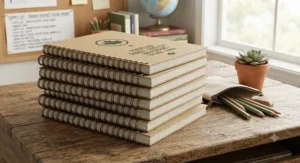
A single subject spiral notebook is a wire-bound notebook dedicated to one class, project, or topic, typically with 70 to 100 sheets, a single ruling type, and a cover that ranges from basic coated cardstock to water-resistant poly. Unlike multi-subject notebooks with dividers, it keeps one thread of notes contiguous and easy to flip through — which, according to research on handwritten note-taking from the University of New Brunswick’s Centre for Enhanced Teaching and Learning, actually supports deeper conceptual recall than typed notes in several controlled studies.
We’ll walk through the top seven picks, a practical usage guide, real-world buying scenarios, and the details that separate a notebook that survives September from one that’s still intact in June. Every price mentioned below is a range in Canadian dollars, current at the time of research — always check the live listing before you buy, since Amazon pricing shifts constantly.
Quick Comparison Table
| Notebook | Ruling | Cover | Sheets | Best For |
|---|---|---|---|---|
| Hilroy 1-Subject Coil Notebook | Wide ruled | Coated cardstock | 100 | Budget Canadian classic |
| Oxford Spiral Notebook 6-Pack | Wide ruled | Coated cardstock | 70 each | Colour-coded subjects |
| Five Star 1-Subject Spiral Notebook | College ruled | Water-resistant poly | 100 | Plastic-cover durability |
| Amazon Basics 1-Subject Notebook (3-pack) | Wide ruled | Poly | 100 each | Budget plastic-cover bulk buy |
| Miquelrius Single Subject Notebook | Graph/quad | Poly | 80 | Premium paper feel |
| Rhodia Wirebound A4+ Notebook | Lined or graph | Waterproof card | 80 | Ultra-premium paper quality |
| Hilroy Neatbook 1-Subject Notebook | Wide ruled | Cardstock, wireless coil | 80 | Lightweight everyday carry |
Looking at the table, the split comes down to cover material and paper weight more than anything else. The Hilroy 1-Subject Coil Notebook and Amazon Basics 1-Subject Notebook win on pure economics, but the Five Star 1-Subject Spiral Notebook and Miquelrius Single Subject Notebook justify their higher price with covers and paper stock that actually survive a full term in a backpack. If you write with fountain pens or dark gel ink, the Rhodia Wirebound A4+ Notebook‘s heavier paper is the only one on this list built to handle it without bleed-through.
💬 Just one click — help others make better buying decisions too! 😊
Top 7 Single Subject Spiral Notebooks: Expert Analysis
1. Hilroy 1-Subject Coil Notebook — best budget Canadian classic
The Hilroy 1-Subject Coil Notebook is the notebook most Canadians grew up buying off the back-to-school flyer, and it’s held its position for a reason. It comes in an 8″ x 10.5″ wide ruled format with 100 sheets (200 pages), 3-hole punched for binder storage, with a coated cardstock cover in assorted colours. Wide ruled spacing means more room between lines, which matters if you write large or use a thicker pen — something worth knowing before you commit to a pack. Based on the spec sheet, this is squarely a value pick: it’s not trying to be fancy, it’s trying to survive a semester of backpack abuse at the lowest reasonable cost, and by most accounts it does. Reviewers consistently report that the paper resists ink bleed better than the price point suggests, though a recurring theme in feedback is that the assorted-colour listings ship “colour may vary,” so don’t count on choosing your shade. Pros:
- ✅ Reliable Canadian brand with wide retail availability
- ✅ Wide ruled paper suits larger handwriting comfortably
- ✅ 3-hole punched for easy binder integration
Cons:
- ❌ Cover colour is not selectable on most listings
- ❌ Cardstock cover offers no water resistance
At around C$3-C$6 per notebook, this is one of the cheapest genuinely functional options on Amazon.ca, and the value proposition holds up well for anyone buying in bulk for multiple classes.
2. Oxford Spiral Notebook 6-Pack — best for colour-coded subjects
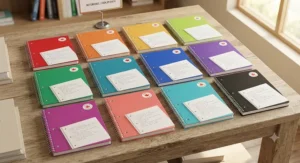
The Oxford Spiral Notebook 6-Pack ships six single subject wide ruled notebooks in six distinct colours — blue, yellow, red, light blue, green, and black — each with 70 sheets, 8″ x 10.5″ pages, and a snag-resistant coil. What most buyers overlook about this pack is that it’s really a colour-coding system disguised as a multipack: six subjects, six covers, zero confusion about which notebook belongs to which class. The paper is double-sided and micro-perforated for clean tear-out, and the coated paperboard cover holds up reasonably well without being water-resistant. Reviewers note the coil resists catching on zippers and backpack straps, which is a small but real quality-of-life detail once you’ve dealt with a mangled spiral firsthand. Based on the spec comparison, 70 sheets per book runs thinner than some rivals here, so a notebook-per-term reader might burn through one faster in a note-heavy class. Pros:
- ✅ Six pre-assigned colours simplify subject organization
- ✅ Snag-resistant coil survives daily backpack use
- ✅ Economical per-notebook cost when bought as a set
Cons:
- ❌ 70 sheets is on the thinner side for heavy note-takers
- ❌ Covers are not water- or tear-resistant
In the C$13-C$18 range for the full six-pack, this works out to some of the lowest per-notebook cost on this list, and it’s a genuinely smart pick for students juggling several courses at once.
3. Five Star 1-Subject Spiral Notebook — best plastic-cover durability pick
The Five Star 1-Subject Spiral Notebook is where “single subject notebooks with plastic cover” earns its own category, and this one is the reference point. It has a water-resistant poly front cover, a coated back cover, 100 college ruled sheets, reinforced storage pockets, and a “Spiral Lock” wire designed specifically to resist snagging. The plastic front cover isn’t cosmetic — it’s the difference between a notebook that survives a spilled water bottle and one that turns into papier-mâché. What most buyers overlook is the reinforced pocket, which holds loose handouts without tearing at the seam the way basic cardstock notebooks often do by November. Reviewers consistently note that the perforated “Neat Sheet” pages tear out with unusually clean edges compared to cheaper alternatives, and the cover genuinely resists creasing over months of use. On paper, this means less mid-semester notebook replacement, which quietly saves money even if the sticker price looks higher upfront. Pros:
- ✅ Water-resistant poly cover protects against spills
- ✅ Reinforced pockets prevent handout tears
- ✅ Spiral Lock wire resists snagging on bags
Cons:
- ❌ Costs more per notebook than basic cardstock options
- ❌ Poly cover adds slight bulk versus thin cardstock
Priced around C$6-C$10, it sits in the mid-range, and for anyone who’s lost a notebook to a leaky water bottle before, the plastic cover alone can justify the premium.
4. Amazon Basics 1-Subject Notebook (3-Pack) — best budget plastic-cover bulk buy
The Amazon Basics 1-Subject Notebook splits the difference between the cardstock budget options and the pricier poly-cover picks: it’s a wide ruled, poly-cover notebook sold in a 3-pack, with 100 sheets and a 9″ x 11″ page size — slightly larger than the standard 8″ x 10.5″ format most brands use. Here’s what the spec sheet won’t tell you outright: the poly cover puts this in plastic-cover territory at a price closer to the cardstock competition, which is a genuinely useful middle ground for anyone comparing single subject notebooks with plastic cover options on a tight budget. Reviewers report the covers hold their shape well and resist the corner-curling that plagues cheaper cardstock notebooks after a few weeks in a bag. The larger page size is worth flagging specifically — it won’t fit some binders or backpack organizers sized for the standard format, so measure before you commit to a set for a specific bag or binder system. Pros:
- ✅ Poly cover at a near-budget price point
- ✅ Larger page size gives extra writing room
- ✅ Sold as a 3-pack for straightforward bulk buying
Cons:
- ❌ Larger dimensions may not fit standard binders
- ❌ Brand lacks the decades-long track record of legacy names
Expect to pay in the C$10-C$15 range for the 3-pack, which puts the per-notebook cost close to premium cardstock while delivering the water resistance of a plastic cover.
5. Miquelrius Single Subject Notebook — best premium paper feel
The Miquelrius Single Subject Notebook is a Spain-manufactured option with a black poly cover, 80 sheets of extra-opaque, heavyweight graph or quad-ruled paper, and printed coloured lines that match the cover. This is the notebook to reach for if the actual writing experience matters more to you than the price tag. Heavyweight paper resists both ink bleed and the “ghosting” show-through that makes double-sided pages look cluttered under fountain pens or fine-liner markers — a detail cheaper wide ruled notebooks routinely struggle with. Based on the spec comparison, the quad/graph ruling is a meaningful differentiator versus the mostly wide-ruled competition here, making it a strong pick for anyone taking notes involving diagrams, math, or sketchnoting layouts. Reviewers consistently praise the paper’s smoothness and opacity, with recurring comments on how well it resists bleed-through even with wetter inks. Sheets are micro-perforated and 3-hole punched, so torn-out pages can still slot into a binder afterward. Pros:
- ✅ Heavyweight paper resists ink bleed and ghosting
- ✅ Graph/quad ruling suits diagrams and math notes
- ✅ Sustainably manufactured with an environmental focus
Cons:
- ❌ Pricier than standard wide ruled competitors
- ❌ Fewer wide ruled colour options than mainstream brands
At roughly C$14-C$20, it’s a premium mid-range pick — the kind of notebook that makes sense for one important class rather than a full stack of six.

6. Rhodia Wirebound A4+ Notebook — best ultra-premium paper quality
The Rhodia Wirebound A4+ Notebook is the outlier on this list in the best way: an A4+ (225mm x 297mm) notebook with 80 sheets of 80g extra-white paper, a waterproof coated card cover in the brand’s signature orange or black, and a printed top frame for titling each page. On paper, 80gsm is noticeably heavier than the roughly 60-70gsm paper used in most mainstream single subject notebooks, and that extra weight is exactly why fountain pen and rollerball users gravitate toward this brand specifically. What the spec sheet won’t tell you, but reviewers note repeatedly, is how much smoother the writing experience feels on this paper compared to standard notebook stock — it’s a genuinely different tier of product, not just a fancier cover. The double wire-binding is built for strength and snag resistance, and the waterproof card cover means this notebook can survive a rainy commute that would ruin a cardstock competitor. This is not the pick for casual class notes on a student budget; it’s the pick for someone who treats their notebook as a daily tool worth investing in. Pros:
- ✅ Heavyweight 80g paper resists bleed with any pen type
- ✅ Waterproof card cover survives wet conditions
- ✅ Top frame margin keeps pages organized by date or topic
Cons:
- ❌ Premium pricing well above mainstream competitors
- ❌ Smaller retail footprint means fewer size/colour options
Pricing typically runs in the C$15-C$25 range depending on size, positioning it as the splurge option for people who genuinely value paper quality over per-unit cost.
7. Hilroy Neatbook 1-Subject Notebook — best lightweight everyday carry
The Hilroy Neatbook 1-Subject Notebook is the lesser-known alternative on this list, and it deserves more attention than it gets. It’s a “wireless” single subject notebook — meaning the coil is tucked and covered rather than fully exposed — with 80 sheets (160 pages) and assorted cardstock covers. The wireless design solves a specific, common annoyance: exposed spiral coils that catch on sweaters, bag straps, and loose papers. Based on the spec comparison, it trades a small amount of the “lay-flat” convenience full coil designs offer for a slimmer, less snag-prone profile that’s genuinely nicer to carry daily. Reviewers report the covers feel a notch sturdier than entry-level Hilroy cardstock options, though as with most assorted-colour listings, you can’t pick your exact shade. This is a strong option for anyone who’s tired of a mangled spiral ruining an otherwise fine notebook, or who just wants something that slides more cleanly into a tight bag pocket. Pros:
- ✅ Covered coil resists snagging on clothing and straps
- ✅ Slimmer profile fits tighter bags and pockets
- ✅ Solid page count for the compact format
Cons:
- ❌ Covered coil doesn’t lay as flat as exposed spirals
- ❌ Limited availability compared to mainstream Hilroy lines
Priced in a similar C$4-C$7 range to the standard Hilroy coil notebook, it’s a low-risk upgrade for anyone who’s had a spiral notebook get wrecked by its own binding.
Practical Usage Guide: Getting the Most Out of Your Notebook
Buying the right notebook is half the job — using it well is the other half. Start each single subject notebook with a one-page index on the very first sheet: date range and topic per section, updated every few weeks. It sounds fussy for the first ten minutes and saves real time by week six, especially in a Hilroy 1-Subject Coil Notebook or Oxford Spiral Notebook stack where six near-identical covers make it easy to grab the wrong one. In the first month, the most common mistake is inconsistent margins — using the printed margin line for headers one week and ignoring it the next, which makes the notebook harder to scan later. A second common mistake is over-tearing pages: pull perforated sheets slowly along the full perforation line rather than yanking from one corner, especially with heavier paper like the Miquelrius Single Subject Notebook or Rhodia Wirebound A4+ Notebook, where a rushed tear can catch the neighbouring sheet. For maintenance, keep notebooks with poly covers like the Five Star 1-Subject Spiral Notebook or Amazon Basics 1-Subject Notebook wiped dry after any spill rather than left damp in a bag, since trapped moisture between pages causes rippling even on water-resistant covers. Store completed notebooks flat rather than upright on a shelf spine-out — spiral bindings compress unevenly under their own weight over a full school year, which eventually warps the coil.
Real-World Scenarios: Matching Notebooks to How You Actually Study
Picture three different students walking into the same stationery aisle. The first is a first-year university student juggling five courses on a tight budget who commutes by bus — for them, the Oxford Spiral Notebook 6-Pack solves two problems at once: cost per notebook and instant colour-coded subject organization, so there’s no fumbling for the right book between lectures. The second is a design or engineering student who needs diagrams alongside written notes and can justify spending a bit more on one key notebook — the Miquelrius Single Subject Notebook‘s quad ruling handles both text and sketches without switching books, and the heavyweight paper survives a semester of highlighter and marker use. The third is a working professional taking client meeting notes daily, who cares more about the notebook surviving a bag with a water bottle, keys, and a laptop charger than about price — the Five Star 1-Subject Spiral Notebook‘s poly cover and reinforced pockets are built exactly for that kind of daily wear, and a fountain-pen user in the same role would lean toward the Rhodia Wirebound A4+ Notebook instead for the paper quality alone. None of these are “better” in the abstract — they’re matched to budget, environment, and how often the notebook actually leaves the bag.
How to Choose Single Subject Spiral Notebooks
Here’s a fast framework, since most of the decision comes down to five practical factors rather than brand loyalty.
- Decide on ruling first. Wide ruled suits larger handwriting and younger students; college ruled fits more per page for dense note-takers; graph or quad ruling matters for math, science, or sketching.
- Match the cover to your environment. If the notebook lives in a backpack with a water bottle, a poly cover like the Five Star 1-Subject Spiral Notebook earns its higher price fast.
- Check the sheet count against your term length. A 70-sheet notebook may not last a note-heavy semester; 80-100 sheets is a safer baseline for a full-length course.
- Consider paper weight if you use gel pens or fountain pens. Heavier stock like the Miquelrius Single Subject Notebook or Rhodia Wirebound A4+ Notebook resists bleed-through that ruins double-sided notes.
- Think about how many subjects you’re organizing. A multipack like the Oxford Spiral Notebook 6-Pack with distinct colours is far easier to sort by class than buying six identical notebooks separately.
- Factor in binder compatibility. If you transfer torn-out pages into a binder, confirm 3-hole punching and micro-perforation, both standard on most notebooks reviewed here.
- Set a realistic budget per notebook, not per multipack. A six-pack that looks cheap can still cost more per notebook than a single premium option if you only need one or two subjects covered.
✨ Don’t Miss These Exclusive Deals! 🔍
Take your note-taking setup to the next level with these carefully selected picks. Click on any highlighted item to check current pricing and availability on amazon.ca — these notebooks help you build genuinely organized, dependable study habits your future exam-week self will thank you for!
Single Subject Wide Ruled Notebooks: What You Need to Know
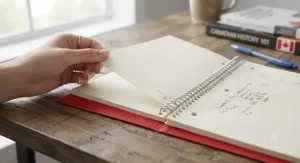
Single subject wide ruled notebooks remain the default choice across Canadian school supply lists, and there’s a practical reason beyond tradition. Wide ruling typically spaces lines around 8.5mm to 9mm apart, compared to roughly 7.1mm to 7.5mm for college ruled — a difference that matters more than it sounds. For younger students still developing fine motor control, or for anyone who simply writes large, wide ruled paper reduces the cramped, illegible scrawl that happens when handwriting doesn’t fit its lane. The Hilroy 1-Subject Coil Notebook and Oxford Spiral Notebook 6-Pack both lean into this format specifically because it’s the standard most Canadian elementary and early secondary classrooms request. It’s worth noting wide ruled isn’t inherently “easier” or “better” — it simply trades page capacity for legibility headroom, which is exactly the trade a lot of note-takers want without realizing there’s a name for it. Teachers and parents shopping from a supply list should double-check the exact wording, since “ruled” without a qualifier on some listings can default to either wide or college depending on the manufacturer’s region of origin.
Single Subject Notebooks with Plastic Cover: Problem-Solving Guide
A plastic cover solves specific, recurring problems rather than being a generic upgrade, so it helps to match the cover to the actual pain point. Problem: spilled drinks or rain damage. A cardstock cover absorbs moisture and warps permanently; the Five Star 1-Subject Spiral Notebook‘s water-resistant poly front cover sheds most spills before they reach the paper. Problem: corners curling and covers creasing in a crowded bag. Poly covers like the one on the Amazon Basics 1-Subject Notebook hold their shape far longer than coated cardstock, which softens and bends after repeated compression. Problem: handout pockets tearing at the seam. Reinforced poly pockets, again a Five Star 1-Subject Spiral Notebook strength, distribute stress across a wider seam than basic paper pockets. Problem: paying a premium you don’t need. If the notebook lives on a desk rather than in a bag, a cardstock cover like the Hilroy 1-Subject Coil Notebook‘s solves nothing extra — save the plastic-cover premium for notebooks that actually travel. Problem: matching cover durability to paper quality. The Miquelrius Single Subject Notebook pairs a poly cover with heavyweight paper, which matters if you want both the exterior and interior of the notebook to hold up equally well over a term.
Wide Ruled vs College Ruled
The wide ruled vs college ruled question comes up constantly, and the honest answer is that it’s about handwriting size and note density, not quality. Wide ruled gives roughly 27 lines per page at 8.5-9mm spacing; college ruled packs in closer to 30-33 lines at 7.1-7.5mm spacing, meaning more content fits on fewer sheets. A dense note-taker copying detailed lecture content benefits from college ruled simply because they’ll burn through fewer notebooks per term — the Five Star 1-Subject Spiral Notebook in college ruled is built with this reader in mind. Someone writing in a larger hand, working through math problems with more spacing needs, or a younger student still building handwriting consistency, generally does better with wide ruled options like the Hilroy 1-Subject Coil Notebook. Interestingly, a 2024 BIC Canada survey covered by Daily Hive found that 62% of Canadians still prefer handwritten note-taking over typing, which suggests this “old-fashioned” ruling debate isn’t going away anytime soon — the format still matters to the majority of people putting pen to paper daily.
Page Count Comparison
Page count is one of the most overlooked specs on a notebook listing, and it directly affects how often you’re buying replacements. Across the seven notebooks reviewed here, sheet counts range from 70 (Oxford Spiral Notebook 6-Pack, per notebook) up to 100 (Hilroy 1-Subject Coil Notebook, Five Star 1-Subject Spiral Notebook, and Amazon Basics 1-Subject Notebook), with the Miquelrius Single Subject Notebook and Rhodia Wirebound A4+ Notebook sitting at 80 sheets, and the Hilroy Neatbook 1-Subject Notebook also at 80 sheets.
| Notebook | Sheets | Pages (double-sided) | Est. weeks per semester course |
|---|---|---|---|
| Oxford Spiral Notebook 6-Pack | 70 | 140 | ~10-12 weeks, note-light course |
| Hilroy Neatbook / Miquelrius / Rhodia | 80 | 160 | ~13-14 weeks, average course |
| Hilroy 1-Subject / Five Star / Amazon Basics | 100 | 200 | ~15-16 weeks, note-heavy course |
The analysis here is straightforward: a standard Canadian semester runs 13-15 weeks, so a 70-sheet notebook is realistically a light-course or short-term option, while the 100-sheet options from Hilroy and Five Star are better sized to carry a note-heavy course the full term without a mid-semester swap. If you’re buying for a full academic year rather than one term, doubling up or choosing the higher sheet counts avoids the annoyance of running out of pages during exam review, historically one of the worst times to be flipping to a fresh notebook.

Colour-Coded Subject Organization
Colour-coded subject organization is less about aesthetics than it looks, and there’s real behavioural research behind it. According to survey data reported by Daily Hive, over a third of Canadians aged 18 to 34 who colour-code their notes believe it measurably improves study efficiency, largely because a consistent colour system reduces the mental friction of locating the right material during review. Here’s a straightforward version of the system: assign one colour per subject and stick to it across every notebook, binder, and folder for that class — the Oxford Spiral Notebook 6-Pack‘s six distinct covers make this close to effortless straight out of the box, since there’s no separate colour-coding step required. For students using single-notebook picks like the Hilroy 1-Subject Coil Notebook or Five Star 1-Subject Spiral Notebook, the same system works with coloured tape flags on the spine or coloured stickers on the cover, since most listings ship with “colour may vary” and won’t guarantee your preferred shade. The trick most people miss is consistency across the full toolkit, not just the notebook — a blue notebook paired with a red folder for the same class defeats the purpose of the system entirely.
Common Mistakes When Buying Single Subject Spiral Notebooks
A few recurring mistakes show up across reviews and buying patterns. The first is buying purely on price without checking sheet count — a notebook that looks cheaper per unit can actually cost more per sheet than a pricier option with double the pages. The second is ignoring ruling type on assorted or multipack listings, which occasionally mix wide and college ruled within the same batch without clear labelling; always check the product specs, not just the photo. The third is assuming “water-resistant” and “waterproof” mean the same thing — a water-resistant poly cover like the one on the Five Star 1-Subject Spiral Notebook sheds light spills, but a genuinely waterproof cover like the Rhodia Wirebound A4+ Notebook‘s is a different tier of protection entirely. The fourth is overlooking page size variance — as noted with the Amazon Basics 1-Subject Notebook‘s 9″ x 11″ format, a slightly larger notebook won’t always fit binders or bag organizers sized for the more common 8″ x 10.5″ standard. The fifth is buying six-packs for a single-subject need; multipacks like the Oxford Spiral Notebook 6-Pack are excellent value for multiple classes but a poor use of budget if you only need one notebook.
Long-Term Cost & Maintenance
Total cost of ownership for a single subject spiral notebook is almost entirely about how many you’ll buy per year, not the sticker price of one. A student replacing a C$3 Hilroy 1-Subject Coil Notebook twice per term due to a worn cover or torn pocket spends more annually than someone who buys one C$8 Five Star 1-Subject Spiral Notebook that survives the whole year. Maintenance costs are minimal but real: reinforcement stickers for 3-hole punched pages (a few dollars for a pack that lasts years), and periodic replacement of the notebook itself once the coil deforms or the cover cracks, typically once per term for budget cardstock options and once per year or less for poly-cover or premium paper options like the Miquelrius Single Subject Notebook or Rhodia Wirebound A4+ Notebook. For a full-time student buying five to six single subject notebooks per term, the annual difference between an all-budget approach and a mixed budget-plus-durable strategy is typically in the C$20-C$40 range — modest, but worth factoring in against how often notebooks actually get replaced mid-term due to damage rather than running out of pages.
Safety, Sustainability & Paper Sourcing
Notebooks aren’t a regulated safety category the way electronics or car seats are, but there are still a few practical considerations worth knowing, especially for parents buying for younger students. Coated cardstock and poly covers used across mainstream brands are generally low-risk, though anyone with a latex or specific plastic sensitivity should check individual product listings for cover material details before buying in bulk. On the sustainability side, paper sourcing is the more meaningful consideration: look for Forest Stewardship Council (FSC) certification where listed, since FSC-certified paper indicates responsibly managed forestry practices verified by independent audit, a standard a growing number of Canadian institutions and retailers have adopted for office and school paper. The Miquelrius Single Subject Notebook specifically markets an environmental manufacturing focus, which is worth confirming on the current listing if sustainability is a deciding factor for your purchase. None of the seven notebooks reviewed here carry special regulatory warnings, but as a general practice, recycling completed notebooks through standard paper recycling (after removing metal spiral coils, which most municipal programs don’t accept) is the simplest way to close the loop on an otherwise disposable school supply.
FAQ
❓ What is the difference between wide ruled and college ruled notebooks?
❓ How many sheets does a single subject notebook usually have?
❓ Are plastic cover notebooks worth the extra cost?
❓ Can single subject notebook pages fit into a binder?
❓ Is colour-coding notebooks actually useful for studying?
Conclusion
Choosing between single subject spiral notebooks really comes down to three questions: how many subjects are you organizing, how rough is the environment the notebook lives in, and how much does paper quality matter to the way you write. Budget-conscious, multi-class shoppers get excellent value from the Hilroy 1-Subject Coil Notebook or Oxford Spiral Notebook 6-Pack; anyone who’s had a notebook ruined by a spill should look hard at the Five Star 1-Subject Spiral Notebook or Amazon Basics 1-Subject Notebook; and readers who care about how the pen actually feels on the page will get more out of the Miquelrius Single Subject Notebook or the Rhodia Wirebound A4+ Notebook. The Hilroy Neatbook 1-Subject Notebook rounds things out as a smart pick for anyone tired of a mangled coil ruining an otherwise fine notebook. None of these are wrong choices — they’re just built for different desks, different bags, and different terms.
✨ Don’t Miss These Exclusive Deals! 🔍
Ready to build out your notebook lineup for the term ahead? Click through to check current prices and availability on amazon.ca, and grab the pick that matches how you actually take notes — future exam-week you will be glad you did!
Recommended for You
- Notebook Multi-Packs for Back to School: 7 Great Picks (2026)
- 7 Best Portable Monitors for Grad School Research in 2026
- Binding and Printing Supplies for Thesis Submission: 7 Top Picks (2026)
Disclaimer: This article contains affiliate links. As an Amazon Associate, I earn from qualifying purchases. If you purchase products through these links, we may earn a small commission at no additional cost to you.
✨ Found this helpful? Share it with your friends! 💬🤗
