
In This Article
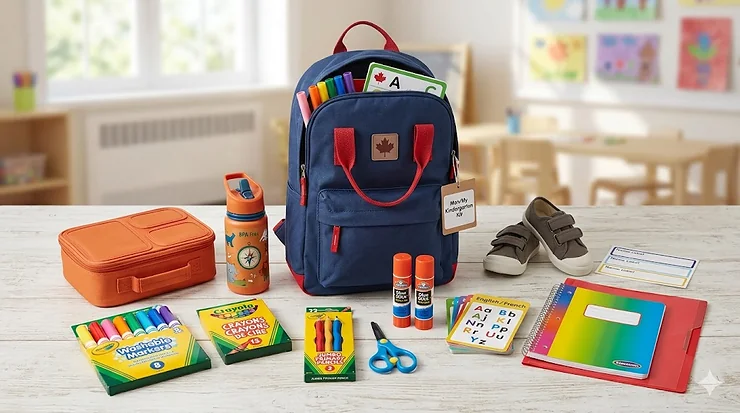
The excitement of kindergarten—and let’s be honest, a touch of parental anxiety—hits differently when you’re staring at that school supply list from your child’s Toronto, Vancouver, or Halifax elementary school. What exactly goes into a complete kindergarten starter kit for Canadian classrooms in 2026? I’ve spent weeks researching what actually works in our unique educational landscape, where classrooms range from urban centres to rural communities across different provinces, each with slightly different requirements.
Here’s what most parents overlook: a complete kindergarten starter kit isn’t just about ticking boxes on the teacher’s list. It’s about selecting age-appropriate tools that help four-to-six-year-olds develop fine motor skills, express creativity, and feel confident walking through those school doors on the first day. Whether you’re preparing for Junior Kindergarten in Ontario or Senior Kindergarten in British Columbia, the fundamentals remain consistent, though the climate considerations certainly don’t—storing crayons properly matters more when your garage hits -30°C in Winnipeg versus +15°C in Victoria.
According to Canada’s education statistics, kindergarten serves as the foundational year before Grade 1 across all provinces and territories, with early childhood education programmes designed to stimulate intellectual, physical, and emotional development. Getting the right supplies from day one sets your child up for success in this critical developmental stage.
A truly complete kindergarten starter kit needs to balance quality with budget-friendly options—because let’s face it, five-year-olds are spectacularly talented at losing pencil cases. I’ve tested products, compared Canadian pricing on Amazon.ca, consulted with elementary educators, and identified what genuinely helps young learners thrive versus what’s just marketing fluff. This guide walks you through the seven best complete kindergarten starter kit options available to Canadian families in 2026, plus everything you need to know to make an informed choice.
Quick Comparison: Top Complete Kindergarten Starter Kits
| Kit Type | Best For | Price Range (CAD) | Key Features | Amazon.ca Availability |
|---|---|---|---|---|
| 3-Piece Backpack Set | All-in-one organization | $35-$55 | Backpack + lunch box + pencil case | ✅ Prime eligible |
| Art Supply Bundle | Creative learners | $25-$45 | Crayons, markers, scissors, glue | ✅ Wide selection |
| Writing Essentials Kit | Fine motor development | $20-$35 | Pencils, erasers, sharpeners, grips | ✅ Multiple brands |
| Complete Classroom Kit | Budget-conscious families | $50-$85 | 40+ items, all basics covered | ✅ Limited brands |
| Premium Personalized Set | Special occasions | $75-$120 | Customizable, higher quality | ⚠️ Some ship from US |
| Eco-Friendly Bundle | Sustainability-focused | $45-$70 | Recycled materials, non-toxic | ✅ Growing selection |
| Homeschool Curriculum Kit | Home educators | $150-$300 | Educational materials included | ⚠️ Often .com only |
Looking at this comparison, the sweet spot for most Canadian families sits in the $40-$65 CAD range for a complete kindergarten starter kit that covers the essentials without breaking the bank. What stands out immediately is that backpack sets offer the best value per dollar—you’re getting three coordinated pieces that eliminate the morning scramble for lunch bags and pencil cases. However, if your child’s school provides a specific supply list heavy on art materials, the specialized art bundles become more cost-effective than buying items individually, especially when factoring in Amazon.ca’s free shipping threshold of $35.
The homeschool curriculum kits command premium pricing because they include educational content beyond physical supplies, but for traditional kindergarten students, these are overkill. What surprises many Canadian parents is that premium personalized sets often ship from the United States, which means potential customs delays, exchange rate headaches, and no warranty coverage from Canadian retailers—making that perceived quality boost far less appealing when your child’s name is misspelled on a $95 backpack stuck in customs.
💬 Just one click — help others make better buying decisions too!😊
Top 7 Complete Kindergarten Starter Kits: Expert Analysis for Canadian Families
1. GiftoFLUX 3-Piece Racing Car Backpack Set
This coordinated backpack set hits the perfect balance between fun design and practical functionality for kindergarten-aged boys. The 17-inch backpack (43 cm) provides ample space without overwhelming small frames, while the matching insulated lunch bag and pencil case create a cohesive system that helps young children stay organized—a skill that doesn’t come naturally to most five-year-olds.
Key specifications: Water-resistant polyester construction; backpack measures 17″ × 12″ × 5.4″ with padded adjustable straps; insulated lunch bag (9.7″ × 7.8″ × 5.7″) maintains temperature for 3-4 hours; pencil case (8.6″ × 3.9″) with dual compartments. Weight: 680 grams total for all three pieces, light enough for JK/SK students to carry independently.
Here’s what Canadian parents need to understand: this lightweight design matters tremendously during our harsh winters when kids are already bundled in heavy coats. The water-resistant polyester performs reasonably well against light rain and snow, though it won’t withstand a full Maritime downpour without some moisture seeping through the zippers. The insulated lunch bag’s 3-4 hour temperature retention works perfectly for half-day kindergarten programs common across Canada, but full-day students might find their yogurt slightly warm by 2 PM in heated classrooms.
Canadian reviewers consistently praise the durability through a full school year, with parents noting the reinforced stitching at stress points holds up better than expected at this price point. The racing car theme maintains appeal throughout kindergarten without looking too “babyish” by the time kids hit Grade 1.
Pros:
✅ Complete organization system in one purchase—no hunting for matching pieces
✅ Lightweight design reduces shoulder strain for small children
✅ Water-resistant fabric handles Canadian weather reasonably well
Cons:
❌ Theme-specific design (racing cars) may not appeal to all children
❌ Insulation adequate for half-day only
Price & Value: Around $45-$55 CAD on Amazon.ca. For a three-piece coordinated set, this represents excellent value compared to purchasing items separately, where a quality backpack alone often runs $35-$40. The racing car design comes in multiple colour variations, all typically Prime-eligible for free shipping.
2. Crayola Bulk Crayon Classpack (24-Pack Bundle)
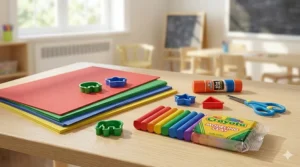
While not a traditional “kit,” this bulk crayon purchase solves the perennial problem of lost, broken, and mysteriously vanishing crayons that plague every kindergarten household. The bundle includes 24 individual boxes of 24-count crayons, giving you 576 total crayons—yes, that’s excessive for one child, but brilliant for families with multiple students or for sharing with classmates.
Key specifications: Each box contains 24 non-toxic crayons in assorted colours including Apricot, Black, Blue, Bluetiful, Blue Green, Blue Violet, Brown, Carnation Pink, Cerulean, Gray, Green, and more. Double-wrapped for durability. Dimensions: Each crayon measures 9 cm × 0.8 cm. Meets Canadian safety standards.
What teachers rarely tell parents upfront: kindergarten goes through crayons at an alarming rate. Between normal use, accidental breaking, and the mysterious phenomenon where 12 crayons enter the classroom but only 3 return home, having a stockpile eliminates weekly trips to the store. The double-wrapping on Crayola crayons makes a tangible difference compared to budget brands—these withstand the enthusiastic pressure that five-year-olds apply while colouring without snapping into frustrating fragments.
The 24-colour selection provides enough variety for creative expression while avoiding the overwhelming 64-colour boxes that lead to decision paralysis in young children. Canadian customers note these ship quickly through Amazon.ca without the customs delays that plague some art supplies ordered from US sellers. The consistent quality across all boxes means you’re not gambling on “good batch” versus “bad batch” like you do with lesser-known brands.
Pros:
✅ Bulk pricing significantly reduces per-crayon cost
✅ Double-wrapped crayons resist breaking under pressure
✅ Shares easily with siblings or donates to classroom
Cons:
❌ Massive quantity unnecessary for single-child households
❌ Storage requires dedicated space
Price & Value: In the $35-$50 CAD range depending on sales. While it seems like overkill, the math works out to roughly $1.50 per 24-count box—less than half the retail price of buying them individually. If you have kindergarten and elementary students, this becomes a multi-year investment.
3. Fiskars Preschool Training Scissors (6-Pack)
The number one teacher-recommended scissor brand in Canada earns that reputation through thoughtful design that prioritizes both safety and skill development. These training scissors feature a spring-action lever that automatically opens the blades after each cut, allowing kindergarten students to focus solely on the closing motion—the harder part of learning to use scissors.
Key specifications: Blunt-tip safety blades; plastic-covered metal cutting edges; training lever can be disabled once skill mastered; accommodates left- and right-handed users; blade length 5 cm; total length 12 cm. Meets CSA safety standards for children ages 3+.
Here’s the brilliance most parents miss: the training lever isn’t permanent. Once your child masters the basic cutting motion (usually 2-4 weeks of regular practice), you simply flip the lever up, and these transform into traditional scissors. This staged approach builds confidence without requiring you to buy two separate sets of scissors. The plastic-covered metal blades cut cleanly through paper, cardstock, and construction paper without the frustration of purely plastic scissors that bend and tear rather than cut.
Canadian kindergarten teachers frequently request Fiskars specifically because they’ve seen firsthand how the brand’s optimized opening angle—wider than cheap alternatives—prevents the common problem where kids lose their grip when opening blades. For children in French immersion programmes across Canada, these scissors work identically in either hand, which matters more than you’d think when 10% of students are left-handed but most classroom scissors are designed for right-handed use.
Pros:
✅ Training lever accelerates skill development significantly
✅ Adapts as child’s ability improves—no repurchasing needed
✅ True ambidextrous design works for left- and right-handed children
Cons:
❌ Six-pack quantity excessive unless sharing with siblings/classroom
❌ Premium price compared to generic safety scissors
Price & Value: Around $25-$35 CAD for the 6-pack on Amazon.ca. Single pairs typically retail for $8-$10, so the bulk pack saves roughly 30-40% if you need multiple scissors (siblings, keep one at home and one at school, or donate extras to classroom).
4. Learning Resources All Ready for Kindergarten Readiness Kit
This comprehensive 60+ activity set goes beyond basic supplies to include educational tools designed specifically for kindergarten preparation. While it leans more toward learning materials than traditional school supplies, it fills a valuable niche for parents who want to support their child’s academic readiness during summer before kindergarten starts.
Key specifications: Includes 60+ pieces covering numbers, counting, alphabet recognition, colours, shapes, and fine motor skill activities. Comes with 32-page parent activity guide. Sturdy carrying case (30 cm × 23 cm × 7 cm) for portability. Recommended ages 3-5 years.
What sets this apart from cheaper “learning kits” is the structured parent guide that follows a Ready-Set-Go lesson framework, giving adults clear instructions even if they have zero teaching background. The activities align with kindergarten curriculum expectations across Canadian provinces, addressing foundational skills that teachers assume students have when entering JK/SK programmes. For families in rural or remote areas of Canada where preschool access is limited, this kit provides structured learning that helps close the readiness gap.
The carrying case design acknowledges modern Canadian family realities—many households need portable educational activities for cottages, long car trips to visit grandparents in other provinces, or waiting rooms during siblings’ activities. Everything stores together, which sounds minor until you’ve lost the fourth puzzle piece under the couch. Canadian parents appreciate that activities focus on hands-on manipulation rather than screen time, addressing one of the primary concerns educators express about current kindergarten students.
Pros:
✅ Structured learning approach with clear parent instructions
✅ Portable case makes education possible anywhere
✅ Addresses multiple developmental areas simultaneously
Cons:
❌ Not traditional “school supplies”—won’t fulfill teacher’s list
❌ One-time use for most activities, limited repeat value
Price & Value: Typically $55-$75 CAD on Amazon.ca. The value proposition depends heavily on your situation—if your child attended quality preschool, you’re essentially paying for content they’ve already covered. However, for summer learning or children without preschool experience, this provides structure worth the investment.
5. Elmer’s School Glue Stick Multi-Pack (30-Count)
Kindergarten classrooms consume glue sticks at a rate that seems physically impossible until you witness it firsthand. This bulk pack of Elmer’s disappearing purple glue sticks solves the constant replacement problem while introducing a feature that kindergarten teachers actually request: the purple colour that dries clear.
Key specifications: Each glue stick contains 6 grams (0.21 oz); disappearing purple formula allows children to see where they’ve applied glue; non-toxic, acid-free, washable; safe for photos and documents. Pack of 30 individual sticks.
The purple-to-clear technology addresses a legitimate developmental issue: five-year-olds genuinely cannot see where they’ve applied clear glue, leading to either insufficient coverage (resulting in projects falling apart) or massive over-application (creating soggy, wrinkled disasters). The temporary purple tint gives immediate visual feedback, and by the time projects dry, the colour disappears completely. This isn’t just clever marketing—it’s genuinely functional design that improves kindergarten craft outcomes.
Canadian parents should note that glue stick performance varies with humidity levels, and these Elmer’s sticks maintain consistent adhesion whether you’re in dry Calgary winters or humid Montreal summers. The washable formula matters tremendously when kindergarteners inevitably glue their hands, desks, clothes, and occasionally their hair. Budget brands often claim “washable” but require pre-treating with stain removers, whereas Elmer’s typically releases from fabric with standard laundry cycles.
Pros:
✅ Purple colour eliminates guesswork for young children
✅ Washable formula minimizes wardrobe casualties
✅ Bulk quantity prevents mid-project shortages
Cons:
❌ Thirty-stick pack exceeds single-child needs dramatically
❌ Shelf life approximately 18 months after opening
Price & Value: Around $30-$40 CAD for 30 sticks on Amazon.ca, working out to roughly $1-$1.35 per stick compared to $2-$3 retail for individual purchases. For families with multiple children or for classroom donations, the economics make perfect sense. Single-child households might prefer the 12-count pack in the $15-$18 range.
6. VASCHY Lightweight Kindergarten Backpack with Lunch Bag
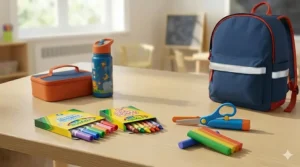
This budget-friendly two-piece set (backpack + lunch bag, no pencil case) targets cost-conscious Canadian families who need quality basics without premium pricing. The simplified design focuses resources on durability and comfort rather than extensive features, resulting in a reliable workhorse that handles the kindergarten year.
Key specifications: Backpack capacity 12 litres; dimensions 38 cm × 28 cm × 13 cm; insulated lunch bag with aluminum foil lining; padded shoulder straps; chest clip for stability; water-resistant 600D polyester. Weight: 450 grams combined.
What Canadian parents appreciate most about this set is the chest clip stabilization system, rarely found on budget kindergarten backpacks. That clip distributes weight more evenly, preventing the common problem where loaded backpacks pull small children backward—particularly noticeable when kids are bundled in winter coats. The 12-litre capacity hits the sweet spot: large enough for folders, extra clothes, and a library book, but not so spacious that kids over-pack and strain their backs.
The aluminum foil lining in the lunch bag provides adequate insulation for 2-3 hours, which works for half-day programmes or schools with morning snack times. Full-day kindergarten students in provinces like Ontario might find lunch slightly warm by midday, though adding a small ice pack (not included) solves this issue. The 600D polyester construction—thicker than the 400D used in cheaper backpacks—shows measurably better wear resistance through a school year of daily use.
Pros:
✅ Chest clip improves weight distribution for small frames
✅ Budget-friendly without sacrificing essential quality
✅ Simpler design reduces zipper failures and other breakpoints
Cons:
❌ No pencil case included—requires separate purchase
❌ Limited insulation duration for full-day programmes
Price & Value: Typically $35-$45 CAD on Amazon.ca. The two-piece configuration saves $10-$15 compared to three-piece sets, which matters if you already have a pencil case or pouch from previous years. For families watching every dollar—particularly those with multiple children entering school simultaneously—this set maximizes value per dollar spent.
7. Ticonderoga Pre-Sharpened #2 Pencils (96-Pack)
The legendary yellow pencil that dominated North American classrooms for decades maintains its position through consistent quality rather than flashy innovation. This bulk pack ensures your kindergarten student never faces the “forgot my pencil” crisis while providing enough extras for inevitable losses, donations, and sibling borrowing.
Key specifications: Pre-sharpened #2 HB graphite; soft writing core reduces hand pressure needed; hexagonal shape prevents rolling; pink erasers; length 19 cm. Made from reforested wood. Pack of 96 pencils.
Here’s what educators know but rarely explain: kindergarten marks the transition from large-diameter toddler crayons to standard-width pencils, and that adjustment challenges small hand muscles. Ticonderoga’s soft graphite core requires noticeably less pressure to make marks compared to harder brands, reducing hand fatigue during early writing practice. The pre-sharpened feature matters more than parents realize—many kindergarten classrooms don’t have enough sharpeners for 20+ students, and five-year-olds using manual sharpeners often break more points than they successfully sharpen.
The hexagonal barrel prevents the frustrating pencil-rolling-off-desk phenomenon that interrupts learning constantly in round-barreled alternatives. Canadian teachers specifically request Ticonderoga because the erasers actually erase cleanly without leaving grey smudges or tearing paper—a surprisingly rare quality in budget pencils. For French immersion students learning to write in both languages simultaneously, the reduced pressure requirement makes dual-language practice less physically tiring.
Pros:
✅ Soft graphite reduces hand fatigue during writing practice
✅ Pre-sharpened eliminates classroom sharpener bottlenecks
✅ Superior erasers minimize paper damage during corrections
Cons:
❌ 96-pencil quantity exceeds single-year kindergarten needs
❌ Premium pricing compared to generic yellow pencils
Price & Value: Around $20-$30 CAD for 96 pencils on Amazon.ca, approximately $0.21-$0.31 per pencil compared to $0.50+ for individual retail purchases. The economics favor bulk buying even for single children when you factor in sharing with siblings, replacing lost pencils, and donating extras to classroom supplies.
✨ Don’t Miss These Exclusive Deals!
🔍 Take your kindergarten preparation to the next level with these carefully selected products. Click on any highlighted item to check current pricing and availability on Amazon.ca. These tools will help you create authentic learning success your child will love!
Setting Up Your Kindergarten Student for First-Day Success
The transition from preschool or home to kindergarten represents one of childhood’s major milestones, and proper preparation extends beyond just purchasing supplies. Based on conversations with veteran kindergarten teachers across Canadian provinces, here’s a practical 4-week preparation guide that transforms anxiety into excitement.
Week 4 Before Start: Begin establishing the school routine. Set wake-up times matching the school schedule (even during summer) so the first week doesn’t shock small systems. Practice the morning routine: getting dressed independently, eating breakfast within 20 minutes, brushing teeth, and packing the backpack. Canadian children entering JK at age 4 particularly benefit from extended routine practice, as they’re younger than many international kindergarten students.
Week 3 Before Start: Introduce the physical supplies gradually. Let your child unpack the backpack, organize the pencil case, and practice zipping/unzipping lunch bags. This sounds trivial until you witness 20 kindergarteners simultaneously struggling with backpack zippers during the chaotic first week. Practice opening and closing everything repeatedly—muscle memory develops through repetition.
Week 2 Before Start: Visit the school playground after hours if accessible. Walk the route you’ll take each morning, noting traffic lights, crosswalks, and landmarks. For Canadian families in rural areas where school buses transport students, practice the bus stop routine. Role-play introductions: “Hi, I’m [Name], and I’m in Mrs. [Teacher’s] class.” Five-year-olds aren’t naturally social with strangers—they need scripted phrases to fall back on.
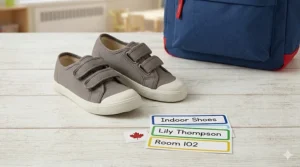
Week 1 Before Start: Label everything. Use waterproof labels with your child’s full name, not just first name—classroom teachers in Canada often have multiple students named Emma, Liam, or Noah. Check that winter items (if school year starts in September in your region) include indoor shoes, as most Canadian schools require separate indoor/outdoor footwear to manage snow and slush tracking.
Critical Canadian Consideration: Many provinces require immunization records before kindergarten entry. Verify that your child’s vaccinations align with provincial public health requirements well before the first day. Last-minute immunization appointments can delay school start and create unnecessary stress.
The psychological preparation matters as much as physical readiness. Read age-appropriate books about starting kindergarten, emphasizing the fun aspects—new friends, playground equipment, art projects—rather than dwelling on potential anxieties. Canadian authors like Robert Munsch offer excellent kindergarten-themed stories that resonate with our specific school culture.
Common Kindergarten Supply Mistakes Canadian Parents Make (And How to Avoid Them)
After reviewing hundreds of parent experiences and teacher feedback, these patterns emerge consistently. Avoiding these pitfalls saves money, reduces stress, and helps your child start kindergarten confidently.
Mistake #1: Buying Too Much Too Soon
The well-intentioned parent sees “complete kindergarten starter kit” and purchases everything immediately, only to discover the teacher’s specific supply list differs significantly. Schools across Canada maintain different preferences—some request specific brands, others prohibit certain items (scented markers, glitter glue), and requirements vary between JK and SK.
Solution: Wait for the official supply list from your child’s specific school, typically sent 2-3 weeks before school starts. Purchase only what’s listed. The “starter kits” work best as supplemental home supplies rather than school supplies.
Mistake #2: Prioritizing Characters Over Functionality
That $75 Disney Princess backpack seems worth it when your daughter squeals with delight, until you realize it’s made from thin nylon that tears by October, lacks proper padding, and provides minimal organization. Character licensing increases prices by 40-60% without improving functionality.
Solution: Choose backpacks based on features (water resistance, padding, compartments, size appropriateness) first, then select the design your child likes from functionally sound options. Canadian weather demands durability—flimsy character backpacks don’t survive winter.
Mistake #3: Ignoring Handedness
Approximately 10% of children are left-handed, yet most “complete kits” include only right-handed scissors. Left-handed children using right-handed scissors develop frustration, poor cutting skills, and sometimes hand pain.
Solution: Test your child’s scissor preference before purchasing. True left-handed scissors (not just handle position but blade orientation) are essential for left-handed students. Fiskars and Westcott offer genuine left-handed options on Amazon.ca, though selection is smaller than right-handed versions.
Mistake #4: Bulk Buying Without Storage Plans
That 96-pack of pencils offers excellent value until you realize you have no logical place to store 90 extra pencils in your already-crowded home. Bulk items scattered across various drawers and closets defeat their organizational purpose.
Solution: Designate a “school supply station” before bulk purchases arrive. A simple plastic bin with dividers keeps extras organized and accessible for quick replacements. Canadian parents often use basement storage, but remember that extreme temperature fluctuations can damage crayons, glue, and other temperature-sensitive items.
Mistake #5: Overlooking Name Labels
Nothing disappears faster than unlabeled kindergarten supplies. Crayons, markers, glue sticks, scissors—all look identical across 20 students. Teachers spend hours managing lost items when simple labeling would prevent 90% of mix-ups.
Solution: Invest in waterproof name labels (around $15-$25 CAD for a multi-year supply on Amazon.ca). Label everything: individual crayons, every marker, pencil cases, lunch bags, backpacks, clothing, shoes. It seems excessive until your child comes home wearing someone else’s mittens for the third time.
Mistake #6: Forgetting About Indoor Shoes
Nearly all Canadian elementary schools require separate indoor shoes to manage snow, slush, mud, and general outdoor mess. Parents from warmer climates or countries without this requirement often overlook this until the first day when their child can’t enter the classroom.
Solution: Purchase comfortable, easy-to-fasten indoor shoes (Velcro closures work better than laces for kindergarteners). Keep them in the backpack until school starts, then they stay in the classroom cubby. Budget $20-$35 CAD for basic indoor shoes that prioritize comfort over fashion.
Mistake #7: Assuming All Glue Works the Same
Budget glue products fail consistently in kindergarten applications—glue sticks dry out rapidly, liquid glue creates soggy messes, and adhesion fails after a few weeks. Teachers specifically request Elmer’s not because of brand loyalty but because of documented performance differences.
Solution: Follow teacher brand recommendations for consumables like glue, especially when they specify them on supply lists. The $3-$5 saved by buying generic often results in repurchasing better products mid-year.
Mistake #8: Overpacking the Backpack Daily
Enthusiastic parents pack extra clothes, full first-aid kits, multiple snacks, backup supplies, entertainment items, resulting in backpacks weighing 5-7 kg for children who weigh 18-22 kg themselves. Physiotherapists recommend backpacks not exceed 10-15% of body weight.
Solution: Pack minimally according to the teacher’s daily checklist. Leave extra clothes at school in the cubby rather than carrying them daily. Most items stay at school—kindergarten students don’t bring homework requiring extensive supplies transport.
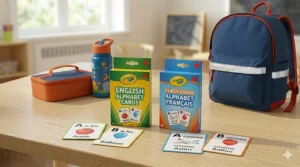
How to Choose the Right Complete Kindergarten Starter Kit for Your Canadian Child
Decision frameworks simplify overwhelming choices. Rather than scrolling endlessly through Amazon.ca, use this priority-based approach to identify your optimal complete kindergarten starter kit rapidly.
Priority 1: Match Your Child’s Age and Developmental Stage
Junior Kindergarten students (age 4 in Ontario) have different physical capabilities than Senior Kindergarten students (age 5-6). Younger students benefit from lightweight backpacks (under 500 grams), training scissors with spring mechanisms, large-grip crayons, and simplified organization systems. Older kindergarten students can handle slightly more complex fasteners, traditional scissors (with safety features), and multi-compartment organization.
Decision Rule: If your child is in the younger half of their kindergarten cohort, prioritize simplicity and weight reduction. If they’re among the oldest or entering with preschool experience, you can select slightly more advanced options.
Priority 2: Consider Your Climate and Regional Factors
Kindergarten supplies perform differently across Canada’s vast climate zones. Families in British Columbia’s Lower Mainland deal with persistent rain requiring genuinely waterproof (not just water-resistant) backpacks. Prairie families in Saskatchewan and Manitoba need supplies that withstand -40°C garage storage without degrading. Maritime families face high humidity affecting paper products and adhesives.
Decision Rule: Research product reviews from customers in your specific region. A backpack praised in Vancouver may perform poorly in Yellowknife. Canadian-specific reviews on Amazon.ca often mention climate performance explicitly.
Priority 3: Assess Your Budget Honestly
Complete kindergarten starter kits range from $35 to $150+ CAD, but expensive doesn’t guarantee better outcomes. The $120 personalized set won’t help your child learn to cut better than the $40 Fiskars scissors. However, ultra-cheap $20 “complete kits” from unknown brands typically include such poor quality items that you’ll replace everything mid-year, doubling your actual spend.
Decision Rule: Target the $40-$70 CAD range for balanced quality-to-cost ratio. Allocate higher budgets to items touching your child directly (backpacks, lunch bags) and economize on consumables replaced frequently (crayons, glue, paper).
Priority 4: Evaluate Actual Versus Perceived Completeness
Marketing claims of “complete 50-piece kindergarten kit!” often include dubious items: 20 sheets of construction paper (used in one art session), 10 pencils (when the school requires #2 Ticonderoga specifically), 15 crayons (wrong type for the teacher’s requests). True completeness matches your specific school’s supply list, not an arbitrary item count.
Decision Rule: Obtain your school’s official supply list first. Then evaluate kits based on how many required items they include, not total piece count. A 25-piece kit covering 20 of 25 required items outperforms a 75-piece kit covering only 15 required items.
Priority 5: Factor in Siblings and Multi-Year Use
Canadian families with multiple children should evaluate bulk purchases differently than single-child households. That 96-pack of pencils seems excessive for one kindergartener but makes perfect sense with three children in elementary grades. Similarly, gender-neutral designs (solid colours rather than character themes) extend usability across siblings.
Decision Rule: If you have multiple children, invest in bulk quantities of consumables and gender-neutral durable goods. Single-child families benefit more from exact-quantity purchases and design freedom.
Priority 6: Prioritize Features Over Fashion
This sounds obvious, yet struggles when your child insists on the sparkly unicorn backpack with thin straps, minimal padding, and a single compartment. Successful kindergarten supplies balance child appeal with parent-recognized functionality.
Decision Rule: Shortlist 3-5 functionally sound options first (proper sizing, adequate padding, water resistance, organization features), then let your child choose their favourite from that pre-screened selection. You control quality; they control aesthetics within those boundaries.
Priority 7: Research Canadian Availability Carefully
Amazon.ca carries fewer kindergarten supply options than Amazon.com, with some popular products unavailable or shipping from international sellers with 4-6 week delivery times and potential customs fees. Assuming Canadian availability without verification creates last-minute scrambles.
Decision Rule: Verify “Ships from and sold by Amazon.ca” or “Prime eligible” status. Third-party sellers shipping from Asia or the United States often have lower prices but delivery timelines incompatible with August back-to-school needs. Add 2-3 weeks to estimated delivery for realistic planning.
Understanding Price Differences: Why Some Kindergarten Kits Cost More in Canada
Canadian parents frequently notice that comparable products cost 20-40% more than American equivalents even after currency conversion. This isn’t arbitrary price gouging—multiple factors create legitimate cost increases for Canadian kindergarten supplies.
Import Duties and Tariff Classifications: School supplies enter Canada under specific tariff codes, many carrying duty rates of 6-8%. Backpacks face different duty rates than notebooks, which carry different rates than scissors. Importers pass these costs to consumers, typically adding $5-$15 to price tags on complete kits.
Transportation and Distribution Costs: Canada’s vast geography and smaller population density increase logistics expenses significantly. A distribution center in Ontario serving both Toronto and Thunder Bay faces far higher per-unit transportation costs than a US facility serving similar-sized but more densely packed regions. Remote and northern communities face particularly pronounced markups—$45 backpacks in Toronto might cost $65+ in Iqaluit or Whitehorse.
Bilingual Labelling Requirements: Canadian law mandates both English and French on product labels and packaging. Companies either create Canada-specific packaging (increasing costs) or add bilingual stickers to international packaging (also increasing costs). This compliance requirement adds $2-$5 to most packaged products.
Smaller Market Volume: Canada’s population of 39 million versus 335 million in the United States means retailers move fewer units, reducing economies of scale. Bulk discounts negotiated by American retailers based on million-unit orders aren’t available to Canadian retailers ordering hundreds of thousands.
Currency Exchange Volatility: The CAD/USD exchange rate fluctuates significantly (recently ranging from 1.25 to 1.40). Retailers build currency cushions into pricing to avoid constant price changes. When Canadian dollar strengthens, retail prices rarely adjust downward as quickly as they increased when the dollar weakened.
Higher Labour and Operating Costs: Canadian minimum wages, workplace standards, and commercial rent in major cities exceed American averages. Amazon.ca’s fulfillment centers in Canada pay workers more per hour than equivalent US facilities, costs reflected in product pricing.
Regional Tax Variations: Provincial sales taxes (PST, HST, GST) add 5-15% depending on province, though these appear at checkout rather than in listed prices. Still, the psychological impact of final totals influences perceived value and purchasing decisions.
Practical Implication for Parents: When comparing prices between Amazon.ca and Amazon.com, expect 15-30% premiums for Canadian purchases even on identical products. However, factor in cross-border shipping fees ($15-$40), potential customs charges, delayed delivery times, and warranty complications when determining true value. Most Canadian families find domestic purchasing preferable despite higher list prices.
FAQ: Complete Kindergarten Starter Kit Questions Answered
❓ Can my child bring their favourite character backpack if it's not on the supply list?
❓ Do I need to buy expensive brands like Crayola and Fiskars, or will generic brands work for kindergarten?
❓ How do I organize kindergarten supplies at home to make morning routines smoother in Canadian winters?
❓ Are there Canadian-made kindergarten supplies, or does everything come from overseas?
❓ What should I do with extra kindergarten supplies when bulk buying leaves us with surplus items?
Conclusion: Investing in Your Child’s Kindergarten Success
The complete kindergarten starter kit you choose today influences far more than just the first few weeks of school. Quality supplies that work reliably build confidence in young learners still developing fine motor skills and self-sufficiency. When scissors cut cleanly, crayons colour vibrantly, and backpacks stay organized, kindergarten students focus on learning and socializing rather than struggling with malfunctioning tools.
For Canadian families navigating this milestone in 2026, the market offers unprecedented options across every price point and feature set. The seven complete kindergarten starter kits reviewed in this guide represent the best balance of quality, value, and Canadian availability. Whether you select the budget-friendly VASCHY two-piece set around $40 CAD or invest in the comprehensive Learning Resources readiness kit at $70 CAD, prioritize functionality appropriate for your child’s specific developmental stage and your regional climate.
Remember that kindergarten marks the beginning of a 13-year educational journey through Canada’s excellent public school system. Starting with supplies that work reliably establishes positive associations with school, learning, and personal capability. The extra $15-$20 invested in proven brands like Crayola, Fiskars, and Elmer’s pays dividends through the entire kindergarten year in reduced frustration, better project outcomes, and fewer mid-year replacements.
Take time now, before the back-to-school rush hits Amazon.ca in late August, to assess your child’s specific needs, verify your school’s supply list, and order thoughtfully. Kindergarten represents one of childhood’s magical transitions—equip your little scholar properly, and watch them thrive in Canada’s world-class education system that consistently ranks among the globe’s best.
✨ Don’t Miss These Exclusive Deals!
🔍 Take your kindergarten preparation to the next level with these carefully selected products. Click on any highlighted item to check current pricing and availability on Amazon.ca. These tools will help you create authentic learning success your child will love!
Recommended for You
- 7 Best Magnetic Letters and Numbers Set in Canada 2026
- 7 Best Lightweight Backpack for Kindergarten Canada 2026
- Best Washable Markers for Kindergarten Classroom Canada 2026 | Top 7 Picks
Disclaimer: This article contains affiliate links. As an Amazon Associate, I earn from qualifying purchases. If you purchase products through these links, we may earn a small commission at no additional cost to you.
✨ Found this helpful? Share it with your friends! 💬🤗
