
In This Article
You know that feeling when finals week hits and your brain feels like it’s running a marathon while simultaneously solving complex equations? Yeah, we’ve all been there. But here’s something most students don’t realize: exam stress becomes problematic when it interferes with your ability to perform and achieve your academic and learning goals.
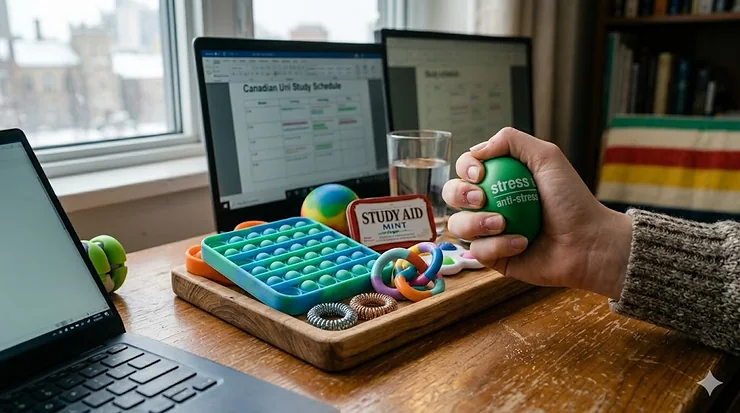
According to research from Canadian universities, stress relief supplies for exam season aren’t just nice-to-have accessories – they’re essential tools that help students manage the physical and mental symptoms of test anxiety. Physical signs include a fast heartbeat, tense muscles, headache, sweating, upset stomach, nausea, diarrhea, dry mouth and difficulty sleeping. That’s where the right supplies come in.
Whether you’re cramming for your MCAT at a Toronto library or preparing for final exams in Vancouver, having the right stress management tools can transform your study sessions from overwhelming to manageable. This guide explores seven evidence-based stress relief supplies for exam season that Canadian students swear by – all available on Amazon.ca with prices in CAD. From fidget tools for anxiety students to aromatherapy for focus studying, we’ve researched what actually works.
Let’s dive into the world of sensory regulation tools and exam anxiety management tools that can help you ace those exams while maintaining your sanity.
Quick Comparison Table: Top Stress Relief Supplies at a Glance
| Product Type | Best For | Price Range (CAD) | Portability | Noise Level |
|---|---|---|---|---|
| Infinity Cube | Silent fidgeting during study | $12-$25 | Pocket-sized | Silent |
| Stress Ball Pack | Hand tension release | $5-$29 | Highly portable | Silent |
| Essential Oil Diffuser | Creating calm study environment | $30-$50 | Desk-bound | Ultra-quiet |
| Fidget Sensory Kit | Multiple anxiety outlets | $14-$35 | Backpack-friendly | Mostly silent |
| Aromatherapy Roll-On | On-the-go focus boost | $10-$18 | Purse/pocket | N/A |
| Breathing Timer Device | Guided meditation practice | $18-$35 | Desktop | Silent |
| Motivational Stress Balls | Positive affirmations + relief | $13-$26 | Highly portable | Silent |
💬 Just one click – help others make better buying decisions too!😊
✨ Don’t Miss These Exclusive Deals!
🔍 Take your exam preparation to the next level with these carefully selected products available in Canada. Click on any highlighted item to check current pricing and availability on Amazon.ca. These tools will help you create authentic stress relief your brain will thank you for!
Top 7 Stress Relief Supplies for Exam Season: Expert Analysis
1. PILPOC theFube Infinity Cube – Premium Aluminum Fidget Tool
If you’re looking for a sophisticated fidget solution that won’t make you look like you’re playing with toys during a study session, the PILPOC theFube Infinity Cube is your answer. This isn’t your average plastic fidget – it’s crafted from aircraft-grade aluminum alloy that feels substantial in your hand.
Key Specifications:
- Material: Aluminum alloy construction
- Size: 1.57 x 1.57 x 1.57 inches (compact and discreet)
- Weight: Substantial enough to provide satisfying tactile feedback
Price Range: $24-$32 CAD on Amazon.ca
Canadian students particularly appreciate this infinity cube because it’s completely silent – perfect for those marathon library study sessions where even a pen click can earn you disapproving glares. The eight interconnected cubes can be rotated from any direction, providing endless configurations that keep your hands busy while your mind focuses on organic chemistry or calculus.
Customer Feedback (Canadian Buyers): Toronto-based university students report that the premium metal construction feels “professional” and “durable,” with many noting they’ve used the same cube throughout entire semesters without any wear. One McMaster student mentioned it helped them through 4-hour study blocks by providing a physical outlet for nervous energy.
✅ Pros:
- Premium aluminum construction lasts for years
- Completely silent operation (library-approved)
- Comes with protective carry case
❌ Cons:
- Higher price point than plastic alternatives
- Heavier weight may not suit everyone
2. GRISPOT Colour-Changing Stress Balls – 3-Pack Sensory Set
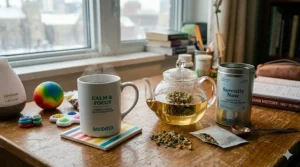
The GRISPOT Colour-Changing Stress Balls take the classic stress relief tool and add a fascinating visual element that makes them particularly effective for students who need sensory engagement. These aren’t just ordinary squeeze balls – they’re filled with temperature-sensitive gel that changes colour as you manipulate them.
Key Specifications:
- Set includes 3 balls (yellow, purple, blue)
- Made from BPA-free, latex-free rubber
- Diameter: Approximately 6 cm (perfect palm fit)
Price Range: $14-$19 CAD on Amazon.ca
What makes these stress balls exceptional for exam anxiety management tools is the dual sensory experience. The physical act of squeezing engages your muscles (helping release built-up tension), while the colour transformation provides visual feedback that can be almost meditative. According to progressive muscle relaxation theory, physical tension and mental anxiety are connected, and by consciously relaxing muscles, students with anxiety can shut off their flight-or-fight response and focus on the present moment.
Customer Feedback (Canadian Buyers): Students across Canada report these balls survived entire exam seasons without leaking. A UBC student mentioned using them during timed practice tests, finding the colour-changing feature helped them gauge how long they’d been squeezing – an inadvertent stress timer.
✅ Pros:
- Colour-changing provides engaging visual feedback
- Durable construction (no reported leaks)
- BPA-free and safe for extended use
❌ Cons:
- Slight rubber smell when first opened (dissipates with airing)
- May be too soft for those preferring firmer resistance
3. ASAKUKI 500ml Essential Oil Diffuser – Premium Aromatherapy System
The ASAKUKI 500ml Essential Oil Diffuser represents the intersection of stress relief and environmental control. This isn’t just about making your study space smell nice – it’s about leveraging aromatherapy for focus studying through scientifically-backed scent therapy.
Key Specifications:
- Tank capacity: 500ml (runs 6-8 hours continuously)
- Coverage area: Up to 250 square feet
- Features: Remote control, 7 LED colour options, 3 timer settings
Price Range: $30-$40 CAD on Amazon.ca
Research shows that essential oils such as peppermint, rosemary, frankincense, bergamot, lemon, cypress, and eucalyptus in aromatherapy can be a powerful tool in enhancing focus and concentration. The ASAKUKI diffuser’s large tank means you can run it through extended study sessions without refilling, while the remote control lets you adjust settings without breaking your concentration.
Customer Feedback (Canadian Buyers): Canadian students living in residence halls particularly appreciate the auto-shutoff feature – no fire hazards when you inevitably fall asleep while studying. A McGill student reported using peppermint oil during morning study sessions and lavender during evening wind-down, finding the routine helped establish healthy study-sleep boundaries.
✅ Pros:
- Large 500ml capacity for extended use
- Ultra-quiet operation (under 35dB)
- Remote control eliminates desk disruption
❌ Cons:
- Requires regular cleaning for optimal performance
- Initial investment higher than basic diffusers
4. Teacher Created Resources Fidget Sensory Toy Box – 18-Piece Variety Kit
The Teacher Created Resources Fidget Sensory Toy Box is the Swiss Army knife of stress relief supplies for exam season. Instead of committing to one fidget style, this kit gives you 18 different sensory regulation tools to discover what works best for your unique anxiety patterns.
Key Specifications:
- Includes 18 different fidget tools (spiky rings, squishy balls, flip chains, stretchy strings)
- All items meet US and Canadian toy safety standards
- Portable storage box included
Price Range: $20-$28 CAD on Amazon.ca
What makes this particularly valuable for exam anxiety management tools is the variety. Maybe infinity cubes work during calculus but stress balls are better for essay writing – this kit lets you experiment. According to research on fidget tools for anxiety students, fidget tools serve as effective stress and anxiety reducers by providing individuals with a tangible outlet for nervous energy, promoting a sense of calm.
Customer Feedback (Canadian Buyers): Concordia students report sharing these kits with study group members, with different people gravitating toward different tools. One student mentioned the flip chain became their “organic chemistry companion,” while another preferred the marble mesh during reading comprehension.
✅ Pros:
- Variety lets you discover your optimal fidget type
- Storage box keeps everything organized
- Child-safe materials (latex-free, non-toxic)
❌ Cons:
- Some pieces may not appeal to everyone
- Storage box can be bulky for minimalist backpacks
5. Focus Essential Oil Roll-On – Pre-Diluted Concentration Blend
The Focus Essential Oil Roll-On is aromatherapy for focus studying in its most portable form. This isn’t something you diffuse – it’s something you apply directly to your temples, wrists, or neck for an immediate concentration boost.
Key Specifications:
- Volume: 10ml (approximately 300 applications)
- Blend includes: Vetiver, peppermint, orange, geranium, lavender, sage, spruce
- Pre-diluted with coconut oil (safe for immediate application)
Price Range: $12-$16 CAD on Amazon.ca
The beauty of this product lies in its convenience. You can’t bring a diffuser into an exam room, but you can absolutely apply this roll-on before walking in. Research indicates that vetiver, peppermint and orange are very well known to enhance clarity and concentration, promoting a sense of calm and clarity in order to stay focused on the task at hand.
Customer Feedback (Canadian Buyers): Students across Canadian universities report using this before exams, during study breaks, and even in the exam room itself (applied beforehand). A York University student mentioned the scent helped create a “Pavlovian response” – after using it during productive study sessions, applying it before exams helped trigger that same focused mental state.
✅ Pros:
- Portable enough for exam rooms
- Pre-diluted (no carrier oil mixing required)
- Natural ingredients (no synthetic additives)
❌ Cons:
- Scent is subjective (what smells focusing to one may distract another)
- Recommended for ages 12+ only
6. Meditation Breathing Light – 4-7-8 Method Guide
The Meditation Breathing Light brings breathing exercise timer technology to your desk in the form of a visual guide. This device uses colour-coded LED lights to guide you through the clinically-proven 4-7-8 breathing technique.
Key Specifications:
- Method: Green light (inhale 4 seconds), yellow light (hold 7 seconds), blue light (exhale 8 seconds)
- Size: Approximately 17.3 x 9.7 cm (desk-friendly)
- Power: 3 AAA batteries (not included) or USB cable
Price Range: $18-$26 CAD on Amazon.ca
This is where stress relief supplies for exam season meet evidence-based psychology. The 4-7-8 breathing technique involves slowly and deeply inhaling through your nose for a count of four, holding the breath for a count of seven, then exhaling slowly through pursed lips for a count of eight, which helps relieve stress. The Breathing Light automates the counting, letting you focus purely on the breath.
Customer Feedback (Canadian Buyers): Students report using this during study breaks and before bed. A Waterloo student mentioned it helped establish a “context switch” – five minutes of guided breathing to transition from study mode to sleep mode, improving both sleep quality and next-day focus.
✅ Pros:
- Visual guidance requires no sound or counting
- Activates body’s natural relaxation response
- Suitable for all ages (children through adults)
❌ Cons:
- Requires batteries or USB connection
- Single breathing pattern (no customization)
7. Lumarice Motivational Stress Balls – 5-Pack with Affirmations
The Lumarice Motivational Stress Balls combine physical stress relief with psychological support through printed affirmations. Each foam ball features a different motivational quote designed to shift your mindset while you squeeze away tension.
Key Specifications:
- Set of 5 foam balls with different affirmations
- Diameter: Approximately 2.5 inches
- Material: Durable polyurethane foam
Price Range: $13-$18 CAD on Amazon.ca
What separates these from standard stress balls is the cognitive element. Messages like “You’ve got this” and “Breathe and believe” provide micro-doses of encouragement during challenging study sessions. Research on self-soothing supplies suggests that combining physical and mental interventions creates stronger anxiety reduction than either alone.
Customer Feedback (Canadian Buyers): Canadian students particularly appreciate these during late-night study sessions when motivation wanes. An Alberta student mentioned keeping one in each study location (home desk, library, campus coffee shop) so they always had access to both physical relief and mental encouragement.
✅ Pros:
- Foam construction provides satisfying squeeze resistance
- Motivational messages offer psychological support
- Lightweight and portable for any study location
❌ Cons:
- Foam may compress over time with heavy use
- Affirmations may feel cheesy to some users
Understanding Exam Stress: The Canadian Student Experience
Exam stress isn’t just about feeling nervous before a test – it’s a complex physiological and psychological response that affects millions of Canadian students annually. Understanding what’s happening in your body and mind during exam season is the first step toward managing it effectively.
When you encounter a stressful situation like an upcoming exam, your body activates what psychologists call the “stress response.” Your body releases adrenaline, your heart beats faster and you start to breathe more quickly – both good and bad events can trigger this reaction. This is completely normal and, in small doses, can actually enhance performance.
The problem emerges when this stress response becomes chronic. During exam season, many students experience weeks of elevated stress hormones, leading to the “consuming energy stores” phase where your body begins to release stored sugars and fats, making you feel driven, pressured and tired, potentially leading to increased coffee consumption, smoking, and alcohol use, along with experiencing anxiety, negative thinking, memory loss, and getting sick more frequently.
This is where stress relief supplies for exam season become crucial. They’re not about eliminating stress entirely (some stress can be motivating), but about preventing stress from escalating to levels that impair your performance. Canadian research shows that students who actively manage exam stress through tools like mindfulness supplies students and sensory regulation tools perform better academically than those who don’t.
Think of stress management tools as preventative maintenance for your brain. Just like you wouldn’t run a car for weeks without oil changes, you shouldn’t run your brain through exam season without proper stress relief mechanisms. The supplies we’ve covered – from fidget tools for anxiety students to aromatherapy for focus studying – provide that essential maintenance.
The Science Behind Fidget Tools and Focus
Here’s something that might surprise you: fidgeting isn’t a sign of poor attention – it’s often a strategy your brain uses to maintain attention. This is particularly relevant when we talk about fidget tools for anxiety students and how they actually improve rather than disrupt concentration.
Research on sensory regulation tools reveals that fidgeting can help relieve stress in the short term and may help increase concentration and attention, though some studies show they may actually be a distraction, especially in children. The key is understanding which type of fidgeting helps versus hinders.
Passive fidgeting – like clicking a pen repeatedly or tapping your foot – can be disruptive and doesn’t necessarily improve focus. Active, intentional fidgeting with dedicated tools (like infinity cubes or stress balls) provides sensory input that helps regulate arousal levels. Think of it like this: your brain has an optimal arousal zone for learning. Too little arousal and you’re bored and distracted. Too much arousal and you’re anxious and scattered. Fidget tools help you stay in that sweet spot.
The mechanism works through several pathways. First, repetitive hand movements engage motor cortex regions that might otherwise wander toward anxious thoughts. Second, the tactile feedback provides sensory input that can be calming. Third, having control over a physical object during an uncontrollable situation (like exam difficulty) provides a psychological sense of agency.
Canadian students report that the silent nature of modern fidget tools makes them practical for actual study environments. Unlike the loud fidget spinners that dominated a few years ago, today’s stress relief supplies for exam season – infinity cubes, worry stones, sensory stones – can be used in libraries, quiet study rooms, and even during exams themselves without disturbing others.
The bottom line? When chosen and used appropriately, fidget tools aren’t a distraction from studying – they’re a tool that enables better studying by managing the anxiety and restlessness that would otherwise derail focus.
Aromatherapy for Focus: What Actually Works
Walk into any Canadian university library during exam season and you’ll notice something: the air smells different. It’s not just stress sweat (though there’s probably some of that). More students are turning to aromatherapy for focus studying, using portable diffusers, roll-ons, and even scented study supplies to create optimal cognitive environments.
But does it actually work, or is it just pleasant placebo? The research is compelling. Studies on essential oils have shown that aromatherapy works by stimulating the olfactory system, the part of the brain connected to smell, with scent molecules traveling through the nose to the brain, particularly affecting the limbic system which influences emotions and memory.
Different essential oils serve different cognitive purposes. Peppermint oil is perhaps the most studied for academic performance. Peppermint contains menthol, which stimulates the hippocampus area responsible for mental clarity and focus, increasing alertness and cognitive function by activating neurotransmitters. Canadian students report using peppermint during morning study sessions and for subjects requiring sharp analytical thinking.
Rosemary oil has earned its reputation as the “memory oil.” Research suggests its aroma may significantly improve memory retention and recall – exactly what you need when memorizing organic chemistry reactions or historical dates. Lavender works differently, promoting calm rather than stimulation. It’s ideal for evening study sessions or managing pre-exam jitters.
The key to effective aromatherapy for focus studying is matching the oil to both the time of day and the type of cognitive work. Analytical, detail-oriented work (math, science, coding) pairs well with stimulating oils like peppermint or lemon. Creative, conceptual work (essay writing, brainstorming) may benefit from balancing oils like bergamot. Review and memorization work excels with rosemary.
For Canadian students, practical application matters. Desktop diffusers work great for dorm rooms or private study spaces, but they’re not allowed in most libraries. That’s where roll-ons and personal inhalers become exam anxiety management tools you can actually use anywhere. The FOCUS Essential Oil Roll-On we discussed earlier can be applied before entering an exam, creating an olfactory anchor that triggers your “study mode” mindset.
One important note: aromatherapy works best as part of a comprehensive approach. It’s not magic – you can’t fail to study all semester then expect peppermint oil to save your exam. But when combined with proper preparation, adequate sleep, and other stress management techniques, aromatherapy becomes a valuable tool in your academic toolkit.
Creating a Stress-Free Study Environment
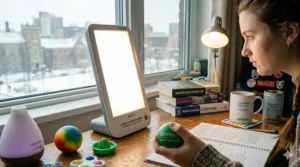
Your study environment isn’t just where you study – it’s a crucial variable in how effectively you study and how stressed you feel while doing it. Creating an optimal space for exam preparation involves more than just finding a quiet corner; it requires intentional design that supports both concentration and stress management.
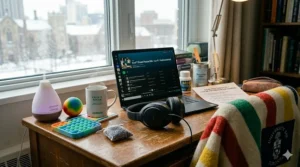
Start with the physical setup. Research consistently shows that clutter increases cortisol (stress hormone) levels. Before exam season, spend 30 minutes organizing your study space. This doesn’t mean everything must be minimalist – it means everything should have a designated place. Your stress relief supplies for exam season should be within arm’s reach. Keep your infinity cube, stress balls, or other sensory regulation tools in a specific spot so you’re not searching for them mid-anxiety spike.
Lighting dramatically affects both mood and cognitive performance. Natural light is ideal, but if you’re studying during evening hours (as most students do during exam season), invest in full-spectrum bulbs that mimic daylight. Pair this with your essential oil diffuser creating ambient aromatherapy, and you’ve addressed two sensory systems that influence stress levels.
Temperature matters more than most students realize. A room that’s too warm makes you drowsy; too cold and you’re tense and distracted. The sweet spot for most people is around 20-22°C (68-72°F). If you’re in residence and can’t control temperature, layer clothing so you can adjust.
Now let’s talk about managing digital distractions. Your phone is simultaneously essential (for study apps, timers, communication) and toxic (for social media, news, texts). Create a phone zone on your desk away from your primary working area. When you need a break, you physically move to check it – this creates a conscious decision point rather than mindless scrolling.
Consider designating different spaces for different activities. If possible, don’t study in the same location where you sleep or relax. This “context switching” helps your brain know what mode to be in. One Toronto student shared that she studies at her desk, takes stress-relief breaks on her bed (using her breathing timer device), and only sleeps in her bed at night. This spatial separation helped reduce pre-sleep anxiety.
Incorporate your mindfulness supplies students into the environment itself. Position your breathing exercise timer where you’ll see it during study breaks. Keep motivational stress balls visible as visual reminders that stress management is part of the process, not a failure to “just power through.”
Finally, accept that perfection isn’t the goal – functionality is. Your study environment will never be as Instagram-perfect as those photos of aesthetically-pleasing desk setups. What matters is creating a space where you can focus, where stress relief tools are accessible, and where you actually want to spend time. That’s the environment that will carry you through exam season successfully.
Breathing Techniques: Your Built-In Exam Anxiety Tool
Here’s something liberating: you already own the most powerful stress relief tool available, and it’s free. Your breath is a direct line to your autonomic nervous system – the system that controls your stress response. Learning to use it effectively transforms it from an unconscious process into one of the most effective exam anxiety management tools available.
The 4-7-8 breathing technique we mentioned with the Breathing Light device is based on pranayama, an ancient yogic practice. The pattern – inhale for 4, hold for 7, exhale for 8 – isn’t arbitrary. The extended exhale activates your parasympathetic nervous system (your “rest and digest” mode), counteracting the sympathetic “fight or flight” response that creates exam anxiety.
But breathing techniques go beyond just 4-7-8. Box breathing (4-4-4-4: inhale-hold-exhale-hold) is another powerful pattern, particularly favoured by students who find the 4-7-8 hold too challenging initially. The beauty of box breathing is its simplicity and balance – it’s easy to remember even when anxious.
For immediate stress relief during exams, try the “physiological sigh.” Research from Stanford University shows this pattern – one deep inhale through the nose, a second brief inhale to maximally inflate the lungs, then a long exhale through the mouth – rapidly reduces anxiety. It’s discreet enough to use during an exam without drawing attention.
Canadian students report particular success with “resonant breathing” or “coherent breathing” – breathing at a rate of approximately 5.5 breaths per minute. This rate optimizes heart rate variability, a marker of nervous system balance and resilience. At first, this feels impossibly slow. Most people naturally breathe 12-16 times per minute. But with practice (using tools like breathing exercise timer devices), this rate becomes comfortable and profoundly calming.
The practical challenge isn’t learning these techniques – it’s remembering to use them when stress hits. This is where breathing timer devices earn their place among stress relief supplies for exam season. They automate the pattern, letting you focus purely on breathing without counting or timing. For students with anxiety, trying to count breaths while already anxious often backfires (“Wait, was that breath four or five? Now I’ve lost count and I’m more stressed!”). Visual or audio cues eliminate that mental load.
Incorporate breathing practice into your daily routine, not just exam moments. Spend five minutes each morning with coherent breathing while reviewing study materials. Use 4-7-8 breathing during study breaks. Practice physiological sighs whenever you notice tension building. By the time exam day arrives, these patterns become automatic – your brain’s stress-relief shortcuts that activate with minimal conscious effort.
Remember: breathing techniques aren’t about taking deep breaths. They’re about creating specific breathing patterns that physiologically shift your nervous system state. That’s the difference between “take a deep breath” (generally unhelpful advice) and “practice 4-7-8 breathing for two minutes” (a specific intervention with measurable results).
Mindfulness and Meditation for Students
Mindfulness has become such a buzzword that it’s lost meaning for many students. “Be mindful” ranks up there with “just relax” in the category of unhelpful advice. But when properly understood and practiced, mindfulness becomes one of the most powerful mindfulness supplies students can develop – and unlike physical supplies, it goes with you everywhere.
Let’s define it clearly: mindfulness is paying attention to the present moment without judgment. That’s it. Not emptying your mind (impossible), not achieving some zen state (unrealistic), not sitting cross-legged for hours (impractical). It’s simply noticing what’s happening right now – your thoughts, feelings, sensations – without labeling them as good or bad.
For students managing exam stress, mindfulness offers a crucial insight: most exam anxiety isn’t about the exam itself. It’s about your thoughts about the exam. You’re not anxious about the organic chemistry test happening three days from now – you’re anxious about your thoughts (“I’m going to fail,” “I should have studied more,” “My parents will be disappointed”). Mindfulness helps you recognize these as thoughts, not facts.
Start with micro-practices. You don’t need hour-long meditation sessions (who has time during exam season?). Try the “three breath” practice: three times per day, pause for three intentional breaths. Notice the sensation of air moving in and out. That’s mindfulness. Do it before opening your textbook, during study breaks, and before bed. Ninety seconds total per day.
Body scan meditation is particularly effective for exam anxiety because it addresses the physical manifestations of stress. Spend five minutes slowly scanning your awareness through your body, noticing where you’re holding tension. Don’t try to fix it or relax – just notice. “Oh, my shoulders are up by my ears. Interesting.” Often, simple awareness allows natural release. Pair this with your breathing exercise timer for guided structure.
Canadian students report success with “noting” practice during study sessions. When your mind wanders (it will – constantly), simply note it: “thinking,” “planning,” “worrying.” This simple acknowledgment helps you disengage from the thought spiral and return to studying. It’s less dramatic than you’d imagine – no meditation cushion required. Just you, your textbook, and a willingness to notice when your mind has wandered into catastrophic scenarios.
Walking meditation transforms your walk to the library into stress-relief practice. Instead of scrolling your phone or ruminating about exams, pay attention to the physical sensations of walking. Feel your feet touching ground, notice how your weight shifts, observe the temperature of air on your skin. This isn’t weird or woo-woo – it’s giving your stress-spiral brain a break by anchoring in physical sensations.
The relationship between mindfulness and other stress relief supplies for exam season is synergistic. Using an infinity cube during mindfulness practice provides a physical anchor. Aromatherapy creates a sensory environment conducive to present-moment awareness. Breathing techniques are, essentially, mindfulness practices themselves.
Here’s what mindfulness doesn’t do: it doesn’t eliminate stress, make exams easier, or replace studying. Here’s what it does do: it helps you respond to stress more skillfully, prevents anxiety spirals, and makes study time more efficient by reducing time lost to worry.
Nutrition and Hydration During Exam Season
Let’s address something often overlooked in discussions of stress relief supplies for exam season: what you’re putting into your body dramatically affects how you handle stress. Your brain is an organ, and like all organs, it requires proper fuel to function optimally. During exam season, when cognitive demands are highest, nutrition becomes even more critical.
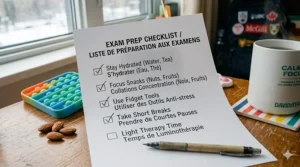
Start with hydration. Canadian students tend to rely heavily on coffee during exam prep, which works counter-intuitively – caffeine is a diuretic, promoting dehydration, which impairs cognitive function and increases stress sensitivity. The solution isn’t eliminating coffee (let’s be realistic), but consciously increasing water intake. Keep a water bottle at your desk alongside your stress balls and fidget tools. Set phone reminders to drink every 30 minutes.
Blood sugar stability might be the most underestimated factor in stress management. When blood sugar crashes (which happens after high-sugar snacks or long periods without eating), your body releases stress hormones to mobilize stored energy. Your brain can’t distinguish between actual danger and low blood sugar – either way, you feel anxious. Solution? Eat protein and complex carbs together every 3-4 hours. Think apple slices with peanut butter, not just chocolate bars.
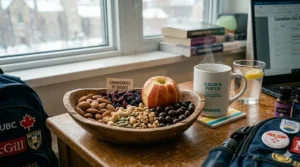
Omega-3 fatty acids support brain function and have anti-inflammatory properties that may help manage stress. Canadian students report success with simple additions like walnuts, flaxseeds, or fish oil supplements. One University of Toronto student mentioned keeping a jar of mixed nuts at their desk next to their essential oil diffuser – the combination addressed both olfactory and nutritional needs.
Magnesium deficiency is surprisingly common in students (thanks to processed food diets and stress itself, which depletes magnesium). Low magnesium correlates with increased anxiety. Food sources include dark leafy greens, nuts, seeds, and dark chocolate (yes, actual dark chocolate – 70%+ cacao, not milk chocolate). Many students also supplement, though consult a healthcare provider first.
B-vitamins, particularly B6, B12, and folate, support neurotransmitter production. Deficiency can manifest as poor concentration, irritability, and anxiety – exactly what you’re trying to manage during exams. Best sources include eggs, legumes, whole grains, and leafy greens. Canadian fortified foods (cereals, plant milks) often provide good B-vitamin content.
The caffeine conversation deserves nuance. Caffeine itself isn’t the enemy – it’s a tool that, like your stress relief supplies for exam season, needs strategic use. Keep total caffeine under 400mg daily (roughly four cups of coffee). Consume before noon to minimize sleep disruption. Never use caffeine to replace sleep – it masks fatigue without resolving it, setting up a dangerous cycle.
Avoid alcohol as a stress management tool. Although alcohol may seem to relax you while you are taking it, afterwards it can lead to even more anxiety and depression. Canadian students report that even moderate drinking during exam season disrupts sleep quality, impairs memory consolidation, and creates next-day anxiety. If you’re using self-soothing supplies like stress balls and breathing timers, adding alcohol to the mix sabotages those efforts.
Practical exam-season nutrition looks like this: Start mornings with protein (eggs, Greek yogurt, protein smoothie). Keep study desk stocked with mixed nuts, fruit, whole grain crackers, cheese. Prepare easy meals in advance so you’re not skipping meals when time-pressured. Stay hydrated. Use caffeine strategically rather than constantly. This nutritional foundation makes all your other stress management tools – fidget tools for anxiety students, aromatherapy for focus studying – more effective.
Sleep and Stress: Breaking the Vicious Cycle
Here’s the exam season paradox every Canadian student knows: you need sleep to study effectively, but exam anxiety prevents sleep, which increases anxiety, which further prevents sleep. Breaking this cycle is critical, and it requires treating sleep as seriously as any other exam anxiety management tool.
First, understand the relationship. Difficulty sleeping is a common physical sign of exam stress. Sleep deprivation impairs memory consolidation, decision-making, emotional regulation, and cognitive performance – everything you need for exam success. Yet many students sacrifice sleep for extra study time, not realizing this trade-off is counterproductive.
Research consistently shows that the same material studied for four hours followed by a full night’s sleep is better retained than six hours of study without sleep. Sleep isn’t downtime from learning – it’s when your brain processes and consolidates what you studied. When you skip sleep, you’re not just tired; you’re actively undoing your study efforts.
Create a wind-down routine starting 90 minutes before target sleep time. This is where your stress relief supplies for exam season integrate beautifully. Shut down screens (blue light disrupts melatonin production). Practice 4-7-8 breathing with your breathing exercise timer. Use your essential oil diffuser with lavender (the most studied sleep-promoting essential oil). The routine signals your brain: “Learning time is over. Sleep time approaches.”
The bedroom-study separation we mentioned earlier becomes crucial for sleep. If you’ve been studying in bed all day, your brain associates bed with stress and alertness. This classical conditioning makes falling asleep difficult. Study at a desk. Use your bed only for sleep and rest. If you must study in your room, sit on the floor, at a desk, anywhere but the bed.
Manage pre-sleep worry with a “worry dump” practice. Thirty minutes before bed, spend five minutes writing down everything you’re worried about or need to remember. This externalizes thoughts, preventing the 2 AM panic of “What was that thing I need to study tomorrow?” Keep a notebook beside your bed alongside your stress balls for this purpose.
If sleep won’t come after 20 minutes in bed, get up. Lying there frustrated increases sleep anxiety. Go to a different room, use your infinity cube or stress ball for ten minutes of mindful fidgeting, practice gentle breathing, then return to bed. Don’t turn on bright lights or screens – this signals daytime to your circadian system.
Napping deserves strategic deployment. Short naps (20 minutes max) can refresh without interfering with nighttime sleep. Longer naps enter deep sleep stages, leaving you groggy and disrupting night rest. Set alarms. Never nap after 3 PM. Canadian students report success with the “coffee nap”: drink coffee, immediately nap for 20 minutes, wake as caffeine kicks in. The combination provides more alertness than either alone.
Accept that perfect sleep during exam season is unrealistic. You might have some restless nights. That’s okay – one night of poor sleep doesn’t destroy academic performance. What matters is the overall pattern. Prioritize sleep on most nights, use stress management tools when sleep is difficult, and trust that your breathing timer and aromatherapy routine will help regulate your nervous system even when sleep is imperfect.
Remember: sleep is not a luxury or something to sacrifice for extra study time. It’s a fundamental requirement for the brain function that makes studying worthwhile. Treat it as essential as attending lectures or completing assignments.
How to Choose the Right Stress Relief Supplies for Your Needs
With dozens of stress relief supplies for exam season available, how do you choose what actually works for you? Here’s a systematic approach to building your personal stress-management toolkit.
1. Identify Your Stress Symptoms
Different stress patterns require different tools. Do you experience:
- Physical tension (clenched jaw, tight shoulders)? → Stress balls, breathing timers
- Mental restlessness (racing thoughts, difficulty focusing)? → Fidget tools, meditation apps
- Environmental sensitivity (easily distracted by noise, light)? → Aromatherapy diffusers, noise-canceling headphones
- Mixed symptoms? → Multi-tool kits like sensory fidget boxes
2. Consider Your Study Environment
Your tools must work where you actually study:
- Library/public spaces? → Silent tools only (infinity cubes, worry stones, roll-on aromatherapy)
- Dorm room/home? → Any tools work (diffusers, breathing timers, full fidget kits)
- Multiple locations? → Portable options (stress balls, roll-ons, pocket-sized fidgets)
3. Match Tools to Your Sensory Preferences
Some students are tactile learners; others are visual or olfactory. Experiment:
- Tactile preference? → Textured fidgets, stress balls, infinity cubes
- Visual preference? → Colour-changing stress balls, breathing light timers
- Olfactory preference? → Essential oil diffusers, aromatherapy roll-ons
- Auditory preference? → Apps with calming sounds, binaural beats
4. Start Small and Build
Don’t buy every tool at once. Try:
- Week 1: Basic stress ball ($5-10 CAD)
- Week 2: If stress balls help, add fidget cube ($12-15 CAD)
- Week 3: Introduce aromatherapy roll-on ($12-18 CAD)
- Week 4: Consider larger investments like diffusers ($30-40 CAD)
5. Evaluate Effectiveness
After two weeks with each tool, ask:
- Do I actually use this, or does it sit in my drawer?
- Does it reduce stress when I use it?
- Is it practical for my study routine?
Keep what works. Donate or sell what doesn’t.
6. Budget Considerations (Canadian Prices)
- Starter Budget ($25-40 CAD): Stress ball pack + infinity cube + aromatherapy roll-on
- Mid-Range Budget ($60-100 CAD): Add essential oil diffuser + fidget variety kit
- Comprehensive Kit ($150-200 CAD): Full range including breathing timer + premium materials
7. Canadian-Specific Considerations
- Shipping: Many products on Amazon.ca offer free shipping over $35
- Import Costs: Stick to “Shipped from Amazon.ca” to avoid duties
- Return Policies: Amazon.ca typically offers 30-day returns
- Winter Climate: Diffusers double as humidifiers (helpful in dry winter air)
8. Combining Tools Strategically
The most effective approach uses multiple tools for different situations:
- Morning Study Sessions: Essential oil diffuser (peppermint) + infinity cube
- Afternoon Library Time: Stress ball + aromatherapy roll-on
- Pre-Exam Anxiety: Breathing timer + motivational stress ball
- Sleep Preparation: Diffuser (lavender) + 4-7-8 breathing
9. Don’t Forget Free Tools
Before spending, maximize free resources:
- Breathing techniques (completely free)
- Walking/movement breaks (free stress relief)
- Campus counseling services (many Canadian universities offer free sessions)
- YouTube meditation guides (free alternatives to paid apps)
10. Quality vs. Quantity
One high-quality infinity cube used daily beats ten cheap fidgets collecting dust. Canadian students consistently report that premium items (PILPOC cubes, ASAKUKI diffusers) last entire academic careers, making them better investments than repeatedly buying cheap alternatives.
The goal isn’t collecting every stress relief tool available – it’s identifying the specific tools that address your specific stress patterns in your specific study environment. Start minimal, experiment systematically, and build your personalized toolkit based on what actually reduces your stress.
Comparison Table: Benefits vs Traditional Stress Management
| Approach | Effectiveness | Portability | Cost (CAD) | Learning Curve | Evidence Base |
|---|---|---|---|---|---|
| Fidget Tools | High for attention focus | Excellent | $10-30 | None | Growing |
| Aromatherapy | Moderate to high | Medium to high | $15-50 | Low | Moderate |
| Breathing Exercises | Very high | Perfect (built-in!) | Free-$30 | Medium | Strong |
| Traditional Exercise | Very high | Medium | Free-$50/month | Low | Very strong |
| Counseling | Very high | N/A | Free-$150/session | Medium | Very strong |
| Meditation Apps | High | Excellent | Free-$15/month | Medium to high | Strong |
| Medication | Variable | Excellent | $10-100/month | Medical oversight | Very strong |
Comparison Table: Price Range and Value Analysis
| Budget Level | Total Investment | Products Included | Best For | Value Rating |
|---|---|---|---|---|
| Starter ($25-40 CAD) | $25-40 | Stress ball pack, infinity cube OR roll-on | Students unsure what works | ⭐⭐⭐ |
| Essential ($60-80 CAD) | $60-80 | Stress balls, fidget cube, roll-on, breathing app | Most students (recommended) | ⭐⭐⭐⭐⭐ |
| Comprehensive ($120-150 CAD) | $120-150 | All above + diffuser + variety fidget kit | High-anxiety students, multiple study spaces | ⭐⭐⭐⭐ |
| Premium ($180-250 CAD) | $180-250 | Comprehensive + breathing timer, premium materials | Long-term investment, multiple semesters | ⭐⭐⭐⭐ |
Frequently Asked Questions About Exam Stress Relief
❓ How effective are fidget tools compared to traditional stress relief methods in Canada?
❓ What essential oils work best for exam stress and focus in Canadian study environments?
❓ How long should students practice breathing exercises during exam preparation?
❓ Are stress relief supplies tax-deductible for Canadian students?
❓ What's the best way to combine multiple stress relief tools during study sessions?
Conclusion: Building Your Personalized Exam Success Toolkit
Exam season doesn’t have to be a stress spiral that compromises your health and performance. As we’ve explored throughout this guide, stress relief supplies for exam season aren’t luxuries or distractions – they’re evidence-based tools that help Canadian students manage the very real physiological and psychological demands of academic pressure.
The seven products we’ve analyzed – from the premium PILPOC Infinity Cube to the versatile Lumarice Motivational Stress Balls – represent different approaches to the same goal: helping your brain function optimally during high-stakes situations. Whether you respond better to tactile fidgeting, olfactory stimulation through aromatherapy, or structured breathing practices, there’s a tool designed for your specific stress pattern.
Remember the key insights:
Stress management isn’t one-size-fits-all. The infinity cube that transforms one student’s focus might distract another. The lavender that calms some may smell medicinal to others. Give yourself permission to experiment, and trust your own responses over general recommendations.
Supplies supplement – they don’t substitute – for proper preparation, adequate sleep, good nutrition, and healthy study habits. The best stress ball in the world can’t compensate for cramming unprepared into an exam.
Start small and scale strategically. You don’t need every product immediately. Begin with a basic stress ball ($5-10 CAD), assess whether physical fidgeting helps your focus, then build from there. Many Canadian students report their most-used tools cost under $20.
Canadian resources support you beyond products. Most universities offer free counseling, peer support groups, and stress management workshops. The Mental Health Commission of Canada provides resources and support for stress management. Combine product-based tools with these free services for comprehensive support.
As you move forward through exam season, remember that managing stress isn’t about achieving some zen-like calm where exams don’t affect you. It’s about having reliable tools that prevent stress from escalating to levels that impair performance. Your stress relief toolkit – whether it’s a $15 stress ball or a $150 comprehensive kit – becomes your safety net, there when anxiety threatens to derail your studying.
You’ve got this. And now, you’ve got the tools to support yourself through it.
Recommended for You
- 7 Best Blue Light Blocking Glasses for Students Canada 2026
- 7 Best Ergonomic Study Setup for Students in Canada 2026
- 7 Best Christmas Gifts for Students Who Love Studying Canada 2026
Disclaimer: This article contains affiliate links to Amazon.ca. If you purchase products through these links, we may earn a small commission at no additional cost to you.
✨ Found this helpful? Share it with your friends! 💬🤗
