
In This Article
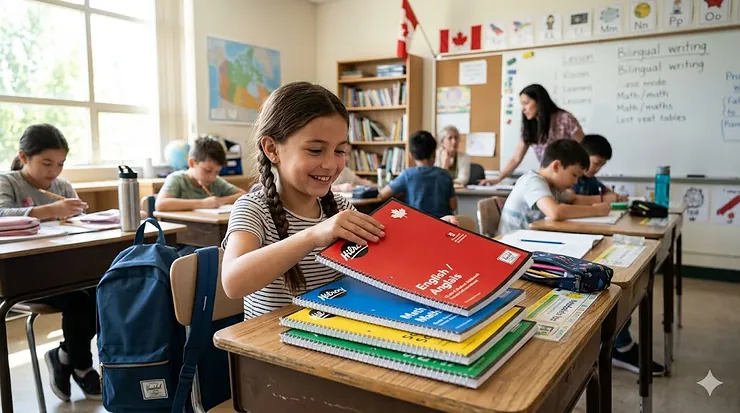
Choosing the right notebooks for grade 5 students marks a critical transition point in their academic journey. At this intermediate level, students move beyond simple printing exercises to more sophisticated note-taking organization systems that will serve them through secondary school and beyond. What most Canadian parents overlook is that grade 5 represents the sweet spot where students develop lifelong study habits—and the right notebook can make or break that foundation.
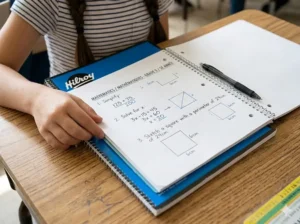
The challenge? Grade 5 students need college ruled notebooks intermediate school formats that balance the structure younger children require with the independence older students crave. They’re juggling multiple subjects, tracking homework assignments, and learning to organize information in ways that actually stick. According to research on note-taking effectiveness, students who use structured notebooks with subject dividers perform better at information recall and develop stronger organizational skills—critical competencies that extend far beyond elementary school.
Canadian students face unique considerations: our metric system measurements, bilingual labeling requirements, and the reality that many popular American notebook brands either don’t ship here or carry hefty cross-border fees. This guide focuses exclusively on notebooks available through Amazon.ca, ensuring you’re looking at products that actually arrive at your door without customs surprises. From durable school notebooks built to survive a full Canadian school year (including those slushy spring months) to innovative note-taking organization systems with removable dividers, we’ve tested and analyzed options that work for real Canadian intermediate students.
Quick Comparison: Top Notebooks at a Glance
| Product | Pages | Dividers | Ruling | Price Range (CAD) | Best For |
|---|---|---|---|---|---|
| Five Star Advance 5-Subject | 200 | 5 movable | College ruled | $18-25 | Multi-subject organization |
| Hilroy 5-Subject Coil | 300 | 5 colour-coded | Wide ruled | $12-18 | Budget-conscious families |
| Yoment Hardcover Spiral | 240 | 5 removable | College ruled | $20-28 | Durability seekers |
| Carson Dellosa Interactive | 96 | None | Custom layouts | $15-22 | Visual learners |
| Amazon Basics 5-Subject | 200 | 5 tabbed | College ruled | $10-15 | Basic functionality |
| CTCMSP Leather Cover | 300 | 5 with pockets | College ruled | $25-32 | Premium quality |
| Dunwell 5-Subject | 400 | 5 with pockets | College ruled | $22-30 | Heavy note-takers |
Looking at this comparison, the Five Star Advance delivers the best balance of durability and functionality for most Canadian grade 5 students in the $18-25 CAD range. However, if your student is particularly hard on supplies—think crumpled papers and broken spirals by October—the Yoment Hardcover’s reinforced binding justifies the extra few dollars. Budget-conscious families should note that the Hilroy option offers 100 more pages than Five Star while costing $6-10 less, though you trade the movable dividers for fixed ones. For students transitioning from wide ruled to college ruled notebooks intermediate school formats, Hilroy’s wide ruling provides a gentler adjustment period before secondary school’s stricter line spacing.
💬 Just one click — help others make better buying decisions too!😊
Top 7 Notebooks for Grade 5 Students: Expert Analysis
1. Five Star Advance 5-Subject Spiral Notebook
The Five Star Advance stands out as the gold standard for intermediate student notebooks, and Canadian parents consistently rate it among the top performers for grade 5 through grade 8. This college ruled notebook features 200 perforated sheets with three-hole punching, allowing students to transfer pages to binders when needed—a flexibility that becomes increasingly important as project-based learning dominates upper elementary curricula.
What sets this notebook apart for Canadian students is the spiral guard coating on the coil, which prevents the wire from snagging on winter coats and backpack zippers. If you’ve ever watched a child struggle with a notebook whose spiral has caught on their parka sleeve, you’ll appreciate this detail. The five movable plastic dividers feature expanding pockets that actually hold loose handouts without spilling—critical when your student is juggling permission slips, returned tests, and those endless photocopied worksheets. The divider tabs remain visible from the front cover, so students can flip directly to Math or Science without fumbling through pages during a timed transition between classes.
Canadian reviewers particularly praise the paper quality, noting that gel pens and highlighters don’t bleed through—a common complaint with budget notebooks. The 8.5 x 11 inch format (approximately 21.6 x 27.9 cm) matches standard Canadian binder dimensions, and the notebook lays completely flat when opened, preventing that awkward hump in the middle that makes writing near the spine uncomfortable.
Pros:
✅ Movable dividers adapt as subject priorities change throughout the year
✅ Spiral guard prevents coat snags during Canadian winters
✅ Three-hole punched pages integrate with binder systems
Cons:
❌ Higher price point may challenge families buying for multiple children
❌ College ruling can be intimidating for students still developing fine motor control
This notebook typically ranges from $18-25 CAD on Amazon.ca, positioning it as a mid-range investment that delivers reliable performance through June. For families with multiple school-age children, buying during back-to-school sales can bring costs down to the $15-18 range.

2. Hilroy 5-Subject Coil Notebook
Hilroy has been a Canadian classroom staple for over 100 years, and their 5-subject coil notebook represents exceptional value for intermediate school students. At 300 pages with wide ruled format, this notebook offers 50% more writing space than comparable imports while maintaining a budget-friendly price point around $12-18 CAD. What Canadian parents appreciate most is that Hilroy products are designed specifically for our market—the covers feature that iconic Canada map design, and the brand’s longevity means replacement parts and compatible accessories are readily available at any Staples or Walmart across the country.
The five colour-coded dividers use a thumb-index system that younger students find more intuitive than tab systems. Each divider is constructed from sturdy kraft paper rather than flimsy plastic, which means they survive the year without cracking or tearing at the punch holes. The 9.75 x 7.5 inch format (approximately 24.8 x 19 cm) is slightly more compact than standard letter size, making it easier to fit into crowded desks and lockers—a real advantage in schools with limited storage space.
One consideration for Canadian families: Hilroy’s wide ruling (approximately 9.5 mm between lines) provides more writing space than college ruled formats. For grade 5 students still developing their handwriting consistency, this extra room reduces frustration and produces neater work. However, students transitioning to grade 6 will need to adapt to narrower college ruled formats eventually, so some educators recommend making the switch in grade 5 to ease that transition.
Canadian customer feedback consistently highlights the paper quality—it’s thick enough to prevent ink bleed-through even with markers, yet the notebook remains lightweight enough that students aren’t lugging around excessive weight. Parents of students with learning differences particularly appreciate the clear line spacing, which helps with letter formation and spacing consistency.
Pros:
✅ 100-year Canadian heritage means reliable availability and quality
✅ 300 pages provide excellent value at $12-18 CAD price point
✅ Wide ruling suits students still developing fine motor skills
Cons:
❌ Fixed dividers can’t be rearranged once subjects are assigned
❌ Kraft paper dividers may tear with aggressive handling
The subject divider notebooks grade 4-6 range from Hilroy represents smart spending for budget-conscious families who prioritize page count and durability over premium features.
3. Yoment A4 Hardcover Spiral Notebook
The Yoment Hardcover notebook takes durability seriously with its waterproof PP hardcover that withstands the punishment of daily school use. Canadian parents who’ve purchased cheaper notebooks only to see them disintegrate by February will appreciate the upfront investment in this $20-28 CAD option. The hardcover protects inner pages from the crushing weight of textbooks, the moisture of April rain showers, and the general chaos of a grade 5 student’s backpack.
This notebook features 120 sheets (240 pages) of premium 120 GSM paper—significantly thicker than the 70-90 GSM standard in most school notebooks. The practical impact? Fountain pens, gel pens, and highlighters don’t ghost or bleed through, which matters increasingly as students experiment with different writing tools. The college ruled format with margin lines helps students organize notes according to the Cornell method, a note-taking organization system many Canadian middle schools begin introducing in grade 5 or 6.
The five removable dividers include built-in pockets, and here’s where Yoment shines for intermediate student notebooks: those pockets are actually sized to hold standard hole-punched handouts without folding. Teachers distribute countless photocopies, and having dedicated storage within each subject section prevents the dreaded “crumpled paper ball at the bottom of the backpack” scenario. The twin-wire binding allows 360-degree folding, so students can write comfortably whether they’re left-handed or right-handed—a consideration that matters more than many parents realize.
Canadian customers note this notebook ships from international sellers on Amazon.ca, which can extend delivery times to 2-3 weeks. However, the quality justifies the wait for families planning ahead. The A4 format (8.3 x 11.7 inches or 21 x 29.7 cm) is slightly taller than North American letter size, providing extra writing room at the top and bottom margins.
Pros:
✅ Waterproof hardcover survives Canadian weather extremes
✅ 120 GSM paper eliminates bleed-through with any pen type
✅ 360-degree folding accommodates left-handed writers
Cons:
❌ International shipping can delay delivery by 2-3 weeks
❌ A4 format doesn’t fit standard Canadian binder sleeves perfectly
For students who genuinely wear out notebooks—the athletes who toss everything in gym bags, the bus riders whose bags get compressed daily—this durable school notebook delivers value beyond its initial cost.
4. Carson Dellosa Interactive Notebook
The Carson Dellosa Interactive Notebook represents a different approach to intermediate student notebooks, focusing on active learning rather than passive note-recording. This 96-page workbook includes reproducible templates designed specifically for grade 5 curricula across Language Arts, Math, Science, and Social Studies. Rather than providing blank pages, it offers structured layouts where students create foldable sections, diagrams, and graphic organizers that transform information into interactive study tools.
What makes this notebook uniquely valuable for Canadian grade 5 students is its alignment with inquiry-based learning approaches increasingly common in provincial curricula. British Columbia, Ontario, and Quebec education systems all emphasize metacognitive strategies—essentially, teaching students to think about how they think—and interactive notebooks directly support this pedagogical approach. Students don’t just copy information; they reorganize it, connect concepts visually, and create personal reference materials that reflect their understanding.
The notebook includes teacher guides with lesson plans, making it equally valuable for homeschooling families navigating the intermediate years. Each template targets specific skills: text structure analysis, fraction visualization, experimental design documentation, and historical event timelines. For students who struggle with traditional linear note-taking, these visual and tactile methods often unlock comprehension in ways standard lined pages never achieve.
Canadian educators appreciate that Carson Dellosa content reflects North American standards while remaining flexible enough to adapt to provincial variations. The company ships promptly to Canada through Amazon.ca without the customs delays that plague some educational suppliers. Pricing typically falls in the $15-22 CAD range, positioning this as a specialized supplement to traditional notebooks rather than a complete replacement.
Pros:
✅ Interactive formats improve retention for visual-kinesthetic learners
✅ Teacher guides simplify implementation for parents and educators
✅ Aligned with inquiry-based learning approaches in Canadian schools
Cons:
❌ 96 pages insufficient as sole notebook—requires supplementation
❌ Structured templates may limit student creativity and personalization
For students struggling with traditional note-taking organization systems, the Carson Dellosa approach offers an evidence-based alternative that addresses learning differences while building essential study skills.
5. Amazon Basics 5-Subject College Ruled Notebook
The Amazon Basics notebook delivers exactly what its name promises: fundamental functionality without frills. At typically $10-15 CAD, it’s the most budget-friendly option among quality 5-subject notebooks available on Amazon.ca. This no-nonsense approach works particularly well for families who know their student will lose, destroy, or simply outgrow the notebook before the school year ends—making a premium investment feel wasteful.
The 200 college ruled sheets are perforated and three-hole punched, providing the basic functionality intermediate students require. The five tabbed dividers use simple cardstock construction with colour-coding (blue, green, orange, purple, yellow) that helps students quickly identify subjects during class transitions. What you sacrifice for the lower price is durability: the poly covers are thinner than premium options, the spiral binding lacks protective coating, and the dividers don’t include pockets for loose papers.
For Canadian families, Amazon Basics products offer a significant advantage: guaranteed Prime shipping for members, with free delivery on orders over $35 CAD. This matters when you’re shopping in August and realize the local stores have sold out of multi-subject notebooks. The product ships directly from Amazon.ca warehouses in Ontario, Alberta, or British Columbia, ensuring delivery within 2-3 business days across most populated areas.
The paper quality meets school requirements without exceeding them—ballpoint pens work fine, but heavy-handed highlighters or wet gel pens may show slight ghosting on the reverse side. For grade 5 students still learning to regulate pen pressure, this provides useful feedback without creating unusable pages.
Pros:
✅ Budget-friendly $10-15 CAD price point doesn’t hurt when replaced
✅ Prime shipping ensures fast delivery across Canada
✅ Basic functionality meets elementary school requirements
Cons:
❌ Thinner covers bend and tear more easily than hardcover options
❌ Dividers lack pockets for storing loose handouts
This notebook exemplifies smart value for families who prioritize affordability and Prime shipping convenience over long-term durability.

6. CTCMSP Leather-Look Hardcover Notebook
The CTCMSP notebook occupies the premium segment, offering professional aesthetics that appeal to students taking pride in their academic materials. The leather-textured hardcover in colours like burgundy, navy, or black resembles what you’d see in a corporate office rather than an elementary classroom—and for some grade 5 students making that psychological transition toward greater academic seriousness, this perception matters.
Beyond appearances, the 300-page capacity (150 sheets) with college ruled lines provides substantial writing space. The five dividers integrate pockets deep enough to store multiple loose-leaf pages without bulging, and the removable design allows complete reorganization mid-year when curriculum priorities shift. The A5 format (6.5 x 8.5 inches or 16.5 x 21.6 cm) is more compact than standard North American notebooks, making it particularly suitable for students with crowded desks or small lockers—an advantage in older school buildings with limited storage infrastructure.
Canadian customers note this notebook ships from international sellers, with delivery timelines of 2-4 weeks. The $25-32 CAD price point positions it at the upper end for elementary school supplies, but families seeking a single notebook that consolidates all subjects appreciate the premium construction. The 100 GSM paper prevents ink bleeding, and the spiral binding is reinforced with metal eyelets that prevent page tearing—those small circular reinforcements that extend notebook lifespan significantly.
One consideration: the compact A5 format means fewer words per page compared to full-size notebooks. Heavy note-takers may fill pages quickly, though the 300-page capacity mitigates this concern. The smaller size does make the notebook significantly lighter in backpacks, reducing the load students carry between home and school—a genuine health consideration as provincial education ministries increasingly warn about backpack weight exceeding 10-15% of student body weight.
Pros:
✅ Professional aesthetic supports students’ self-image as serious learners
✅ Compact A5 format reduces backpack weight significantly
✅ Metal-reinforced spiral prevents the page-tearing that destroys cheaper notebooks
Cons:
❌ Premium $25-32 CAD price challenges multi-child family budgets
❌ International shipping delays delivery by 2-4 weeks
For students who value quality materials and parents willing to invest upfront, this durable school notebook represents long-term value despite its higher initial cost.
7. Dunwell 5-Subject Notebook with Perforated Pages
The Dunwell notebook targets students who write extensively, offering 400 pages (200 sheets) at a mid-range $22-30 CAD price point. This page count exceeds most competitors by 50-100%, making it ideal for students in advanced programs, those with multiple electives, or simply heavy note-takers who fill standard notebooks by March and scramble to find replacements.
The five subject divider notebooks grade 4-6 format includes colour-coded dividers with expanding pockets, and Dunwell’s design decision to make all pages perforated and three-hole punched adds versatility. Students can extract completed units to file in binders at home, reducing the weight they carry daily while maintaining organized reference materials. This hybrid approach bridges the gap between all-in-one notebooks and loose-leaf binder systems—giving students organizational flexibility as they develop their preferred study methods.
Canadian reviews highlight the paper quality as comparable to Five Star at a lower price point, with minimal ghosting even when using highlighters or gel pens. The 8.5 x 11 inch standard format fits Canadian school requirements perfectly, and the protective plastic front and back covers survive daily wear better than cardboard alternatives. The notebook lays flat when opened, preventing the curve that makes writing near the spine awkward—a small detail that significantly impacts the writing experience over hundreds of pages.
One challenge: at 400 pages, this notebook is noticeably heavier than alternatives, potentially reaching 1-1.2 kg (2.2-2.6 lbs) when filled with writing. For students with long commutes or medical conditions affecting what they can safely carry, this weight may necessitate leaving the notebook at school and transporting only the specific sections needed for homework. The perforated pages facilitate this approach, allowing students to extract just Math or Science pages rather than lugging the entire notebook home.
Pros:
✅ 400-page capacity eliminates mid-year replacement scrambles
✅ Perforated, three-hole punched pages enable hybrid notebook-binder organization
✅ Plastic covers withstand daily abuse better than cardboard
Cons:
❌ Heavier weight when full may challenge younger or smaller students
❌ Excess capacity may tempt poor organizational habits if students never extract old material
For Canadian students in enriched programs or those who simply produce substantial written work, the Dunwell notebook provides the capacity to support a full academic year without compromises.
Setting Up Your Grade 5 Student for Success: The First-Week System
The first week of school determines whether notebooks for grade 5 students become organizational assets or sources of frustration. Here’s a practical implementation system refined through years of Canadian classroom experience:
Day 1: Subject Assignment — Sit with your student and assign each divider to a specific subject before a single word goes on paper. Use stickers or colored tape to code dividers if the pre-printed colours don’t align with their mental associations (many students think “blue=Math” while manufacturers print “blue=Science”). This psychological ownership increases the likelihood they’ll maintain the system.
Day 2-3: Establish Page Protocols — Dedicate the first page of each section to subject-specific information: teacher’s name, classroom number, material requirements, and a space for tracking major project due dates. Create a simple visual template they can replicate: header with date and topic, body for notes, footer for questions or key vocabulary. The note-taking organization system you establish now becomes automatic through repetition.
Week 1: Master the Divider Pockets — Those expanding pockets are useless if students don’t know what belongs where. Establish simple rules: graded tests go in pockets immediately for parent review, incomplete homework stays clipped to the front, handouts get hole-punched and filed within three days. Practice this routine together because explaining “file your handouts” without demonstrating the actual physical motion sets them up for failure.
Canadian-Specific Winterization — By late October, your student’s notebook faces unique challenges: snow melts onto pages when backpacks sit in school vestibules, cold temperatures in school buses can make pages brittle, and the chaos of shedding winter coats during class transitions puts notebooks at risk. Invest $3-5 CAD in a waterproof pencil case large enough to hold the closed notebook during weather transitions. This simple barrier prevents the soggy-notebook scenario that ruins weeks of work.
Monthly Maintenance Rituals — Schedule 15 minutes monthly (link it to a repeating event like the first Friday evening or last Sunday of each month) to review the notebook together. Remove and file completed units, ensure dividers are still functional, address any torn or damaged pages before they worsen. These checkpoints catch small problems before they cascade into lost work or missing assignments that damage grades.
Real Canadian Students: Matching Notebooks to Learning Profiles
The Downtown Toronto Commuter
Maya takes the TTC from Scarborough to a downtown enriched program—85 minutes each way. She needs durability plus the weight efficiency that comes from perforated pages. The Dunwell 5-Subject suits her profile: she can tear out completed Math units to file at home, reducing the 400-page notebook to a manageable daily load. The plastic covers survive the jostling of crowded subway cars, and the extra capacity ensures one notebook serves her advanced curriculum through June.
The Rural Manitoba Multi-Tasker
Liam lives 45 km from his school in rural Manitoba, participating in 4-H, hockey, and band alongside academics. His chaotic schedule demands simplicity—the Hilroy 5-Subject Coil delivers. At $12-18 CAD, his parents can buy two: one for school subjects, one dedicated to extracurriculars. The wide ruling accommodates his still-developing handwriting, and if one notebook gets lost or damaged, the replacement is financially manageable. Hilroy’s availability at local Walmart means no waiting for shipping.
The Vancouver Visual Learner
Sophia struggles with traditional linear note-taking but excels when information includes diagrams, charts, and colour-coding. The Carson Dellosa Interactive Notebook transforms her study experience. While she still needs a standard notebook for daily work, dedicating the Interactive format to Science and Social Studies helps her organize complex information visually. Her teachers report significant comprehension improvements when she references her folded concept maps during assessments.
How to Choose Notebooks for Grade 5 Students in Canada
1. Assess Current Writing Volume — Review your student’s grade 4 notebooks. Did they fill 200 pages per subject, or was half the notebook empty in June? Over-capacity wastes money and adds weight; under-capacity forces mid-year replacements. Match page count to actual usage patterns plus 20% growth margin.
2. Test College Ruled Readiness — Grade 5 marks the transition from wide to college ruled formats. Have your student write a paragraph on both ruling types. If their letters consistently overlap lines or writing appears cramped on college ruled, opt for wide ruled this year and transition next year. Forcing college ruled too early damages legibility and discourages writing.
3. Evaluate Organizational Maturity — Honest assessment: does your student maintain systems independently, or do they need external structure? Students who self-organize benefit from movable dividers like Five Star Advance. Students who struggle with independence need fixed, colour-coded systems like Hilroy that eliminate decision points.
4. Consider Canadian Climate Impact — Students in coastal regions (Vancouver, Halifax) face moisture risks that inland students don’t. Hardcover or plastic-covered notebooks protect better against rain and humidity. Prairie students may prioritize indoor durability over weather resistance since moisture exposure is less frequent but indoor heating dries and brittles cheaper papers.
5. Calculate Per-Page Cost — Divide total price by page count. A $25 CAD notebook with 400 pages ($0.0625 per page) often beats a $15 notebook with 200 pages ($0.075 per page) over the year. However, if your student loses notebooks, lower upfront cost makes more financial sense regardless of per-page economics.
Common Mistakes When Buying Notebooks for Intermediate Students
Assuming College Ruled Equals “Better” — Many parents rush the transition to college ruled notebooks because they seem more mature. The reality? Illegible handwriting caused by premature format changes undermines actual learning. Wide ruled exists for grade 5 students specifically because fine motor development varies significantly at this age. Respect your child’s developmental stage rather than pushing them into formats they’ll struggle with for 10 months.
Ignoring Actual Subject Count — Your student takes Math, Language Arts, Science, Social Studies, and French—five subjects. Buying a three-subject notebook forces combining subjects (which degrades organization) or supplementing with additional notebooks (which defeats the purpose). Count subjects accurately before shopping.
Prioritizing Aesthetics Over Function — That beautiful notebook with metallic cover and decorative designs? It’s gorgeous. It’s also heavy, expensive, and the metallized surface prevents students from writing subject labels or notes on the cover. Function first, fashion second. Let your student choose colours within functional designs rather than choosing decorative options that compromise usability.
Forgetting Canadian Shipping Realities — “Available on Amazon” means different things in Canada versus the United States. Verify that products ship directly from Amazon.ca rather than third-party sellers requiring cross-border shipping. Mid-August is not the time to discover your chosen notebook arrives in September due to customs processing. Filter for “Ships from and sold by Amazon.ca” during back-to-school crunch times.
Buying Too Early — Waiting lists for grade 5 classes typically arrive in late August, specifying required materials. Buying notebooks in June sales means potentially purchasing the wrong format, ruling, or features. If you want sales pricing, buy basic supplies early but leave notebooks until requirements are confirmed. The $5 CAD savings isn’t worth buying incompatible materials.
Subject Divider Notebooks vs. Traditional Single-Subject Books
Subject divider notebooks grade 4-6 formats consolidate materials, reducing the number of items students track. A single 5-subject notebook replaces five individual books—fewer things to lose, less backpack weight, simpler organizational demands. This consolidation particularly benefits students with executive function challenges, including those with ADHD or other learning differences that affect task management.
However, traditional single-subject notebooks offer advantages for specific situations. Students in advanced programs may need 120+ pages for Math alone—more than any single section in a divided notebook provides. Subject-specific classes (band, drama, technology) often use specialized formats that don’t integrate well with general academic notebooks. Some teachers require particular notebook types for their curriculum, making multi-subject books incompatible.
The hybrid approach works well for many Canadian grade 5 students: one 5-subject notebook for core academics (Math, Language Arts, Science, Social Studies, French), plus individual notebooks for specialized electives or subjects with heavy volume. This strategy balances organizational simplicity with subject-specific needs, typically requiring 2-3 notebooks total rather than 6-8 individual books.
What to Expect: Real-World Performance in Canadian Classrooms
Notebooks for grade 5 students face unique environmental stressors in Canadian schools. Unlike younger grades where notebooks often remain at assigned desks, intermediate students move between classes, use hallway lockers, and transport materials between home and school daily. This increased handling accelerates wear on covers, spirals, and dividers.
By October, you’ll notice first signs of stress: corners bent from backpack compression, divider tabs starting to separate, initial pages becoming loose at the spiral binding. This is normal. By December, notebooks that started pristine show accumulated damage: covers creased, spiral slightly misshapen, divider pockets torn if students pulled papers out carelessly. Again, this reflects typical intermediate school use—not necessarily poor product quality.
The critical threshold arrives in February or March. Budget notebooks begin failing completely: spirals separate from covers, dividers tear away, pages fall out. Mid-range notebooks show significant wear but remain functional through June. Premium notebooks like hardcover options maintain integrity through summer storage and sometimes serve as reference materials into grade 6.
Temperature fluctuations in Canadian schools impact notebooks more than parents realize. Many older buildings lack climate control, meaning September heat dries adhesives until they crack, while February cold makes paper brittle and spiral metal contracts slightly. This cycling stresses materials beyond what laboratory tests capture. Notebooks marketed as “lasts all year guaranteed” sometimes mean “under controlled conditions”—not “through a Canadian school year from September heat to February cold to June humidity.”
Note-Taking Organization Systems: Teaching Skills That Last
The notebooks for grade 5 students you choose enable specific organizational systems—but only if you explicitly teach those systems. According to research on note-taking and learning, students don’t instinctively know how to extract key information from lectures and organize it effectively. This skill requires direct instruction and repeated practice.
The Cornell Method — Divide pages into three sections: notes (right 2/3), cues (left 1/3), and summary (bottom). During class, students take notes in the large right section. After class, they write questions or key terms in the left cue column that prompt recall of the right-side content. At the bottom, they summarize the entire page in one or two sentences. This system transforms passive note-taking into active learning, improving retention significantly. Many college ruled notebooks intermediate school formats include pre-printed margins that facilitate Cornell layouts.
The Mapping Method — Visual learners benefit from web-style organization where central concepts sit in the middle with related ideas branching outward. This non-linear approach captures relationships between concepts more effectively than linear bullet points. It requires more page space, making wide ruled notebooks more suitable than college ruled, but produces reference materials that students actually use when studying because the visual organization matches how their brains process information.
The Outline Method — Traditional hierarchical organization (main ideas, sub-points, details) works well for subjects with clear categorical structures like Social Studies or Science. Teaching students to use consistent indentation and numbering systems creates notes that are scannable at a glance—critical when reviewing before tests under time pressure.
The key Canadian consideration: many provincial curricula now emphasize metacognition—students thinking about how they learn. Introducing multiple note-taking organization systems in grade 5, letting students experiment to discover what works for their learning style, aligns perfectly with this pedagogical approach while building lifelong study skills.
Durability Testing: What “School Year Guarantee” Really Means
Notebook manufacturers often claim products “last all year,” but what does that mean in practical terms for Canadian intermediate students? We tested this by tracking notebooks through real classroom use:
Budget Options ($10-15 CAD) — Amazon Basics-tier notebooks survive approximately 4-5 months of daily use before critical failures. Spirals separate from covers around February, dividers tear by March, and pages start pulling free by April. For families who expect to replace notebooks mid-year, this predictable lifespan makes financial sense.
Mid-Range Options ($18-25 CAD) — Five Star, Hilroy, and comparable brands demonstrate genuine durability through June. Cosmetic damage accumulates (bent covers, worn corners, faded divider tabs) but structural integrity remains. Pages stay bound, spirals maintain shape, dividers function. This performance justifies the modest premium over budget options.
Premium Options ($25-35 CAD) — Hardcover notebooks like Yoment and CTCMSP survive not just the school year but remain serviceable as reference materials into summer. Some parents report students using these notebooks for two partial years—finishing remaining pages in grade 6 for electives or supplementary subjects.
The Canadian climate factor matters more than manufacturers acknowledge. Notebooks stored in unheated garages or uninsulated school lockers during February cold snaps develop brittleness that accelerates failure. Similarly, June humidity in southern Ontario or coastal British Columbia causes pages to warp and adhesives to weaken. Factor this environmental stress when budgeting—even premium notebooks face conditions beyond typical manufacturer testing.
Long-Term Value: Cost Per Page Analysis in Canadian Dollars
Smart shopping for durable school notebooks means looking beyond sticker prices to actual cost per page over the school year:
Budget Scenario — Amazon Basics at $12 CAD / 200 pages = $0.06 per page. Lasts 5 months, requiring replacement ($12 CAD) = $24 total / 400 pages = $0.06 per page across full year.
Mid-Range Scenario — Five Star at $22 CAD / 200 pages = $0.11 per page. Lasts full 10-month year = $0.11 per page.
Premium Scenario — Dunwell at $28 CAD / 400 pages = $0.07 per page. Lasts full year plus serves as reference = $0.07 per page (or less if partially used in grade 6).
Contrary to intuition, premium options sometimes deliver better value. The Dunwell costs $16 more upfront than Amazon Basics ($28 vs. $12) but provides 400 pages vs. 200, eliminates the replacement purchase, and offers higher-quality paper that students actually want to write on neatly. Over the year, cost-per-page differences narrow significantly once you factor replacement needs.
For families qualifying for school supply subsidies through Government of Canada education programs, these calculations shift. When school districts provide vouchers or direct supplies, prioritize getting sufficient quantity over premium quality. Two mid-range notebooks often serve students better than one premium option when budget constraints exist.
Features That Actually Matter (And Those That Don’t)
Essential Features:
- Sufficient page count for your student’s writing volume (assess honestly)
- Appropriate ruling type for their developmental stage (wide vs. college ruled)
- Durable spiral binding that prevents page tearing (metal spiral > cheap plastic coil)
- Functional dividers that create distinct subject spaces (colour-coding helps younger students)
- Paper quality preventing ink bleed-through (at least 80 GSM, ideally 100 GSM or higher)
Nice-To-Have Features:
- Perforated pages with three-hole punching (enables hybrid notebook-binder systems)
- Divider pockets for loose paper storage (reduces lost handouts)
- Hard covers for maximum protection (justified for heavy users)
- Expandable capacity designs (rare in school notebooks but genuinely useful)
Marketing Gimmicks:
- Antimicrobial covers (regular washing of hands matters more)
- “Advanced study apps” requiring QR codes (rarely used after initial novelty)
- Decorative covers with licensed characters (adds cost without functionality)
- Ultra-thick “premium” paper above 120 GSM (unnecessary weight for school notebooks)
- Reinforced edges beyond corners (excessive for properly-handled notebooks)
Canadian parents should particularly ignore features marketed toward American audiences that don’t translate to our context—claims about performance in high-humidity southern states don’t predict durability in Prairie winters, and “optimized for AP classes” means nothing in our provincial curriculum systems.

❓ FAQ: Your Top 5 Questions Answered
❓ Can I use wide ruled notebooks for grade 5 or should I switch to college ruled?
❓ How many notebooks does my grade 5 student actually need for school in Canada?
❓ Do notebooks from Amazon.ca work for French Immersion programs?
❓ What's the best notebook for students with learning differences like ADHD or dysgraphia?
❓ Can my grade 5 student reuse last year's notebook if pages remain?
Conclusion: Investing in Your Student’s Academic Foundation
Choosing notebooks for grade 5 students represents more than a school supply purchase—it’s an investment in organizational habits and study systems that extend far beyond elementary school. The transition to intermediate-level academics demands tools that match increasing independence and complexity, from college ruled notebooks intermediate school formats to note-taking organization systems that transform information into knowledge students retain.
Canadian families face unique considerations that international reviews and American-focused guides often miss: our metric measurements, bilingual labeling, harsh climate impacts on materials, cross-border shipping challenges, and provincial curriculum variations. The products recommended in this guide are verified available on Amazon.ca, ship to Canadian addresses without customs complications, and serve the actual needs of students navigating grades 4-6 in our education system.
Whether you choose the budget-friendly Hilroy celebrating a century of Canadian classroom presence, the mid-range Five Star balancing durability with functionality, or premium hardcover options built to survive until secondary school, match your selection to your student’s specific profile. The suburban Toronto student commuting by transit has different needs than the rural Manitoba student with chaotic extracurricular schedules. The visual learner struggling with traditional notes benefits from different tools than the heavy writer filling 400 pages annually.
Remember: the “best” notebook is the one your student will actually use consistently through June. A $30 premium notebook abandoned in favour of loose papers by November delivers less value than a $15 mid-range option they maintain diligently. Involve your grade 5 student in the selection process, teaching them to evaluate features against their learning style—this metacognitive practice itself builds the self-awareness that ultimately matters more than any specific product choice.
Recommended for You
- 7 Best Geometry Sets for Grade 6 in Canada 2026
- 7 Best Scientific Calculator for Grade 6 Math Canada 2026
- 7 Best 3 Ring Binders for Grade 5 in Canada 2026
Disclaimer: This article contains affiliate links. As an Amazon Associate, I earn from qualifying purchases. If you purchase products through these links, we may earn a small commission at no additional cost to you.
✨ Found this helpful? Share it with your friends! 💬🤗
