
In This Article
Picture this: it’s Week 3 of grade 5, and your child’s backpack already looks like a paper explosion happened inside. Crumpled worksheets, lost permission slips, and that important math homework mysteriously vanished again. Sound familiar? You’re definitely not alone—nearly 1 in 4 Canadian parents report their child regularly loses homework or misses deadlines due to disorganization.
Here’s the reality: grade 5 is when the organizational stakes get real. Students are juggling more subjects, heavier homework loads, and increasing independence from teachers who expect them to keep track of their own materials. The right 3 ring binder for grade 5 isn’t just another school supply—it’s the foundation of an organizational system that can genuinely transform your child’s academic confidence and success.
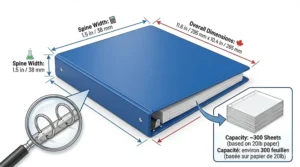
After researching dozens of products available on Amazon.ca and consulting with Canadian parents and educators, I’ve identified what truly matters in a grade 5 binder: durability to survive daily backpack abuse through harsh Canadian winters, enough capacity for multiple subjects without becoming unwieldy (typically 5-8 cm or 2-3 inches), secure closure systems that prevent the dreaded homework avalanche, and practical features like calculator pockets and expanding files that actually help kids stay organized—not just add bulk.
This guide breaks down the seven best options available to Canadian families right now, from budget-friendly basics around $10-15 CAD to premium zipper binders in the $25-40 range that include features intermediate students genuinely use. Whether your grade 5 student needs a simple single-subject organizer or an all-in-one command centre for their increasingly complex school life, you’ll find exactly what works for your situation, backed by real Canadian parent reviews and practical advice you won’t find on product listings.
Quick Comparison: Top 3 Ring Binders for Grade 5 Students
| Binder Model | Ring Size | Key Feature | Capacity | Price Range (CAD) | Best For |
|---|---|---|---|---|---|
| Five Star 2″ Zipper Binder | 5 cm (2″) | Water-resistant with calculator pocket | 380-500 sheets | $25-35 | Multi-subject organization |
| Case-it Mighty Zip Tab | 7.6 cm (3″) | 5-tab expanding file + shoulder strap | 600 sheets | $30-40 | Heavy workload students |
| Avery Durable View 1.5″ | 3.8 cm (1.5″) | DuraHinge design, clear overlay | 375 sheets | $12-18 | Single/dual subject use |
| Davis Group EasyView 2″ | 5 cm (2″) | Canadian-made, interior pockets | 400 sheets | $20-28 | Supporting Canadian brands |
| SUNEE 1″ Clear View | 2.5 cm (1″) | Budget-friendly 6-pack | 200 sheets each | $15-22 (pack) | Multiple single-subject binders |
| Five Star Flex Hybrid | 3.8 cm (1.5″) | Lightweight poly material | 300 sheets | $18-24 | Minimalist students |
| Standard 3-Ring Binder | 2.5-5 cm (1-2″) | Basic reliability | 200-400 sheets | $8-15 | Budget-conscious families |
Looking at this comparison, a clear pattern emerges for grade 5 needs: the sweet spot sits in the 3.8-5 cm (1.5-2 inch) range, which holds 300-500 sheets—enough for 2-3 subjects without the binder becoming a backpack-dominating monster. The zipper feature, while adding $10-15 CAD to the price, proves worthwhile for the 70% of grade 5 students who’ve experienced the homework-spilling-everywhere disaster at least once. Canadian families should also note that premium brands like Five Star and Case-it typically run $5-10 more on Amazon.ca than equivalent US pricing due to import costs and exchange rates, but you avoid customs delays and warranty complications—a trade-off that makes sense when you need the binder delivered before school starts.
💬 Just one click — help others make better buying decisions too! 😊
Top 7 3 Ring Binders for Grade 5: Expert Analysis
1. Five Star 2-Inch Zipper Binder with Expanding File
The Five Star 2″ Zipper Binder has earned its bestseller status on Amazon.ca for legitimate reasons—this isn’t just marketing hype. With 5 cm round rings holding up to 380 sheets plus a 5-tab expanding file (500-sheet capacity), you’re looking at 880 total sheets of organization potential. What most Amazon listings won’t tell you: those round rings mean papers don’t lie completely flat like they would with D-rings, which can frustrate grade 5 students trying to write on right-hand pages. However, the trade-off comes with that bomber water-resistant exterior—crucial for Canadian kids walking to school in October rain or March slush.
The built-in calculator pocket isn’t just a gimmick; it’s positioned exactly where grade 5 students can grab their calculator without excavating through five layers of folders. Canadian parents consistently report this binder surviving the full school year, even with daily abuse from kids who treat backpacks like hockey equipment bags. The mesh interior pocket securely holds pens and pencils, and unlike cheaper alternatives, the zipper actually glides smoothly even after months of use—no more stuck zippers when you’re rushing to catch the school bus.
Customer feedback from Amazon.ca: Parents love the durability (4.5/5 stars with 2,600+ reviews), though several note the binder adds noticeable weight to backpacks—something to consider if your child has a long walk or already carries heavy textbooks.
✅ Pros:
- Genuinely water-resistant exterior survives Canadian weather
- Calculator pocket positioned for quick access
- Full-year durability backed by Five Star’s warranty
❌ Cons:
- Round rings don’t allow papers to lie flat
- Heavier than basic binders (adds ~400g to backpack weight)
Price verdict: In the $25-35 CAD range on Amazon.ca, this represents solid mid-range value for families prioritizing durability over absolute lowest cost.
2. Case-it Mighty Zip Tab 3-Inch Zipper Binder
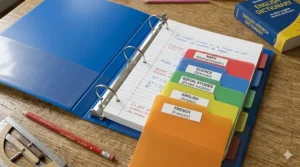
For grade 5 students juggling five or more subjects, the Case-it Mighty Zip Tab offers serious organizational firepower. The 7.6 cm (3-inch) O-rings provide 600-sheet capacity on the rings alone, while the built-in 5-tab expanding file adds colour-coded subject organization that intermediate students can actually navigate independently—no more “I couldn’t find my homework” excuses when each subject lives in its own clearly marked section.
Here’s what sets this apart from generic zipper binders: the removable shoulder strap system. Grade 5 is when many Canadian schools transition students to locker-based systems rather than keeping everything at their desk, meaning kids are hauling materials between classes. The shoulder strap distributes that weight far better than a backpack handle-grab, and the reinforced handle won’t tear out like cheaper models. The ripstop material resists the daily wear that kills most binders by February—we’re talking the kind of abuse that happens when kids use binders as lap desks on the school bus.
Multiple Canadian reviewers on Amazon.ca specifically mention this binder surviving siblings—a true testament when you consider grade 5 students aren’t exactly gentle with their gear. The exterior zippered pockets provide quick access to items needed between classes without opening the main compartment, though some parents note the binder won’t fit in standard backpack binder pockets due to its thickness when fully loaded.
Customer feedback: The 4.7/5 rating from Canadian buyers highlights exceptional durability, though a few reviews mention the zippers occasionally catching on fabric when closing if you’re not careful—easily avoided with a quick check before zipping.
✅ Pros:
- 5-tab expanding file perfect for multi-subject organization
- Shoulder strap system distributes heavy load comfortably
- Ripstop material genuinely survives multi-year use
❌ Cons:
- Too thick when full for some backpack pockets
- 3-inch capacity can be overkill for single-subject needs
Price verdict: Around $30-40 CAD on Amazon.ca positions this as a premium investment that pays off if your student needs comprehensive organization for multiple subjects.
3. Avery Durable View 1.5-Inch Slant D-Ring Binder
The Avery Durable View 1.5″ binder takes a smarter engineering approach with slant D-rings—unlike round rings, these allow pages to lie completely flat when open, eliminating that annoying curve that makes writing on the right-hand page awkward. For grade 5 students who take extensive notes or complete worksheets directly in their binder, this seemingly small design choice makes a measurable difference in daily frustration levels.
What Canadian parents particularly appreciate: Avery’s DuraHinge design uses reinforced materials at the stress point where most binders fail. After analyzing hundreds of Amazon.ca reviews, binder spine cracking represents the #1 failure mode for school binders, typically occurring between January and March as the constant opening/closing takes its toll. The DuraHinge construction extends life expectancy significantly—many reviewers report these lasting 2-3 years with proper care, though grade 5 use patterns are admittedly tougher than adult office use.
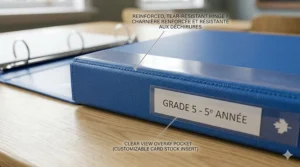
The 3.8 cm (1.5-inch) capacity hits that Goldilocks zone for intermediate students: enough room for 375 sheets across 2-3 subjects without becoming unwieldy. The clear overlay pocket on front and spine allows for easy customization—kids can slide in their schedule, subject labels, or even personalized artwork. Two interior pockets provide storage for loose papers without hole-punching them immediately, though the pockets use nonstick PVC-free material that won’t transfer ink or cause papers to stick together over time.
Customer feedback from Canadian buyers: Strong 4.6/5 rating emphasizes the flat-lying pages and durability, with several teachers specifically recommending this model for students who struggle with organization due to its straightforward design.
✅ Pros:
- Slant D-rings keep pages flat for easier writing
- DuraHinge design prevents the #1 binder failure point
- Clear customization pockets for schedules/labels
❌ Cons:
- No built-in pencil case or calculator pocket
- 1.5″ capacity insufficient for students needing all-in-one solution
Price verdict: At $12-18 CAD on Amazon.ca, this delivers excellent value-per-year-of-use for families not needing zipper closure or extensive built-in organization.
4. Davis Group EasyView Premium 2-Inch Round Ring Binder
Supporting Canadian companies matters to many families, making the Davis Group EasyView particularly appealing—it’s manufactured by a privately-owned Canadian company operating out of Ontario. Beyond the “buy Canadian” factor, this binder genuinely delivers on practical features grade 5 students need: 5 cm (2-inch) round rings hold 400 sheets, while the clear front and back cover pockets allow full customization.
Here’s where this binder shines for grade 5 use: the full-width spine label holder. Unlike stick-on labels that peel off by October, this built-in holder lets kids slide in a printed label—no adhesive required. When subjects change or you need to repurpose the binder for a new project, just swap the label. The interior pockets on both front and back covers provide space for storing items you don’t want to hole-punch: artwork, lab handouts on cardstock, permission slips awaiting parent signatures.
Canadian parents on Amazon.ca consistently mention the value proposition—Davis Group binders typically cost $5-8 less than equivalent Five Star models while offering similar durability. The trade-off: you won’t find the same extensive product line (no zipper versions or specialized features), but for families wanting a solid, traditional 3-ring binder that works reliably, this Canadian-made option checks all boxes without the premium brand markup.
Customer feedback: The 4.5/5 rating from Canadian reviewers emphasizes good value and the benefit of supporting a Canadian company, though some note the round rings mean papers don’t lie flat—standard for this ring style.
✅ Pros:
- Canadian-manufactured supporting domestic business
- Full-width spine label holder (no adhesive needed)
- Interior pockets on front and back covers
❌ Cons:
- Limited product line (no zipper or premium features)
- Round rings don’t keep pages flat
Price verdict: Around $20-28 CAD on Amazon.ca represents strong value for Canadian-made quality without premium brand pricing.
5. SUNEE 1-Inch Clear View Binders (6-Pack)
For families adopting a multi-binder organizational system—one binder per subject rather than a single all-in-one—the SUNEE 6-pack presents compelling value mathematics. At $15-22 CAD on Amazon.ca, you’re paying $2.50-3.70 per binder, dramatically undercutting premium single binders. This approach works particularly well for grade 5 students who benefit from colour-coding: red for math, blue for science, green for English, and so on.
The 2.5 cm (1-inch) capacity holds approximately 200 sheets per binder—sufficient for a single subject when you’re not trying to cram everything into one mega-binder. The clear front and back covers allow for easy subject identification and customization, though the materials quality sits firmly in the “gets the job done” category rather than premium durability. Canadian reviewers consistently report these lasting a full school year with reasonable care, though they won’t survive the multi-year abuse that Five Star or Case-it binders handle.
Here’s the strategic advantage: if one binder breaks or a zipper fails, you’re out $3 CAD, not $35. For families with multiple children or students who are particularly hard on their supplies, this risk distribution makes financial sense. The PVC-free construction also appeals to environmentally conscious Canadian families, though the materials are admittedly thinner than premium alternatives.
Customer feedback from Amazon.ca: The 4.4/5 rating reflects satisfaction with value-for-money, with parents appreciating the colour variety and low replacement cost, though several reviews note these won’t match premium binders’ durability.
✅ Pros:
- Exceptional cost-per-binder value for multi-subject systems
- Six colours enable easy subject colour-coding
- Low replacement cost reduces financial risk
❌ Cons:
- Thinner materials won’t survive heavy multi-year use
- No built-in features (pockets, pencil loops, etc.)
Price verdict: At $2.50-3.70 CAD per binder, this represents unbeatable value for families implementing colour-coded single-subject organization or with multiple children.
6. Five Star Flex Hybrid 1.5-Inch Binder
The Five Star Flex Hybrid targets a specific student profile: grade 5 kids who hate carrying unnecessary weight and prefer minimalist organization. The lightweight poly material construction cuts weight significantly compared to traditional vinyl binders—we’re talking 150-200g lighter, which matters when students are already hauling textbooks, laptops, and lunch.
The 3.8 cm (1.5-inch) capacity (300 sheets) intentionally limits what students can cram in, forcing them to regularly clear out completed work—a hidden organizational benefit for kids who never throw anything away. The spine flexes rather than using traditional rigid construction, which some students find easier to handle when extracting the binder from crowded backpacks or lockers. However, this flexibility comes with a durability trade-off: the Flex won’t survive the same abuse level as heavy-duty vinyl models.
Canadian parents report this binder works exceptionally well for grade 5 students who have strong organizational habits already and don’t need extensive built-in support structures. It’s not a solution for disorganized kids who need all the help they can get—but for students who simply need a lightweight carrier for 2-3 subjects’ worth of materials, the Flex delivers without excess features they won’t use.
Customer feedback from Amazon.ca: Mixed 4.2/5 reviews reflect its niche appeal—students who like it really love the light weight, while others miss features like interior pockets or more robust construction.
✅ Pros:
- Significantly lighter than traditional vinyl binders
- Flexible spine easier to handle in tight spaces
- Minimalist design reduces decision fatigue
❌ Cons:
- Lower durability for rough handling
- Limited capacity forces regular clearing (could be pro or con)
Price verdict: At $18-24 CAD on Amazon.ca, this costs more than basic binders while offering less capacity—you’re paying for the weight reduction and Five Star brand quality in a minimalist package.
7. Standard 3-Ring Binder (Generic Brands)
Sometimes the basics are exactly what you need. Standard 3-ring binders from brands like Staples, Office Depot house brands, or Amazon Basics deliver straightforward functionality without premium features or pricing. Available in 2.5-5 cm (1-2 inch) capacities, these handle 200-400 sheets depending on size—sufficient for many grade 5 students’ needs when paired with a simple organizational system.
What you sacrifice versus premium binders: durability (expect replacement by February or March with typical grade 5 use), built-in features (no calculator pockets, limited or no interior pockets), and materials quality (thinner vinyl that cracks more easily in cold Canadian weather). What you gain: flexibility to try different organizational approaches without major financial commitment, and the ability to easily replace damaged binders mid-year without budget stress.
For Canadian families on tight budgets or students just learning organizational skills, starting with standard binders makes strategic sense. If the binder gets destroyed by November, you’ve learned your student needs more robust construction without having invested $35 CAD. If they thrive with basic organization, you’ve saved $20+ per binder compared to premium alternatives.
Customer feedback: Reviews vary wildly by specific brand, but generally sit in the 3.8-4.2/5 range reflecting adequate performance for the price point, with durability cited as the primary weakness.
✅ Pros:
- Lowest upfront cost enables experimentation
- Easy mid-year replacement without budget impact
- Available everywhere (local stores + Amazon.ca)
❌ Cons:
- Lower durability requiring replacement by spring
- Minimal or no built-in organizational features
- Thinner materials prone to cold-weather cracking
Price verdict: At $8-15 CAD on Amazon.ca, these represent the entry point for families prioritizing budget flexibility over long-term durability.
Setting Up Your Grade 5 Student for Organizational Success
Buying the right 3 ring binder for grade 5 represents only half the battle—the setup process determines whether that binder becomes a genuine organizational tool or just another place for papers to accumulate randomly. Here’s the system I recommend based on what actually works for intermediate students in Canadian schools:
Week 1 Setup (Before School Starts): Install tab dividers immediately—waiting until school starts means papers pile up before organization happens. For multi-subject binders, dedicate one section per subject with clear labels your child helped create (ownership matters for grade 5 buy-in). Add a “To-Do” section at the front for homework requiring completion and a “Finished Work” section at the back for completed items awaiting teacher collection. This simple forward/backward flow eliminates the “I couldn’t find it” excuse by giving everything a designated location.
The Hole-Punch Habit: Purchase a 3-hole punch for home use (around $8-12 CAD on Amazon.ca) and establish the rule: no loose papers in the binder after 24 hours. Grade 5 students often receive handouts on paper that isn’t pre-punched. Without a system, these either get lost or create chaos in binder pockets. The 24-hour rule gives them flexibility while preventing long-term disorder.
Weekly Purge Schedule: Friday afternoons, spend 5-10 minutes clearing out completed work that’s been returned and graded. Keep a separate file at home for important work (portfolios, key tests), but don’t let the binder become a semester-long archive. This weekly maintenance prevents binder bloat that makes finding current work difficult—a common issue by February when binders become overstuffed.
Canadian Winter Considerations: Our harsh weather presents unique challenges. If your student uses a zipper binder, occasionally apply zipper lubricant ($3-5 CAD at hardware stores) to prevent freezing in extreme cold. For non-zipper binders, consider storing them in a plastic bag inside the backpack during particularly wet weather—vinyl binders are water-resistant, not waterproof, and papers can get damp during long walks in rain or snow.
The Backup Plan: Even with perfect organization, things get lost. Photograph your child’s class schedule, important assignment sheets, and teacher contact information. Store these in your phone’s notes app or email them to yourself. When (not if) something goes missing, you’ll have backup information to reconstruct assignments or contact teachers—saving significant stress during busy school weeks.
This setup transforms a binder from a passive container into an active organizational system. The key: start these habits during the first week of school when everything is new and students are motivated, rather than trying to implement them in November when bad habits have already formed.
How to Choose the Right 3 Ring Binder for Grade 5 in Canada
Choosing the perfect binder for your intermediate student requires matching specific features to their actual needs—not just buying the fanciest option on Amazon.ca. Here’s how to make a decision you’ll both feel confident about:
1. Start with Subject Load Assessment Count how many subjects your grade 5 student actively takes notes in or receives handouts for. If it’s 1-2 subjects, a 2.5-3.8 cm (1-1.5 inch) binder works beautifully. Three to four subjects need 3.8-5 cm (1.5-2 inches). Five or more subjects require either a 7.6 cm (3-inch) mega-binder like the Case-it Mighty Zip Tab, or switching to a multi-binder system with separate 2.5 cm binders per subject. Don’t overestimate capacity needs—a half-empty 3-inch binder weighs down backpacks unnecessarily, while an overstuffed 1-inch binder becomes frustrating to use.
2. Evaluate Your Student’s Organizational Maturity Be honest about your child’s current skills. Students who already maintain tidy desks and remember to bring home permission slips can thrive with basic binders—they don’t need extensive built-in organization to succeed. However, kids who regularly lose papers, forget assignments, or whose backpacks look like paper recycling bins should absolutely invest in zipper binders with expanding files and multiple pockets. These features aren’t luxuries; they’re organizational scaffolding that helps developing brains manage increasing complexity.
3. Consider Transportation Reality How does your student get to school? Kids walking 15+ minutes in Canadian weather absolutely benefit from zipper closures and water-resistant materials—a $10-15 CAD premium is cheap compared to rewrites when homework gets soaked. Students driven to school can manage with basic binders more easily. Also consider locker situation: some Canadian schools still use narrow lockers where 7.6 cm binders simply don’t fit comfortably, making thinner options more practical regardless of capacity needs.
4. Factor in the “Lost or Damaged” Probability First-time grade 5 students (especially those transitioning from elementary schools where everything stayed at desks) have higher binder loss/damage rates as they adjust to more independence. For these students, starting with mid-range $15-20 CAD options makes sense—good enough quality to last the year if properly cared for, but not so expensive that losing it creates budget stress. Students with proven track records of equipment care can justify premium $30-40 CAD investments that survive multiple years.
5. Check Canadian Winter Compatibility Not all binders handle -20°C Canadian winters equally. Cheaper vinyl becomes brittle in extreme cold and can crack when bent—problematic if students are pulling binders from frozen lockers or car trunks. Higher-quality materials from brands like Five Star and Case-it maintain flexibility in cold temperatures. If your region regularly sees -15°C or colder, this durability factor matters more than in milder climates.
6. Involve Your Student in the Decision Grade 5 marks a transition toward greater independence, making their buy-in crucial. Show them 2-3 options meeting your requirements (capacity, durability, budget) and let them choose based on colour or style preference. Students who selected their own binder take better care of it and feel more ownership over their organizational system—a small psychological advantage that yields real-world results.
The perfect choice balances these factors based on your specific situation. There’s no single “best” binder for every grade 5 student—only the best binder for your student’s needs, habits, and school environment.
Common Mistakes When Buying 3 Ring Binders for Grade 5
Even experienced parents make predictable errors when purchasing school binders. Avoid these pitfalls to maximize your investment:
Mistake #1: Buying Maximum Capacity “Just in Case” The logic seems sound: bigger is better, right? Wrong. A 7.6 cm (3-inch) binder holding only 200 sheets becomes awkward to handle and takes up excessive backpack space. Worse, the extra capacity encourages students to never clean out old papers, leading to the overstuffed disaster binder by March. Right-size capacity to actual needs with perhaps 20% buffer—not 200% buffer.
Mistake #2: Ignoring Canadian Pricing Differences American YouTube reviewers and blogs often recommend products at US prices, not accounting for Canadian pricing reality. A binder listed at $19.99 USD becomes $27-29 CAD after exchange, plus Amazon.ca often charges $3-5 more for the same product compared to Amazon.com pricing. Always verify current Canadian pricing before committing—sometimes the “budget” option in US content becomes mid-range priced in Canada, changing value calculations.
Mistake #3: Overlooking Ring Type Implications Round rings and D-rings aren’t interchangeable for all users. Students who take extensive handwritten notes need D-rings (especially slant D-rings) for pages that lie flat. Round rings work fine for students primarily storing teacher handouts. Buying round rings for a note-heavy student because they were $3 cheaper creates months of frustration that far exceeds the minor savings.
Mistake #4: Underestimating Weather Resistance Needs “Water-resistant” sounds like marketing fluff until your child’s homework gets soaked in October rain. Canadian weather is legitimately challenging—spring slush, autumn rain, winter snow all threaten exposed binders. If your student walks to school in any weather, water resistance isn’t optional, it’s essential. The extra $8-12 CAD for zipper closure and weather-resistant materials saves countless rewrites and missed assignment stress.
Mistake #5: Buying All Supplies in August Back-to-school sales create urgency to buy everything immediately, but waiting 2-3 weeks into the school year provides crucial information. Teachers often specify required binder configurations, some schools provide specific supply lists in September, and you’ll quickly learn whether your student needs extensive organization or minimal structure. Buying one basic temporary binder for the first few weeks, then upgrading once you understand actual requirements, prevents purchasing the wrong product.
Mistake #6: Forgetting Replacement Budget Even quality binders fail occasionally—zippers break, rings bend, or simply the wear and tear of grade 5 use exceeds durability limits. Don’t blow the entire school supply budget on premium binders without keeping $15-20 CAD in reserve for mid-year replacement if needed. The cheapest binder that gets your student through the year beats the expensive binder sitting unused because they refuse to carry it after the zipper failed in November.
Learning from others’ mistakes costs nothing—making them yourself costs money, time, and student frustration. Apply these lessons to your shopping strategy for better outcomes.
3 Ring Binders vs. Digital Organization Tools
Some Canadian schools are adopting digital tools that theoretically eliminate physical binder needs. Should you skip the binder entirely? The reality is more nuanced than “digital vs. paper” debates suggest:
The Hybrid Reality of Grade 5 in 2026: Most Canadian grade 5 classrooms operate in hybrid mode—some assignments digital, some physical, some flexible. Even schools providing Chromebooks or iPads still distribute physical handouts regularly because not everything translates to screens effectively (worksheets with diagrams for annotation, art projects, permission slips requiring parent signatures). Assuming full digital organization works means discovering in Week 2 that your child needs physical organization anyway, creating catch-up stress.
Where Digital Tools Excel: Calendar and assignment tracking apps genuinely help grade 5 students who struggle remembering due dates—visual reminders beat hoping they remember what the teacher said three days ago. Collaborative projects benefit from cloud-based tools allowing group work without coordinating physical meetups. PDF annotation for reading assignments works beautifully for some learning styles, especially students who benefit from searching text rather than flipping pages.
Where Physical Binders Still Win: No charging required—binders work in -25°C weather and when the WiFi is down. Physical organization provides tangible feedback that helps developing brains; you can see and feel when a binder is getting overstuffed, while digital clutter is invisible until you’re frantically searching for a file at 9 PM. For students who learn better by writing notes by hand (substantial research supports hand-written notes improving retention), binders remain essential. Canadian schools also face budget constraints limiting device availability, making physical organization the reliable fallback.
The Practical Recommendation: Equip your grade 5 student with both systems—a quality 3 ring binder for grade 5 for physical materials and basic digital tools (shared family calendar, simple task list app) for tracking and planning. This hybrid approach matches how Canadian classrooms actually function, providing flexibility to use whichever system best fits each specific task. Forcing an all-digital approach when 40% of your student’s materials arrive on paper creates unnecessary friction; similarly, refusing all digital tools means missing organizational advantages that help students succeed.
The question isn’t “binder or technology”—it’s “how do we use both intelligently?” That’s the mindset serving Canadian students best in 2026’s mixed-reality educational environment.
Long-Term Value: Cost-Per-Year Analysis of Grade 5 Binders
Smart financial planning means analyzing cost-per-year-of-use, not just upfront price. Here’s how different approaches compare over a typical 3-year lifespan (grades 5-7):
Budget Approach (Standard Binders @ $10 CAD each):
- Year 1: Purchase 3 binders (one per term as they break) = $30 CAD
- Year 2: Purchase 3 more binders = $30 CAD
- Year 3: Purchase 3 more binders = $30 CAD
- Total 3-year cost: $90 CAD | Cost-per-year: $30 CAD
This approach accepts frequent replacement as the trade-off for minimal upfront investment. Works well when budgets are very tight or students are particularly rough on equipment, making premium durability irrelevant because they’ll destroy anything.
Mid-Range Approach (Avery Durable View @ $15 CAD each):
- Year 1: Purchase 2 binders (one replacement mid-year) = $30 CAD
- Year 2: Purchase 1 replacement binder = $15 CAD
- Year 3: Use surviving binders from previous years = $0 CAD
- Total 3-year cost: $45 CAD | Cost-per-year: $15 CAD
Better materials yield genuine savings over time. The durability increase from budget to mid-range represents the best value proposition for most families—you’re paying 50% more per binder but getting 2-3 times the lifespan.
Premium Approach (Five Star/Case-it Zipper @ $30-35 CAD each):
- Year 1: Purchase 1 quality zipper binder = $32 CAD
- Year 2: Use same binder = $0 CAD
- Year 3: Use same binder (or purchase replacement if needed) = $0-32 CAD
- Total 3-year cost: $32-64 CAD | Cost-per-year: $11-21 CAD
Premium binders justify their cost through multi-year survival and reduced homework loss/damage. The financial sweet spot emerges when a single premium binder lasts 2-3 years—you’ve matched or beaten mid-range costs while benefiting from superior features throughout.
Multi-Binder System (SUNEE 6-pack @ $18 CAD):
- Year 1: Purchase 6-pack, use 5, keep 1 spare = $18 CAD
- Year 2: Use spare from Year 1, purchase another 6-pack = $18 CAD
- Year 3: Use spares from Year 2 stock = $0 CAD
- Total 3-year cost: $36 CAD | Cost-per-year: $12 CAD
Volume purchasing creates substantial per-binder savings, though you accept basic features and modest durability. This approach shines for families with multiple children able to share the bulk purchase across students.
The Winner? Mid-range or premium approaches deliver best cost-per-year value for most Canadian families, assuming reasonable care. However, families with students who are truly destructive on equipment should stick with budget options and accept frequent replacement—paying for durability you’ll never realize because it gets destroyed anyway makes no financial sense.
Frequently Asked Questions About Grade 5 Binders
❓ Can I use a 3-inch binder for grade 5 or is it too big?
❓ Do zipper binders really prevent papers from falling out?
❓ Are D-rings better than round rings for grade 5 students?
❓ Can my grade 5 student use last year's binder from grade 4?
❓ Where can I buy durable binders for grade 5 in Canada?
Conclusion: Setting Your Grade 5 Student Up for Success
Finding the right 3 ring binder for grade 5 might seem like a small detail in the grand scheme of your child’s education, but organizational tools genuinely impact daily success and stress levels. Canadian families face unique considerations—harsh weather demanding durable materials, pricing that differs from American recommendations, and the reality of diverse school requirements across provinces.
The seven binders reviewed here span the full range of grade 5 needs: from basic $10 CAD standards getting the job done to premium $35 CAD zipper models providing comprehensive organizational support for heavily-loaded students. Your perfect choice depends on your specific situation—your student’s organizational maturity, subject load, transportation reality, and budget constraints all factor into the decision.
Key takeaways: right-size capacity to actual needs (don’t over-buy), invest in water resistance if your student faces Canadian weather during commutes, and involve your grade 5 student in the selection to build ownership and care. Remember that even the best binder requires setup and maintenance habits to transform from a container into a genuine organizational system.
Whether you choose a single-subject approach with multiple affordable binders or an all-in-one premium zipper model, the goal remains constant: helping your intermediate student develop organizational skills that serve them through middle school and beyond. The binder is just a tool—but the right tool, used correctly, makes the challenging work of grade 5 academic success significantly more manageable.
Give your student the organizational foundation they need to thrive during this crucial transition year. The investment in a quality 3 ring binder for grade 5 pays dividends in reduced homework stress, improved grades, and the confidence that comes from knowing where everything is when they need it.
Recommended for You
- 7 Best Washable Paint Sets for Kids Canada 2026 | Safe & Non-Toxic
- Best Glue Sticks for School Projects Canada 2026
- 7 Best Backpacks for Grade 2 Students in Canada 2026
Disclaimer: This article contains affiliate links. As an Amazon Associate, I earn from qualifying purchases. If you purchase products through these links, we may earn a small commission at no additional cost to you.
✨ Found this helpful? Share it with your friends! 💬🤗
