
In This Article
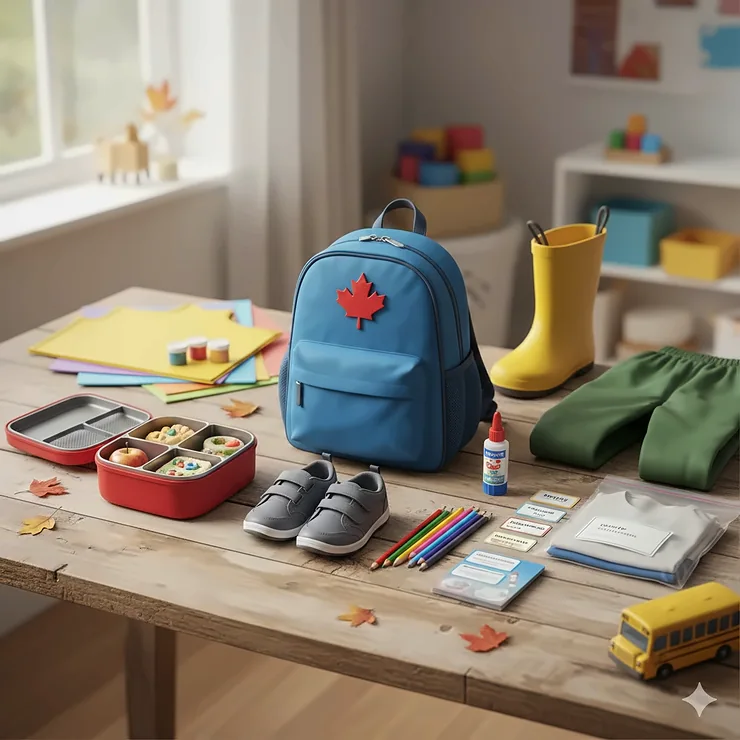
The first day of kindergarten marks an incredible milestone in your child’s life—and as a Canadian parent, you want everything to be absolutely perfect. I still remember the nervous excitement of preparing my daughter’s backpack, carefully labeling each crayon and ensuring every supply was age-appropriate and safe. That mixture of pride and worry is universal, isn’t it?
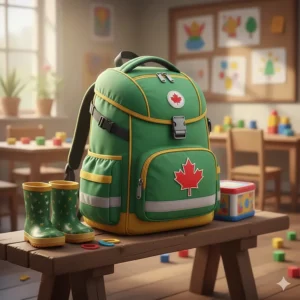
Creating a proper first day of kindergarten supplies list isn’t just about checking boxes on a school form. It’s about choosing choking hazard free supplies that keep your 5-year-old safe, selecting easy-grip supplies for small hands that encourage independence, and finding durable items that’ll survive the energetic chaos of a Canadian kindergarten classroom.
In Canada, kindergarten typically begins for children aged 4-6 (average age 5), with programs varying slightly across provinces. Whether you’re in Ontario, British Columbia, or anywhere across our beautiful country, this guide will help you navigate the overwhelming world of school supplies with confidence and maybe even a bit of excitement.
Quick Comparison Table: Top Kindergarten Supplies at a Glance
| Product | Best For | Price Range (CAD) | Key Feature | Safety Rating |
|---|---|---|---|---|
| Crayola Jumbo Crayons 16-Count | Easy grip coloring | $8-$12 | Double-wrapped durability | ✅ Non-toxic, Ages 3+ |
| Skip Hop Zoo Pack Backpack | Daily transport | $25-$35 | Name tag pocket | ✅ BPA-free materials |
| Fiskars Training Scissors | Learning to cut | $6-$10 | Auto-open lever | ✅ Blunt safety tips |
| Crayola Ultra-Clean Washable Markers | Mess-free art | $10-$15 | Washes from skin | ✅ AP certified safe |
| Mabel’s Labels Name Tags | Labeling supplies | $20-$30 | Waterproof, durable | ✅ Non-toxic adhesive |
| Crayola Construction Paper Pad | Creative projects | $8-$14 | 400 sheets included | ✅ Acid-free paper |
| Melissa & Doug Jumbo Triangular Crayons | Preventing roll-away | $12-$18 | Non-roll design | ✅ Non-toxic certified |
💬 Just one click – help others make better buying decisions too! 😊
Top 7 first day of kindergarten supplies list Products: Expert Analysis
1. Crayola Jumbo Crayons 16-Count – The Gold Standard for Kindergartners
When it comes to jumbo crayons for 5 year old children, Crayola sets the benchmark that other brands struggle to match. These aren’t your standard classroom crayons—they’re specifically engineered for developing motor skills.
Key Specifications:
- 16 vibrant colours including primary and secondary shades
- 5-inch length with thick 0.56-inch diameter
- Double-wrapped for extra strength and durability
Canadian Price: $8-$12 CAD on Amazon.ca
The genius of Crayola Jumbo Crayons lies in their thoughtful design. The extra-large barrel creates an ideal grip for small, still-developing hands, while the double wrapping prevents the heartbreaking snap that comes mid-masterpiece. Canadian parents consistently report these crayons lasting an entire school year, even with enthusiastic daily use.
One Toronto mother shared that her son with developing fine motor skills found these infinitely easier to control than standard crayons. The broader surface area means more colour coverage with less pressure—perfect for kindergartners still building hand strength.
✅ Pros:
- Perfect size for age-appropriate school supplies
- Hard to break even with enthusiastic use
- Non-toxic and ACMI certified for safety
❌ Cons:
- Limited to 16 colours (some kids want more variety)
- Slightly more expensive than standard crayons
2. Skip Hop Zoo Pack Little Kid Backpack with Built-In Name Tag
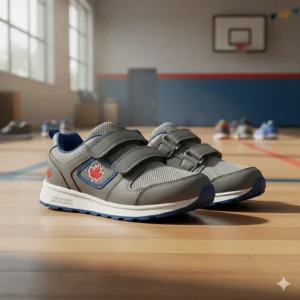
A kindergarten backpack with name tag isn’t just convenient—it’s essential for busy Canadian classrooms where 20+ little ones need to identify their belongings quickly.
Key Specifications:
- Dimensions: 12″ H x 10″ W x 5″ D
- Insulated front pocket for snacks
- Built-in name tag window on back panel
Canadian Price: $25-$35 CAD
The Skip Hop Zoo Pack transforms the mundane backpack into a delightful companion. With adorable animal designs (from butterflies to dinosaurs), it makes identifying your child’s bag effortless in the classroom chaos. The built-in name tag feature is brilliant—write your child’s name and slip it into the clear window pocket. No sewing, no iron-ons, just simple practicality.
Canadian reviewers particularly appreciate the size—it’s large enough for a standard folder, lunch box, and change of clothes (those kindergarten “accidents” happen!), yet small enough that a 5-year-old can comfortably carry it. The padded, adjustable straps prevent shoulder strain during the walk from the school bus.
✅ Pros:
- Purpose-built for kindergarten-sized children
- Insulated pocket keeps lunches fresh in Canadian weather
- Machine washable (because spills happen)
❌ Cons:
- Not suitable for wheeled attachment
- May be outgrown by Grade 2
3. Fiskars Training Scissors – Building Confidence Through Safe Design
Finding safety scissors for kindergarten that actually cut paper (instead of just frustrating your child) can feel impossible. The Fiskars Training Scissors solve this beautifully.
Key Specifications:
- Training lever for automatic blade opening
- Plastic-covered metal blades
- Ambidextrous design for left and right-handed kids
Canadian Price: $6-$10 CAD
As the #1 teacher-recommended brand, Fiskars understands what kindergartners need. The innovative training lever opens the blades automatically after each cut, allowing your child to focus solely on the closing motion. Once they’ve mastered this fundamental skill, flip the lever up for traditional scissor action.
A Calgary teacher with 15 years of kindergarten experience told me these scissors reduce cutting frustration by at least 70%. The blunt tips provide safety without sacrificing cutting ability, and the optimized handle loops accommodate those adorably chubby kindergarten fingers.
✅ Pros:
- Choking hazard free supplies with rounded safety tips
- Transitions from training to traditional mode
- Works for both left and right-handed children
❌ Cons:
- Slightly larger than some safety scissors
- Training lever can be accidentally engaged
4. Crayola Ultra-Clean Washable Markers 10-Count
Every parent’s nightmare: permanent marker on the walls, clothes, or worse—on little faces during “face painting time.” Crayola Ultra-Clean Washable Markers eliminate this stress entirely.
Key Specifications:
- 10 vibrant, long-lasting colours
- Washes from skin, walls, and most fabrics
- Broad-line tip for versatile drawing
Canadian Price: $10-$15 CAD per pack
These washable markers kindergarten teachers actually request by name because they genuinely wash out. Not “sort of” wash out. Not “maybe with intense scrubbing” wash out. They legitimately rinse away with just soap and water.
Canadian parents appreciate that Crayola’s Color Max technology delivers brighter, more vibrant colours without increasing messiness. The conical tip allows for both broad strokes (colouring large areas) and fine lines (adding details), making these markers incredibly versatile for different art projects.
One Vancouver mother shared how her son accidentally drew on their cream sofa—she panicked until remembering these were the washable markers. A damp cloth and 30 seconds later, you’d never know it happened.
✅ Pros:
- Easy-grip supplies for small hands with comfortable barrels
- Won’t bleed through typical classroom paper
- Safe and non-toxic for ages 3+
❌ Cons:
- Caps can be lost easily
- Tips may dry out if left uncapped overnight
5. Mabel’s Labels Daycare Combo Pack for Labeling Supplies for Kindergarten
In a classroom of 20-25 kids with identical school supplies, labeling supplies for kindergarten isn’t optional—it’s absolutely critical for preventing the “whose crayon is this?” debates.
Key Specifications:
- 70 personalized labels in various sizes
- Dishwasher, microwave, and freezer safe
- Write-on name space available
Canadian Price: $20-$30 CAD
Mabel’s Labels, a proudly Canadian company, understands our unique needs. Their labels withstand everything from lunch box dishwasher cycles to frozen water bottles to summer heat in backpacks. The variety pack includes small labels for individual crayons and pencils, medium labels for lunch containers, and larger tags for backpacks and jackets.
The adhesive is remarkably strong—Ontario parents report labels staying put through entire school years, even on items that go through weekly washing. Yet they remove cleanly when needed, without leaving sticky residue on items you’ll pass down to younger siblings.
✅ Pros:
- Made-in-Canada quality and customer service
- Personalized with your child’s name
- Multi-size variety for different items
❌ Cons:
- Custom orders take 5-7 business days
- Higher price point than generic labels
6. Crayola Construction Paper 400-Sheet Pad
Construction paper is the unsung hero of kindergarten creativity. The Crayola Construction Paper Pad provides months of crafting possibilities.
Key Specifications:
- 400 sheets in 10 assorted colours
- 9″ x 12″ standard size sheets
- Acid-free for long-lasting projects
Canadian Price: $8-$14 CAD
While this might seem like an excessive amount of construction paper, ask any kindergarten teacher—it disappears fast. Between daily art projects, holiday crafts, cutting practice, and those enthusiastic “I’m making something for everyone in my family” afternoons, 400 sheets might last until Christmas break.
Crayola Construction Paper cuts cleanly (important for those still-developing scissor skills), folds crisply, and glues without warping excessively. The colours remain vibrant even after months in a backpack, and the acid-free composition means those precious kindergarten masterpieces won’t yellow with time.
✅ Pros:
- Excellent value with bulk quantity
- Heavyweight paper that doesn’t tear easily
- Standard size fits most project requirements
❌ Cons:
- Bulk pack is heavy for small children to carry
- Storage requires space at home
7. Melissa & Doug Jumbo Triangular Crayons 10-Pack
Here’s a common kindergarten frustration: round crayons rolling off desks and breaking. Melissa & Doug Jumbo Triangular Crayons solve this with elegant simplicity.
Key Specifications:
- Unique triangular anti-roll shape
- 10 vibrant colours in flip-top case
- Encourages proper pencil grip from day one
Canadian Price: $12-$18 CAD
The triangular design serves dual purposes—preventing those annoying rolling-crayon incidents while naturally positioning little fingers in the correct tripod grip. This seemingly small detail has big implications for developing proper writing posture from kindergarten onward.
Canadian occupational therapists often recommend triangular crayons for children developing fine motor skills. The three flat surfaces provide natural finger placement guides, making these perfect age-appropriate school supplies for the kindergarten classroom.
The included flip-top case keeps all crayons organized and prevents the classic “loose crayons tumbling through the backpack” scenario that drives both parents and teachers to distraction.
✅ Pros:
- Prevents rolling and falling
- Develops proper writing grip naturally
- Durable case keeps everything organized
❌ Cons:
- Only 10 colours (fewer than standard packs)
- Triangular shape may feel unusual initially
Understanding Canadian Kindergarten Requirements
All Canadian provinces and territories offer kindergarten programs, typically for 5-year-olds, though specific requirements vary by region. Understanding your provincial guidelines helps you prepare the right supplies.
What Exactly Is a first day of kindergarten supplies list?
A first day of kindergarten supplies list is a curated collection of age-appropriate school supplies designed specifically for 4-6 year old children entering their first formal educational environment. Unlike older grades that focus on academic tools, kindergarten supplies emphasize safety, appropriate sizing, and developmental support.
The ideal first day of kindergarten supplies list balances three critical factors:
Safety First: All items must be choking hazard free supplies. At this age, children are still developing awareness about what should and shouldn’t go in mouths. Jumbo crayons for 5 year old kids, larger markers, and rounded safety scissors all minimize accidental ingestion risks.
Size Matters: Easy-grip supplies for small hands aren’t just convenient—they’re essential for building confidence. When a child can successfully manipulate their tools, they engage more enthusiastically with learning activities.
Durability Counts: Kindergartners haven’t yet mastered “gentle.” Supplies need to withstand enthusiastic use, frequent dropping, and the occasional moment of frustration.
Provincial Variations in Canadian Kindergarten Supply Needs
Ontario’s Full-Day Kindergarten Considerations
Ontario offers full-day kindergarten programs with educator teams including both teachers and early childhood educators. This extended day means children need:
- Extra snacks and water bottles
- Change of clothes (accidents happen during long days)
- Rest mat or towel for quiet time
- More robust supplies that withstand all-day use
British Columbia’s Play-Based Learning Approach
BC’s kindergarten programs emphasize play-based learning, which means:
- More art supplies for creative expression
- Construction materials for building projects
- Washable markers and crayons (mess is part of learning)
- Sturdy backpacks for transporting projects home
Alberta’s Early Childhood Services
Alberta is unique in funding education for children as young as 2 years 8 months through their Early Childhood Services program. Parents should:
- Consider younger children may need even larger grip supplies
- Choose extra-durable items for longer pre-K to K transition
- Select supplies suitable for broader age ranges
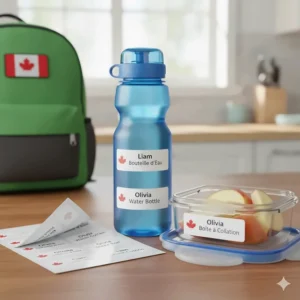
How to Choose the Perfect Kindergarten Backpack with Name Tag
Size Specifications for 5-Year-Olds
A kindergarten backpack with name tag should measure approximately:
- Height: 11-13 inches (enough for folders but not overwhelming)
- Width: 9-11 inches (fits lunch box and supplies)
- Depth: 5-6 inches (creates structure without bulk)
Canadian winters add complexity—your child needs space for mittens, hats, and sometimes snow pants. A backpack in the 12″ x 10″ x 5″ range accommodates these extras without being too heavy when empty.
Name Tag Placement: Visible vs. Hidden
There’s ongoing debate about name tag visibility. Some Canadian safety experts recommend:
Hidden name tags (inside the backpack or on the back panel) prevent strangers from addressing your child by name, reducing potential safety risks.
Visible name tags help teachers and staff identify belongings quickly in busy classroom environments.
Many parents compromise with last name only on the outside tag, and full name plus contact information inside the backpack.
Strap Adjustment for Growing Bodies
Look for backpacks with:
- Adjustable, padded shoulder straps that grow with your child
- Chest clips to distribute weight evenly
- Lightweight construction (empty backpack under 1 lb is ideal)
Canadian children walk or take school buses more than in many countries, making comfortable carrying essential.
Safety Standards for Jumbo Crayons for 5 Year Old Children
Why Size Matters for Choking Prevention
Crayola specifically marks certain products with choking hazard warnings for children under 3 years, but kindergarten-aged children benefit from larger supplies too. Jumbo crayons for 5 year old kids typically measure 0.56 inches in diameter—substantially larger than the 1.25-inch diameter considered a choking hazard.
Non-Toxic Certifications to Look For
When shopping for age-appropriate school supplies, verify:
- ACMI (Art & Creative Materials Institute) Certification: Ensures products meet strict safety standards
- ASTM D-4236: American standard commonly adopted in Canada for art materials
- Health Canada Compliance: Confirms products meet Canadian safety regulations
Crayola, Melissa & Doug, and Fiskars all maintain these certifications across their kindergarten-appropriate product lines.
Understanding “Washable” vs. “Ultra-Clean”
Not all washable markers kindergarten teachers request are created equal:
Standard Washable: Removes from most fabrics with standard washing
Ultra-Clean Washable: Removes from skin, walls, and furniture with just water
Permanent: Should never appear in kindergarten classrooms
For Canadian parents, ultra-clean washable markers provide peace of mind during those first creative exploration months.
Mastering Safety Scissors for Kindergarten Success
The Training Lever Advantage
Traditional safety scissors require children to master both opening AND closing motions simultaneously—a complex coordination task for 5-year-olds. Training scissors with auto-opening levers simplify this:
- Child closes blades (the cutting motion)
- Lever automatically reopens blades
- Child focuses solely on the cutting action
- Coordination develops naturally
Once your child masters closing, flip the lever up for traditional scissor use. This graduated approach reduces frustration significantly.
Left-Handed vs. Ambidextrous Scissors
Approximately 10% of Canadian children are left-handed, and using right-handed scissors causes genuine struggle. Quality ambidextrous scissors like Fiskars Training Scissors work for both orientations because:
- Blade alignment supports both hand positions
- Handle design accommodates either thumb placement
- Cutting mechanics function identically for both hands
If your child is definitively left-handed, consider dedicated left-handed safety scissors for kindergarten to prevent developing compensation habits.
Proper Cutting Technique for Kindergartners
Teaching correct scissor grip prevents future challenges:
- Thumb in small hole, fingers in large hole
- Thumb always points up toward the ceiling
- Paper moves, scissors stay relatively still
- Cutting on the line, not through the middle
Practice on straight lines before progressing to curves and shapes. Those childhood “cutting practice” worksheets serve genuine developmental purposes!
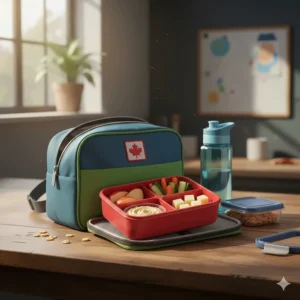
Complete Labeling Supplies for Kindergarten Strategy
What Items Absolutely Need Labels?
Labeling supplies for kindergarten might seem excessive until your child comes home with someone else’s jacket for the third time. Label these items without exception:
Clothing Items:
- Winter jacket and snow pants
- Indoor shoes
- Gym shoes
- Hat, mittens, and scarf (attach labels with ribbon if needed)
- Any removable sweaters or hoodies
School Supplies:
- Backpack (inside and outside)
- Lunch box and thermos
- Water bottle
- Pencil case or supply box
- Individual crayons and markers (yes, really!)
Special Items:
- Show-and-tell toys
- Library books borrowed from school
- Artwork portfolios
Label Types and Their Best Uses
Stick-On Labels:
- Best for: Hard surfaces like lunch boxes, water bottles, folders
- Durability: Dishwasher and microwave safe options available
- Application: Clean surface, apply firmly, let cure 24 hours
Iron-On Labels:
- Best for: Clothing, fabric bags, cloth items
- Durability: Survives multiple wash cycles
- Application: Requires iron and firm pressure for 10-15 seconds
Write-On Tags:
- Best for: Shoes, bags, temporary items
- Durability: Moderate; may need replacement mid-year
- Application: Simply write with permanent marker
Canadian companies like Mabel’s Labels offer combo packs with all three types, perfect for comprehensive labeling.
Creative Labeling for Non-Fabric Items
Some items resist traditional labels:
- Crayons: Use small wrap-around labels specifically designed for circular items
- Markers: Label the caps (they’re less likely to rub off with use)
- Erasers: Tiny dot labels or permanent marker work best
- Glue sticks: Label the bottom end (the twist base)
Yes, labeling individual crayons seems obsessive, but when 20 kids have identical Crayola Jumbo Crayons, that obsession prevents tears and arguments.
Building a Budget-Friendly Kindergarten Supply Kit
Canadian Pricing Reality Check
Let’s be honest about costs. A complete first day of kindergarten supplies list in Canada typically runs:
Budget Approach: $75-$100 CAD
Mid-Range Approach: $125-$175 CAD
Premium Approach: $200-$250 CAD
Breaking this down:
- Backpack: $20-$35
- Basic supplies (crayons, markers, scissors): $30-$50
- Labels and organization: $20-$30
- Paper, folders, notebooks: $15-$25
- Extra supplies (glue, erasers, pencils): $15-$30
- Winter gear labels and tags: $10-$20
Money-Saving Strategies for Canadian Parents
1. Shop Multi-Packs Crayola often bundles crayons and markers together at better per-unit pricing than individual purchases. A classpack might cost $30 but provide enough supplies for the entire year plus sharing with siblings.
2. Time Purchases Strategically Canadian back-to-school sales peak in August. Amazon.ca Prime Day (July) often features school supply deals. Post-Christmas clearance can provide next year’s supplies at 50-70% off.
3. Join Parent Supply Cooperatives Many Canadian schools organize bulk purchasing—pooling orders through one supplier reduces per-family costs. Our local parent council negotiated 20% off by combining 100 family orders.
4. Differentiate “Essential” vs. “Nice-to-Have” Your first day of kindergarten supplies list truly requires:
- Backpack (must have)
- Crayons and markers (must have)
- Safety scissors (must have)
- Labels (must have)
- Folders and notebooks (must have)
Everything else can be added gradually as needs become clear.
When to Invest in Premium Products
Some supplies justify premium spending:
Backpacks: A quality $30-35 backpack lasts 2-3 years; a $15 backpack may fail by November Scissors: Premium safety scissors like Fiskars cut properly; cheap scissors frustrate and discourage Labels: Good labels stay put all year; cheap labels peel off, requiring replacement
Buy generic for: construction paper, glue sticks, tissues, baby wipes
Buy premium for: items directly affecting your child’s success and frustration levels
Creating an Organized Supply Routine at Home
Setting Up Your Kindergarten Supply Station
Designate a specific home location for kindergarten organization:
Lower Shelf Access: Place frequently needed items (crayons, markers, paper) where your child can reach independently. This encourages responsibility and reduces “I need help” interruptions.
Supply Replenishment System: Keep backup supplies in a higher location. When the classroom asks for tissue box donations or your child reports “I’m out of glue sticks,” you’re prepared without emergency store runs.
Weekly Backpack Check: Every Sunday evening:
- Empty backpack completely
- Check for notes or forms requiring attention
- Replace depleted supplies
- Clean any spills or crumbs
- Repack for Monday morning
Teaching Supply Responsibility to Kindergartners
Five-year-olds can learn basic supply care:
“One More Please” System: When your child takes the last glue stick or final crayon, they tell you so it can be replaced. This develops awareness without requiring inventory management.
Capped Marker Rule: Make recapping markers part of every art session’s cleanup. Yes, you’ll still find uncapped markers, but establishing the expectation early helps.
Scissors Safety Routine: Always close scissors before putting them away. Always. This single habit prevents injuries and blade damage.
Managing the Artwork Avalanche
Canadian kindergartners produce approximately 437 art projects daily (okay, it feels like that many). Create a management system:
Display Rotation: Dedicate fridge or wall space for “current favorites.” Rotate weekly, photographing before discarding.
Portfolio System: Keep a large flat folder for exceptional pieces. At year-end, select 10-15 “best of” items to preserve, photograph the rest, then recycle.
Digital Archiving: Photograph every project with your phone. Create a “Kindergarten Year” album. In five years, you’ll treasure these digital memories more than 200 construction paper turkeys.
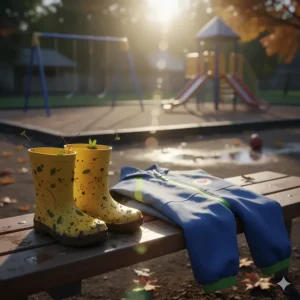
Preparing for Canadian Weather-Specific Supply Needs
Winter Clothing Label Strategy
Canadian winter requires extensive labeling:
The Missing Mitten Phenomenon Kindergartners lose mittens with astonishing frequency. Attach labels AND clips that connect mittens to jacket sleeves. String-through-sleeves works, but clips are easier for independent dressing.
Snow Pants Problem Most schools require labeled snow pants from November through March. Use iron-on labels inside the waistband and write names in permanent marker at multiple locations.
Indoor Shoe Mix-Ups Every Canadian kindergarten classroom has 20 pairs of nearly identical indoor shoes. Bright labels on heels and inside tongues prevent confusion.
Season-Specific Supply Adjustments
Fall (September-November):
- Light jacket labels
- Extra changes of clothes (playground mishaps)
- Fall-themed art supplies for projects
Winter (December-March):
- Full winter gear labels (jacket, snow pants, boots, mittens, hat)
- Extra hand sanitizer (cold/flu season)
- Lip balm for dry Canadian winter air
Spring (April-June):
- Rain jacket and boots labels
- Extra snacks (outdoor time increases)
- Sunscreen for playground time
Special Considerations for Children with Additional Needs
Adapted Easy-Grip Supplies for Small Hands with Motor Delays
Some children need extra support with fine motor skills:
Chunky Triangular Grips: Add foam grips to regular pencils and crayons, creating even larger diameters for easier grasping. Canadian occupational therapists frequently recommend this modification.
Spring-Loaded Scissors: Beyond training scissors, spring-loaded models automatically reopen after each cut, requiring minimal finger strength—helpful for children with low muscle tone.
Heavyweight Paper: Standard construction paper can be frustrating for children still developing control. Heavyweight cardstock provides more resistance, making it easier to control during cutting activities.
Left-Handed Kindergartners
About 10% of Canadian children are left-handed. Their needs:
Left-Handed Scissors: While ambidextrous scissors work adequately, dedicated left-handed scissors make cutting significantly easier and prevent compensation habits.
Notebook Positioning: Teach left-handed children to position notebooks to the left and tilt slightly for better writing posture.
Marker Cap Removal: Left-handed kids pull caps off differently. Demonstrate the easiest technique to prevent markers rolling off desks.
Building Independence in Kindergartners with Support Needs
Even children requiring additional support can develop independence:
Visual Labels: Add pictures to labels alongside names—a drawing of boots next to “Boots” helps non-readers find their items.
Color-Coding System: Assign your child a specific color. All their supplies feature this color, making identification easier in crowded classrooms.
Checklist Cards: Create picture-based morning routine cards: 1) Check backpack 2) Pack lunch 3) Add snack 4) Water bottle. Laminate and attach to backpack.
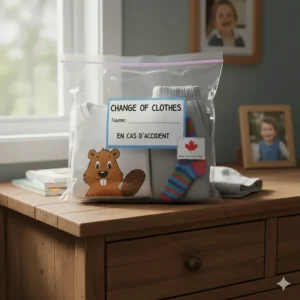
Environmentally Conscious Supply Choices
Sustainable Options for Canadian Families
Environmental awareness can guide purchasing without breaking budgets:
Refillable vs. Disposable:
- Markers: Some brands offer refillable ink reservoirs (rare in kindergarten sizes)
- Glue: Bulk bottles with refillable sticks reduce plastic waste
- Crayons: Brands like Stockmar use beeswax instead of petroleum-based wax
Recycled Content Products: Crayola offers recycled marker and crayon programs. Some retailers collect used markers for recycling. Check your local municipality—some Canadian cities accept markers in school supply collection programs.
Longevity Over Price: One quality Fiskars scissor lasting three years generates less waste than three cheap scissors that break annually.
Teaching Kindergartners About Supply Sustainability
Age-appropriate environmental lessons:
Used-Up vs. Still-Good: Help your child assess when supplies truly need replacing versus when they’re “bored” with current items.
Sharing Extras: When art projects require only red and blue, save other colours for tomorrow rather than unpacking everything.
Donation Opportunities: At year-end, gently used supplies can be donated to community centres, daycares, or next year’s kindergarten class.
Technology Integration in Modern Kindergarten
Digital Tools Supplementing Traditional Supplies
While this guide focuses on physical supplies, modern Canadian kindergartens increasingly incorporate technology:
Tablets in Kindergarten: Many programs use tablets for literacy and numeracy apps. If your school program includes this, consider:
- Protective case (kindergartners drop things)
- Screen protector (self-explanatory)
- Headphones (child-sized with volume limiting)
QR Code Labels: Some innovative Canadian parents create QR code labels linking to contact information rather than displaying phone numbers publicly.
Digital Portfolio Apps: Apps like Seesaw let teachers share your child’s work digitally, reducing paper art storage needs.
Balancing Screen Time with Hands-On Learning
Ontario’s kindergarten program emphasizes play-based learning and hands-on experiences, so traditional supplies remain crucial despite technology integration.
Kindergartners still need:
- Physical crayons for developing fine motor skills
- Real scissors for hand-eye coordination
- Actual construction paper for spatial awareness
Technology supplements but doesn’t replace these foundational experiences.
Timeline: When to Purchase Kindergarten Supplies
Spring Before Kindergarten Starts (March-May)
Early Planning Benefits:
- Wider selection availability
- More time for price comparison
- Ability to take advantage of early sales
March Activities:
- Request official supply list from school
- Research specific item requirements
- Create preliminary budget
April Activities:
- Begin watching for sales
- Order personalized items (labels need 1-2 weeks)
- Purchase off-season items if significantly discounted
May Activities:
- Buy backpack so child can practice packing
- Purchase clothing items needing labels
- Start labeling process for winter gear (gets ahead of fall rush)
Summer Supply Shopping (June-August)
June:
- Early bird sales begin
- Retailers stock full selections
- Purchase items with longer customization times
July:
- Prime Day and mid-summer sales
- Good time for bulk purchases
- Less crowded stores than August
August:
- Peak shopping season (most crowded)
- Best sales often first week of August
- Last chance for school-specific requirements
Last-Minute Additions (First Two Weeks of School)
Teachers often request specific items after school starts:
- Particular folder colours for subject organization
- Specific brands that work better in their classroom
- Additional supplies for sharing (tissues, hand sanitizer)
Keep $30-50 available for these unexpected requests.
✨ Don’t Miss These Exclusive Deals!
🔍 Take your first day of kindergarten supplies list preparation to the next level with these carefully selected products available on Amazon.ca. Click on any highlighted item to check current pricing and availability. These age-appropriate school supplies will help you create an organized, safe, and exciting kindergarten experience your child will love!
FAQ: First Day of Kindergarten Supplies List Questions
❓ What should be on my first day of kindergarten supplies list for Canadian schools?
❓ How do I choose choking hazard free supplies for my 5-year-old?
❓ Why are easy-grip supplies for small hands important in kindergarten?
❓ What makes a good kindergarten backpack with name tag for Canadian weather?
❓ When should I start shopping for kindergarten supplies in Canada?
Conclusion: Your Child’s Kindergarten Success Starts Here
Creating the perfect first day of kindergarten supplies list isn’t about buying the most expensive items or the largest quantities. It’s about selecting age-appropriate school supplies that support your child’s development, choking hazard free supplies that keep them safe, and easy-grip supplies for small hands that encourage independence and confidence.
From jumbo crayons for 5 year old artists to safety scissors for kindergarten creativity, from kindergarten backpack with name tag organization to comprehensive labeling supplies for kindergarten—each item serves a purpose in your child’s educational journey.
Canadian kindergarten represents a unique blend of play-based learning and skill development, and with over 51% of Canadians completing tertiary education, the highest rate globally, our educational foundations clearly work. Setting your child up with the right supplies contributes to this success story.
As you prepare for that momentous first day, remember: your child will remember your excitement and support far longer than whether their crayons had 16 or 24 colours. The washable markers kindergarten teachers request will wash out, the misplaced scissors will be found, and somehow, despite everything, your little one will thrive and grow and amaze you.
Here’s to new beginnings, to first day photos, to backpacks that seem impossibly large, and to the incredible journey of kindergarten. You’ve got this, Canadian parents!
Recommended for You
- 7 Must-Have University Dorm Essentials for Canadian Students 2026
- Best Complete Back to School Supplies Under $100 Canada 2026
- 17 Back to School Supplies Checklist Grade 9 Ontario 2026 Guide
Disclaimer: This article contains affiliate links to Amazon.ca. If you purchase products through these links, we may earn a small commission at no additional cost to you.
✨ Found this helpful? Share it with your friends! 💬🤗
