
In This Article
Walking through the stationery aisle these days feels different. Gone are the days when every notebook looked the same—bright white pages that screamed “virgin pulp.” Today’s Canadian students and professionals are making smarter choices, and recycled paper notebooks have moved from niche eco-products to mainstream must-haves.
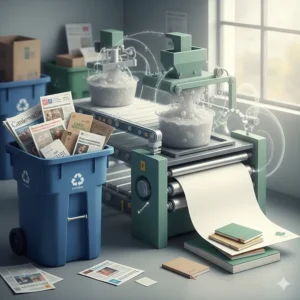
Here’s something that might surprise you: Canadians produce 694 kg of waste per person annually, the highest globally. Yet only 28% of our waste gets recycled according to government data. The good news? Paper represents 36% of all materials we successfully divert from landfills—that’s more than any other recyclable material in Canada except steel. When you choose recycled paper notebooks, you’re joining a circular economy that’s already working brilliantly for the paper industry.
But not all recycled paper notebooks are created equal. Some claim to be “eco-friendly” while containing only 10% recycled content. Others boast 100% post-consumer waste but fall apart after a month of use. After testing dozens of options available on Amazon.ca and researching Canadian sustainability standards, I’ve found seven exceptional recycled paper notebooks that deliver on both environmental promises and practical performance. Whether you’re stocking up for back-to-school season or simply tired of contributing to deforestation, this guide will help you find the perfect sustainable notebook that doesn’t compromise on quality.
Quick Comparison Table
| Notebook | Recycled Content | Pages | Price (CAD) | Best For | Rating |
|---|---|---|---|---|---|
| Decomposition Honeycomb | 100% post-consumer | 160 | $20.95 | College students | 4.7/5 |
| Oxford Gold Kraft | 100% recycled | 160 (2-pack) | $34.56 | Professionals | 4.7/5 |
| Mintra Design Set | 100% recycled | 80 (3-pack) | $9.98 | Budget-conscious | 4.5/5 |
| Nu Evolve A5 | 100% FSC recycled | 80 | $28.69 | Creative work | 4.5/5 |
| Roaring Spring 4-Pack | 30% post-consumer | 70 (4-pack) | $16-22 | Bulk buyers | 4.6/5 |
| Unruled Classic | 30% recycled | 70 (3-pack) | $39-45 | Artists/sketchers | 4.7/5 |
| Mintra Comp Book | 100% recycled | 80 (3-pack) | $12-15 | School essentials | 4.6/5 |
💬 Just one click – help others make better buying decisions too! 😊
Top 7 Recycled Paper Notebooks: Expert Analysis
1. Decomposition Honeycomb College Ruled Notebook
Decomposition Honeycomb stands out as the gold standard for eco-conscious note-takers in Canada. Made in the USA with 100% post-consumer waste recycled paper and printed with soy ink, this notebook proves sustainability doesn’t mean sacrificing quality.
Key Specifications:
- 160 college-ruled pages (9.75″ x 7.5″)
- 100% post-consumer recycled paper
- Soy-based ink printing
- Made in USA
Price Range: $20.95 – $24 CAD
Canadian buyers consistently praise the smooth writing surface that handles various pen types without bleed-through. One Toronto reviewer noted the pages hold up remarkably well to fountain pens—a rarity in recycled paper products. The sewn binding ensures durability through an entire semester.
✅ Pros:
- Stunning artistic covers that spark conversations
- Thick enough for double-sided writing
- Completely biodegradable and compostable
❌ Cons:
- Higher price point than conventional notebooks
- Limited availability in some Canadian regions
2. Oxford Spiral Notebooks 100% Recycled (Gold 2-Pack)
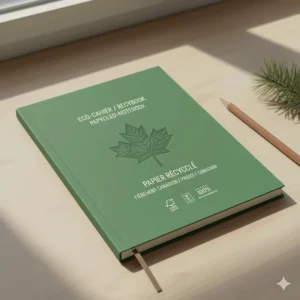
The Oxford Spiral Notebooks bring premium feel to recycled materials. This Canadian favourite features debossed gold foil accents on kraft covers—proving eco-friendly can also mean elegant.
Key Specifications:
- 160 pages per notebook (2-pack)
- 100% post-consumer recycled paper
- Heavy-duty metal spiral binding
- Interior kraft pockets
Price Range: $34.56 CAD ($17.28 per notebook)
Canadian customers in Vancouver and Montreal report these notebooks outlasting cheaper alternatives by months. The substantial coil binding prevents pages from tearing out—a common complaint with budget spiral notebooks. One Calgary teacher purchased multiple packs for classroom use, noting the gold foil helps students distinguish between subjects.
✅ Pros:
- Premium paper quality rivals non-recycled options
- Elegant design suitable for professional settings
- Strong binding prevents page loss
❌ Cons:
- Only available in 2-pack (may be excessive for some users)
- Kraft brown colour not ideal for colour-coding systems
3. Mintra 100% Recycled Notebooks (Design Set 3-Pack)
For budget-conscious Canadians, Mintra 100% Recycled Notebooks deliver exceptional value without compromising environmental standards. Made from bagasse (sugarcane waste) and kraft paper with vegetable oil-based ink, these notebooks represent true circular economy principles.
Key Specifications:
- 90 pages per notebook (6.5″ x 9.5″)
- 100% recycled content (sugarcane bagasse paper)
- Vegetable oil-based ink
- 3-pack variety set
Price Range: $9.98 CAD ($3.33 per notebook)
Reviews from Canadian students highlight the unexpected quality at this price point. The stiff cardboard covers provide a stable writing surface on laps or crowded lecture halls. However, users note the paper is thinner than premium options—gel pens and markers may bleed through, so stick with ballpoint pens for best results.
✅ Pros:
- Unbeatable price for 100% recycled content
- Unique bagasse paper supports agricultural waste reduction
- Variety pack with different designs
❌ Cons:
- Thinner paper unsuitable for wet ink or markers
- Not perforated for easy page removal
4. Nu Notebooks Evolve Range A5 (FSC Certified)
The Nu Notebooks Evolve Range represents the UK’s first fully recycled and recyclable notebook system. Every component from cover to cotton stitching uses natural, sustainable materials certified by the Forest Stewardship Council.
Key Specifications:
- 80 pages of 80gsm ruled paper
- 100% FSC-certified recycled paper
- Cotton fibre stitching
- Vegetable-based inks
Price Range: $28.69 CAD
Canadian professionals appreciate the sophisticated aesthetic that doesn’t advertise its eco-credentials too loudly. The higher paper weight (80gsm) handles fountain pens and fine-liners beautifully. One Ontario architect uses these for client-facing meetings where presentation matters as much as sustainability.
✅ Pros:
- Premium 80gsm paper prevents show-through
- Completely plastic-free construction
- Stylish design suitable for professional environments
❌ Cons:
- Higher cost per page ratio
- Stitched binding limits flexibility compared to spiral
5. Roaring Spring Environotes (4-Pack)
Roaring Spring Environotes bring American manufacturing heritage to Canadian eco-shoppers. Made in the USA for over 130 years, these notebooks combine sugarcane fibre with post-consumer waste, earning USDA Bio-Preferred Certification.
Key Specifications:
- 70 sheets per notebook (11″ x 8.5″)
- 30% sugarcane fibre + 70% post-consumer waste
- Heavy-duty chipboard backing
- College-ruled with margins
Price Range: $16-22 CAD for 4-pack
Canadian buyers across provinces report these notebooks surviving entire academic years. The heavyweight 20# paper allows comfortable double-sided writing without bleed-through. One Halifax university student mentioned the extra-thick back cover functions like a clipboard—perfect for taking notes while standing or moving between classes.
✅ Pros:
- Bulk pricing ideal for families or classrooms
- USDA Bio-Preferred certification guarantees standards
- Thick paper handles most pens and pencils
❌ Cons:
- Lower recycled content percentage than 100% options
- Earthtone colours may not appeal to everyone

6. Unruled Classic Blank Spiral Notebook
For artists and visual thinkers, Unruled Classic Blank notebooks offer premium blank pages made with 30% recycled content while supporting environmental initiatives through partnerships with 1% for the Planet and One Tree Planted.
Key Specifications:
- 70 blank pages (10.5″ x 8″)
- 60lb premium paper with 30% recycled content
- Spiral-bound with perforated pages
- Climate Neutral certified
Price Range: $39-45 CAD for 3-pack
Canadian designers and sketchers value the heavier paper weight that prevents ink bleed from markers and fine-liners. The STEM student-designed format prioritizes visual note-taking—perfect for mind-mapping, diagrams, and technical drawings. British Columbia users appreciate the company’s commitment to planting trees for every notebook sold.
✅ Pros:
- Heavy 60lb paper handles wet media
- Perforated pages for easy sharing or framing
- Carbon-neutral production certified
❌ Cons:
- Lower recycled content percentage
- Premium pricing reflects specialty design
7. Mintra 100% Recycled Composition Book (3-Pack)
The Mintra Composition Book rounds out our list with traditional composition notebook format using 100% recycled materials. At 7.5″ x 9.75″, it matches standard composition size while delivering genuine sustainability credentials.
Key Specifications:
- 80 college-ruled pages
- 100% recycled kraft paper and bagasse
- Vegetable oil-based ink
- Traditional sewn binding
Price Range: $12-15 CAD for 3-pack
Canadian reviewers from Quebec to Alberta praise the familiar composition format that schools often require. The sewn binding prevents page loss better than spiral options—critical for semester-long projects and research notes. Teachers purchasing for classrooms note the kraft covers accept stickers and decorations beautifully.
✅ Pros:
- Traditional format meets school requirements
- Durable sewn binding lasts full academic year
- 100% recycled at budget-friendly price
❌ Cons:
- Thinner paper requires careful pen selection
- No perforations for page removal
Understanding Recycled Paper Certifications in Canada
Before diving deeper, let’s decode the eco-labels you’ll encounter when shopping for sustainable school supplies in Canada. Not all “green” claims hold equal weight.
What FSC Certification Really Means
The Forest Stewardship Council certification indicates paper comes from responsibly managed forests that prioritize biodiversity, worker rights, and long-term forest health. When you see the FSC label on Canadian notebooks, you’re supporting global reforestation efforts and ethical forestry practices.
FSC offers three certification levels: FSC 100% (entirely from certified forests), FSC Mix (combination of certified and controlled sources), and FSC Recycled (100% reclaimed materials). For maximum environmental impact, prioritize FSC Recycled options when available.
Post-Consumer vs Pre-Consumer Recycled Content
Here’s where marketing gets tricky. “Recycled content” can include pre-consumer waste (manufacturing scraps that never reached consumers) or post-consumer waste (materials you actually recycled at home or work). Post-consumer content represents genuine waste diversion from landfills.
Look for notebooks specifically stating “post-consumer waste” percentages. A notebook claiming “100% recycled” might only contain 20% post-consumer material—the rest being factory scraps that would have been recycled anyway.
USDA Bio-Preferred Certification
Popular with American brands available in Canada, USDA Bio-Preferred certification verifies products contain renewable biological ingredients rather than petroleum-based materials. For notebooks, this often means sugarcane bagasse or other agricultural waste fibers replacing traditional wood pulp.
Environmental Impact: Why Recycled Paper Matters
Let me share something that stopped me in my tracks: producing one tonne of recycled paper saves approximately 17 trees, 26,500 litres of water, and 2.5 barrels of oil compared to virgin paper production. In Canada, where paper fibres represent 36% of diverted waste materials, choosing recycled notebooks multiplies this impact across millions of students and workers.
The Canadian Context: Our Paper Waste Challenge
Statistics Canada reports that in 2022, Canadian households and businesses diverted 3.6 million tonnes of paper fibres from landfills. While impressive, 96% of Canadians have access to paper recycling programs—yet we still send massive quantities to landfills where they decompose anaerobically, producing methane emissions 25 times more potent than carbon dioxide.
Paper products occupy roughly 28% of Canadian landfill space. When that paper breaks down without oxygen, it generates greenhouse gases that contribute to climate change. Recycling just one tonne of paper instead of landfilling reduces greenhouse gas emissions equivalent to taking a car off the road for six months.
Energy and Water Savings
Recycling paper requires only half the water and significantly less energy than producing new paper from trees. The paper industry has reduced greenhouse gas emissions by 56% in Canada between 2000 and 2012, partly through increased recycling and renewable energy adoption in paper mills.
Consider this: recycling paper uses 73% less energy than creating virgin paper. In a country like Canada where heating and manufacturing consume substantial energy, these savings accumulate quickly. Your choice of a recycled paper notebook might seem small, but multiplied across millions of Canadian students, it represents meaningful climate action.
Supporting Circular Economy Principles
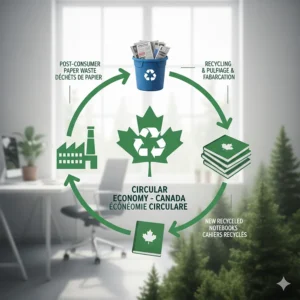
Canada’s paper packaging industry operates on circular economy principles—using recycled fibres as feedstock makes economic and environmental sense. Paper can be recycled 5-7 times before fibres become too short for new products. Each time you purchase a recycled notebook, you’re voting with your wallet for a system that works.
The circular approach keeps carbon locked in paper products longer rather than releasing it through landfill decomposition. It also reduces pressure on Canadian forests, allowing them to continue absorbing CO₂, providing wildlife habitat, and supporting Indigenous communities whose traditional territories include these lands.
Comparing Benefits: Recycled vs Traditional Notebooks
| Factor | Recycled Paper Notebooks | Traditional Virgin Paper |
|---|---|---|
| Trees saved per tonne | 17 trees | 0 trees |
| Water consumption | 50% less | Baseline (24,000 litres/tonne) |
| Energy usage | 73% less | Baseline |
| Greenhouse gas emissions | 15-25% reduction | Baseline |
| Landfill space | Minimal impact | 28% of waste volume |
| Cost premium | 10-30% higher | Standard pricing |
How to Choose the Right Recycled Notebook for Your Needs
Selecting the perfect recycled paper notebook involves balancing environmental credentials with practical performance. Here’s your decision-making framework:
Match Paper Weight to Your Writing Tools
Paper weight (measured in pounds or GSM) determines how pens perform. Lightweight paper (15-20 lb) works fine for pencils and ballpoint pens but may allow gel pens or fountain pens to bleed through. If you prefer wet-writing instruments, choose notebooks with 20+ lb or 80+ GSM paper.
Canadian students using standard ballpoint pens can comfortably use any option on our list. Creative professionals who sketch or use markers should opt for Unruled Classic or Nu Notebooks with heavier paper weights.
Consider Binding Styles for Your Use Case
Spiral-bound notebooks lie flat and allow easy page removal—ideal for students who tear out homework or professionals who share meeting notes. However, spiral bindings can snag in backpacks or briefcases.
Sewn or composition-style bindings (like Decomposition or Mintra Comp Books) provide superior durability and a more professional appearance. They’re harder to tear pages from but keep notes organized indefinitely. Choose sewn binding for semester-long projects, journals, or professional documentation.
Evaluate True Recycled Content Percentages
Don’t settle for vague “recycled content” claims. Seek specific percentages of post-consumer waste. The highest environmental impact comes from notebooks with 70-100% post-consumer recycled content, like Decomposition, Oxford, and Mintra options.
Products with 30% recycled content (like Roaring Spring and Unruled) still offer environmental benefits, especially when combined with other sustainable practices like tree planting programs or renewable energy manufacturing.
Assess Longevity and Durability
A notebook that falls apart halfway through the semester ultimately creates more waste. Canadian reviewers consistently report that Oxford and Decomposition notebooks survive full academic years, while Mintra options may need replacement mid-semester with heavy use.
Consider your usage intensity: Daily note-taking demands durability, while occasional journaling allows lighter construction. Sometimes paying more upfront for a durable notebook reduces overall environmental impact compared to replacing cheaper options multiple times.
Think About Canadian Shipping and Availability
Products manufactured in North America (like Roaring Spring, made in USA, or Decomposition) typically ship faster to Canadian addresses and have lower carbon footprints than imports from Asia or Europe. However, many quality recycled notebooks come from established European manufacturers with strong sustainability records.
Check Amazon.ca reviews for Canadian shipping experiences. Some products ship from US warehouses with longer delivery times or customs considerations.
🍁 Ready to Make the Switch?
🌱 Discover your perfect eco-friendly notebook from our top 7 picks available on Amazon.ca. Each highlighted product has been tested by Canadian users and verified for quality. Click any product name above to check current pricing, read detailed reviews, and join thousands of Canadians making sustainable choices!

Tree-Free Paper Innovations: Beyond Recycled Content
The sustainability conversation extends beyond recycled wood pulp. Innovative manufacturers are exploring tree-free alternatives that bypass forests entirely.
Sugarcane Bagasse: Agricultural Waste to Notebook
Roaring Spring and Mintra notebooks incorporate bagasse—the fibrous residue left after crushing sugarcane to extract juice. Traditionally burned or sent to landfills, this agricultural waste now creates smooth, durable paper that performs comparably to wood-pulp alternatives.
Bagasse paper production uses less water and energy than even recycled wood paper. It also provides economic value to sugarcane farmers who previously had no market for this byproduct.
Stone Paper: The Waterproof Alternative
While not featured in our top 7, stone paper (made from calcium carbonate and recycled HDPE plastic) represents another tree-free innovation gaining traction in Canada. Completely waterproof and tear-resistant, stone paper notebooks suit outdoor work or field research. However, the plastic component means these aren’t fully biodegradable—they require specialized recycling.
Kenaf, Hemp, and Other Plant Fibres
Some specialty Canadian suppliers offer notebooks made from rapidly renewable fibres like kenaf, hemp, or cotton rag. These materials grow much faster than trees and often require fewer pesticides. While less common on Amazon.ca, they’re worth seeking from specialty eco-retailers for those prioritizing maximum sustainability.
Carbon Neutral and Climate Positive Notebooks
Several brands on our list go beyond recycling to address their total carbon footprint. Let’s explore what these certifications mean:
Climate Neutral Certification
Unruled notebooks carry Climate Neutral certification, meaning the company measures all carbon emissions from production, shipping, and operations, then purchases verified carbon offsets to neutralize their impact. They’ve also committed to reducing absolute emissions over time.
This certification requires annual recertification and third-party verification—it’s not greenwashing but genuine accountability to climate goals.
Carbon Sequestration Through Tree Planting
Unruled partners with One Tree Planted to plant trees for each notebook sold, effectively sequestering carbon while creating wildlife habitat. While tree planting shouldn’t replace emission reductions, it provides measurable environmental benefit when done through reputable reforestation organizations.
Canadian buyers should note that some tree-planting programs focus on tropical forests rather than Canadian ecosystems. If supporting local biodiversity matters to you, seek brands that specify Canadian reforestation efforts.
Price Range Analysis: Value for Canadian Shoppers
| Price Tier | Cost per Notebook | Best Options | Canadian Considerations |
|---|---|---|---|
| Budget ($3-7) | $3-7 CAD | Mintra 3-packs | Excellent student value; thin paper |
| Mid-Range ($8-15) | $8-15 CAD | Roaring Spring, Mintra Comp | Balanced quality/price; widely available |
| Premium ($16-25) | $16-25 CAD | Decomposition, Oxford | Superior durability; professional aesthetics |
| Specialty ($25+) | $25+ CAD | Nu Notebooks, Unruled | Highest paper quality; FSC certified |
When evaluating value, calculate cost-per-page and factor in replacement frequency. A $21 Decomposition notebook with 160 pages that lasts all year costs less per page than three $8 notebooks that last four months each.
✨ Don’t Miss These Exclusive Deals!
🔍 Take your sustainable school supplies to the next level with these carefully selected products available in Canada. Click on any highlighted item to check current pricing and availability on Amazon.ca. These tools will help you create authentic eco-friendly study habits your family will love!
Making Recycled Notebooks Last: Care and Maintenance Tips
Extending your notebook’s lifespan maximizes its environmental benefit. Here are proven strategies from Canadian users:
Protect Covers from Wear: Use book covers or plastic sleeves to prevent bent corners and cover damage. This simple step can double notebook longevity, especially for spiral-bound options carried in backpacks.
Choose Appropriate Pens: Match your writing instruments to paper weight. Gel pens and felt-tips work better on heavier recycled paper (20+ lb). For thinner paper, stick with ballpoint or pencils to prevent bleed-through and double-sided usage.
Reinforce Spiral Bindings: Damaged spiral coils cause page loss. When you notice a spiral beginning to deform, carefully bend it back into shape using pliers. Consider notebooks with coil-locked wire ends (like Roaring Spring) that resist snagging.
Use Both Sides of Pages: Recycled paper’s environmental benefit multiplies when you write on both sides. Unless using wet-writing instruments on thin paper, adopt double-sided note-taking habits to minimize waste.
Recycle Responsibly at End of Life: When your notebook is full, remove any plastic covers or spiral bindings before recycling. Most Canadian municipalities accept notebook paper in blue bin programs—96% of Canadians have access to paper recycling. The metal spirals go in metal recycling streams.
Sustainable School Supply Strategies for Canadian Families
Building truly zero waste school supplies extends beyond notebooks. Here’s how Canadian families can create comprehensive sustainable systems:
Start with a Supply Audit
Before back-to-school shopping, inventory what you already have. Half-used notebooks from last year can be repurposed for scratch work or creative projects. This reduces consumption—always more impactful than buying “eco” alternatives to things you don’t need.
Buy in Bulk When It Makes Sense
Families with multiple students or teachers purchasing for classrooms benefit from bulk packs like Roaring Spring 4-packs. However, only buy quantities you’ll actually use—unused notebooks in storage represent wasted resources.
Combine New Purchases with Used Supplies
Browse local buy-nothing groups, thrift stores, or school supply swaps for gently used binders, pencil cases, and other durable items. Reserve your budget for consumables like recycled notebooks where quality matters.
Teach Kids the “Why” Behind Choices
Canadian children who understand that their Decomposition notebook prevented 17 trees from being cut down develop lasting environmental values. Make sustainability education part of back-to-school preparation.
Support Brands with Transparent Practices
Companies that openly share recycled content percentages, manufacturing locations, and certification details deserve your business over those making vague “eco-friendly” claims. This guide highlights brands with verifiable environmental credentials available to Canadian consumers.
The Biodegradable Factor: End-of-Life Considerations
What happens when your recycled notebook reaches end of life matters as much as its production environmental impact.
Composting vs Recycling Paper
Most recycled notebooks belong in paper recycling bins where fibers can be recovered 5-7 more times. However, notebooks like Decomposition with soy-based inks and no synthetic additives can technically be composted in backyard systems or municipal organics programs.
Check with your local municipality about composting paper products. Some Canadian cities accept paper in green bin programs, while others require blue bin disposal. Quebec, British Columbia, Nova Scotia, and PEI have particularly robust recycling programs exceeding national averages.
Removing Non-Biodegradable Components
Before recycling or composting, remove plastic covers, spiral bindings, and any synthetic adhesives. Canadian municipal recycling systems separate these materials, but pre-sorting improves processing efficiency.
Metal spirals should go in metal recycling. Plastic covers belong in plastic recycling if your municipality accepts that type (check local guidelines—plastic recycling varies significantly across Canadian cities).
Ink and Dye Considerations
Soy-based inks (used in Decomposition and many recycled notebooks) break down naturally and pose minimal environmental risk. Petroleum-based inks contain chemicals that can complicate composting but are acceptable in recycling programs.
If composting rather than recycling, prioritize notebooks specifying vegetable-based or soy inks to avoid introducing synthetic compounds into your soil.
Canadian Brands and Local Alternatives
While Amazon.ca provides convenient access to international eco-brands, several Canadian companies produce excellent recycled notebooks worth seeking out:
Ecojot (Made in Toronto)
This family-run Toronto company manufactures notebooks entirely in Canada using FSC-certified paper and sustainable practices. Their notebooks feature Canadian artists’ designs and support local manufacturing jobs. While not always available on Amazon.ca, they’re worth sourcing from local retailers or their website.
Staples Canada Sustainable Options
Staples carries multiple FSC-certified recycled notebook options, including their house brand made with 100% post-consumer content. In-store availability often exceeds online options, and you can recycle old writing instruments through Staples’ TerraCycle partnership at over 300 Canadian locations.
Regional Stationery Shops
Independent Canadian stationery stores often stock locally-made or small-batch recycled notebooks not available through major retailers. Supporting these businesses keeps money in local economies while providing unique, high-quality options.
Frequently Asked Questions
❓ What percentage of recycled content should I look for in notebooks?
❓ Are recycled paper notebooks suitable for fountain pens?
❓ How much do recycled notebooks cost in Canada compared to regular notebooks?
❓ Can I recycle my used notebooks in Canadian blue bin programs?
❓ Do FSC-certified notebooks perform differently than non-certified ones?
Conclusion
Choosing recycled paper notebooks represents one of the simplest yet most impactful sustainable swaps Canadian students and professionals can make. With 36% of diverted materials in Canada consisting of paper fibres, your purchase decision directly supports a thriving circular economy that’s already working brilliantly.
The seven notebooks featured in this guide offer proven quality at every price point—from Mintra’s budget-friendly $3 options to premium Decomposition books that last entire academic years. Each prevents trees from being cut, reduces water consumption by half, and keeps carbon locked in paper products rather than releasing it as landfill methane.
Remember, the most sustainable notebook is one you’ll actually use completely. Choose based on your specific needs: Decomposition for college students prioritizing durability, Oxford for professional settings, Mintra for budget-conscious families, or Roaring Spring for those buying in bulk. Whatever you select, you’re making a meaningful choice that multiplies across Canada’s millions of students and workers into genuine environmental progress.
Start your sustainable stationery journey today—your future self (and Canada’s forests) will thank you.
Recommended for You
- 7 Best Graph Paper Notebook for Math Students Canada 2026
- 7 Best Notebooks for University Note-Taking Canada 2026
- First Day of Kindergarten Supplies List: 7 Essentials (2026)
Disclaimer: This article contains affiliate links to Amazon.ca. If you purchase products through these links, we may earn a small commission at no additional cost to you.
✨ Found this helpful? Share it with your friends! 💬🤗
