
In This Article
Remember that sinking feeling when you frantically search through crumpled papers minutes before class? I’ve been there, and trust me—a well-organized 3-ring binder organization system for students can transform academic chaos into streamlined success. Whether you’re navigating high school hallways in Toronto or managing university courses in Vancouver, the right binder system isn’t just about storing papers; it’s about creating a reliable command centre for your educational journey.
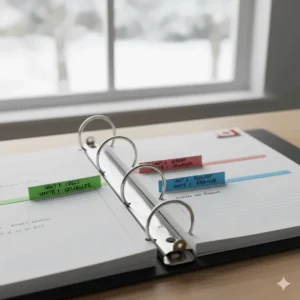
According to Canada’s education system, Canadian students benefit from world-class schooling that emphasizes organizational skills alongside academic achievement. The humble 3-ring binder, invented in 1886 by German engineer Friedrich Soennecken and standardized in North America by William P. Pitt in 1904 (Wikipedia), remains surprisingly relevant for today’s students. While digital tools have their place, physical binders offer tactile organization that many learners find essential for retention and quick reference.
In this comprehensive guide, you’ll discover how to select the perfect 3-ring binder organization system for students that accommodates Canada’s unique academic environment—from handling thick textbooks through harsh winter commutes to organizing bilingual course materials. We’ll explore heavy-duty options, compare ring types, review zipper binders with integrated pencil pouches, and examine divider systems that actually work for Canadian students juggling multiple subjects.
Quick Comparison Table
| Product | Ring Type | Capacity | Key Feature | Price (CAD) | Best For |
|---|---|---|---|---|---|
| Five Star Zipper Binder 2″ | Round | 380 sheets | 6-pocket expanding file | $35-45 | Heavy course loads |
| QuickFit View Binder 2″ | Round/D-ring | 475 sheets | Custom cover design | $18-25 | Personalization |
| Amazon Basics D-Ring 3″ | D-ring | 625 sheets | Budget-friendly | $15-22 | Maximum capacity |
| Easyview Premium 2″ | D-ring | 475 sheets | Eco-friendly materials | $20-28 | Environmental conscious |
| Case-it Zipper Binder | Round | 400 sheets | Built-in calculator pocket | $32-42 | Math/science students |
| Premium Economy 1.5″ | D-ring | 350 sheets | Multi-pack value | $28-38/6-pack | Budget buyers |
| Avery Heavy-Duty 2″ | Slant D-ring | 540 sheets | One-touch mechanism | $25-35 | Frequent access needs |
💬 Just one click – help others make better buying decisions too! 😊
Top 7 3-Ring Binder Organization Systems for Students: Expert Analysis
1. Five Star Zipper Binder 2-Inch – Premium All-in-One Solution
The Five Star Zipper Binder dominates Canadian campuses for good reason. This powerhouse combines a 2-inch round ring capacity (380 sheets) with a 6-pocket expanding file accessible from both inside and outside the binder—a game-changing design when you’re rushing between classes. The water-resistant exterior handles Canada’s unpredictable weather, while the integrated handle makes transport effortless even with heavy textbooks.
Key Specifications:
- Dimensions: 34.9 cm x 30.8 cm
- Secure zipper pocket for pencil pouch integration
- Durable plastic interior with calculator pocket
- Available in multiple colours
Price: $35-45 CAD on Amazon.ca
Canadian students consistently praise the Five Star’s durability through entire academic years. “Survived my engineering program without a single rip,” notes one University of Toronto review. The expanding file system eliminates the need for separate folders, consolidating your 3-ring binder organization system for students into one portable unit.
✅ Pros:
- Exceptional build quality with water resistance
- Multi-access expanding file saves time
- Integrated storage for calculators and supplies
❌ Cons:
- Higher price point than basic binders
- Bulkier profile may not fit small lockers
Best for: University students with heavy course loads and commuters needing weather-resistant organization.
2. QuickFit View Binder 2-Inch Round Ring – Canadian-Made Customization
Made right here in Canada by Davis Group, the QuickFit View Binder offers something competitors don’t—complete customization through its unique overlay design. Simply create a single sheet covering the spine and front cover to instantly identify your binder. The PVC-free polypropylene construction aligns with environmental standards while providing excellent durability for thick textbooks.
Key Specifications:
- 2-inch round rings hold 475 sheets
- Clear interior pockets (front and back)
- Made in Canada from eco-friendly materials
- Standard 8.5″ x 11″ paper compatibility
Price: $18-25 CAD on Amazon.ca
This heavy-duty binder for thick textbooks receives high marks from Canadian buyers managing science courses and humanities programs alike. The clear pockets protect documents you can’t hole-punch, like permission slips or artwork. “Perfect for my daughter’s Grade 10 curriculum,” shares an Ontario parent.
✅ Pros:
- Canadian manufacturing supports local economy
- Customizable appearance aids quick identification
- Eco-conscious PVC-free materials
❌ Cons:
- Requires DIY cover creation
- Clear overlay may show wear over time
Best for: Students wanting personalized organization and supporting Canadian-made products.
3. Amazon Basics 3-Inch D-Ring Binder – Maximum Capacity Budget Champion
When you need serious capacity without draining your student budget, the Amazon Basics 3-Inch D-Ring Binder delivers remarkably. The D-ring configuration allows papers to lie flat—crucial for reading lengthy research papers or thick textbook chapters. At 625 sheets capacity, this binder handles comprehensive subjects like Canadian history or advanced sciences with ease.
Key Specifications:
- 3-inch slant D-rings for 625-sheet capacity
- Two interior pockets for loose documents
- Standard 8.5″ x 11″ format
- Durable poly material construction
Price: $15-22 CAD on Amazon.ca (2-pack available)
The D-ring vs O-ring binder debate often centres on capacity and page-turning ease. D-rings win on both fronts by positioning rings along the binder’s edge rather than centre, providing approximately 25% more storage than equivalent round rings. Canadian students appreciate that papers don’t curve awkwardly when the binder fills up.
✅ Pros:
- Exceptional capacity-to-price ratio
- D-ring design prevents paper bunching
- Prime shipping across Canada
❌ Cons:
- Basic aesthetics lack personality
- No zipper closure for security
Best for: Budget-conscious students managing courses with extensive reading materials.
4. Easyview Premium D-Ring Binder 2-Inch – Sustainable Organization
The Easyview Premium Binder represents responsible student organization through its 100% recycled board construction (85% post-consumer waste). Davis Group’s commitment to environmental standards resonates with Canadian students increasingly aware of sustainability. The clear-view front and back covers enable binder dividers and tabs system visibility, while the full-width spine label holder ensures easy identification on dorm shelves.
Key Specifications:
- 2-inch D-rings accommodate 475 sheets
- Made from recycled materials
- Clear customizable covers
- Reinforced binder pockets inside
Price: $20-28 CAD on Amazon.ca
This eco-friendly option doesn’t sacrifice functionality for sustainability. The angled D-rings allow pages to lie flat against covers—essential for studying in crowded library spaces or small dorm rooms. “Used these through my entire business degree at UBC,” reports one graduate. The binder ring durability withstands daily use without loosening or catching papers.
✅ Pros:
- Environmentally responsible construction
- Clear covers show customized organization
- D-ring design maximizes capacity
❌ Cons:
- Slightly higher price than basic models
- Limited colour variety
Best for: Environmentally conscious students needing reliable, sustainable organization.
5. Case-it Zipper Binder with Built-In Calculator Pocket – STEM Student Essential
Mathematics and science students face unique organizational challenges—formulas, problem sets, graphing paper, and constant calculator access. The Case-it Zipper Binder addresses these needs brilliantly with dedicated calculator storage, expandable file system, and secure zipper closure preventing homework disasters during Canadian winters.
Key Specifications:
- 2-inch round rings (400-sheet capacity)
- Dedicated calculator pocket
- Multiple storage compartments
- Full zipper protection
Price: $32-42 CAD on Amazon.ca
The zipper binder with pencil pouch concept reaches peak functionality here. Beyond standard pencil storage, Case-it provides reinforced grommets ensuring pencil pouches don’t tear from binder rings—a common frustration students encounter. The handle design distributes weight evenly, crucial when transporting multiple textbooks between classes.
✅ Pros:
- Purpose-built for STEM courses
- Comprehensive storage solution
- Weather-sealed zipper closure
❌ Cons:
- Premium pricing
- Bulkier than standard binders
Best for: Mathematics, physics, chemistry, and engineering students requiring integrated calculator access.
6. Premium Economy 1.5-Inch D-Ring Multi-Pack – Best Value Organization
Budget stretches thin for students, especially with textbook costs and living expenses. The Premium Economy 6-Pack provides exceptional value—six colour-coded 1.5-inch binders perfect for the typical Canadian high school schedule of six core subjects. The D-ring configuration holds 350 sheets per binder, adequate for standard courses while keeping weight manageable.
Key Specifications:
- 1.5-inch D-rings (350 sheets each)
- Six vibrant colours for subject coding
- Interior clear pockets
- Made from 100% recycled board
Price: $28-38 CAD on Amazon.ca (6-pack)
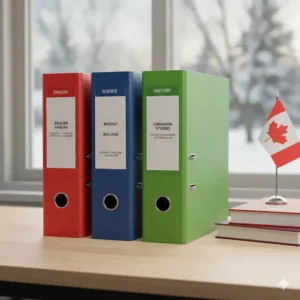
Colour-coding transforms student organization systems. Assign blue for mathematics, red for English, green for science—whatever system resonates with your learning style. Canadian teachers frequently recommend this approach for students transitioning from elementary to secondary school. “My son finally stopped bringing the wrong binder to class,” laughs a relieved parent from Calgary.
✅ Pros:
- Outstanding cost-per-binder value
- Colour system aids organization
- Adequate capacity for most courses
❌ Cons:
- Smaller ring size limits heavy subjects
- No zipper closure
Best for: High school students managing multiple subjects on a budget.
7. Avery Heavy-Duty View Binder 2-Inch Slant D-Ring – Professional Grade Performance
When binder ring durability matters most—for multi-year programs or intensive coursework—the Avery Heavy-Duty View Binder justifies its premium positioning. The patented One Touch slant D-rings open with a single hand, dramatically improving efficiency during lectures or study sessions. Gap-free rings eliminate the frustrating paper snags that plague cheaper binders.
Key Specifications:
- 2-inch slant D-rings (540 sheets)
- One Touch easy-open mechanism
- Gap-free ring design
- Heavy-duty construction
Price: $25-35 CAD on Amazon.ca
The view binder customization capability lets you create professional presentations or organize research projects with custom covers. Canadian college students appreciate the durability through multiple semesters—one investment covering several courses. “Still using it for my MBA program after undergrad,” testifies a McGill alumnus. The reinforced binder pockets withstand heavy use without tearing.
✅ Pros:
- Superior ring mechanism quality
- Gap-free design prevents damage
- Professional appearance for presentations
❌ Cons:
- Higher individual unit cost
- Overkill for light-use courses
Best for: Graduate students, competitive programs, or anyone needing maximum reliability.
Understanding Binder Ring Types: D-Ring vs O-Ring Comparison
The D-ring vs O-ring binder debate significantly impacts your 3-ring binder organization system for students experience. Here’s what Canadian students need to know about each configuration and why it matters for handling thick textbooks and daily coursework.
Round Rings (O-Rings): Traditional Versatility
Round rings, also called O-rings, represent the original binder design dating back to the late 1800s. These circular mechanisms position centrally on the binder back, creating that familiar curved spine profile. Round rings work well for moderate paper loads and offer universal compatibility with all hole-punched materials.
Advantages:
- Smooth page-turning from any angle
- Universal design works with all accessories
- Generally less expensive than D-ring alternatives
- Easier to find replacement parts if needed
Limitations:
- Papers curve around the ring mechanism
- Reduced capacity compared to equivalent D-ring sizes
- Centre positioning makes the binder thicker
- Can cause wear on first and last pages
Canadian students managing standard course loads (150-300 pages per binder) find round rings perfectly adequate. They’re ideal for English, social studies, or arts courses where you’re adding and removing papers frequently throughout the term.
D-Rings: Modern Efficiency
D-ring mechanisms revolutionized binder design by repositioning rings against the binder’s back edge. This seemingly simple change creates approximately 25% more capacity while allowing pages to lie completely flat. The angled design reduces stress on hole-punched edges, extending paper life in heavy-use situations.
Advantages:
- Maximum capacity (25% more than round rings)
- Pages lie flat for easier reading
- Reduced wear on punched holes
- More compact spine despite higher capacity
Limitations:
- Slightly higher cost than round rings
- Some users find opening mechanism less intuitive initially
- May require more durable ring mechanisms for heavy loads
For heavy-duty binder for thick textbooks applications—think science courses with supplementary materials, mathematics with practice problems, or university-level courses combining multiple resources—D-rings provide superior performance. The flat-lying pages make a noticeable difference when studying from thick binders in cramped dormitory desks or library carrels.
Slant D-Rings: Premium Performance
Premium binders often feature slant D-rings combining D-ring capacity with angled opening mechanisms for one-handed operation. These represent the pinnacle of binder engineering, though they command higher prices. Avery pioneered this design with their Gap-Free rings that eliminate paper snags entirely.
When to Choose Each Type:
Choose Round Rings If:
- Managing standard course loads (under 300 sheets)
- Budget is primary concern
- Frequently adding/removing papers
- Younger students (elementary/junior high)
Choose D-Rings If:
- Handling heavy textbook materials
- Need maximum capacity in compact size
- Want papers to lie flat for studying
- Organizing reference materials long-term
Choose Slant D-Rings If:
- Require frequent daily access
- Managing graduate-level coursework
- Need professional presentation quality
- Binder durability is critical investment
Binder Capacity Guide: 2-Inch vs 3-Inch Ring Sizing
Understanding binder capacity helps Canadian students avoid two common mistakes: buying undersized binders that burst by mid-semester or oversized ones that add unnecessary weight to backpacks. The ring size measurement refers to the ring’s inner diameter—a 2-inch binder has rings measuring 2 inches from inside edge to inside edge when closed.
1-Inch to 1.5-Inch Binders (225-350 Sheets)
Perfect for single subjects or lighter courses. Canadian high school students often use multiple smaller binders rather than one large binder—the colour-coding benefit outweighs carrying multiple items. Ideal for:
- English/language arts courses
- Social studies/history
- Arts or elective classes
- Organizing personal projects
Weight becomes manageable even when fully loaded, essential for younger students or those with long commutes on public transit across Canadian cities.
2-Inch Binders (400-475 Sheets)
The sweet spot for most post-secondary students. A 2-inch binder balances capacity, portability, and functionality beautifully. This size accommodates:
- Semester-long university courses
- Science courses with lab materials
- Business or commerce programs
- General academic organization
Round rings typically hold 380-400 sheets at 2-inch diameter, while D-rings manage 450-475 sheets. For Canadian students taking four courses per semester, one 2-inch binder per course creates manageable organization without excessive bulk.
3-Inch Binders (600-650 Sheets)
Heavy-duty binder for thick textbooks territory. These substantial organizers serve specialized needs:
- Year-long comprehensive courses
- Graduate program research projects
- Professional certification programs
- Portfolio or presentation materials
The Amazon Basics 3-inch D-ring we reviewed holds 625 sheets—enough for an entire year of certain subjects. However, weight becomes significant when fully loaded. Consider your commute and storage situation carefully. Students in apartments with desk study spaces benefit more than those hauling binders across sprawling university campuses.
Practical Capacity Considerations
Standard 20-pound copy paper measures approximately 0.004 inches thick per sheet. However, handwritten notes, printouts with graphics, or mixed media quickly add bulk. Canadian students should estimate usable capacity at about 80% of rated maximum to account for:
- Varied paper weights
- Dividers and tabs (each counts as 3-5 sheets thickness)
- Binder pouches and accessories
- Paper naturally compressing rings outward
For heavy courses with 200+ pages of weekly readings—common in Canadian humanities programs—a 2-inch binder provides comfortable capacity with room for growth. STEM courses with problem sets and formula sheets benefit from the same sizing.
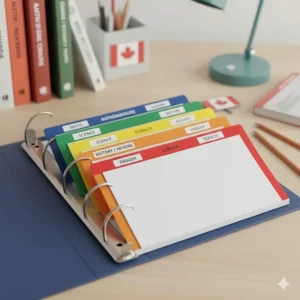
Essential Binder Dividers and Tabs System for Students
A 3-ring binder organization system for students reaches its full potential with proper dividers and tabs. These simple tools transform chaotic paper collections into streamlined reference systems, dramatically improving study efficiency and grade outcomes for Canadian students at all levels.
Types of Divider Systems
Plastic Dividers with Insertable Tabs
Durable plastic dividers represent the workhorse of student organization. Brands like Avery and Office Depot produce reinforced polypropylene versions withstanding daily abuse through entire academic years. The insertable tab system lets you customize labels as course needs evolve—critical for Canadian students in CEGEP or university programs where syllabi change weekly.
Key advantages include water resistance (crucial for Canadian weather), reusability across multiple courses, and resistance to tearing at hole-punches. Budget $8-15 CAD for quality sets of 5-8 dividers. Look for:
- Reinforced ring holes (won’t tear under heavy pages)
- Writable or printable tab inserts
- Pocket options for storing small documents
- Double-sided use capability
Paper Dividers with Pre-Printed Tabs
Cost-effective paper dividers work perfectly for semester-long courses where you won’t reuse the system. These typically cost $3-6 CAD for 5-tab sets and offer adequate durability for moderate use. Canadian students preparing for single-semester online courses or workshop series find these ideal.
However, paper dividers tear more easily at hole-punches when binders fill heavily. Consider adding reinforcement tabs available at any Canadian office supply retailer if using paper dividers with 2-inch or larger binders.
Write-On Dividers for Maximum Flexibility
Avery’s Big Tab Write & Erase Dividers combine plastic durability with dry-erase surfaces, enabling unlimited customization. Canadian students managing project-based courses—common in progressive education systems across provinces—appreciate adapting organization systems mid-semester without replacing dividers.
Cost runs $12-18 CAD for 5-tab sets, justified by multi-year reusability. “Used the same set through my entire nursing program,” reports a University of Alberta graduate.
Organizational Strategies
Subject-Based Organization
The most common approach divides binders by course subjects. For secondary students following typical Canadian curriculum structures:
Tab 1: Class Information (syllabus, contacts, schedule)
Tab 2: Notes & Handouts
Tab 3: Homework & Assignments
Tab 4: Tests & Quizzes
Tab 5: Projects & Resources
This system works beautifully with colour-coded binders—blue binder for mathematics, red for English, etc. Canadian teachers frequently recommend this framework during back-to-school preparation.
Time-Based Organization
University students managing complex research projects benefit from chronological organization:
Tab 1: Current Week Materials
Tab 2: Week 2-4 Archive
Tab 3: Month 1 Archive
Tab 4: Month 2 Archive
Tab 5: Reference Materials
This prevents the binder from becoming overwhelming while maintaining comprehensive records. Simply file older materials to archives monthly, keeping current sections manageable.
Resource-Type Organization
Graduate students and professionals organizing research or comprehensive exam preparation might divide by resource type:
Tab 1: Primary Sources
Tab 2: Secondary Literature
Tab 3: Personal Notes & Analysis
Tab 4: Data & Statistics
Tab 5: Bibliography & Citations
This sophisticated approach suits intensive academic work common in Canadian graduate programs and professional certifications.
The AVID Binder System
Many Canadian schools have adopted the AVID (Advancement Via Individual Determination) program emphasizing single binder systems. Students maintain one comprehensive binder with subject-separated dividers rather than multiple binders. This approach teaches transferable organizational skills while reducing locker clutter and forgotten materials.
The system typically uses 2-inch or 3-inch binders with 5-7 dividers—one per subject plus sections for planning and correspondence. Canadian educators report improved student preparedness and reduced lost assignments when implementing AVID principles.
Zipper Binder with Pencil Pouch: Complete Storage Solutions
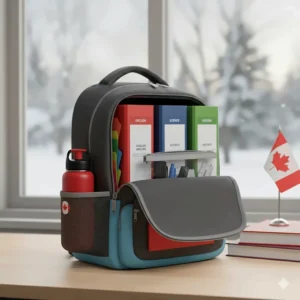
The zipper binder with pencil pouch concept revolutionized student organization by consolidating supplies and materials into unified systems. Canadian students navigating between classes, managing lockers, or commuting via public transit particularly benefit from these all-in-one solutions that prevent the dreaded “I forgot my…” scenarios.
Integrated Zipper Closure Benefits
Weather protection tops the list for Canadian students. A quick glance at meteorological patterns across provinces reveals why: Vancouver’s rain, Toronto’s humidity, Calgary’s wind, Halifax’s snow—papers need protection from it all. Zipper binders create weatherproof seals maintaining document integrity during outdoor transitions between buildings or during bus commutes.
Security represents another critical advantage. Homework doesn’t accidentally slip out when binders tip in overstuffed backpacks or lockers. For younger students prone to losing materials, zipper closure provides parents and teachers peace of mind worth the premium pricing.
Organization reaches peak efficiency when everything—binders, pencils, calculators, USB drives, student cards—travels together in one secure package. University students managing multiple campus locations especially appreciate consolidation.
Pencil Pouch Integration Options
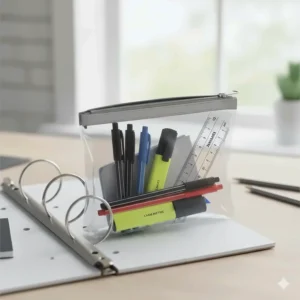
Three-Hole Punch Pouches
The most versatile pencil storage attaches directly to binder rings via reinforced grommets spaced at standard 4-inch (10.8 cm) intervals. These affordable options ($5-12 CAD for two-packs on Amazon.ca) fit any 3-ring binder organization system for students.
Look for:
- Metal-reinforced grommets (not plastic)
- Dual-zipper compartments separating pens from calculators
- Clear window panels for quick visual scanning
- Waterproof interior lining
Brands like KONVINIT, Forvencer, and Gredecor produce reliable models well-reviewed by Canadian buyers. The 9.8″ x 7″ (25cm x 18cm) sizing accommodates standard writing implements plus scientific calculators required for Canadian mathematics curricula.
Built-In Binder Pockets
Premium zipper binders integrate dedicated pencil pockets eliminating add-ons entirely. Five Star pioneered this approach with calculator-specific compartments, multiple pen loops, and expandable pouches for larger items. These built-in solutions typically feature:
- Elastic pen loops preventing movement
- Calculator-sized mesh pockets with velcro closures
- Zipper compartments for eraser, sharpener, USB drives
- Business card slots for student ID or library cards
Canadian students report these integrated designs outlast add-on pouches because they’re specifically engineered for binder stress points. However, you lose flexibility—can’t move the pouch between binders easily.
Hybrid Systems
Smart students combine approaches: integrated pockets for frequently-accessed items (pens, highlighters) while three-hole pouches store occasional supplies (extra erasers, correction tape, sticky notes). This creates customizable systems matching individual study habits and course requirements.
Essential Supplies for Canadian Students
What belongs in your binder pencil pouch? Canadian curriculum requirements and study best practices suggest:
Writing Implements:
- 2-3 ballpoint pens (blue, black)
- Mechanical pencils with extra lead
- Highlighters (3-4 colours for colour-coding notes)
- Fine-tip markers for diagrams
Correction & Support:
- Correction tape or pen
- Ruler (15cm for most work)
- Pencil sharpener
- Quality eraser
Technology Integration:
- USB flash drive (backup important assignments)
- Calculator (scientific or graphing per course needs)
- Earbuds for educational videos or audio resources
Organization Tools:
- Small sticky notes for flagging pages
- Paper clips or mini binder clips
- Hole punch reinforcers for torn pages
Resist overstuffing—overweight pencil pouches stress binder rings and make access awkward during classes. Rotate supplies seasonally, keeping only current-course essentials immediately accessible.
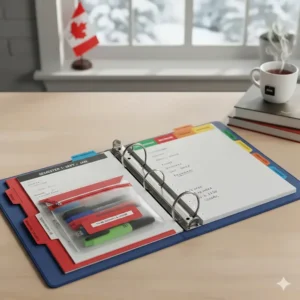
Maximizing Binder Organization for Different Student Levels
Canadian education systems span diverse age ranges and academic intensities requiring customized organizational approaches. What works brilliantly for elementary students often proves insufficient for graduate programs. Let’s explore age-appropriate 3-ring binder organization system for students strategies across educational stages.
Elementary Students (Grades 1-5)
Young learners benefit from simplified systems emphasizing visual organization and easy access. Recommended approach:
Binder Size: 1-inch round ring maximum—smaller hands manage lighter weights better. The 225-sheet capacity accommodates elementary coursework comfortably.
Colour Coding: Essential at this age. Assign bright, distinct colours for subject areas:
- Red: Mathematics
- Blue: Language Arts
- Green: Science
- Yellow: Social Studies
Parents can coordinate binder colours with matching folders and notebooks creating consistent visual systems children recognize instantly.
Divider Strategy: 3-tab maximum per binder prevents overwhelming young students. Simple categories work best:
- Notes and Handouts
- Homework
- Finished Work (to go home)
Special Considerations: Choose binders with clear front pockets allowing personalized labels or artwork. Canadian elementary teachers often recommend including emergency contact information visible in the front pocket. Consider magnetic closures over zippers for younger grades—less fumbling with mechanisms during transitions.
Middle School/Junior High (Grades 6-9)
Transitional years where organizational skills develop crucially. Students begin managing multiple subject teachers and increased academic expectations. This phase sets patterns affecting future success.
Binder Size: 1.5-inch to 2-inch depending on course loads. Canadian junior high students typically manage 5-7 subjects requiring adequate capacity without excessive bulk.
Organization Style: Choice emerges here—some students thrive with one master binder using extensive dividers, while others prefer subject-specific binders. Experiment during early weeks to identify what works.
Divider Strategy: 5-7 tabs if using master binder approach:
- One tab per subject
- Additional tab for extra supplies
- Planner or assignment tracker section
For subject-specific binders, 4 tabs each:
- Syllabus & Class Information
- Notes
- Assignments & Homework
- Tests & Review Materials
Skill Development Focus: Canadian educators emphasize teaching organizational systems rather than mandating specific approaches. Middle school represents ideal timing for students to discover personal organizational styles matching their learning preferences. Encourage weekly binder maintenance routines—5 minutes every Friday removing outdated materials and reorganizing sections prevents accumulation chaos.
High School (Grades 10-12)
Academic intensity increases dramatically. Canadian high school students juggling core subjects, electives, extracurriculars, and part-time employment need sophisticated organizational systems supporting complex schedules.
Binder Size: Subject-dependent. Sciences, English, and social studies benefit from 2-inch capacity; mathematics and foreign languages might require only 1.5-inch; optional courses often manage with 1-inch.
Organization Style: Most successful high school students use subject-specific binders with detailed internal organization:
Tab 1: Course Foundation
- Syllabus and course outline
- Teacher contact information
- Grading rubrics and expectations
Tab 2: Current Unit
- Lecture notes
- Handouts and readings
- Practice problems or activities
Tab 3: Completed Units
- Archived notes for exam review
- Returned assignments with feedback
- Unit tests and quizzes
Tab 4: Major Projects
- Research materials
- Draft work
- Rubrics and requirements
Tab 5: Study Resources
- Formula sheets
- Vocabulary lists
- Reference materials
Advanced Techniques: Canadian high school students preparing for university benefit from developing comprehensive review systems. Consider dedicating separate “exam prep” binders consolidating key materials from all courses—essentially creating custom study guides. Grade 12 students can practice organizing research materials mimicking university-level academic work.
College/University (Post-Secondary)
Advanced studies demand professional-grade organization supporting intensive learning, research projects, and professional networking. The 3-ring binder organization system for students evolves significantly at this level.
Binder Size: Course-specific needs vary wildly. Humanities seminars might require 1.5-inch for weekly readings; science courses with labs need 2-3 inch capacity; research projects demand dedicated large binders.
Organization Style: Hybrid approaches work best:
Course Binders follow detailed internal systems:
- Chronological sections (weeks 1-4, 5-8, etc.)
- Resource types (readings, lectures, discussions)
- Assessment preparation sections
Project Binders organize research comprehensively:
- Literature review materials
- Methodology documentation
- Data collection/analysis
- Draft chapters/sections
- Bibliography and references
Professional Portfolio Binders showcase accomplishments:
- Resume/CV materials
- Cover letter templates
- Work samples
- Reference letters
- Networking contacts
University-Specific Strategies: Canadian universities expect independent learning requiring proactive organization. Create master syllabi calendars combining all course deadlines in one view—use the front pocket of your planning binder. Maintain digital backups of critical materials, but physical binders still serve vital roles for active studying and comprehensive exam preparation where digital screens prove limiting.
Binder Maintenance and Longevity Tips for Canadian Students
Even premium binders require proper care to survive Canadian academic years. Weather extremes, daily wear, and academic intensity stress organizational systems uniquely in our climate. These maintenance strategies help your 3-ring binder organization system for students perform reliably from September through June.
Seasonal Considerations
Fall/Winter Protection (September-March)
Canadian winters challenge binders through temperature extremes, moisture, and physical stress. Implement these protective measures:
Weather Sealing: Invest in zipper binders for primary course materials during harsh months. Even quality non-zipper binders benefit from protective covers or waterproof backpack sleeves. Many Canadian students use plastic grocery bags as emergency binder covers during unexpected snowstorms—practical if inelegant.
Cold Temperature Care: Plastic binders become brittle in extreme cold. Avoid leaving binders in unheated cars, outdoor lockers, or cold mudrooms. Ring mechanisms especially suffer from cold-induced brittleness, breaking more easily during normal use. If binders must endure cold, allow gradual warming before opening rings to prevent cracking.
Moisture Management: Snow melts on boots, drips from coats, and condenses on cold binder covers entering heated buildings. Keep binders in protected backpack sections away from wet clothing. Silica gel packets (often included with electronics) placed in binder zipper pockets absorb ambient moisture preventing paper deterioration.
Spring/Summer Maintenance (April-August)
Humidity Control: Spring thaw and summer humidity affect paper quality. Binders stored in basements or non-climate-controlled areas risk mould growth. Store off-season binders in dry locations, ideally with desiccant packets if humidity runs high in your region.
Ring Mechanism Cleaning: Academic year ends provide perfect timing for deep cleaning. Remove all papers and wipe ring mechanisms with barely-damp cloths removing accumulated dust, eraser residue, and paper fibers. Dry thoroughly before storage. This simple maintenance prevents rings from sticking or catching come fall semester.
Material Restoration: Vinyl and polypropylene binders accumulate grime, but clean remarkably well with mild soap solutions. Test inconspicuous areas first confirming cleaning won’t damage printed designs. Thoroughly dry before storage to prevent mildew.
Daily Care Practices
Proper Loading Techniques
Extend binder life through correct usage:
Ring Opening: Always fully open rings before adding/removing papers. Forcing papers through partially-opened rings stresses mechanisms causing premature failure. If rings stick, slight lubrication with graphite powder (not oil—attracts dirt) can help.
Capacity Management: Never exceed recommended sheet capacity. Overstuffed binders stress rings, covers, and spine bindings. As a rule, if the binder won’t close completely, remove materials. Canadian students should archive older course materials regularly rather than cramming everything into one binder.
Paper Quality: Standard 20-pound copy paper provides optimal balance. Heavier stocks or excessive laminated materials stress rings unnecessarily. If using heavyweight paper regularly (art students, design programs), size binders larger accounting for reduced effective capacity.
Strategic Handling
Transport: Always secure binders completely before moving. Open binders suffer damage when jostled in backpacks or lockers. Zipper binders provide obvious security; non-zipper versions benefit from elastic bands or velcro straps during transport.
Storage: Store binders vertically like books on shelves rather than stacked horizontally. Horizontal stacking compresses lower binders distorting covers and stressing ring mechanisms. Vertical storage also improves accessibility and visual organization.
Weight Distribution: When carrying multiple binders, distribute weight evenly in backpacks. Single-shoulder bags stress both your body and binders unevenly. Canadian physiotherapists and chiropractors frequently see student patients with carrying-related issues—proper weight distribution protects both you and your materials.
Repair and Replacement
When to Repair:
- Minor cover scuffs: Ignore or decorate
- Loose ring mechanisms: Tighten screws or try new mechanism
- Torn interior pockets: Repair with clear packing tape
- Damaged dividers: Replace individual dividers rather than entire systems
When to Replace:
- Cracked or broken ring mechanisms
- Bent rings preventing proper closure
- Severely damaged covers affecting structural integrity
- Persistent closure failures in zipper binders
Canadian students should budget replacing one or two heavily-used binders annually in post-secondary programs. High-quality binders often last multiple years with proper care—the Five Star “Lasts All Year Guaranteed” warranty reflects realistic durability expectations for intensive academic use.
Frequently Asked Questions
❓ What size 3-ring binder organization system for students works best for Canadian high school?
❓ How do D-ring binders compare to O-ring models for thick textbooks in Canada?
❓ Are zipper binders worth the extra cost for Canadian students?
❓ What's the best binder dividers and tabs system for university students?
❓ How do I prevent binder rings from breaking during Canadian winters?
Conclusion: Building Your Ideal Student Binder System
Selecting the right 3-ring binder organization system for students isn’t about finding one perfect product—it’s about creating personalized organizational frameworks supporting your unique academic journey through Canada’s educational landscape. Whether you’re managing elementary school transitions in Winnipeg, juggling high school AP courses in Victoria, or navigating university engineering programs in Montreal, thoughtful binder organization directly impacts academic success.
The products reviewed here represent proven solutions for Canadian students at various budget points and academic intensities. The Five Star Zipper Binder ($35-45 CAD) delivers premium all-in-one organization for demanding post-secondary programs, while the Amazon Basics D-Ring ($15-22 CAD) provides exceptional value for budget-conscious students needing maximum capacity. The QuickFit View Binder ($18-25 CAD) supports local manufacturing while offering customization perfect for personalized learning approaches. The Easyview Premium ($20-28 CAD) satisfies environmentally conscious students without sacrificing functionality.
Remember that organizational systems evolve with your needs. Experiment during early weeks finding combinations resonating with your learning style—subject-specific versus master binders, colour-coding schemes, divider configurations. Canadian students benefit from our world-class education system when paired with organizational tools supporting consistent, focused learning throughout challenging academic years.
Start by assessing your current courses’ material volume, considering your commute situation, and honestly evaluating organizational habits. Invest in quality where it matters—primary courses deserve premium binders; electives might manage with budget options. Maintain systems weekly rather than attempting periodic overhauls. Your academic success depends partly on brilliant ideas and hard work, but substantially on simply finding your notes when you need them.
The perfect 3-ring binder organization system for students already exists—you just need to build it thoughtfully using these principles, products, and strategies tailored to Canadian education’s unique demands and opportunities.
✨ Don’t Miss These Exclusive Deals!
🔍 Take your student organization to the next level with these carefully selected products available in Canada. Click on any highlighted item to check current pricing and availability on Amazon.ca. These tools will help you create authentic academic success your teachers and parents will celebrate!
Recommended for You
- 7 Best High School Locker Organization Supplies Canada 2026
- 7 Best Academic Planners for High School Students Canada 2026
- 7 Best Mechanical Pencil for Students Canada 2026
Disclaimer: This article contains affiliate links to Amazon.ca. If you purchase products through these links, we may earn a small commission at no additional cost to you.
✨ Found this helpful? Share it with your friends! 💬🤗
