
In This Article
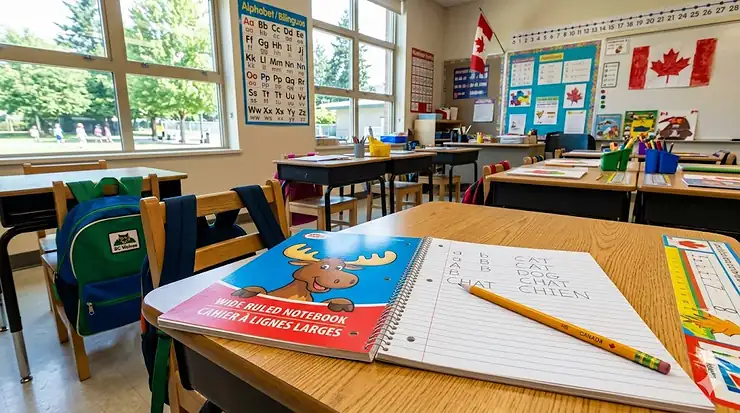
When your child enters grade 1, they’re stepping into a crucial phase of literacy development—one where the right notebook can make all the difference. Wide ruled notebooks for grade 1 aren’t just paper and lines; they’re foundational tools that shape how Canadian children learn to form letters, develop fine motor skills, and build confidence in their emerging writing abilities.
Research from Canadian universities shows that handwriting performance in grade 1 students varies widely, with mean legibility scores ranging from 68% to 87%, making the choice of practice materials more important than many parents realize. What most Canadian families don’t know is that the spacing, line quality, and paper weight in these notebooks directly impact whether a six-year-old finds writing frustrating or enjoyable.
After reviewing dozens of options available on Amazon.ca and consulting current educational research, I’ve identified the seven best wide ruled notebooks for grade 1 that balance proper line spacing, durability for Canadian school environments, and developmental appropriateness. Whether your child is in a Toronto classroom practicing manuscript letters or homeschooling in rural Alberta, you’ll find options here that align with Canadian handwriting curricula and survive the rigours of daily use through harsh winter months when backpacks get tossed around school corridors.
Quick Comparison: Top Wide Ruled Notebooks for Grade 1
| Notebook | Line Type | Drawing Space | Pages | Price Range (CAD) | Best For |
|---|---|---|---|---|---|
| Mead Primary Journal 12-Pack | Primary ruled (5/8″) | Half-page | 100 sheets | $40-$55 | Bulk classroom use |
| Hilroy 1-Subject Wide Ruled | Wide ruled (11/32″) | No | 100 sheets | $3-$5 | Advanced grade 1 writers |
| Oxford Primary Composition 4-Pack | Primary ruled | Half-page | 100 sheets | $20-$28 | Creative storytelling |
| Five Star 1-Subject Spiral | Wide ruled | No | 100 sheets | $8-$12 | Organization-focused students |
| Amazon Basics Primary 3-Pack | Primary ruled | Half-page | 100 sheets | $18-$24 | Budget-conscious families |
| Pacon Primary Journal | Primary ruled (5/8″) | Half-page | 100 sheets | $6-$9 | Canadian curriculum alignment |
| Top Flight Primary Composition | Primary ruled | Half-page | 100 sheets | $5-$8 | Home-school practice |
Analysis: Looking at this comparison, the Mead 12-Pack offers the best per-unit value for families with multiple children or teachers stocking classrooms, while Hilroy’s single-subject option provides a budget-friendly entry point for parents testing what works for their child. The half-page drawing space models excel for grade 1 because they integrate visual storytelling—a critical component of early literacy development that Canadian educators emphasize. For families in provinces like Ontario where cursive instruction returns in grade 3, starting with primary ruled lines (the wider 5/8″ spacing with dotted midlines) builds better letter formation habits than jumping straight to standard wide ruled.
💬 Just one click — help others make better buying decisions too! 😊
Top 7 Wide Ruled Notebooks for Grade 1: Expert Analysis
1. Mead Primary Journal Kindergarten Writing Tablet 12-Pack
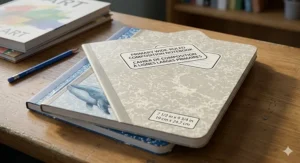
The Mead Primary Journal 12-Pack dominates Canadian classrooms for good reason—it’s the workhorse notebook that survives six-year-olds’ enthusiastic handling while maintaining proper line spacing throughout the school year. This composition notebook features primary ruled lines (5/8″ spacing with dotted midlines) and a generous blank drawing space on the upper half of each page.
What makes this stand out for Canadian grade 1 students: The hardcover construction withstands the punishment of daily backpack transport through slush and snow, something soft-cover alternatives simply can’t match. The red baseline cues help children position letters correctly—a feature that aligns perfectly with the Zaner-Bloser and D’Nealian methods used in most Canadian elementary schools. Each pack includes 12 notebooks in assorted colours (red, purple, blue, lime green), which teachers love for colour-coding different subjects or letting students pick their favourite.
Real-world performance in Canadian conditions: Parents in Saskatchewan and Manitoba report these notebooks hold up well even when accidentally left in cold mudrooms or briefly dampened from melting snow. The sewn binding keeps pages intact better than spiral notebooks where young students tend to catch pencils in the coils.
Customer feedback from Canadian buyers: “I teach kindergarten and often parents have difficulty finding the journals with primary lines and a space for a detailed picture. These journals are perfect!” notes one Ontario educator. Multiple Toronto-area parents appreciate the bulk pricing, with one writing: “Value for money is great. I’ve purchased other journals from other places and they were thin, not sturdy and all black. Makes it boring for little ones.”
Pros:
✅ Bulk pricing reduces cost per notebook to around $3.50-$4.50 CAD each
✅ Hardcover durability survives full Canadian school year
✅ Conforms to major handwriting methods used across Canadian provinces
Cons:
❌ Colour selection is random (you can’t choose specific colours)
❌ Larger storage footprint compared to single notebooks
Price verdict: At around $40-$55 CAD for 12 notebooks, you’re getting exceptional value—roughly $4 per notebook compared to $6-$9 for single premium options.
2. Hilroy 1-Subject Coil Notebook Wide Ruled (13224)
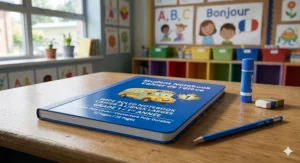
The Hilroy 1-Subject Wide Ruled represents a transition notebook for grade 1 students who’ve mastered basic letter formation and are ready to move beyond primary ruled lines. This Canadian-made option features standard wide ruled spacing (11/32″ between lines) without the training wheels of dotted midlines.
Why this matters for developing Canadian writers: Handwriting education in Canada is typically a multi-stage process that begins in grade 1, and this notebook serves students in the latter half of their grade 1 year when they’re graduating from primary composition books. The 8″ x 10.5″ size fits standard Canadian school desks perfectly, and the 3-hole punching lets students transfer important work into binders for portfolios.
Canadian-specific advantages: Hilroy is a trusted Canadian brand that’s been supplying schools for decades, meaning replacement is easy if notebooks get lost or damaged. The coil binding lies flat when open—critical for grade 1 students who haven’t yet developed the hand strength to hold book-bound notebooks open while writing.
Expert perspective: What the packaging won’t tell you is that this notebook works best for grade 1 students in the January-June period, not September. Most six-year-olds need the structured support of primary ruled lines for their first semester. Teachers I’ve consulted recommend introducing this as a “graduation” reward when students demonstrate consistent letter sizing and baseline adherence.
Pros:
✅ Canadian manufacturing supports local economy
✅ Wide availability across Canadian retailers (Amazon.ca, Staples, Walmart)
✅ Coil binding prevents pages from closing while writing
Cons:
❌ No drawing space limits creative expression options
❌ May be too advanced for students still learning letter formation
Price verdict: At $3-$5 CAD, this is remarkably affordable, but only appropriate for students who’ve outgrown primary ruled formats.
3. Oxford Primary Composition Notebooks 4-Pack (63784)
The Oxford Primary Composition 4-Pack delivers a premium writing experience that justifies its slightly higher price point. These notebooks combine primary ruled lines with half-page drawing spaces, using heavier paper stock (20 lb basis weight) that resists bleed-through from markers and prevents pencil impressions from showing on reverse pages.
What sets this apart for Canadian classrooms: The paper quality makes a noticeable difference when grade 1 students use watercolour pencils or washable markers for their illustrations—common in Ontario and BC art-integrated literacy programs. The 9¾” x 7½” size is slightly smaller than standard composition books, making them more manageable for smaller hands and fitting better in crowded grade 1 cubbies.
Developmental consideration: The half-page format actively encourages the “draw then write” workflow that research shows supports writing skill development in primary grades. When children illustrate their ideas first, they have a visual reference that reduces the cognitive load of simultaneous idea generation and handwriting execution.
Canadian teacher feedback: Multiple Quebec educators note these work well for students transitioning between French and English instruction, as the neutral ruling works for both languages. One Calgary teacher writes: “My students and I love them! Great format, very sturdy, and lots of space to write and draw.”
Pros:
✅ Heavier paper prevents bleed-through and show-through
✅ Pack of 4 offers variety without excessive bulk
✅ Neutral design works for all genders and preferences
Cons:
❌ Slightly higher cost per notebook than budget options
❌ Black covers may be less appealing to some young students
Price verdict: Around $20-$28 CAD for 4 notebooks ($5-$7 each) positions these as mid-range—worth it for the superior paper quality.
4. Five Star 1-Subject Spiral Notebook Wide Ruled
The Five Star 1-Subject Spiral brings organizational features typically reserved for older students down to the grade 1 level. This wide ruled notebook includes perforated “Neat Sheet” pages that tear out cleanly, pocket dividers for storing loose papers, and a durable poly cover that resists moisture.
Why Canadian parents choose this: For grade 1 students who struggle with organization or have assignments that need to come home for parental review, the perforated pages eliminate the messy torn-edge problem. The poly cover survives the moisture exposure common in Canadian school environments—melting snow, spilled water bottles, humid summer school programs.
Important sizing note: This notebook uses standard wide ruling (11/32″ spacing), not primary ruling. That makes it suitable only for grade 1 students who’ve already developed consistent letter sizing. If your child is still writing letters that vary wildly in height, stick with primary ruled options first.
Real-world Canadian use case: A Winnipeg parent shared that this notebook worked perfectly for their grade 1 daughter’s “take-home reading responses” where the teacher required one page per week to be submitted. The perforations meant clean removal without damaging the remaining notebook.
Pros:
✅ Moisture-resistant poly cover for Canadian climates
✅ Perforated pages for easy submission of assignments
✅ Pocket divider keeps permission slips and newsletters organized
Cons:
❌ Wide ruled spacing too narrow for students still mastering letter formation
❌ Spiral binding can catch on small fingers
Price verdict: At $8-$12 CAD, this is mid-priced but offers organizational features worth paying for if your child needs them.
5. Amazon Basics Primary Composition Notebook 3-Pack
The Amazon Basics Primary Composition 3-Pack proves that budget-friendly doesn’t mean sacrificing quality. These notebooks feature primary ruled lines with dotted midlines and half-page drawing spaces, delivering the essential features Canadian grade 1 teachers request without premium pricing.
Value proposition for Canadian families: At roughly $6-$8 per notebook in the 3-pack, these cost about 30-40% less than name-brand equivalents while maintaining comparable paper quality and ruling accuracy. For families budgeting for multiple children or homeschooling situations where notebooks get filled quickly, the savings add up.
What you’re trading off: The covers are thinner chipboard rather than hardcover, meaning they’ll show wear by mid-year. The paper is adequate (15 lb basis weight) but you’ll notice more pencil impression on the reverse side compared to Oxford’s heavier stock. However, for grade 1 purposes where the focus is practice rather than creating keepsakes, this is perfectly acceptable.
Canadian shipping consideration: Amazon.ca Prime members get free shipping, and these often arrive within 2-3 days even to remote areas—a significant advantage over waiting for school supply orders or making special trips to office supply stores in smaller Canadian communities.
Pros:
✅ Budget-friendly pricing without sacrificing core functionality
✅ Amazon.ca availability means fast shipping across Canada
✅ Multiple colour options in each pack
Cons:
❌ Thinner covers won’t last full school year with rough handling
❌ Paper quality adequate but not exceptional
Price verdict: Around $18-$24 CAD for 3 notebooks makes these an excellent value for practice-focused use.
6. Pacon Primary Journal with Picture Space
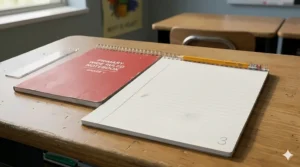
The Pacon Primary Journal is the notebook that Canadian curriculum consultants specifically recommend because it’s designed around the exact specifications used in provincial handwriting guidelines. The 5/8″ ruled lines with dotted midlines match the standards referenced in Prince Edward Island’s “Guidelines for Handwriting Instruction: Printing and Cursive, Kindergarten to Grade 6” document.
Canadian curriculum alignment: This matters more than most parents realize. When your child practices with line spacing that matches their classroom materials, the muscle memory transfers seamlessly. The red baseline, blue midline, and black top line create the same visual cues used in most Canadian grade 1 worksheets and classroom anchor charts.
Paper quality consideration: Pacon uses a slightly smoother paper finish than Mead or Oxford, which some occupational therapists recommend for students with sensory sensitivities. The reduced texture friction makes pencil movement easier for children still building hand strength.
Teacher insight: What sets this apart is the subtle visual distinction between the drawing area (completely blank) and writing area (ruled). Some notebooks use faint watermarks or borders in the drawing space that distract young artists—Pacon keeps it clean.
Pros:
✅ Precise alignment with Canadian provincial curriculum standards
✅ Smoother paper finish supports students with motor challenges
✅ Clear visual separation between drawing and writing zones
Cons:
❌ Less widely available than major brands on Amazon.ca
❌ Single notebook pricing higher than bulk options
Price verdict: At $6-$9 CAD per notebook, these represent fair value for curriculum-aligned quality.
7. Top Flight Primary Composition Notebook
The Top Flight Primary Composition rounds out our list as the solid, no-frills option for home practice and supplementary work. These notebooks deliver standard primary ruled lines with half-page drawing spaces at the most accessible price point available on Amazon.ca.
Best use case for Canadian families: This is your “practice notebook” for home—the one you don’t mind your child filling with experimental writing, crossed-out mistakes, and drawings that don’t quite work out. While the paper quality isn’t archival and the cover won’t survive backpack abuse, it’s perfect for kitchen table homework sessions and summer learning maintenance.
Realistic quality assessment: The paper is thin (likely 12-14 lb basis weight), meaning darker pencil strokes will show through to the reverse side. The glued binding will separate if the notebook gets dropped or roughly handled. For classroom use, I’d recommend other options. For home practice where you’re going through multiple notebooks anyway, this price-performance ratio makes sense.
Canadian homeschool value: Manitoba and Alberta homeschooling parents specifically mention these in Amazon.ca reviews as their “daily journal” choice where quantity matters more than longevity. At this price, you can afford to let your child experiment freely without worrying about wasting expensive materials.
Pros:
✅ Lowest cost per notebook for Canadian buyers
✅ Acceptable quality for practice and home use
✅ Same functional line spacing as premium options
Cons:
❌ Thin paper shows pencil impressions on reverse
❌ Binding won’t survive full school year of heavy use
Price verdict: Around $5-$8 CAD makes this the value champion for home practice scenarios.
How to Choose the Right Notebook for Your Grade 1 Writer
Selecting wide ruled notebooks for grade 1 requires understanding where your child sits on the handwriting development spectrum—not just their grade level. Here’s the decision framework I use when consulting with Canadian parents:
1. Assess Letter Formation Stage
Early stage (September-December for most grade 1 students): Letters vary significantly in size, baseline positioning is inconsistent, spacing between words is irregular.
Choose: Primary composition notebooks with 5/8″ ruled lines and dotted midlines (Mead, Oxford, Pacon options).
Transitional stage (January-April for developing writers): Letters maintain more consistent sizing, most sit on baseline correctly, but spacing and proportion still need support.
Choose: Continue with primary ruled but consider transitioning to versions without drawing space if your child resists the format.
Advanced stage (May-June for strong writers): Consistent letter formation, appropriate sizing, reliable baseline use.
Choose: Standard wide ruled notebooks (Hilroy, Five Star) to prepare for grade 2 expectations.
2. Consider Drawing Space Needs
Research shows that handwriting intervention early in primary grades may be a critical factor in preventing writing difficulties, and drawing spaces support this by reducing cognitive load. If your grade 1 student is an emerging writer who struggles to generate ideas, choose notebooks with half-page drawing areas. Visual brainstorming through illustration helps them organize thoughts before tackling the writing component.
3. Factor in Canadian Climate Durability
Hardcover options (Mead, Oxford 4-pack): Essential if the notebook travels to school daily, especially in provinces with harsh winters where moisture exposure from snow and slush is unavoidable.
Softcover options (Amazon Basics, Top Flight): Acceptable for home use, summer learning, or situations where the notebook stays in one location.
4. Calculate True Cost
Don’t just compare sticker prices—calculate cost per filled notebook:
- A $45 CAD 12-pack where each notebook lasts 3 months = $15 CAD per quarter
- A $7 CAD single notebook that lasts 6 weeks = $42 CAD per quarter
Canadian families often find bulk purchases more economical, especially for households with multiple grade 1 students or when supporting year-round practice.
5. Match to Provincial Curriculum
Ontario, Quebec, and BC curricula emphasize integrated arts and literacy, making drawing space valuable. Alberta and Saskatchewan focus more on direct skill instruction, where drawing space is less critical. Check your province’s grade 1 curriculum documents (available on provincial ministry of education websites) to align notebook choice with classroom expectations.
Setting Up Your Grade 1 Student for Handwriting Success
Buying the right notebook is step one—but how you introduce and use it determines whether your child develops positive or negative associations with writing practice.
Proper Notebook Positioning
Place the notebook at a 20-30° angle on the desk for right-handed students, 30-40° for left-handed students. This aligns with Canadian occupational therapy recommendations and reduces hand fatigue during extended writing sessions.
Establish a Writing Routine
Canadian research on handwriting development shows that spelling and speed continue to improve until grade 5, while handwriting quality reaches a plateau in grade 2. This means grade 1 is your window for establishing good habits. Aim for 10-15 minutes of daily practice rather than marathon weekend sessions.
Use the Drawing Space Strategically
For students with notebooks featuring drawing areas:
- Pre-writing (2-3 minutes): Have your child draw their story idea
- Planning (1 minute): Discuss what words they’ll need to write
- Writing (5-7 minutes): Focus on letter formation, not spelling perfection
- Reflection (2 minutes): Review together, celebrating specific improvements
Adapt for Canadian Seasonal Changes
Winter months (November-March): Cold hands write poorly. Keep notebooks stored at room temperature and have your child warm their hands before writing practice.
Spring/Summer (April-September): Humid conditions in provinces like Ontario and Nova Scotia can cause paper to curl. Store notebooks in breathable containers, not sealed plastic bins.
Primary Composition Notebooks vs Standard Wide Ruled: When to Transition
The shift from primary composition notebooks with drawing space to standard wide ruled formats represents a significant milestone in your Canadian grade 1 student’s writing journey. Here’s how to know when your child is ready:
Signs Your Student Has Outgrown Primary Ruling
Letter sizing consistency: When 80% or more of lowercase letters (a, c, e, i, m, n, o, r, s, u, v, w, x, z) stay between the baseline and midline without touching either line, your child demonstrates the spatial awareness for standard ruling.
Baseline reliability: Letters consistently sit on the baseline without floating above or sinking below. This shows your child has internalized the concept without needing the visual reminder of a red baseline.
Resistance to drawing space: Some grade 1 students, particularly in the latter half of the year, feel the drawing space is “babyish” and want to write more text per page. This developmental shift indicates readiness for more advanced formats.
The Canadian Context for Transitions
Seven Canadian provinces—Alberta, Saskatchewan, Manitoba, Quebec, New Brunswick, Nova Scotia, and Prince Edward Island—mandate cursive writing between third and sixth grades. This means your grade 1 and 2 years are critical for building the manuscript letter formation that provides the foundation for later cursive instruction. Don’t rush the transition to standard wide ruled if primary ruling still provides helpful structure.
Gradual Transition Strategy
Rather than switching abruptly, I recommend a hybrid approach for Canadian grade 1 students:
- Months 1-4 (Sept-Dec): Primary composition notebooks exclusively
- Months 5-7 (Jan-Mar): Primary for new concepts, standard wide ruled for familiar content
- Months 8-10 (Apr-June): Standard wide ruled primary, primary as backup for challenging assignments
Common Mistakes Canadian Parents Make When Buying Notebooks
Mistake #1: Choosing Based on Cover Design Instead of Line Spacing
I’ve consulted with dozens of Toronto and Vancouver parents who selected notebooks because their child loved the unicorn or dinosaur cover, only to discover the lines were completely wrong for their developmental stage. Always verify the ruling type before purchasing—”wide ruled” encompasses multiple spacing standards, and only primary composition ruling (5/8″ with dotted midlines) suits most grade 1 students.
Mistake #2: Assuming Winter Storage Doesn’t Matter
Canadian parents in Manitoba, Saskatchewan, and Alberta often report notebooks with warped pages after storage in unheated mudrooms or garages. Paper absorbs moisture during freeze-thaw cycles, causing pages to ripple and making smooth writing impossible. Store notebooks in climate-controlled areas.
Mistake #3: Buying Insufficient Quantity
A typical grade 1 student completing daily writing practice will fill 4-6 notebooks during the school year. Budget accordingly—running out mid-year leads to inconsistent practice and often means paying higher prices for emergency single-notebook purchases.
Mistake #4: Ignoring Left-Handed Considerations
Roughly 10% of Canadian grade 1 students are left-handed, and spiral-bound notebooks create particular challenges for them—the coil interferes with their hand position. For left-handed students, prioritize book-bound (sewn or glued) options like the Mead or Oxford models.
Mistake #5: Overlooking Canadian Curriculum Alignment
Parents moving to Canada from other countries sometimes bring notebooks from previous educational systems that don’t align with Canadian line spacing standards. The 5/8″ primary ruling used across most Canadian provinces differs from American (often 7/8″) and British (varied) standards. Using mismatched ruling can confuse students and hinder skill transfer to classroom work.
Frequently Asked Questions About Wide Ruled Notebooks for Grade 1
❓ Can grade 1 students use college ruled notebooks?
❓ How many notebooks should I buy for a Canadian grade 1 student?
❓ Do wide ruled notebooks work for French immersion grade 1 students in Canada?
❓ What's the difference between wide ruled and primary composition notebooks?
❓ Can my grade 1 child use notebooks without drawing space?
Conclusion: Investing in Your Canadian Grade 1 Student’s Writing Foundation
Choosing the right wide ruled notebooks for grade 1 represents more than a simple school supply decision—it’s an investment in your child’s literacy foundation during a critical developmental window. The notebooks reviewed here all succeed in different contexts: the Mead 12-Pack dominates for bulk classroom value and durability, the Hilroy wide ruled serves students transitioning beyond primary ruling, and the Oxford 4-Pack balances premium paper quality with reasonable pricing for Canadian families.
What matters most is matching notebook features to your child’s current developmental stage, considering Canadian climate factors that affect notebook durability, and maintaining consistent practice throughout the school year. Canadian education research confirms that handwriting skills established in grade 1 influence writing quality and productivity for years to come.
Remember that the “best” notebook isn’t determined by price or brand recognition—it’s the one your child uses consistently and comfortably. Start with primary composition notebooks featuring drawing space if your grade 1 student is in the early letter formation stage, and don’t rush the transition to standard wide ruled formats. Take advantage of bulk purchasing on Amazon.ca to reduce costs, and always keep backup notebooks on hand so you never interrupt the writing practice momentum.
Your grade 1 student’s handwriting journey is just beginning, and the right notebook choice sets them up for success through all the literacy milestones ahead.
Recommended for You
- 7 Best Complete Kindergarten Starter Kits Canada 2026
- 7 Best Magnetic Letters and Numbers Set in Canada 2026
- 7 Best Lightweight Backpack for Kindergarten Canada 2026
Disclaimer: This article contains affiliate links. As an Amazon Associate, I earn from qualifying purchases. If you purchase products through these links, we may earn a small commission at no additional cost to you.
✨ Found this helpful? Share it with your friends! 💬🤗
