
In This Article
There’s a particular kind of chaos that descends on Canadian households in late August — the frantic search for a specific shade of crayon, the realization that the backpack you bought is the wrong size, and the dawning horror that school starts in four days. Sound familiar?
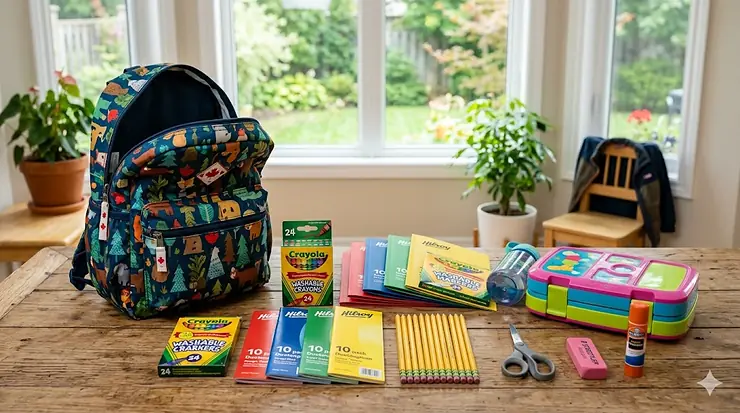
If you’re prepping a child for their very first year of school — whether that’s Junior Kindergarten (JK) or Senior Kindergarten (SK) — having a complete back to school supplies kindergarten checklist ready before the rush hits every major retailer can make an enormous difference. Not just for your sanity, but for your child’s confidence walking through those classroom doors.
So what exactly is a complete back to school supplies kindergarten kit? It’s the full collection of writing tools, art materials, organizational essentials, personal care items, and classroom-shared supplies that support a child’s daily learning and play-based activities in JK and SK. Unlike older grades, kindergarten supply lists lean heavily toward creative exploration tools — chunky crayons, washable markers, blunt-tipped scissors — designed around the ergonomic reality of five-year-old hands that haven’t yet fully developed fine motor control.
Ontario’s updated 2026 Kindergarten Curriculum (replacing the 2016 version) places fresh emphasis on structured literacy and phonemic awareness alongside play-based learning, which means your child’s supplies need to support both creative expression and early reading activities. The Ottawa-Carleton District School Board notes that kindergarten supply lists are largely voluntary — schools keep backup supplies — but many Canadian families still prefer to send their children with a personalized, labelled kit for hygiene and ownership reasons.
This complete back to school supplies kindergarten guide covers the seven best product picks available on Amazon.ca (in CAD pricing), a full checklist, real-world usage tips for Canadian conditions, and answers to the questions Canadian parents are actually Googling in July.
Quick Comparison: Top Kindergarten Supply Products on Amazon.ca (2026)
| Product | Category | Price Range (CAD) | Best For | Amazon.ca Available? |
|---|---|---|---|---|
| Crayola Ultra-Clean Washable Crayons (24 pk) | Art Supplies | $5–$9 | All JK/SK students | ✅ Yes |
| Fiskars 5″ Blunt-Tip Kids Scissors | Cutting Tools | $6–$12 | Ages 4–7, lefty/righty | ✅ Yes |
| Elmer’s Disappearing Purple Glue Sticks (6-pk) | Adhesives | $7–$12 | Craft and paper work | ✅ Yes |
| Ticonderoga Pre-Sharpened #2 Pencils (12-pk) | Writing Tools | $8–$14 | Early printing practice | ✅ Yes |
| Vaschy Lightweight Kindergarten Backpack | Bags | $25–$45 | Preschool-to-JK transition | ✅ Yes |
| Roots Kids Recycled Lightweight Backpack | Bags | $40–$65 | Canadian-made durable option | ✅ Yes |
| Mead Primary Composition Book (Wide Ruled) | Notebooks | $5–$10 | Journalling & drawing | ✅ Yes |
Looking at the table above, it’s clear that building a complete back to school supplies kindergarten kit on Amazon.ca doesn’t have to cost a fortune — most individual items sit comfortably under $15 CAD. The bigger investment is the backpack, where durability and ergonomics matter significantly more than aesthetics. Budget-conscious Canadian families can realistically kit out a kindergartener for the full school year for $80–$130 CAD by shopping strategically on Amazon.ca (Prime members enjoy free shipping on eligible orders, while non-Prime orders typically require a $35 minimum for free standard shipping).
💬 Just one click — help others make better buying decisions too! 😊
✨ Don’t Miss These Exclusive Deals!
🔍 Take your kindergarten prep to the next level with these carefully selected products. Click on any highlighted item to check current pricing and availability on Amazon.ca. These tools will help you create an organized, stress-free first school year your child will love!
Top 7 Complete Back to School Supplies Kindergarten: Expert Analysis
1. Crayola Ultra-Clean Washable Crayons, 24 Count
Let’s start with the non-negotiable: crayons. Crayola’s Ultra-Clean Washable Crayons are hands-down the most universally recommended art supply on every JK and SK list across Canada — and for good reason. The 24-count pack gives little artists enough colour variety without becoming overwhelming, while the washable formula is specifically engineered to clean off skin, most clothing, and painted walls.
What the spec sheet won’t tell you: kindergarteners will average about three “floor drops” and two “pocket incidents” per week. Standard crayons snap. The Ultra-Clean line uses a thicker core formula that holds up remarkably well to the kind of enthusiastic grip a four-year-old deploys. For Canadian families dealing with arts-and-crafts-on-the-kitchen-table situations in the long winter months (hello, Ottawa in January), having crayons that wash off the good tablecloth is not a luxury — it’s a survival strategy.
Customer feedback highlights the bright, vivid colour output that doesn’t fade even after multiple classroom use cycles. Canadian parents frequently note these survive the full school year without needing replacement.
✅ Non-toxic, AP certified
✅ Available in multiple pack sizes on Amazon.ca
✅ Works for both lefties and righties
❌ 24-count can feel limited for creative projects; 48-count upgrade costs more
❌ Individual crayons aren’t sold for replacements — full box only
Price range: around $5–$9 CAD for 24-count. Excellent value — this is the one supply you should never cheap out on.
2. Fiskars 5″ Blunt-Tip Kids Scissors
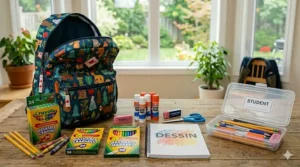
The Fiskars 5″ Blunt-Tip Scissors for Kids Ages 4–7 are the gold standard in Canadian kindergarten classrooms, and teachers will often specifically request this brand by name. The safety-edge blades feature an innovative blade angle that dramatically reduces the risk of accidental cuts while still cutting cleanly through construction paper, tissue paper, and craft foam — the holy trinity of JK art class.
Here’s what stands out from a practical standpoint: Fiskars engineered these with a larger finger loop and an ergonomic thumb loop that genuinely fits small hands. Most generic scissors have finger holes sized for adults; Fiskars tested with actual kids. The result is that your child can open and close the blades without losing grip, which means fewer “the scissors won’t work!” frustrations mid-project. This matters more than you’d think — hand fatigue and grip failure are why many kindergarteners give up on cutting activities early.
Canadian reviews consistently praise durability, with many parents noting the same pair lasting through both JK and SK years. The scissors are ambidextrous, which is important since left-handedness is often identified in kindergarten.
✅ Ergonomic design tested for ages 4–7
✅ Safety-edge blades, ambidextrous
✅ Backed by Fiskars’ lifetime warranty
❌ Some children find blunt tips slightly harder to initiate cuts on folded paper
❌ The bright colours may cause “I want the blue one!” conflicts in shared supply situations
Price range: $6–$12 CAD. Buy two — one for school, one for home craft projects.
3. Elmer’s Disappearing Purple Glue Sticks, 6-Pack
Elmer’s Glue Sticks are the #1 teacher-recommended brand in Canada, and the Disappearing Purple formula is a quiet genius product: it goes on purple so kids can see where they’ve applied it, then dries clear. For a five-year-old trying to glue paper pieces onto a collage, this visual feedback is transformative — no more invisible glue creating invisible-but-wet disasters.
The washable, acid-free formula means it’s safe for little hands and won’t damage paper projects over time. The 6-pack format is ideal because glue sticks disappear faster than you’d expect in a kindergarten classroom — small hands squeeze hard, and many sticks end up glued to the cap by October. Buying a multipack at the start of the year means you’re covered for top-ups.
From an expert standpoint, I’d suggest labelling each stick with your child’s name using a permanent marker on the cap — it’s the one supply most likely to migrate to another child’s pencil case.
✅ Disappearing purple formula for easy application visibility
✅ Acid-free and washable
✅ 6-pack provides all-year coverage
❌ Caps occasionally dry out if left off for more than a few minutes
❌ Not suitable for heavier materials like cardboard (liquid glue handles that better)
Price range: $7–$12 CAD for 6-pack. Check for multipacks — they offer better per-unit value.
4. Ticonderoga Pre-Sharpened #2 Pencils, 12-Pack
The Ticonderoga Wood-Cased #2 Pencils are what serious teachers reach for, and there’s a reason: the SoftTouch eraser actually erases cleanly without smearing, and the lead formula is remarkably break-resistant for a standard #2. When a kindergartener is learning to print for the first time, a pencil that snaps under the slightest pressure sends the wrong message about writing. Ticonderoga’s pencils hold up through the enthusiastic, whole-fist grip that early printers apply.
Pre-sharpened out of the package means they’re classroom-ready from day one. The 12-pack is the sweet spot for a kindergarten year — enough for regular replacements without going overboard. Most JK/SK classrooms in Ontario and BC use pencils primarily for printing practice and tracing activities aligned with the new 2026 Ontario Kindergarten Curriculum’s literacy focus.
Canadian parents who’ve gone through both JK and SK years consistently identify pencil quality as the most underrated supply decision. A child struggling to write with a scratchy, snapping pencil develops negative associations with printing early on.
✅ Industry-standard quality for printing practice
✅ SoftTouch eraser cleans well without smearing
✅ Pre-sharpened and classroom-ready
❌ Can be harder to find on Amazon.ca than on Amazon.com — check availability before ordering
❌ Still need a good pencil sharpener as the year progresses
Price range: $8–$14 CAD for 12-pack.
5. Vaschy Toddler Kindergarten Backpack (Small, Water-Resistant)
The Vaschy Lightweight Kindergarten Backpack is one of the top-selling kids’ backpacks on Amazon.ca for the JK/SK age range, and it earns that position through straightforward practicality. The compact size (roughly 30 cm × 22 cm, fitting an A4 folder and lunch container) is specifically designed for the kindergarten body — it won’t overwhelm a four-year-old’s frame the way a standard “junior” backpack does.
The water-resistant exterior is non-negotiable for Canadian school conditions. From September rain in Vancouver to spring slush in Toronto to actual snow on early October mornings in Calgary, a kindergartener’s backpack is going to encounter moisture. The Vaschy’s wipe-clean surface handles a full Canadian school year without developing the mildew issues that plague cheaper fabric alternatives.
For ergonomics, look for padded S-shaped straps when purchasing. The general guideline from Canadian physiotherapists is that a loaded backpack should weigh no more than 10–15% of the child’s body weight. A kindergartener weighing around 18 kg (40 lbs) should carry no more than 1.8–2.7 kg (4–6 lbs) — well within range for a typical JK kit.
✅ Compact size appropriate for ages 3–7
✅ Water-resistant and wipe-clean exterior
✅ Affordable entry-level option on Amazon.ca
❌ Less durable over multiple years than premium alternatives
❌ Colour selection changes seasonally — verify current options
Price range: $25–$45 CAD. A solid first-year backpack without breaking the budget.
6. Roots Kids Lightweight Recycled Backpack
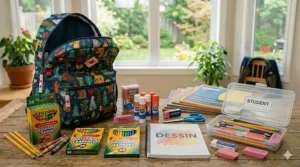
The Roots Kids Lightweight Backpack is a proudly Canadian brand option that punches well above its price point and is widely available on Amazon.ca. What makes Roots stand out in a crowded backpack category is the quality of materials and the Canadian-designed construction: the 100% recycled fabric construction reduces environmental impact (an increasingly important factor for many Canadian families), and the design includes thoughtful practical touches like a reflective safety accent, a dedicated bottle pocket, and a padded back panel.
The reflective accent deserves a specific mention for Canadian context: in fall and winter, kindergarteners are often walking to or from school in low-light conditions. A reflective element on a backpack is a genuine safety feature, not just decoration, particularly in provinces like Ontario, Alberta, and Quebec where school start times in January mean some families are doing pickup in near-darkness.
The 22.5-litre capacity is slightly large for JK specifically — it works better for SK when children begin carrying slightly more materials. Canadian parents using this for JK may want to check it doesn’t overwhelm their child’s frame before the first day.
✅ Canadian brand with strong reputation
✅ Made from 100% recycled fabrics
✅ Reflective accent for low-light Canadian conditions
❌ Slightly large for JK (better suited to SK+)
❌ Premium price point compared to generic alternatives
Price range: $40–$65 CAD. Worth the investment for a backpack that lasts 2–3 school years.
7. Mead Primary Composition Book (1/2 Blank, 1/2 Lined, Wide Ruled)
The Mead Primary Story Journal Composition Book is specifically designed for early learners — the top half of each page is blank for drawing/illustration, while the bottom half features wide-ruled lines for printing practice. This format directly supports the kind of story-sequencing and early writing activities that Ontario’s new 2026 Kindergarten Curriculum explicitly encourages through its updated literacy expectations.
What most parents overlook about this product is how much the physical format matters for a kindergartener. Standard ruled notebooks have lines too close together for a child still developing pencil control. The wide-ruled primary format gives appropriate spacing and the blank drawing section means the child can illustrate their story first — a technique early childhood educators use to build narrative confidence before writing.
The composition-book binding is more durable than spiral notebooks (no wires to catch on backpack zippers or poke small hands), and the sewn binding holds up through the year even with daily use.
✅ Purpose-designed for JK/SK age level
✅ Combined drawing/writing format supports early literacy
✅ Durable composition binding
❌ Specific model may vary by availability on Amazon.ca
❌ Not required by all Canadian school boards — confirm with your child’s teacher
Price range: $5–$10 CAD. An underrated addition to the complete back to school supplies kindergarten kit.
How to Actually Use These Supplies: A Canadian Parent’s Setup Guide
Getting the supplies is step one. Setting them up correctly for a Canadian kindergartener is where the real preparation happens.
Label absolutely everything. This sounds obvious, but it deserves emphasis: every single item — individual crayons, each glue stick cap, the scissors handle, the pencil case, the composition book, the backpack chest clip, the water bottle lid — should have your child’s name on it. Use a Sharpie marker (fine tip) directly on items, or invest in iron-on clothing labels for fabric items. Kindergarten classrooms pool many supplies, and unlabelled items become communal property by Thanksgiving.
Introduce supplies at home first. Before the first day of school, sit down with your child and practise opening the backpack, removing the pencil case, uncapping a glue stick, and using the scissors. In a new classroom environment with a new teacher and twenty unfamiliar children, a child who already knows how their supplies work has one less thing to feel anxious about. For the scissors especially, a few sessions of supervised cutting practice at home builds both skill and confidence.
Think about Canadian weather from day one. Your child’s backpack will encounter September rain, October frost, November slush, and potentially December snow depending on which province you’re in. Store crayons away from hot car interiors (they melt at around 35°C/95°F — entirely achievable in a car parked in a Toronto summer) and keep glue sticks away from excessive cold (below 0°C/32°F they can become brittle and separate from the stick). A simple zipper pencil case inside the backpack protects supplies from the elements during transit.
Mid-year replenishment strategy. Plan a second supply run in January. Crayons break, glue sticks deplete, and pencils go missing. Amazon.ca’s Subscribe & Save option works well for consumables like glue sticks and pencils — set a quarterly delivery to arrive in September and January, and you’ll never scramble again.
Hygiene additions worth including. The Ottawa-Carleton District School Board and many other Canadian school boards suggest including a box of facial tissues and a container of hand sanitiser in your child’s kit. Canadian winters bring extended periods of close-quarters classroom time that creates ideal cold-and-flu transmission conditions. A personal tissue box labelled with your child’s name is a small addition that many teachers genuinely appreciate.
Real Canadian Families, Real Scenarios: Which Supplies Fit Your Situation
Understanding which products to prioritize depends on your child’s specific situation. Here are three common Canadian scenarios:
Scenario 1 — The Ottawa Family Starting JK in September A 4-year-old entering JK at a full-day Ottawa public school under the new 2026 curriculum. Budget: around $80–$100 CAD total. Priority supplies: Crayola Ultra-Clean Washable Crayons, Fiskars blunt-tip scissors, Elmer’s glue sticks (6-pack), Ticonderoga pencils, a compact Vaschy backpack, and a zippered pencil case. The Ottawa-Carleton board’s voluntary list means families have flexibility, but a basic kit of these items covers the vast majority of JK classroom activities. The Mead Primary Composition Book is worth adding if the teacher has indicated journalling activities.
Scenario 2 — The Vancouver Rainy-Season SK Parent A 5-year-old entering SK in Vancouver where September and October rainfall is near-constant. A water-resistant backpack is non-negotiable here — prioritize the Roots Kids or Vaschy water-resistant option. Store crayons and pencil supplies in a sealed pencil case inside the backpack rather than loose pockets, and add a secondary zip-lock bag as an inner liner. Vancouver SK classes often involve outdoor learning elements (the Pacific Coast climate means teachers lean into forest and garden activities), so durable, weather-resistant organization is worth the extra thought.
Scenario 3 — The Edmonton Family on a Tight Budget A family in Edmonton managing back-to-school for multiple children with a total supply budget under $60 CAD. Strategy: prioritize the consumables (crayons, glue sticks, pencils) as these offer the most direct classroom value, and shop during Amazon.ca’s late-July back-to-school sales. Delay the backpack purchase — a child transitioning from preschool may already have a usable bag for JK. Amazon.ca’s $35 free shipping threshold means consolidating purchases into one order saves meaningfully on delivery costs.
How to Choose Complete Back to School Supplies Kindergarten in Canada: 7 Criteria
Shopping for a kindergartener’s first supply kit can feel overwhelming when every shelf and product page is competing for attention. Here’s a prioritized framework for Canadian buyers:
1. Age-appropriateness first. Every item must be designed for ages 4–6. This means chunky crayons, blunt scissors, wide-rule paper, and pencils with large erasers. Supplies designed for older children require fine motor control that most kindergarteners haven’t yet developed.
2. Washability is non-negotiable for art supplies. Crayons, markers, and paint should be washable-labelled. Canadian parents who’ve rinsed marker off the good couch cushions understand this on a spiritual level. Non-washable supplies have no place in a JK kit.
3. Safety certifications matter. Look for AP (Approved Product) certification on art supplies and non-toxic labelling. In Canada, health and safety standards for children’s products fall under Health Canada’s Consumer Product Safety regulations — choose products that meet or exceed these standards.
4. Durability over the full school year. A kindergarten school year in Canada runs roughly September through late June — approximately ten months. Supplies need to last this full arc, not just September. Crayola and Fiskars are teacher-recommended precisely because they’re engineered for this kind of sustained use.
5. Ergonomics for small hands. This applies most critically to scissors and writing tools. Products tested with actual children in the target age range (look for brand claims like “designed for ages 4–7” with ergonomic grips) outperform generic alternatives significantly for kindergarten use.
6. Amazon.ca availability and shipping. Confirm items ship to your province, especially if you’re in a northern region or smaller city. Prime-eligible items are worth prioritizing for reliable delivery timing before the first day of school. Order by mid-August at the latest to avoid back-to-school delivery delays.
7. Budget balance across categories. Don’t spend your whole budget on a backpack and scrimp on the art supplies — it should be the other way around. The consumables (crayons, glue sticks, pencils) get used daily and deserve quality investment. The backpack matters, but a mid-range option serves JK students well.
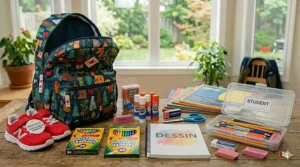
Common Mistakes Canadian Parents Make When Shopping for Kindergarten Supplies
Buying too early without teacher input. Many Canadian school boards — including the Ottawa-Carleton DSB — explicitly recommend waiting for teacher communication before purchasing supplies. Some kindergarten classrooms provide all consumables communally; buying individual items in advance may be unnecessary. Wait for your child’s specific school or teacher supply list before going all-in.
Ignoring ergonomics in favour of aesthetics. The character-branded scissors with the favourite cartoon on the handle are almost always sized and weighted wrong for small hands. Parents buy them, children struggle with them, and they end up shoved in the bottom of the backpack by week three. Go for ergonomics first, fun second.
Forgetting the Canadian winter supply window. Many Canadian families buy supplies in August and never restock. By January, crayons are broken stubs, glue sticks are depleted, and pencils have migrated. Build a mid-year resupply into your planning — the Amazon.ca Subscribe & Save feature helps automate this.
Underestimating backpack sizing. A backpack that fits a seven-year-old will sit at the base of a four-year-old’s spine and create poor posture habits from day one. For JK specifically, aim for a bag whose packed depth stays above the child’s hips and whose straps adjust to keep the bag close to the back. The 10–15% body weight guideline is a useful check.
Skipping the labelling step. Unlabelled supplies in a classroom of twenty kindergarteners become communal supplies within two weeks. Label everything before the first day — it takes about twenty minutes and saves considerable frustration.
Buying in USD without checking CAD equivalent. Some popular back-to-school products are listed on Amazon.com but either don’t ship to Canada or carry import fees that make them significantly more expensive. Always shop on Amazon.ca and verify you’re seeing Canadian pricing — what appears to be a bargain at US$12 may actually be $22–$28 CAD after conversion and import duties.
What to Expect: Real-World Kindergarten Supply Performance in Canadian Classrooms
Kindergarten classrooms in Canada are high-energy, hands-on environments where supplies face genuinely tough conditions. Here’s what honestly happens to each supply category over the course of a JK or SK year:
Crayons take the most punishment. Expect to replenish 30–40% of a 24-pack by February, particularly for colours used in self-portraits (skin tones, blues, and greens). Washable formulas hold colour vibrancy better through storage in backpacks and pencil cases.
Scissors are the most likely item to cause a teacher note home. Either your child loses them in the classroom, another child borrows them permanently, or they develop a bending issue from cutting cardboard (which blunt-tip scissors aren’t designed for). Fiskars’ lifetime warranty is genuinely useful here — keep the packaging.
Glue sticks deplete fastest of all consumables. A child goes through roughly one standard glue stick per 4–6 weeks in active use. The 6-pack format purchased at the start of year typically requires one mid-year top-up.
Pencils see moderate use in JK (printing emerges more strongly in SK and Grade 1) but are still needed for tracing and name-writing practice. Expect 20–30% loss to breakage or disappearance in a JK year; pencil use ramps up significantly in SK.
Backpacks under $35 CAD rarely survive a full Canadian school year in good condition. Zippers fail, straps fray, and the base panel often shows wear from being dropped on wet ground. Spending in the $40–$65 range on a quality option covers JK through SK (and sometimes into Grade 1) without replacement.
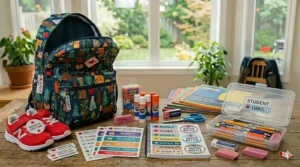
FAQ: Complete Back to School Supplies Kindergarten in Canada
❓ What is typically on a kindergarten supply list checklist in Canada?
❓ What are the essential supplies for JK/SK that every Canadian parent should buy?
❓ Do Canadian schools provide kindergarten supplies, or do parents have to buy everything?
❓ When is the best time to shop for back to school supplies in Canada on Amazon.ca?
❓ Are there specific safety standards Canadian parents should look for on children's school supplies?
Conclusion: Set Your Canadian Kindergartener Up for a Great First Year
Starting kindergarten is one of the most significant transitions in a young child’s life — and in a Canadian context, it’s happening against the backdrop of a newly updated 2026 Ontario Kindergarten Curriculum, an evolving school supply landscape, and the eternal challenge of September weather that refuses to cooperate.
The complete back to school supplies kindergarten checklist we’ve covered in this guide isn’t about buying the most or the most expensive. It’s about buying the right things: supplies that fit small Canadian hands, survive the full school year (including winter conditions), and genuinely support a child’s first forays into writing, creating, and exploring. Crayola washable crayons, Fiskars ergonomic scissors, Elmer’s disappearing glue sticks, Ticonderoga pencils, and a properly-sized water-resistant backpack form the core of what any JK or SK student in Canada actually needs.
Shop Amazon.ca early (mid-July to early August) to catch back-to-school deals, confirm availability in your province, and take advantage of Prime shipping before the September rush. Label everything before day one. Build in a January resupply. And trust that a well-prepared child with the right tools walks into that first classroom day with measurably more confidence.
✨ Don’t Miss These Exclusive Deals!
🔍 Take your kindergarten prep to the next level with these carefully selected products. Click on any highlighted item to check current pricing and availability on Amazon.ca. These tools will help you create an organized, confident first school year your child will love!
Recommended for You
- 7 Best Science Fair Project Supplies Canada 2026
- 7 Best Gym Bag for Middle School Students Canada 2026
- 7 Best Backpacks for Grade 8 Students in Canada 2026
Disclaimer: This article contains affiliate links. As an Amazon Associate, I earn from qualifying purchases. If you purchase products through these links, we may earn a small commission at no additional cost to you.
✨ Found this helpful? Share it with your friends! 💬🤗
