

In This Article
Exam season has a way of sneaking up on even the most organised student, and by the time the countdown hits two weeks, half the battle is just finding a highlighter that hasn’t dried out in your backpack since October. Exam prep supplies for high school students are the physical tools — highlighters, flashcards, sticky tabs, planners, and index cards — that turn a messy binder into an actual study system. What is exam prep supplies for high school students, in practical terms? It’s the small kit of stationery that supports active recall, colour-coded review, and deadline tracking so studying feels less like drowning and more like following a plan.
This guide digs into seven real, currently available products on amazon.ca, breaks down what actually matters versus what’s just clever packaging, and builds out a full toolkit — whether you’re cramming for the Ontario Secondary School Literacy Test (OSSLT), juggling five Grade 12 finals, or just trying to survive January exam week without losing your mind. According to the Education Quality and Accountability Office, the OSSLT is a two-session, 37-question literacy assessment that every Ontario student needs to pass to graduate — which means the right prep tools matter well beyond a single test day.
We’ve grouped budget, mid-range, and premium options together so you’re not stuck comparing apples to oranges. Every recommendation below is grounded in real specs, real aggregated review themes, and honest reasoning about who each product actually suits — not fluffy marketing copy lifted from a product listing. Let’s get into it.
Quick Comparison Table: Exam Prep Supplies for High School Students at a Glance
| Product | Type | Price Range (CAD) | Best For |
|---|---|---|---|
| Stabilo Boss Original Highlighters | Highlighter set | C$15-C$22 | Long-term colour-coding system |
| Zebra Mildliner Dual-Tip Highlighters | Highlighter set | C$18-C$25 | Thin, glossy textbook pages |
| Sharpie Tank Highlighters Value Pack | Highlighter set | C$20-C$28 | Bulk buying for exam season |
| Oxford Ruled Index Cards with Storage Tray | Flashcard system | C$12-C$18 | An all-in-one flashcard kit |
| Amazon Basics Ruled Index Flash Cards | Flashcard pack | C$8-C$12 | Budget bulk flashcards |
| Post-it Flags Combo Pack | Study tabs | C$10-C$15 | Annotating textbooks and notes |
| Blue Sky Weekly & Monthly Academic Planner | Student planner | C$18-C$28 | Tracking exam deadlines |
Looking at the table, a clear pattern emerges: nothing here is a single “must-buy,” because exam prep supplies for high school students work as a system, not a solo act. The Stabilo Boss Original Highlighters and the Oxford Ruled Index Cards with Storage Tray form the backbone of most study routines — colour-coded notes plus retrievable flashcards — while the Blue Sky Weekly & Monthly Academic Planner is what keeps the whole system from falling apart under deadline pressure. Budget-conscious students should note that the Amazon Basics Ruled Index Flash Cards deliver nearly the same functional value as the pricier flashcard system, just without the built-in tray.
💬 Just one click — help others make better buying decisions too!😊
Top 7 Exam Prep Supplies for High School Students: Expert Analysis
1. Stabilo Boss Original Highlighters — best all-rounder for colour-coded notes
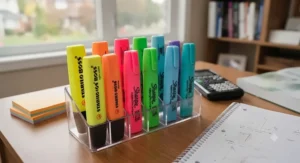
The Stabilo Boss Original Highlighters have barely changed their signature wedge shape since the design first launched decades ago, and that’s mostly because the shape actually solves a real problem: it won’t roll off your desk mid-study session. The set typically comes in six to twenty-three colours, with a chisel tip offering both a 2mm fine line and a 5mm broad swipe, and the water-based ink is genuinely washable, so it won’t ruin your school uniform or your favourite hoodie. In practice, this means you can build out a serious colour-coding system — one shade for definitions, one for dates, one for exam-style questions — without worrying about streaks bleeding through to the next page in most standard notebooks.
Based on the spec comparison with cheaper highlighters, the anti-dry-out cap technology is what really separates this from a dollar-store highlighter: leave the cap off by accident for a few hours and it still writes, which matters when you’re cramming and constantly setting pens down mid-sentence. This makes it a strong pick for students who highlight daily across multiple subjects rather than just once before a single test. Reviewers consistently report that the ink lasts through an entire semester of heavy use, and the refillable design (Stabilo sells ink refills separately) appeals to buyers who want to avoid tossing plastic barrels every few months.
Pros:
- ✅ Wide colour range supports detailed colour-coding systems
- ✅ Anti-dry-out cap technology holds up to careless capping
- ✅ Refillable ink reduces long-term waste and cost
Cons:
- ❌ Pricier per-pen than basic drugstore highlighter sets
- ❌ Chisel tip needs practice for consistently neat fine lines
At around C$15-C$22 for a standard set, the Stabilo Boss Original Highlighters land in the mid-range, but the durability and refill option make them a genuinely good long-term value for anyone highlighting several hours a week.
2. Zebra Mildliner Dual-Tip Highlighters — best no-bleed pick for thin textbook pages
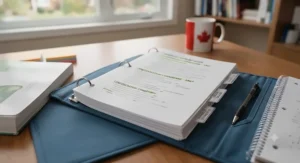
If you’ve ever highlighted a photocopied worksheet or a thin paperback novel and watched the ink soak straight through to the other side, the Zebra Mildliner Dual-Tip Highlighters solve exactly that headache. Each pen has a broad chisel tip on one end and a fine liner on the other, and the muted, low-saturation “mild” ink tones are specifically formulated to sit on top of the page rather than seep through it. What most buyers overlook about this set is that the dual-tip format effectively replaces two separate stationery purchases — a highlighter and a fine-tip pen — with one barrel, which is genuinely useful when your pencil case space is limited during an exam.
The gentle pastel colour palette isn’t just aesthetic preference; it also reduces the visual fatigue of staring at neon-bright pages for hours, something reviewers frequently mention when comparing it to harsher fluorescent alternatives. Based on the spec sheet, sets typically ship in packs of five to fifteen colours, giving Grade 11 and 12 students enough variety to separate multiple subjects without needing to buy several packs. The fine-tip end is genuinely useful for annotating in margins, labelling flashcard categories, or underlining key terms in a way a chisel-only highlighter simply can’t do.
Pros:
- ✅ Dual chisel and fine-tip design in a single pen
- ✅ Low-bleed ink formula for thin or glossy paper
- ✅ Muted colour palette reduces visual fatigue over long sessions
Cons:
- ❌ Pastel tones can look less vibrant than classic neon highlighters
- ❌ Fine-tip end dries out faster with frequent uncapping
Priced around C$18-C$25 for a mid-size set, the Zebra Mildliner Dual-Tip Highlighters are worth the slight premium if your study materials include a lot of thin-paper handouts or paperback novel studies.
3. Sharpie Tank Highlighters Value Pack — best bulk buy for exam season
Exam season is exactly when highlighters go missing, dry out, or get borrowed and never returned — which is why the Sharpie Tank Highlighters Value Pack, sold in large bulk counts of a dozen colours or more, earns its spot as the budget bulk option here. The chisel tip is smear-resistant, meaning it holds up reasonably well even if a classmate’s gel pen ink crosses paths with it, and the barrel design is chunkier than most competitors, which reduces hand fatigue during marathon study sessions. Reviewers consistently note that the smear resistance genuinely works on printed textbook pages, though it’s less reliable on handwritten notes done in certain gel inks.
Here’s what to weigh: this isn’t the highlighter you buy for a refined colour-coding aesthetic — it’s the one you buy so that every member of a study group, or every subject binder in your bag, has its own dedicated highlighter without anyone stressing about losing a C$20 pen. The sheer volume per pack (often 24 to 36 highlighters) means the effective cost-per-pen is lower than almost anything else in this roundup, which matters for families managing exam prep supplies for high school students across more than one kid.
Pros:
- ✅ Large bulk counts reduce cost-per-highlighter significantly
- ✅ Smear-resistant chisel tip works well on printed pages
- ✅ Chunky barrel design reduces hand fatigue in long sessions
Cons:
- ❌ Colour range is more limited than premium alternatives
- ❌ Ink can smear over certain gel pen inks in handwritten notes
At roughly C$20-C$28 for a full value pack, the cost-per-unit puts the Sharpie Tank Highlighters Value Pack well ahead of premium single-purchase highlighters for anyone stocking up before a full exam block.
4. Oxford Ruled Index Cards with Reusable Storage Tray — best all-in-one flashcard system
Flashcards are one of the most research-backed study tools out there, and the Oxford Ruled Index Cards with Reusable Storage Tray turns a loose stack of paper into an actual retrieval-practice system. The set typically ships with 300 or more 3-by-5-inch cards and a hard plastic tray with alphabetical or subject dividers, which solves the single biggest complaint about flashcards: losing a quarter of the deck in your backpack by week two. The lined front and blank back format gives students room for a clear question-and-answer split, which supports the kind of active recall that cognitive psychology research consistently ties to stronger exam performance.
Based on the spec comparison with loose card packs, the tray is really the differentiator here — it turns flashcards into something you can actually flip through on a bus or between classes without cards scattering everywhere. Aggregated review sentiment suggests students particularly like using the divider tabs to separate subjects (biology terms in one section, French vocabulary in another), which turns a single box into a full-semester study system rather than a one-test tool. What the spec sheet won’t tell you, but reviewers note, is that the standard weight paper holds up fine to daily flipping but does eventually soften at the corners with heavy year-long use.
Pros:
- ✅ Storage tray keeps large decks organised by subject
- ✅ Lined front and blank back supports clean Q&A formatting
- ✅ 300+ cards per pack lasts most students a full semester
Cons:
- ❌ Standard paper weight softens with very heavy daily use
- ❌ Tray adds bulk compared to a simple rubber-banded stack
Around C$12-C$18, the Oxford Ruled Index Cards with Reusable Storage Tray offer strong value for students who want a genuine flashcard system rather than a loose pile of cards.
5. Amazon Basics Ruled Index Flash Cards — best budget bulk flashcard pack
Not every student needs a tray and dividers — sometimes you just need a large volume of flashcards for a specific exam cram, and the Amazon Basics Ruled Index Flash Cards deliver exactly that at a lower price point. The set usually includes around 300 cards in bright neon assorted colours, which turns out to be more functionally useful than it sounds: colour-sorting cards by subject or unit is a lot faster than digging through a single-colour deck looking for a specific topic tab. The ruled format on one side keeps handwriting neat for longer answers, which matters for subjects like history or English where flashcards often need more than a single word.
Here’s what most buyers overlook: because these ship without a tray, students often end up using a simple binder clip, elastic band, or repurposed shoebox — which sounds like a downside but actually keeps the whole flashcard kit lighter and easier to toss in a bag pocket. Reviewers frequently mention the card stock is a touch thinner than the premium Oxford alternative, so it’s genuinely a better fit for a single exam season than a full year of daily flipping.
Pros:
- ✅ Lower price point than tray-based flashcard systems
- ✅ Neon colour assortment makes subject sorting fast
- ✅ Ruled side keeps longer answers legible
Cons:
- ❌ No storage tray included, so cards can scatter
- ❌ Thinner card stock than premium tray-based alternatives
At around C$8-C$12, the Amazon Basics Ruled Index Flash Cards are the pick for students who want flashcard volume without the added cost of a storage system.
6. Post-it Flags Combo Pack — best tabs for textbook annotation
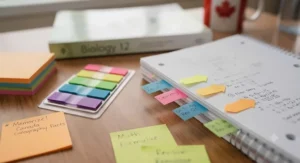
Highlighting an entire page is one thing, but flagging the exact page you need to find again during a timed review session is a different skill entirely, and the Post-it Flags Combo Pack is built for that job. The pack typically bundles both narrow and wide flag sizes across several colours in a pop-up dispenser, which dispenses one tab at a time so you’re not fumbling with a sticky sheet mid-study session. The writable surface takes pen, pencil, or highlighter ink, meaning each flag can double as a mini label — “test question type,” “essay thesis example,” “formula I keep forgetting” — rather than just a blank colour marker.
What the spec sheet won’t tell you, but reviewers note, is how useful these flags are specifically for open-book components of exams or for research-based assignments where you need to relocate a specific paragraph fast. Because the tabs are repositionable rather than permanently sticky, they can be pulled off and reused across different textbooks or notebooks throughout the year, which stretches the value of a single combo pack considerably further than a one-use product.
Pros:
- ✅ Writable surface turns tabs into mini labels
- ✅ Repositionable adhesive works across multiple textbooks
- ✅ Pop-up dispenser prevents tabs from sticking together
Cons:
- ❌ Smaller flag sizes can be fiddly for students with larger handwriting
- ❌ Combo packs cost more per tab than single-size refill packs
At around C$10-C$15, the Post-it Flags Combo Pack earns its keep in almost any exam prep kit for Grade 12 students juggling multiple dense textbooks at once.
7. Blue Sky Weekly & Monthly Academic Planner — best planner for tracking exam deadlines
None of the highlighters or flashcards above matter much if a student loses track of when the actual exam is, which is exactly the gap the Blue Sky Weekly & Monthly Academic Planner fills. Running on the academic calendar (July through June rather than January through December), it includes both monthly overview spreads and weekly lined pages, with laminated tabs that make flipping to a specific month fast during a chaotic morning. The monthly view is where most students plot exam dates as soon as they’re announced, while the weekly spread becomes the actual day-to-day study schedule — a distinction that matters because cramming everything into a single view tends to make deadlines blur together.
Based on the spec comparison with basic notebook-style planners, the laminated tabs and flexible wirebound spine are what separate this from a plain notepad: it lies flat on a desk during a study session, which sounds minor until you’ve tried to write in a stiff hardcover planner balanced on your knee. Reviewers consistently mention that the ample lined space in the weekly section is generous enough for both class assignments and personal study blocks, which matters for a Grade 12 student for whom a student planner for exams needs to track coursework, part-time work shifts, and revision time simultaneously.
Pros:
- ✅ Academic-year calendar (July-June) matches the actual school year
- ✅ Laminated tabs make month navigation fast
- ✅ Wirebound spine lies flat for easier writing during study sessions
Cons:
- ❌ Larger 8.5-by-11-inch format doesn’t fit every backpack pocket
- ❌ No built-in habit tracker or grade calculator some students want
At roughly C$18-C$28, the Blue Sky Weekly & Monthly Academic Planner is a reasonable mid-range investment for any student whose exam prep supplies for high school students currently amount to sticky notes stuck to a bedroom mirror.
Building the Ultimate Exam Prep Kit for Grade 12 Students
Grade 12 is a different beast than earlier high school years — you’re juggling final exams, university or college applications, and often a part-time job, all at once. An exam prep kit for Grade 12 students needs to be genuinely portable, because most of the actual studying happens in fifteen-minute pockets between classes, shifts, and commutes rather than in one long weekend session.
Picture three different students. First, there’s the AP-track student carrying five subjects at once, who leans hardest on the Oxford Ruled Index Cards with Reusable Storage Tray to keep chemistry formulas, historical dates, and French vocabulary from blurring into one indistinguishable pile. Second, there’s the budget-conscious student working weekends at a part-time job, for whom the Amazon Basics Ruled Index Flash Cards paired with the Sharpie Tank Highlighters Value Pack delivers nearly identical study value at a fraction of the cost. Third, there’s the student managing five overlapping deadlines — coursework, a part-time job schedule, and OSSLT prep — who genuinely can’t function without the Blue Sky Weekly & Monthly Academic Planner anchoring the whole week.
What ties all three profiles together is portability and colour-coding consistency: pick one highlighter colour per subject and stick with it across your entire binder, flashcard deck, and planner notes, so your brain builds fast pattern recognition rather than re-learning a colour system every week.
Study Tools for the Ontario OSSLT Exam
For Ontario students specifically, study tools for the Ontario OSSLT exam look a little different than general exam prep, because the OSSLT tests reading comprehension and writing conventions rather than memorized formulas or dates. According to Wikipedia’s summary of the test, students must produce several pieces of writing — including summaries, opinion pieces, and news reports — which means flashcards work differently here than they would for a science exam.
Rather than fact-based flashcards, OSSLT-focused students tend to get more mileage from the Zebra Mildliner Dual-Tip Highlighters, used to colour-code practice reading passages by main idea, supporting detail, and tone — a technique that mirrors exactly what the test is scoring. The Post-it Flags Combo Pack is genuinely useful here too, flagging transition words and topic sentences across practice passages so students build pattern recognition for how “official” writing is structured. Because the OSSLT is offered at set points in the school year, the Blue Sky Weekly & Monthly Academic Planner helps students carve out short, regular fifteen-minute reading practice blocks in the weeks leading up to test day, rather than cramming reading comprehension the night before — a skill that, unlike memorized content, genuinely does not respond well to last-minute cramming.
Practical Usage Guide: Setting Up a Study Stationery System That Actually Works
Buying the right exam prep supplies for high school students is only half the job — setting them up properly is what actually makes them useful. Start by assigning one highlighter colour per subject and writing that colour-key inside the front cover of your planner, so you never have to guess what pink versus green means three weeks later. Next, load your flashcard tray with dividers labelled by unit rather than by date, since units get reviewed repeatedly while dates become irrelevant after the test passes.
CBC’s science reporting on study habits points out that repeated retrieval — testing yourself instead of just rereading — both strengthens memory and reduces stress, which is exactly what a flashcard tray is designed to support. A common first-30-days mistake is over-highlighting — marking so much of a page that nothing stands out anymore. Aim to highlight less than 20% of any given page; if more than a fifth of it is coloured, you’re not identifying key information, you’re just recolouring the whole page. Set a weekly five-minute maintenance ritual: flip through your flashcard tray and pull any cards you’ve gotten right three times in a row, moving them to a “mastered” section so your active deck stays focused on material you actually still need to review. Finally, block out a recurring fifteen-minute slot in your planner every Sunday to preview the coming week’s exam and assignment deadlines — this single habit prevents more last-minute panic than any single stationery purchase ever will.
How to Choose Study Stationery in Canada
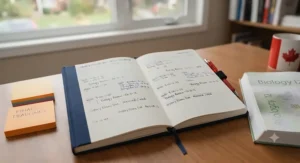
Choosing study stationery in Canada comes down to matching supplies to your actual study habits rather than buying whatever looks aesthetically pleasing online. Here’s a straightforward framework:
- Match highlighter ink to your paper type. Thin photocopies and paperbacks need low-bleed formulas like the Zebra Mildliner Dual-Tip Highlighters; sturdier textbook pages tolerate standard liquid ink fine.
- Buy flashcards in bulk if you’re covering multiple subjects. A single 100-card pack disappears fast once you’re studying four or five courses simultaneously.
- Prioritize a planner that matches the academic calendar, not the standard January-December calendar, since most of your deadlines fall mid-year.
- Consider portability over aesthetics. A flashcard tray that doesn’t fit your backpack pocket won’t get used, no matter how nice it looks.
- Buy in bulk for shared households. If more than one sibling is studying, bulk packs like the Sharpie Tank Highlighters Value Pack cut cost-per-unit significantly.
- Test one product before committing to a full system. Buy a single pack of flashcards or one highlighter set before building an entire colour-coded system around a brand you haven’t actually tried.
- Factor in Canadian winter humidity and heating. Dry indoor heat during exam season (typically January and June) can dry out cheaper highlighters faster, which is where anti-dry-out technology in premium pens earns its keep.
Common Mistakes When Buying Exam Season Supplies
The most common mistake with exam season supplies is buying everything at once, right before the exam, instead of building a system gradually across the semester. This leads to unopened flashcard packs and highlighters that dry out from disuse before they’re ever needed for their intended purpose. A second frequent error is choosing supplies based on colour or design trends rather than function — a beautifully packaged flashcard set with a flimsy card stock will fall apart faster than a plain-looking but sturdier alternative like the Oxford Ruled Index Cards with Reusable Storage Tray.
A third mistake is underestimating volume needs. Students frequently buy a single 100-card flashcard pack expecting it to last an entire exam season across four subjects, then run out with two weeks left. Buying a bulk option like the Amazon Basics Ruled Index Flash Cards upfront avoids a stressful last-minute reorder during the exact week you can least afford the distraction. Finally, many students skip a planner entirely, assuming their phone calendar covers it — but reviewers and school mental health resources consistently note that writing deadlines by hand improves recall of those same deadlines, which is exactly why a physical planner still earns a spot in a modern exam prep kit.
Highlighters and Flashcards vs Digital Study Apps
The honest comparison between highlighters and flashcards versus digital study apps isn’t as one-sided as either camp likes to claim. Digital flashcard apps offer spaced-repetition algorithms that automatically resurface material you’re forgetting, which is a genuine advantage over a static paper deck. However, physical flashcards and highlighted notes force a slower, more deliberate engagement with material — you have to physically write the question and answer, which research on handwritten note-taking consistently ties to stronger initial encoding of information.
| Approach | Setup Effort | Cost Over Time | Best For |
|---|---|---|---|
| Paper flashcards & highlighters | Low, immediate | One-time purchase | Deep, deliberate review sessions |
| Digital apps | Moderate, account setup | Often subscription-based | Quick reviews, automated repetition |
The takeaway from the table above is that most students benefit from a hybrid approach: use the Oxford Ruled Index Cards with Reusable Storage Tray for deep first-pass learning of new material, then transfer weaker cards into a digital app for spaced repetition in the final week. Relying entirely on one method tends to leave a gap — paper alone can get disorganised over a full semester, while apps alone can create a false sense of mastery if you’re just tapping “easy” without genuinely testing recall.
What to Expect: Real-World Performance
On paper, a highlighter is a highlighter — but real-world performance varies more than the packaging suggests. Expect the Stabilo Boss Original Highlighters to genuinely last a full semester of daily use without drying out, based on the anti-dry-out cap technology, while a cheaper highlighter left capless overnight may be unusable by morning. Expect flashcard decks using the Oxford Ruled Index Cards with Reusable Storage Tray to hold their shape and stay legible through months of daily flipping, whereas thinner budget cards will start to soften and curl at the corners after heavy handling.
Expect the Post-it Flags Combo Pack to genuinely survive being repositioned across three or four different textbooks over a school year, rather than needing replacement after a single use. And expect a planner like the Blue Sky Weekly & Monthly Academic Planner to actually get used consistently only if you build the five-minute Sunday review habit described earlier — the best planner in the world sits blank on a shelf if it’s not paired with a consistent weekly ritual.
Features That Actually Matter (And Those That Don’t)
Marketing copy loves to highlight features that barely affect actual study outcomes. Scented highlighters, glitter ink, and novelty shapes are fun but functionally irrelevant to exam performance — they don’t improve recall or organisation in any measurable way. What genuinely matters: anti-dry-out technology (fewer wasted pens), low-bleed ink formulas (usable notes on both sides of thin paper), a physical storage system for flashcards (actual usage over time versus a pile that gets abandoned), and a planner calendar that matches the real academic year.
Colour count is a feature that matters less than it seems. Buyers often assume more colours automatically means a better highlighter set, but reviewers consistently note that most students settle into using just three or four colours consistently regardless of how many options the pack includes. A six-colour set like a basic Stabilo Boss Original Highlighters pack is functionally sufficient for the vast majority of students, and the extra colours in larger sets often go untouched.
Long-Term Cost & Maintenance: Total Value Over a School Year
Thinking about exam prep supplies for high school students purely by upfront sticker price misses the real picture, which is total cost of ownership across a full school year. A single Stabilo Boss Original Highlighters set at roughly C$15-C$22 that lasts a full year without drying out actually costs less per month of use than repeatedly replacing a C$5 highlighter pack every few weeks because the ink keeps drying out.
| Product | Typical Lifespan | Approx. Cost Per Semester |
|---|---|---|
| Stabilo Boss Original Highlighters | Full school year | Low (one-time purchase) |
| Sharpie Tank Highlighters Value Pack | One exam season, shared use | Low, spread across multiple users |
| Oxford Ruled Index Cards with Storage Tray | Full school year | Low-moderate |
| Blue Sky Weekly & Monthly Academic Planner | One academic year | Moderate, one-time |
The pattern here is consistent: durable, well-made supplies rarely cost dramatically more over a full year than cheaper alternatives that need repeat purchases. Maintenance is minimal across the board — cap highlighters properly, keep the flashcard tray closed to avoid card damage, and store the planner somewhere it won’t get crushed at the bottom of a backpack.
✨ Don’t Miss These Exclusive Deals!
🔍 Take your exam prep to the next level with these carefully selected school supplies. Click on any highlighted item to check current pricing and availability on amazon.ca. These tools will help you build genuine study habits your future self will thank you for!
Your Decision Framework: Picking the Right Student Planner for Exams
A student planner for exams should match how you actually think, not how a stationery aisle is merchandised. If you’re a visual thinker who needs to see the whole month before committing to a study schedule, prioritize a planner like the Blue Sky Weekly & Monthly Academic Planner with strong monthly overview pages. If you’re managing a part-time job alongside Grade 12 coursework, prioritize weekly pages with generous lined space over decorative monthly spreads, since your scheduling conflicts happen day to day, not month to month.
If your school follows a semester system with exams clustered in January and June, choose a planner running on the academic calendar rather than the standard calendar year, so you’re not flipping between two separate books. If budget is the main constraint, a simple spiral notebook divided into weekly sections can substitute reasonably well, though it lacks the pre-printed dates that make deadline-spotting faster in a dedicated academic planner. The simplest test: if you can’t picture yourself opening it every single day, it’s the wrong planner for you, regardless of how nice the cover looks.

FAQ
❓ What supplies do I need for exam prep as a high school student?
❓ How many highlighter colours should I actually use?
❓ Is a physical planner better than a phone calendar for exam prep?
❓ How do I study for the OSSLT specifically?
❓ Are cheap highlighters and flashcards good enough for exam season?
Conclusion
Building a solid kit of exam prep supplies for high school students doesn’t require an expensive haul from every stationery aisle in the store — it requires picking a few genuinely durable tools and actually using them consistently. Whether that’s the Stabilo Boss Original Highlighters for a colour-coding system that survives a full year, the Oxford Ruled Index Cards with Reusable Storage Tray for retrieval-practice flashcards, or the Blue Sky Weekly & Monthly Academic Planner for keeping every deadline visible at a glance, the right combination depends on your subjects, your budget, and honestly, how likely you are to actually open the planner every day.
Ontario students prepping for the OSSLT, Grade 12 students juggling five final exams, and anyone just trying to survive exam season without losing a single flashcard all benefit from the same underlying principle: pick tools that match how you actually study, set them up properly in the first week rather than the night before, and maintain the system with small five-minute check-ins rather than one overwhelming reorganisation. As School Mental Health Ontario notes, spacing out study sessions and reviewing material often in short bursts tends to beat marathon cramming sessions — and the right supplies make that kind of steady, spaced-out studying a lot easier to stick with.
✨ Ready to build your exam season kit? Check current prices and availability on amazon.ca before your next study session!
Recommended for You
- Nike vs Herschel Backpack for High School: 7 Picks (2026)
- 7 Best Backpacks for High School Students in 2026 (Canada)
- TI-84 vs TI-Nspire: 7 Best Picks for Canadian Students (2026)
Disclaimer: This article contains affiliate links. As an Amazon Associate, I earn from qualifying purchases. If you purchase products through these links, we may earn a small commission at no additional cost to you.
✨ Found this helpful? Share it with your friends! 💬🤗
