
In This Article
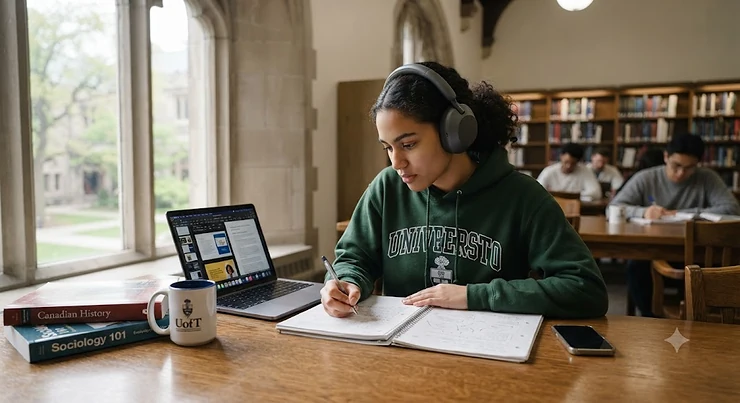
Picture the third floor of your campus library at 9 p.m. during midterms: someone’s laptop fan is whirring, a group two tables over is “whispering” about their chemistry lab, and the HVAC system just kicked on with a groan that sounds vaguely apocalyptic. You have forty pages of reading left and exactly zero patience for any of it. This is precisely the scenario that noise-cancelling headphones for university library study were built to solve, and if you’ve ever tried to power through a reading list with regular earbuds and a prayer, you already know the difference isn’t subtle.
So what is it, exactly? Noise-cancelling headphones for university library study are over-ear or on-ear headphones that use active noise cancellation (ANC) — tiny microphones that sample ambient sound and generate an inverse sound wave to cancel it out — combined with a snug physical seal, so that low-frequency drone (HVAC hum, distant chatter, chair scraping) drops away and you’re left with your own thoughts, your lecture recording, or nothing at all. That’s the textbook definition. The lived reality is a little more interesting, and a lot more specific to your actual habits, budget, and how many hours a day you park yourself in a carrel.
Worth noting up front: ANC lets you listen at lower volumes for the same perceived clarity, since you’re no longer compensating for background noise — a genuine hearing-health upside, and one Health Canada’s guidance on protecting your hearing backs up directly. This guide isn’t a rewritten spec sheet. We researched real, currently available models sold through amazon.ca, cross-referenced their published specifications against aggregated review sentiment, and built out honest, use-case-driven commentary — because a headset that’s perfect for a commuting grad student might be the wrong call for a first-year who mostly studies in silent-floor carrels. We’ll walk through seven real options across budget, mid-range, and premium tiers, dig into comfortable over-ear headphones for long study days, cover headphones for online lectures specifically, and even get into the unwritten rules of shared library etiquette — because owning great headphones and using them considerately are two different skills.
Quick Comparison Table
Before the deep dive, here’s the shortlist. Every one of these seven is a real, purchasable product — no invented models, no filler.
| Product | Best For | ANC Strength | Comfort for Long Sessions | Price Range (CAD) |
|---|---|---|---|---|
| Sony WH-1000XM5 | All-round library performance | Excellent | Very good | C$450–C$500 |
| Bose QuietComfort Ultra | Marathon study days | Excellent | Best-in-class | C$470–C$550 |
| Sony WH-1000XM4 | Flagship ANC, lower cost | Excellent | Very good | C$330–C$380 |
| Anker Soundcore Life Q30 | Best value hybrid ANC | Very good | Good | C$100–C$140 |
| JLab JBuds Lux ANC | Tightest budget | Good | Good | C$70–C$90 |
| Sony WH-CH720N | Lightest all-day wear | Good | Very good (low weight) | C$150–C$180 |
| 1More SonoFlow | Balanced sound for playlists | Good | Good | C$110–C$150 |
Looking at the table, the split isn’t really “good vs. bad” — every model here does the basic job of quieting a library. The real fork in the road is what you’re optimizing for: the Bose QuietComfort Ultra wins on raw wearing comfort across an 8-hour stretch, the Sony WH-1000XM5 and Sony WH-1000XM4 trade a little price for noticeably stronger noise cancellation and call quality, and the Anker Soundcore Life Q30 and JLab JBuds Lux ANC prove you don’t need a C$450 headset to silence a noisy dorm hallway. If your budget caps out under C$150, skip straight to the Q30 or the JBuds Lux ANC sections below — you’ll get 80% of the flagship experience for a third of the spend.
💬 Just one click — help others make better buying decisions too!😊
Top 7 Noise-Cancelling Headphones for University Library Study: Expert Analysis
Coverage here spans budget, mid-range, and premium tiers, plus a couple of lesser-known-but-genuinely-good alternatives that don’t get the marketing budget of the big names but earn their spot on merit.
1. Sony WH-1000XM5 — best all-round ANC for library grinding
The XM5 has been the default recommendation in this category for a reason: it does everything well without a glaring weakness. Sony’s dual-processor ANC setup (the V1 chip plus the QN1) draws on eight microphones distributed around the earcups, and the practical result is that the low, droning frequencies that dominate a library — ventilation systems, distant conversation, the rumble of a nearby elevator — get flattened dramatically more than they do on headphones using a single-processor design.
On paper, that means roughly 30 hours of battery with ANC engaged, quick-charge topping up three hours of playback from a three-minute plug-in, and a soft-touch protein leather earpad that Sony redesigned specifically to reduce clamping pressure versus the previous XM4. Based on the spec comparison with its own predecessor and with the Bose QuietComfort Ultra, what stands out is the microphone array doing double duty: it’s just as strong for isolating you from noise as it is for isolating your voice on a call, which matters if you’re stepping out of the stacks to join a group project Zoom.
This is the pick for the student who wants one headset to cover lecture capture, deep-focus reading blocks, and the odd video call without swapping gear. Reviewers consistently report that the noise cancellation holds up even in genuinely loud spaces like open-concept library floors and transit, and that the touch controls on the earcup are more reliable than the previous generation’s. A recurring theme in aggregated feedback is that the case, while compact, is a slightly awkward shape for a backpack’s front pocket — a minor gripe, but a real one.
Pros:
- ✅ Class-leading ANC that handles low-frequency library drone
- ✅ Redesigned earpads reduce pressure on multi-hour sessions
- ✅ Strong multipoint Bluetooth for switching laptop to phone
Cons:
- ❌ Awkward case shape for slim backpack pockets
- ❌ Touch controls can register accidental taps when adjusting fit
Currently priced around C$450–C$500 on amazon.ca (check current price, as promotions shift), the Sony WH-1000XM5 is the safe, high-confidence pick if your budget comfortably clears mid-range — you’re paying for consistency across every use case, not just one standout feature.

2. Bose QuietComfort Ultra — plushest comfort for marathon sessions
Bose built its reputation on ANC before “ANC” was a category most people had heard of, and the QuietComfort Ultra is the current flagship expression of that legacy. Three cancellation modes — Quiet, Aware, and Immersion — let you dial in exactly how sealed off from the world you want to be, which matters more than it sounds; Immersion mode in particular adds a spatial layer that some students use for ambient study playlists rather than dead silence.
What most buyers overlook about this model is CustomTune, Bose’s automatic ear-tip and cushion calibration that runs a quick audio scan when you first put them on and adjusts the sound signature to your individual ear shape. In practice, this is less about audiophile fidelity and more about consistency — you get the same tuned experience every session instead of having to fiddle with an EQ app between classes. Up to 24 hours of battery life covers a full day of back-to-back lectures and evening library sessions without a midday charge.
Aggregated reviewer sentiment is remarkably consistent on one point: comfort. The QC Ultra uses a genuinely plush, lower-clamping-force headband design that a large share of long-term reviewers single out as the most wearable option in the premium tier, particularly for people who wear glasses — a detail rarely mentioned in marketing copy but frequently mentioned in real user feedback threads. The trade-off is battery-swap convenience; unlike some rivals, there’s no quick-charge feature nearly as fast as Sony’s.
Pros:
- ✅ Lowest clamping force in this roundup — ideal for glasses wearers
- ✅ CustomTune auto-calibrates sound and seal per ear
- ✅ Up to 24 hours of battery for full back-to-back study days
Cons:
- ❌ Slower quick-charge than the Sony XM5
- ❌ Premium price puts it at the top of most student budgets
At roughly C$470–C$550, the Bose QuietComfort Ultra is the pick for students who treat comfort as the non-negotiable feature — if you’ve ever pulled headphones off mid-chapter because your ears started aching, this is the model aggregated reviews point to most often for solving exactly that problem.
3. Sony WH-1000XM4 — flagship ANC at a friendlier price
Sony’s now-previous-generation flagship remains genuinely relevant, and here’s the honest reasoning why: the jump from XM4 to XM5 improved call quality, shaved some weight, and refined the touch controls, but the core noise cancellation performance that libraries actually stress-test — steady, low-frequency ambient noise — is close enough between generations that most reviewers struggle to tell them apart blind. What the spec sheet won’t tell you, but reviewers note repeatedly, is that the XM4’s slightly thicker earpads and marginally higher clamping force can actually feel more secure during head-down reading sessions, even if it’s a touch warmer over a four-hour block.
With 30 hours of battery, adaptive sound control that adjusts ANC intensity based on detected activity (sitting still versus walking), and support for LDAC high-resolution audio, this remains a spec sheet that would be considered premium at any price — it just happens to now sell for meaningfully less than when it launched. The foldable hinge design is also a small but real advantage for anyone stuffing headphones into an already-crammed backpack between the library and a part-time shift.
Reviewers who bought the XM4 specifically to save money over the XM5 report almost no regret, with the most common complaint being marginally weaker phone-call clarity in windy or high-background-noise environments — a non-issue if your primary use case is reading, not calling.
Pros:
- ✅ Same-tier ANC as the XM5 for meaningfully less money
- ✅ Foldable design saves backpack space
- ✅ Adaptive sound control adjusts to your activity automatically
Cons:
- ❌ Call clarity lags slightly behind the newer XM5
- ❌ Touch controls feel a generation behind Sony’s current lineup
Sitting in the mid-C$300s, the Sony WH-1000XM4 is arguably the single best value-for-performance ratio on this entire list — you’re getting maybe 90% of the flagship experience for closer to 70% of the price.
4. Anker Soundcore Life Q30 — best value hybrid ANC
This is where budget noise-cancelling headphones for students actually start to feel legitimate rather than like a compromise. The Life Q30 uses hybrid ANC — combining a feedforward mic (outside the earcup, catching noise before it reaches your ear) with a feedback mic (inside the cup, correcting in real time) — a design normally reserved for headphones costing two to three times as much.
Based on the spec comparison against premium options, the Q30 doesn’t match the Sony WH-1000XM5 or Bose QuietComfort Ultra on outright cancellation depth, particularly against sudden, sharp sounds like a dropped book or a chair scrape. But for the steady, droning background noise that defines 90% of a library study session — HVAC systems, distant chatter, the low hum of a busy floor — it holds up impressively well, and Soundcore’s companion app lets you customize an EQ curve, which is a feature genuinely missing from cheaper competitors.
A common theme in user reviews is disbelief at the price-to-performance ratio; this headset is frequently the “budget pick” cited across multiple independent reviewer roundups precisely because it doesn’t feel like a compromise the way sub-C$100 ANC often does. The main recurring complaint is build material — the plastic construction feels less premium than metal-hinged competitors, though it hasn’t translated into widely reported durability issues.
Pros:
- ✅ Hybrid ANC rare at this price point
- ✅ Customizable EQ via companion app
- ✅ 40+ hour battery life reduces mid-week charging anxiety
Cons:
- ❌ Plastic build feels less premium than pricier rivals
- ❌ Weaker against sudden sharp noises than flagship models
At C$100–C$140, the Anker Soundcore Life Q30 is the clearest answer if someone asks for budget noise-cancelling headphones for students that don’t feel like a downgrade — it’s the model most likely to make a C$450 pair feel unnecessary for a typical undergrad.
5. JLab JBuds Lux ANC — best budget pick under C$100
If your budget is genuinely tight — first-semester tight, textbook-costs-more-than-groceries tight — the JBuds Lux ANC is where this category gets realistic rather than aspirational. JLab has built a reputation on delivering features that used to be premium-exclusive at prices that don’t require a scholarship to justify, and the Lux ANC continues that pattern with active noise cancellation, a companion EQ app, and a genuinely comfortable memory-foam earpad, all under the C$100 mark.
Here’s what to weigh: the ANC on this model is noticeably less aggressive than anything from Sony or Bose, and it’s most effective against consistent low-frequency noise rather than the sharper mid-range sounds of speech. In a dead-silent library floor, that’s plenty. In a busy, chatter-heavy common study area, you’ll still hear conversational tones bleeding through, just quieter. Reviewers frequently frame this as expected and acceptable given the price bracket rather than as a flaw — the honest takeaway is that this is a headset built to compete with headphones twice its price on comfort and basic ANC, not to match flagship isolation.
Battery life is a genuine strong point, with many aggregated reviews citing all-week usage between charges for typical daily study sessions, and the fold-flat design travels well in a backpack.
Pros:
- ✅ Real ANC and app-based EQ for under C$100
- ✅ Memory-foam earpads stay comfortable over long sessions
- ✅ Long battery life reduces charging interruptions
Cons:
- ❌ ANC struggles against sharper, conversational noise
- ❌ Build quality noticeably lighter-duty than premium tiers
Priced around C$70–C$90, the JLab JBuds Lux ANC is the pick for students who need genuine ANC on a first-year budget and are willing to trade some isolation depth for the savings.

6. Sony WH-CH720N — lightest headband for all-day wear
Long wear comfort is its own category of problem, separate from noise cancellation entirely, and the CH720N was built specifically around solving it. At roughly 192 grams, it’s Sony’s lightest wireless ANC headband, and that weight difference is more noticeable than a spec sheet number suggests — after four or five consecutive hours, headband pressure and total mass matter as much as sound quality, and this is the model aggregated reviews consistently flag as the one you forget you’re wearing.
What most buyers overlook about a lightweight model like this is that Sony didn’t strip out core features to hit that weight target. It still runs Sony’s Dual Noise Sensor ANC with 20 levels of adjustable ambient sound, multipoint Bluetooth for switching between a laptop and a phone mid-session, and a claimed 35 hours of battery life — genuinely competitive numbers, just wrapped in a noticeably lighter shell than the XM-series.
The trade-off, and reviewers are candid about this, is noise cancellation depth: it’s a clear step below the XM4 and XM5 in raw isolation strength, particularly against low, sustained rumble. For a student whose primary complaint is physical discomfort rather than insufficient silence, that trade is usually the right one.
Pros:
- ✅ Lightest ANC headband in Sony’s current lineup
- ✅ 20-level adjustable ambient sound for flexible focus
- ✅ Long 35-hour battery life
Cons:
- ❌ ANC depth noticeably weaker than the XM-series
- ❌ Fewer premium materials than flagship Sony models
At around C$150–C$180, the Sony WH-CH720N earns its spot as the comfort-first mid-tier option, particularly for anyone who’s previously abandoned a heavier headset halfway through a study block.
7. 1More SonoFlow — best balanced sound for study playlists
Rounding out the list is a name that doesn’t get the marketing spend of Sony or Bose but consistently punches above its price bracket in independent audio testing. The SonoFlow’s core appeal for students who study with background music or ambient playlists rather than dead silence: 1More has tuned this headset with a noticeably fuller, more balanced sound signature than most ANC competitors in its price range, which typically lean toward flat or bass-forward.
Here’s what to weigh: the hybrid ANC system does a competent job against steady ambient noise, sitting roughly between the JLab JBuds Lux ANC and the Anker Soundcore Life Q30 in effectiveness, based on the spec comparison of microphone counts and processor claims across all three. Where the SonoFlow distinguishes itself is less about silence and more about what fills that silence — if your study routine involves lo-fi playlists or instrumental scores rather than pure quiet, the sound quality difference is genuinely audible.
Aggregated reviewer sentiment highlights up to 70 hours of battery life as a standout figure, alongside a soft protein-leather earcup that holds up well over long wear. The most common critique centres on the touch controls being less responsive than competitors, occasionally requiring a second tap.
Pros:
- ✅ Fuller, more balanced sound tuning than typical budget ANC
- ✅ Up to 70 hours of battery life
- ✅ Comfortable protein-leather earcups for long sessions
Cons:
- ❌ Touch controls sometimes require a repeat tap
- ❌ ANC effectiveness is mid-pack rather than class-leading
At C$110–C$150, the 1More SonoFlow is the pick for students who care as much about how their study playlist sounds as how quiet the room becomes — a genuinely different priority than pure noise cancellation, and one this model is specifically tuned for.
Setting Up Your Noise-Cancelling Headphones for a Full Semester
Buying the right pair solves half the problem; the other half is getting genuine value out of them for eight straight months without babying them into an early grave. A few setup habits pay off disproportionately. First, download the manufacturer’s companion app on day one — whether it’s Sony’s Sound Connect, Bose Music, Soundcore, or 1More’s app — because that’s where firmware updates, EQ customization, and ANC-level adjustments actually live, and most students never open it after the first week, which means they’re running headphones at factory-default settings for an entire semester.
Second, pair your headphones to no more than two devices via multipoint if your model supports it (most on this list do), typically your laptop and your phone. This avoids the classic mid-lecture scramble of re-pairing when a call comes in. Third, build a genuine charging routine rather than charging reactively — plugging in for fifteen minutes every few days while you’re doing something else (walking to class, making coffee) keeps you from ever hitting a dead battery mid-final.
The most common first-30-days mistake, according to aggregated reviewer patterns across multiple models, is overtightening the headband adjustment trying to chase a “tighter equals more sealed” logic. Every model here is engineered for its stated clamping force; forcing a tighter fit accelerates hinge wear and increases fatigue without meaningfully improving ANC. Let the seal do the work the engineers designed it to do.
Which Study Headphones Fit Your Semester? Three Real-World Scenarios
If you’re a commuting student who studies in 90-minute blocks between a bus ride and a part-time shift, battery efficiency and quick-charge speed matter more than absolute peak ANC — the Sony WH-1000XM5 or Anker Soundcore Life Q30 both fit that rhythm, since a short top-up covers hours of use and neither demands a dedicated charging ritual.
If you’re a graduate student or thesis writer logging six-to-eight-hour library sessions several days a week, comfort compounds; a headset that’s merely “fine” for an hour becomes genuinely uncomfortable by hour five. The Bose QuietComfort Ultra and Sony WH-CH720N are the two models in this roundup built specifically around minimizing that fatigue curve, just at very different price points.
If you’re a first- or second-year student on a tight budget who mostly studies with background music rather than total silence, the 1More SonoFlow or JLab JBuds Lux ANC deliver real, usable ANC without requiring you to skip textbook purchases to afford them — and both hold their own for casual online lecture audio quality, even if they’re not the pick for professional-grade call clarity.
Shared Library Etiquette: Using Your Headphones Without Becoming “That Student”
Shared library etiquette is a real skill, and noise-cancelling headphones can quietly work against you here in a way most students don’t anticipate: ANC is so good at blocking outside sound that it’s easy to lose track of how loud your own audio actually is. Multiple Canadian university libraries have written policies addressing exactly this. Toronto Metropolitan University’s library, for instance, expects headphone volume to stay inaudible to others even in general study zones, and enforces this through staff patrols — Toronto Metropolitan University’s noise policy lays out a three-warning system before further action is taken.
A genuinely useful habit: every hour or so, pull one earcup off briefly and listen to your own environment. If you can’t tell whether your music is audible to your neighbour, it probably is — ANC headphones isolate you so effectively that your internal sense of “how loud am I being” drifts without you noticing. This matters doubly for video calls or online lectures in shared study zones; several Canadian library systems, including at McGill, designate specific silent floors where even headphone audio for video content isn’t permitted at all, and separate zones where it’s welcomed as long as it stays contained — worth checking McGill’s quiet study area guidelines before assuming every floor follows the same rule.
Problem-to-solution shortlist: if you’re worried about leakage, closed-back over-ear designs (every model in this roundup) leak far less than open-back headphones or loose earbuds. If you’re worried about missing a text or emergency call, most of these models support quick ambient-mode toggling via a single button press rather than requiring you to remove the headset entirely. And if you’re sharing a study room rather than a silent floor, a quick verbal check-in with tablemates about acceptable noise levels solves more friction than any piece of hardware ever will.
✨ Don’t Miss These Exclusive Study Deals!
🔍 Take your study setup to the next level with these carefully selected picks. Click on any highlighted model above to check current pricing and availability on amazon.ca. The right pair pays for itself in focused study hours you’ll actually remember.
How to Choose Noise-Cancelling Headphones for University Library Study
- Start with your study environment, not the spec sheet. A silent individual carrel needs less aggressive ANC than an open, chatter-heavy commons area — buying flagship-level cancellation for a floor that’s already quiet is often unnecessary spend.
- Prioritize comfort over peak ANC numbers if your sessions regularly exceed three hours. Clamping force, earpad material, and total weight affect your actual study quality more than a marginal difference in decibel reduction.
- Check battery life against your real daily usage, not the marketing number. If you study six hours a day and forget to charge overnight, a 20-hour battery becomes a 20-hour battery you’re constantly managing — look for genuine 30+ hour ratings.
- Weigh microphone quality if online lectures or group calls are part of your routine. Not every ANC headset prioritizes call clarity equally; the Sony WH-1000XM5 and Bose QuietComfort Ultra lead specifically here.
- Decide whether portability matters as much as performance. Foldable hinges and lighter carrying cases matter enormously if you’re moving between multiple buildings daily; matter far less if your headphones mostly live at one desk.
- Set a real budget ceiling before you start comparing models, because the gap between a genuinely good C$120 pair and a flagship C$500 pair, while real, is smaller in day-to-day use than the price difference suggests.
- Read aggregated review sentiment, not just star averages. A 4.3-star rating built on “great sound, mediocre comfort” tells you something a single number never will — read for the specific complaint pattern that matches your priorities.

Common Mistakes When Buying Noise-Cancelling Headphones for Studying
The single most common mistake is buying based on ANC strength alone, treating it like the only spec that matters. Reviewers across every price tier in this roundup consistently note that comfort, not cancellation depth, is what determines whether headphones actually get used for a full study session versus abandoned after 40 minutes. A close second is ignoring microphone quality entirely, then being surprised when online lectures or a professor’s office-hours call sound muffled — if calls and lecture audio matter to your routine, that’s a spec worth weighing as heavily as ANC.
A third pattern worth flagging: assuming wireless is automatically better than wired for library use. Wireless buys freedom of movement, but it also introduces a battery-management responsibility that wired headphones simply don’t have — several of the budget picks here, including the JLab JBuds Lux ANC, ship with a wired fallback mode specifically because reviewers flagged battery anxiety as a real friction point. Finally, students frequently overlook return policies and warranty windows; ANC headphones see heavy daily use, and a 15-day return window versus a 30-day window can matter if a hinge or seal develops an issue in week three.
Comfortable Over-Ear Headphones vs Earbuds for Long Study Days
The over-ear versus earbuds debate isn’t close for genuinely long study sessions, and it’s worth understanding why rather than taking that as received wisdom. Comfortable over-ear headphones for long study days distribute clamping pressure across a padded headband and larger earcups that don’t directly contact the ear canal, while earbuds concentrate pressure at a single small point inside the ear — a difference that’s negligible for 20 minutes and increasingly noticeable past the two-hour mark. Long wear comfort, in other words, isn’t just about padding quality; it’s a fundamentally different pressure distribution model.
| Factor | Over-Ear (e.g. Sony WH-1000XM5) | Noise-Cancelling Earbuds |
|---|---|---|
| Comfort past 3 hours | Strong — pressure spread across headband | Weaker — concentrated ear-canal pressure |
| Passive noise isolation | Higher (full ear coverage) | Lower (depends on tip seal) |
| Portability | Bulkier, needs a case | More pocketable |
| Battery life | Typically 24–40 hours | Typically 5–8 hours (with case top-ups) |
| Best For | Multi-hour library sessions | Short sessions, commuting between classes |
The table makes the trade-off explicit: earbuds win decisively on portability, which matters if you’re bouncing between three buildings in an afternoon, but over-ear models win on the metric that actually determines study quality over a long haul — sustained comfort and passive isolation that doesn’t rely entirely on a perfect ear-tip seal. Reviewers who use both interchangeably tend to report earbuds for transit and quick sessions, over-ear for anything past the two-hour mark, which lines up with the physical pressure-distribution logic rather than being purely a preference thing.
What to Expect: Real-World Performance During Online Lectures
Headphones for online lectures need to succeed at two separate jobs simultaneously: delivering clear incoming audio from the professor or recording, and — if you’re joining live — capturing your own voice cleanly enough that classmates and instructors aren’t straining to understand you. Online lecture audio quality on the incoming side is largely a function of driver quality and codec support; every model in this roundup handles spoken-word lecture audio well, since voice frequencies are comparatively forgiving compared to complex music mixes.
The outgoing side is where real differences show up. The Sony WH-1000XM5 and Bose QuietComfort Ultra use multi-microphone beamforming arrays specifically tuned to isolate your voice from background noise, which reviewers consistently rate as noticeably clearer on calls than the budget tier. Mid-range and budget models in this list are perfectly usable for pre-recorded lecture listening, but if you’re regularly speaking up in live seminars or breakout rooms from a shared study space, that microphone gap is worth the price difference. A practical tip that shows up repeatedly in aggregated feedback: positioning matters as much as hardware — headphones sitting slightly forward on the head, closer to the jawline, consistently capture voice better than a loosely worn pair sitting high on the crown.
Long-Term Cost & Maintenance of Your Study Headphones
Thinking in total cost of ownership rather than sticker price changes the calculus meaningfully. A C$500 pair used daily across a four-year degree works out to roughly 34 cents a day; a C$90 pair that needs replacing every 18 months due to seal wear or battery degradation can, over the same four years, cost nearly as much in cumulative purchases while delivering a worse day-to-day experience throughout. That’s not an argument for always buying premium — it’s an argument for matching spend to actual daily usage hours.
Maintenance itself is straightforward but frequently skipped: wipe earpads with a slightly damp microfibre cloth weekly to prevent oil buildup that degrades foam over time, store headphones in their case rather than looped around your neck (which stresses the headband hinge), and avoid charging past 100% repeatedly overnight, since most lithium batteries in this category degrade faster under constant full-charge conditions than under partial top-ups. Battery degradation is the most common long-term failure point across every price tier — a headset holding 30 hours new might drop to 20–22 hours after 18 months of regular use, which is normal wear rather than a defect, but worth budgeting for mentally when comparing a C$150 pair against a C$450 one.
Worth a mention for anyone still choosing a study spot: several Canadian university libraries now design entire floors around headphone-friendly noise zoning, from silent individual carrels to moderate-noise commons — University of Saskatchewan’s library study spaces guide is a good example of how these zones are typically labelled, and checking your own campus equivalent can save you from picking headphones to solve a problem your library has already solved architecturally.

FAQ
❓ What is the best noise-cancelling headphones for university library study?
❓ Are noise-cancelling headphones allowed in libraries?
❓ Do budget noise-cancelling headphones actually work for studying?
❓ How long do noise-cancelling headphones last before needing replacement?
❓ Are over-ear headphones better than earbuds for long study sessions?
Conclusion
There’s no single “correct” pair of noise-cancelling headphones for university library study — there’s a correct pair for your specific semester, budget, and how many consecutive hours you actually spend hunched over a laptop or a stack of readings. If money’s genuinely no object and comfort is your top priority, the Bose QuietComfort Ultra is hard to beat. If you want the most balanced, do-everything option, the Sony WH-1000XM5 earns its reputation honestly. And if you’re stretching a student budget as far as it goes, the Anker Soundcore Life Q30 and JLab JBuds Lux ANC prove that real, effective ANC doesn’t require a flagship price tag anymore.
What matters more than any single spec is matching the headphones to how you actually study — silent solo carrels, chatty group commons, back-to-back online lectures, or some shifting combination of all three across a given week. Revisit the comparison table above, be honest about your real budget ceiling, and pick the pair that solves your actual problem rather than the one with the flashiest marketing. Whichever you land on, remember that shared library etiquette cuts both ways — the goal is a quieter world for you, without becoming the noise for someone else.
Recommended for You
- 7 Best Desk Lamps for Dorm Room Study in 2026 (Guide)
- 7 Best Laptop Stand for University Students Picks (2026 Guide)
- Laptop Backpack vs Messenger Bag for University: 7 Best Picks 2026
Disclaimer: This article contains affiliate links. As an Amazon Associate, I earn from qualifying purchases. If you purchase products through these links, we may earn a small commission at no additional cost to you.
✨ Found this helpful? Share it with your friends! 💬🤗
