
In This Article
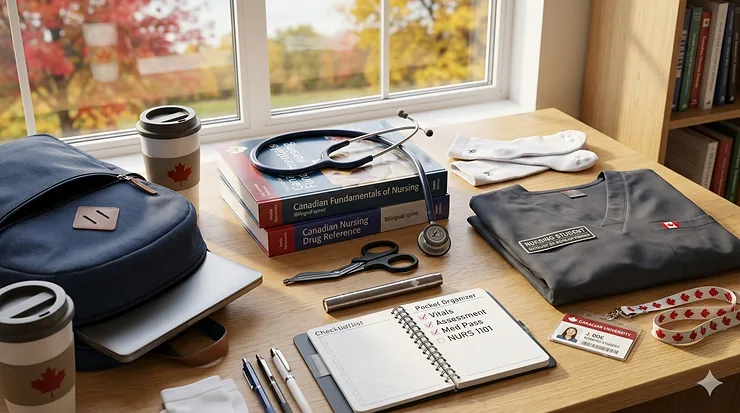
Starting your nursing journey across Canada’s healthcare system means more than just showing up with textbooks and good intentions. Whether you’re beginning at UBC, McGill, or anywhere in between, your first year demands tools that perform reliably during long clinical rotations, harsh Canadian winters, and the inevitable 6am hospital rounds. The Canadian Nurses Association (CNA) represents over 460,000 regulated nurses nationwide and sets professional standards that influence what equipment and skills you’ll need from day one. I’ve watched countless students arrive unprepared, scrambling to borrow equipment or worse, missing crucial learning opportunities because they didn’t invest in the right gear from day one.
The supplies you choose now will either support your success through anatomy labs, simulations, and those nerve-wracking first patient interactions, or they’ll frustrate you when clipboards don’t fit in scrub pockets, stethoscopes pick up too much background noise, or penlights die mid-assessment. Canadian nursing programs move fast, provincial regulations vary, and clinical placement expectations differ from coast to coast. This guide cuts through the marketing noise to focus on what first-year students actually use daily, backed by feedback from Canadian nursing programs and students who’ve survived their foundational year. Every product listed is verified available on Amazon.ca, priced in CAD, and evaluated for performance in real Canadian healthcare settings where winters are long and clinical days are longer.
Quick Comparison: Top Clinical Essentials
| Supply Type | Budget Option | Mid-Range Choice | Premium Pick | Best For |
|---|---|---|---|---|
| Stethoscope | Around $60-80 CAD | $120-160 CAD | $200-280 CAD | Cardiology rotations |
| Clinical Clipboard | $12-18 CAD | $20-30 CAD | $35-45 CAD | Pocket storage |
| Medical Scissors | $8-15 CAD | $18-25 CAD | $28-38 CAD | Daily clinical use |
| Penlight Set | $10-14 CAD | $16-22 CAD | $25-32 CAD | Pupil assessments |
| Anatomy Flashcards | $22-30 CAD | $35-48 CAD | $52-68 CAD | Visual learners |
| Nurse Watch | $15-22 CAD | $28-40 CAD | $45-65 CAD | Pulse tracking |
| Stethoscope Case | $18-25 CAD | $28-35 CAD | $40-52 CAD | Equipment protection |
💬 Just one click — help others make better buying decisions too!😊
Top 7 Nursing Student Supplies First Year: Expert Analysis
1. 3M Littmann Classic III Monitoring Stethoscope
The Littmann Classic III remains the gold standard for nursing students across Canadian programs, and for compelling reasons beyond brand recognition. This stethoscope delivers acoustic sensitivity that’s roughly twice as loud as competing models in the mid-range category, which translates directly to your ability to detect subtle lung crackles or heart abnormalities during clinical assessments. The dual-sided chestpiece switches between adult and paediatric modes with simple pressure adjustments rather than physically flipping the device, saving critical seconds during patient assessments.
In Canadian clinical settings where you’ll encounter everything from elderly patients with thick chest walls to paediatric cases, the tunable diaphragm technology proves invaluable. The 69 cm (27″) tube length provides comfortable reach without compromising sound quality, and the stainless steel chestpiece withstands repeated sanitization with hospital-grade disinfectants—crucial when you’re cleaning between patients during 12-hour shifts. Canadian students report that the non-chill bell sleeve is particularly appreciated during winter clinical placements when touching cold metal to patient skin can affect cooperation and comfort.
Customer feedback from Canadian nursing students consistently highlights the durability through four years of intensive use, the clarity of sounds even in noisy emergency departments, and the variety of colours that help prevent mix-ups in shared clinical spaces. The main complaints centre on the premium price point and occasional tubing that attracts lint.
Pros:
✅ Exceptional acoustic clarity for learning subtle sounds
✅ Durable construction survives years of daily clinical use
✅ Wide colour selection helps personalization and identification
Cons:
❌ Higher upfront investment in the $200-280 CAD range
❌ Tubing can attract hair and lint during long shifts
Price range: Around $200-280 CAD depending on finish and colour options. This represents serious value when you consider it’ll serve you from first-year fundamentals through advanced cardiology rotations and potentially your entire career. The investment pays dividends when your clinical instructors ask you to identify specific heart sounds, and you’re the student who actually hears them clearly.
2. WhiteCoat Clipboard Folding Aluminum
The WhiteCoat folding clipboard solves a problem every Canadian nursing student faces: where do you store a full-size clipboard during clinical rotations when scrub pockets are already stuffed with penlights, scissors, and your phone? This ingenious design folds to approximately 1.3 cm (half-inch) thickness, slipping easily into white coat pockets or the side pocket of your clinical bag without the bulk of traditional clipboards.
The lightweight aluminum construction means you’re not adding significant weight to already heavy clinical days, yet it’s rigid enough to provide a stable writing surface for documentation during bedside assessments or report handoffs. The clip securely holds 15-30 sheets without creasing—essential when you’re managing patient care plans, medication administration records, and clinical worksheets simultaneously. What nursing students particularly appreciate is the medical reference information printed on the back, including normal vital sign ranges and common medical abbreviations, serving as a quick-reference tool when you can’t immediately recall whether a BP of 138/88 requires intervention.
Canadian students who rotate through multiple hospital sites value how this clipboard adapts to different documentation systems. The durability impresses—students report using the same clipboard throughout their entire nursing program without structural failure. The personalization option with engraving helps prevent the common problem of clipboard theft in shared clinical spaces.
Pros:
✅ Folds to fit scrub pockets for hands-free portability
✅ Medical reference information eliminates constant phone checks
✅ Aluminum construction withstands drops and daily wear
Cons:
❌ Metal can feel cold to touch in winter clinical settings
❌ Slightly higher cost than standard plastic clipboards
Price range: Typically around $35-45 CAD on Amazon.ca. This pricing reflects the specialized design and durability—standard clipboards cost $10-15, but they don’t solve the portability problem that defines clinical nursing work. First-year students who invest here consistently report it’s one purchase they never regret.
3. RISEMART Medical Scissors 7.5″ Fluoride Coated
Medical scissors rank among the most frequently used tools during clinical rotations, yet many students underestimate the difference between budget and quality options until they’re struggling to cut through multiple layers of gauze or tape during their first dressing change. The RISEMART scissors feature fluoride-coated stainless steel blades that resist adhesive buildup from medical tape—a seemingly small detail that becomes critical when you’re cutting through layers of Tegaderm or cloth tape during wound care.
The 19 cm (7.5″) length hits the sweet spot for nursing applications: long enough for efficient cutting through bandages and clothing if needed during emergency situations, yet compact enough to carry in scrub pockets without causing discomfort during long shifts. The blunt tip design prevents accidental patient skin injuries when sliding scissors under bandages, a safety feature that matters tremendously during your first nervous attempts at removing dressings close to suture lines or fragile elderly skin.
These scissors withstand repeated autoclaving up to 143°C (290°F), meeting Canadian hospital sterilization standards. Canadian nursing students appreciate the included carabiner clip that attaches scissors to badge reels or scrub loops, preventing the common problem of misplacing them between patient rooms. The serrated edge provides extra cutting power for tougher materials without requiring excessive hand pressure.
Pros:
✅ Non-stick coating cuts through adhesive tape cleanly
✅ Autoclavable to hospital sterilization standards
✅ Blunt tips protect patient skin during bandage removal
Cons:
❌ Slightly heavier than ultra-budget options
❌ Black coating can show wear marks after extensive use
Price range: Around $18-25 CAD for a quality pair. While you can find scissors for $8-10, they typically lack the fluoride coating and durability. Invest here once rather than replacing cheap scissors multiple times throughout your program, and you’ll have a reliable tool that performs identically whether you’re in your first clinical or your final practicum.
4. CAVN LED Penlight with Pupil Gauge (2-Pack)
Pupil assessment represents one of the fundamental neurological checks nursing students perform countless times, yet it’s surprisingly easy to execute poorly without the right equipment. The CAVN penlight set provides two lights—critical because you will lose or misplace one during clinical rotations, guaranteed—and each features both a pupil gauge and 5cm ruler printed directly on the aluminum body.
The LED bulbs deliver bright, focused light necessary for accurate pupil reactions without the warm-up time of traditional penlight bulbs. This instant illumination matters when you’re assessing a patient’s neurological status where every second counts in detecting changes. The pocket clip design keeps penlights secured in scrub pockets or attached to badge reels, though Canadian students report the clip occasionally loosens with heavy use.
The pupil gauge markings (measured in millimetres) eliminate guesswork when documenting pupil size—instead of vaguely noting “pupils slightly dilated,” you can precisely document “pupils 5mm, reactive to light.” This precision impresses clinical instructors and contributes to more accurate patient records. The included ruler proves unexpectedly useful for measuring wound dimensions, drainage amounts, and other clinical measurements requiring quick reference.
Battery life runs approximately 20-30 hours of intermittent use before requiring replacement AAA batteries (not included). Canadian students suggest keeping spare batteries in your clinical bag since penlights inevitably die at the most inconvenient moments, like during a complex assessment your instructor is observing.
Pros:
✅ Pupil gauge and ruler provide measurement precision
✅ Two-pack ensures you have a backup during rotations
✅ LED technology delivers instant bright light
Cons:
❌ Batteries not included in package
❌ Pocket clip can loosen with repeated use
Price range: Around $12-16 CAD for the two-pack. This represents exceptional value—you’re essentially getting two complete assessment tools with measurement references built in. Many students purchase this set at the beginning of first year and the backup penlight remains unused in their bag throughout the entire program.
5. TribeRN Anatomy & Physiology Flashcards (320 Cards)
Anatomy and physiology forms the foundation of nursing practice, yet the volume of information overwhelms many first-year students transitioning from general sciences to healthcare-specific knowledge. These 320 flashcards break down complex body systems into manageable, colour-coded sections that align with typical Canadian nursing curriculum structure. Each card presents anatomical illustrations on one side with detailed explanations and mnemonics on the reverse, supporting active recall learning proven more effective than passive reading.
What sets these apart from generic anatomy flashcards is the nursing-focused context. Rather than simply labelling structures, the cards explain clinical significance: why nurses need to understand the cardiac conduction pathway, how respiratory anatomy affects oxygen therapy decisions, or why renal structure matters for medication administration. This contextual learning helps first-year students bridge the gap between textbook theory and practical bedside application.
The cards come pre-punched with an included ring, allowing you to organize them by upcoming exams, weak areas requiring review, or body systems you’re currently studying in lectures. Canadian students report using these extensively during commutes, between classes, and during study groups. The durable cardstock withstands repeated handling throughout entire programs without significant wear. The colour-coding system helps visual learners quickly locate specific systems, and covering over 1,800 anatomy and physiology terms ensures comprehensive coverage from cardiovascular through endocrine systems.
Pros:
✅ Nursing-specific clinical context connects theory to practice
✅ Colour-coded organization supports efficient studying
✅ Durable construction survives years of intensive use
Cons:
❌ Bulk of 320 cards requires dedicated storage space
❌ Higher price point than basic anatomy flashcards
Price range: Typically around $40-55 CAD on Amazon.ca. While you could purchase generic anatomy flashcards for $20-30, the nursing-focused clinical correlations in this set directly support your coursework and clinical decision-making in ways general anatomy cards cannot. Students consistently report that the investment pays off during both first-year anatomy exams and later when applying that knowledge during complex patient care situations.
6. BOSHIYA Nurse Watch with Second Hand
Accurate pulse counting requires a watch with a clearly visible second hand, yet many first-year students initially try using their smartphones or smartwatches before discovering why purpose-built nursing watches exist. The BOSHIYA watch features a 36mm dial with high-contrast markers and a bright red second hand that makes rapid pulse counting straightforward even in dimly lit patient rooms. Both 12-hour and 24-hour markings accommodate the military time used in Canadian hospital documentation.
The silicone band resists fluid absorption and cleans easily with alcohol wipes or soap and water—essential when you’re moving between patients and need to sanitize all surfaces regularly. Canadian nursing students particularly value the waterproof rating (30 metres) that protects the watch during frequent handwashing, though it’s not designed for submersion during bathing or swimming. The 140mm to 195mm (5.5″ to 7.7″) band adjustment range fits most wrist sizes comfortably.
The luminous feature allows time reading in low-light situations without disturbing patients during night shifts, though it requires prior light exposure to charge. The Japanese quartz movement maintains accuracy critical when you’re timing procedures, administering medications with specific intervals, or documenting events precisely. Multiple colour options let students match their personal preference while maintaining professional appearance standards.
Pros:
✅ Red second hand enables quick, accurate pulse counts
✅ Waterproof design withstands clinical handwashing routines
✅ Luminous dial supports low-light patient assessments
Cons:
❌ Requires light exposure for luminous function to work
❌ Silicone band may cause irritation during extended wear for sensitive skin
Price range: Around $28-40 CAD depending on colour selection. Traditional nursing fob watches cost similar amounts but hang from scrubs rather than securing to your wrist, and many students find the wrist-mounted design more practical during active patient care. This watch specifically addresses nursing workflow in ways consumer watches don’t, making it worth the modest premium over standard timepieces.
7. BOVKE Stethoscope Case with Divider
Investing $200-280 in a quality stethoscope deserves equal investment in protection. The BOVKE hard-shell case prevents the common damages that occur when stethoscopes live loose in clinical bags: bent tubing, cracked chestpieces, damaged earpieces, or broken diaphragms. The EVA construction provides water-resistant, shockproof protection crucial when you’re commuting through Canadian winter weather between home, campus, and clinical sites.
The interior design includes dedicated elastic straps specifically shaped to secure stethoscope components without forcing awkward positions that stress tubing. A middle divider with additional elastic holders accommodates penlights, scissors, and other small clinical tools, essentially creating a complete portable assessment toolkit. The mesh pocket stores spare earpieces, tubing, or other accessories. Canadian students appreciate how this organization means you’re always prepared for clinical, rather than discovering you forgot your penlight at home just as your shift begins.
External dimensions of approximately 28cm x 10cm x 6.8cm (11″ x 4.5″ x 2.7″) fit easily in backpacks or clinical bags without consuming excessive space, while the internal design maximizes usable storage. The zipper closure provides secure protection even when your bag tips over during transport. The wrist strap enables carrying the case independently, useful when you’re just running into hospital for a quick skills lab rather than bringing your entire bag.
Pros:
✅ Hard shell protection prevents expensive stethoscope damage
✅ Organized storage for multiple clinical assessment tools
✅ Water-resistant for Canadian weather protection
Cons:
❌ Adds bulk compared to carrying stethoscope loose
❌ Limited colour options may not suit all preferences
Price range: Around $20-30 CAD on Amazon.ca. This seems like an optional luxury until you witness another student’s $250 Littmann Cardiology IV crack when their backpack falls off a chair onto the hospital floor. The case costs roughly 10% of a replacement stethoscope, making it straightforward insurance that extends the life of your most expensive clinical tool.
Setting Up Your First Clinical Bag: A Practical Guide
Your clinical bag organization determines whether you spend your rotation fumbling for supplies or smoothly executing assessments. Start with a medium-sized messenger bag or backpack with multiple compartments—avoid tiny purses that can’t hold supplies or oversized bags that become cumbersome in tight patient rooms. Dedicate the main compartment to your stethoscope case, clipboard, and any textbooks or binders required for the rotation.
Create a “quick-access pocket” for frequently used items: penlights, scissors, and hand sanitizer should be immediately reachable without digging through your bag. Many Canadian students use small zipper pouches to group similar items—one for writing supplies (pens, highlighters, permanent markers for labelling), one for personal items (lip balm, hair ties, tampons), and one for snacks that won’t melt or leak in temperature fluctuations.
Pack backup supplies that save you mid-shift: spare penlight batteries, extra pens (yours will disappear constantly), bobby pins for hair management, adhesive bandages for the inevitable shoe blisters, and energy bars for rotations where meal breaks vanish during emergencies. In Canadian winter, add gloves and a compact umbrella since you’ll be commuting between buildings in all weather conditions.
Organization tip: Use a small notebook or index cards to jot down medication information, lab values, or procedures you encounter during clinical. This personal reference grows more valuable than any purchased guide because it contains exactly the information you’ve actually needed in practice. Review and consolidate these notes weekly to reinforce learning and build your personal clinical knowledge base that evolves with your experiences.
First Clinical Day Survival: What the Orientation Package Won’t Tell You
Your nursing program provides clinical orientation covering expectations, dress codes, and hospital policies, but they rarely mention the practical realities of your first patient care day. Arrive 20 minutes early—not to impress your instructor (though that helps), but because unfamiliar hospitals are confusing to navigate, parking takes longer than expected, and you need time to find the unit, locate the staff bathroom, and mentally prepare before your shift starts.
Eat a substantial breakfast with protein and complex carbohydrates, even if nerves suppress your appetite. The breakfast you skip at 6am becomes the headache and fatigue you’re fighting by 10am when you need to perform at your best. Pack a lunch that requires no refrigeration or heating, since break room access is unpredictable and meal breaks sometimes vanish entirely during busy clinical days. Peanut butter sandwiches, protein bars, nuts, and fruit all survive in clinical bags without spoiling.
Wear compression socks even if you think you don’t need them. Canadian nursing students consistently report that 12-hour clinical shifts on tile and concrete floors cause leg fatigue and swelling that compression socks significantly reduce. Your feet will still hurt, but less intensely. Keep a spare pair of shoes in your car—if your primary shoes cause problems during the first week, you have backups ready.
Bring all your supplies even if you suspect you won’t need everything. Better to have scissors in your pocket and not use them than to need them during a dressing change and have to borrow from a busy nurse who’s annoyed at the interruption. That said, leave valuables at home or secured in your car. Clinical environments involve entering multiple patient rooms, shared spaces, and chaos during emergencies. Expensive jewelry, electronics beyond your phone, and irreplaceable items risk loss or damage.
Mentally prepare for imperfection. You will make mistakes, forget information, and feel overwhelmed. Every nurse has survived identical experiences. Your instructors expect first-year performance levels—they’re evaluating effort, safety awareness, and willingness to learn, not expecting expert-level skills. The Canadian Nursing Students’ Association (CNSA) advocates for nursing students across all provinces and territories, reminding us that the challenges you face are shared by thousands of students nationwide. Ask questions, admit when you’re uncertain, and prioritize patient safety over trying to appear more competent than you actually are.
How to Choose Nursing Student Supplies First Year in Canada
Selecting appropriate clinical supplies requires balancing multiple factors: program requirements, personal preferences, budget constraints, and performance expectations. Begin by thoroughly reviewing your nursing school’s equipment list—most Canadian programs provide specific requirements including brand preferences or restrictions. Some schools mandate specific stethoscope models for standardized learning, while others allow individual choice within acoustic sensitivity parameters.
Research product reviews specifically from nursing students rather than general consumers. A stethoscope reviewed favorably by recreational users won’t necessarily meet the acoustic precision needed for clinical assessments. Focus on feedback addressing durability, ease of sanitization, performance in noisy environments, and comfort during extended wear. Canadian student reviews are particularly valuable since they address performance in our specific healthcare settings and climate conditions.
Consider your learning style when selecting study materials. Visual learners benefit more from illustrated anatomy flashcards and colour-coded reference materials, while text-oriented learners might prefer detailed written explanations without extensive imagery. Kinesthetic learners should seek products that enable active handling and manipulation, like three-dimensional anatomical models or interactive digital resources.
Budget realistically for both initial purchases and consumable supplies. Your first-year supply investment will run approximately $400-600 CAD for core clinical tools, with an additional $100-150 per term for consumables like pens, notebooks, hand lotion (constant handwashing destroys skin), and replacement batteries. Plan for this expense in advance rather than scrambling to purchase everything in the first week of classes when stress is already high.
Prioritize versatility and multi-use capability. A clipboard with built-in storage eliminates the need for separate organizers. Scissors that autoclave to hospital standards serve you from first-year fundamentals through advanced practice rotations. A mid-range stethoscope that performs well across multiple specialties proves more valuable than a budget model requiring replacement when you enter critical care rotations.
Don’t overlook fit and comfort for items you’ll wear or carry for hours. The cheapest nursing shoes that cause blisters after two hours cost you more in pain and reduced learning than comfortable shoes costing $30 extra. Stethoscope earpieces that don’t seal properly let ambient noise interfere with your assessments, potentially causing you to miss critical sounds. Invest in proper fit from the beginning.
Common Mistakes When Buying Nursing Student Supplies First Year
The most expensive mistake Canadian nursing students make is buying duplicate or incompatible items because they didn’t check program requirements first. Read the entire supply list before purchasing anything, then verify current requirements since lists occasionally update between academic years. Some students waste money on supplies their program specifically prohibits or duplicates what the school provides during lab sessions.
Another frequent error involves choosing the cheapest available option without considering long-term value. That $40 stethoscope seems like smart budgeting until you realize it doesn’t pick up the lung sounds your instructor asks you to identify, forcing you to replace it with a better model and essentially paying twice. Calculate total cost of ownership—a $200 stethoscope lasting eight years costs less than replacing a $60 stethoscope three times over the same period.
Many students initially over-purchase based on anxiety about being unprepared. You don’t need seven different types of penlights, four clipboards, or complete medical encyclopedias. Start with the essential core items, then add specialized supplies as you discover actual needs during clinical rotations. That elaborate organizational system you purchase might never get used if it doesn’t match how you actually work in clinical environments.
Ignoring Canadian climate considerations causes problems. Electronics and medical equipment stored in freezing vehicles between clinical days suffer battery degradation and material damage. Stethoscopes left in hot cars during summer develop sticky tubing. Plan for proper storage and transport protection appropriate to local weather conditions throughout the academic year.
Failing to personalize or identify equipment leads to loss. Your standard black stethoscope looks identical to twelve other student stethoscopes in the clinical area. Mark or personalize items with engraving, distinctive stethoscope charms, or coloured tape to enable quick identification. This small effort prevents both accidental mix-ups and intentional theft that unfortunately occurs in shared spaces.
Not testing supplies before critical use creates unnecessary stress. Open packages, ensure batteries work, verify equipment functions properly, and familiarize yourself with how items operate before your first clinical day. Discovering your brand-new penlight doesn’t work or your stethoscope earpieces don’t fit comfortably while you’re trying to perform your first patient assessment adds avoidable anxiety to an already stressful situation.
Long-Term Value: Cost Analysis for Canadian Nursing Students
Evaluating long-term value requires looking beyond initial purchase price to consider durability, replacement frequency, and performance throughout your entire nursing program and potentially early career. A quality stethoscope costing $220 CAD used daily for six years (undergraduate program plus initial practice years) costs approximately $0.10 per day. That same stethoscope potentially serves your entire 30+ year nursing career, reducing the per-day cost to almost nothing.
Factor Canadian market pricing into value calculations. Some medical supplies cost significantly more in Canada than identical products in the United States due to import fees, currency exchange, and limited competition. Products available exclusively through medical distributors sometimes cost 30-50% more than comparable items on Amazon.ca with free shipping. Compare prices across retailers while ensuring you’re purchasing authentic products rather than counterfeits that occasionally appear from unauthorized sellers.
Consider resale value for premium items. The nursing student marketplace actively trades used equipment, particularly high-quality stethoscopes. A well-maintained Littmann Classic III purchased for $240 might resell for $140-160 after four years of use, effectively reducing your net cost to $80-100. Budget items rarely retain resale value, so you absorb the full purchase price even if the item remains functional.
Account for Canadian healthcare employer requirements. Most hospitals and clinical facilities across Canada maintain specific equipment standards for staff. Purchasing supplies that meet or exceed these standards from the beginning means your student equipment transitions seamlessly to professional practice. Budget alternatives might serve student needs but require replacement when you begin working, essentially paying twice for the same functional category.
Think about opportunity costs of poor equipment. Time spent struggling with inadequate supplies is time unavailable for learning. If you’re repeatedly unable to hear heart sounds clearly because your stethoscope lacks sufficient acoustic sensitivity, you’re missing learning opportunities that directly affect your clinical competence development. The “savings” from budget equipment potentially costs you in reduced skills development that takes much longer to overcome.
Provincial Variations: What Ontario Students Need Versus BC Students
Canadian nursing education maintains general consistency across provinces, but regional variations affect supply priorities. Ontario students rotating through high-volume urban hospitals like Toronto General or Ottawa Hospital encounter different clinical environments than rural BC students doing community placements on Vancouver Island. Urban students need supplies that perform in busy, noisy settings with readily available backup options. Rural students prioritize self-sufficiency since running out to purchase replacement supplies mid-rotation isn’t feasible when the nearest medical supply store is 90 kilometres away.
Quebec nursing students must consider bilingual documentation requirements. Products with English-only reference materials may need supplementation with French resources to meet provincial language standards. Some Quebec programs specify particular French-language textbooks or study materials that don’t directly translate to products marketed nationally.
Climate variations substantially affect supply considerations. Maritime students in Nova Scotia or New Brunswick face humid coastal conditions that require water-resistant storage for supplies and equipment that withstands moisture exposure. Prairie students in Saskatchewan and Manitoba need cold-resistant products since winter temperatures regularly hit -30°C or colder, affecting battery performance and material flexibility. West coast students in mild Vancouver climate have different weatherproofing needs than northern students in Yukon, Northwest Territories, or Nunavut where extreme cold is standard for much of the academic year.
Transportation infrastructure differences matter too. Urban students with reliable public transit can travel light between home, campus, and clinical sites. Students in communities with limited transit or those driving considerable distances need more comprehensive mobile supplies since returning home for forgotten items isn’t practical. These students benefit from keeping backup supplies in their vehicles, though they must account for temperature extremes affecting stored items.
Provincial regulatory variations occasionally influence supply requirements. While Canadian nursing maintains federal consistency through organizations like the Canadian Nurses Association, individual provincial nursing colleges may specify particular documentation forms, identification requirements, or clinical standards affecting what students need. The Canadian Association of Schools of Nursing (CASN) provides educational standards across the country, ensuring quality preparation regardless of which province you study in. Always verify your specific provincial requirements rather than assuming national standards apply universally.
Maximizing Your Student Budget: Strategic Purchasing Timeline
Financial planning for nursing supplies reduces stress and enables better purchasing decisions than panic-buying everything during orientation week. Create a tiered purchasing plan spreading costs across your first year. Invest in core essentials before classes start: stethoscope, scissors, penlight, and watch. These items see immediate use and benefit from early familiarity.
Purchase study materials as courses begin rather than months in advance. Anatomy flashcards ordered before you know your course structure might duplicate materials provided by your program or cover content organized differently than your curriculum teaches. Wait until you’ve attended the first weeks of class, reviewed course outlines, and understand teaching approaches before investing in supplementary study materials.
Watch for seasonal sales specific to Canadian markets. Amazon.ca often runs “back to school” promotions in August and September when nursing students are purchasing supplies. Black Friday and Boxing Day sales sometimes include medical equipment, though verify you’re getting legitimate discounts rather than artificial “sale” prices. End-of-fiscal-year sales from medical suppliers in March can offer substantial savings.
Consider group purchasing with classmates. Buying study materials like flashcard sets or textbooks as a group enables cost sharing. Some supplies come in multi-packs that exceed individual needs but provide excellent per-unit value when split among several students. Organize a supply purchase pool where students collectively order items from Amazon.ca to reach free shipping thresholds while minimizing individual costs.
Apply for student assistance programs. Many Canadian provinces offer grants or loans specifically for healthcare students that can cover equipment costs. Some hospitals provide supply allowances for students during clinical rotations. Nursing schools occasionally have funds available for students experiencing financial hardship. Investigate all available financial support before assuming you must pay full price individually for everything.
✨ Don’t Miss These Exclusive Deals!
🔍 Take your clinical preparation to the next level with these carefully selected products. Click on any highlighted item to check current pricing and availability on Amazon.ca. These tools will help you develop competent assessment skills your patients and instructors will notice!
FAQ
❓ Can I use the same supplies throughout my entire nursing program?
❓ Are there Canadian certification standards for nursing equipment?
❓ What supplies do I actually use daily versus weekly in clinical rotations?
❓ How do I protect expensive equipment during Canadian winters?
❓ Can I claim nursing supplies as education expenses on Canadian taxes?
Preparation Equals Confidence: Your Next Steps
Starting your nursing career with proper supplies transforms anxiety into readiness. The difference between fumbling through your first patient assessment with borrowed, unfamiliar equipment and smoothly executing it with tools you’ve practised with is confidence—and confidence directly affects learning. When you trust your stethoscope will clearly transmit heart sounds, when your penlight reliably illuminates pupils, and when your clipboard provides the stable surface for documentation you need, you can focus mental energy on patient care rather than equipment frustrations.
Canadian nursing programs move quickly, compressing enormous amounts of information and skill development into tight timeframes. Every advantage matters. The student who arrives prepared with quality, reliable supplies gains learning time that the under-equipped student loses to borrowing, improvising, or struggling with inadequate tools. That accumulated advantage compounds across rotations, building clinical competence that carries forward throughout your entire career.
Think of your clinical supplies not as expenses but as investments in your professional development. That stethoscope becomes the tool you use to detect the first signs of pulmonary edema in a heart failure patient. Those flashcards help cement the anatomical knowledge that guides your medication administration decisions. The scissors you purchase cut not just bandages but also through the uncertainty of whether you have the basic tools necessary to function effectively in clinical environments.
Take the time now to research, compare, and purchase quality supplies matched to your learning needs and Canadian practice requirements. Consult with second- and third-year students about what they actually use versus what sits unused in drawers. Read product reviews from students who’ve completed rotations similar to those you’ll face. Make informed decisions that balance your budget constraints with the reality that certain items directly affect your ability to learn and perform.
Your nursing journey deserves the support that proper tools provide. Every successful nurse remembers their first stethoscope, their first clinical placement, and the supplies that supported them through those formative experiences. Choose well, prepare thoroughly, and step into your first year with the confidence that comes from knowing you have exactly what you need to succeed in this demanding but incredibly rewarding profession.
Recommended for You
- 7 MBA Student Supplies Canada Essentials Every Business School Student Needs (2026)
- 7 Essential English Literature Student Supplies University Canada 2026
- 11 Essential Engineering Student Supplies First Year Canada 2026
Disclaimer: This article contains affiliate links. As an Amazon Associate, I earn from qualifying purchases. If you purchase products through these links, we may earn a small commission at no additional cost to you.
✨ Found this helpful? Share it with your friends! 💬🤗
