
In This Article
Moving to Canada for your studies is exciting, but figuring out what school supplies for international students you’ll actually need can feel overwhelming. Should you pack everything from home, or buy locally? Will your electronics work with Canadian outlets? Do you need bilingual supplies? I’ve helped dozens of international students navigate these questions, and the answer is simpler than you might think.
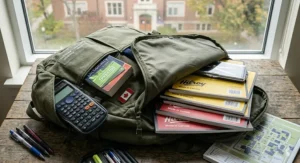
Canada’s education system has unique requirements that differ from what you might be used to. The metric system, bilingual labelling, harsh winter weather, and voltage differences all play a role in determining which supplies will actually serve you well here. What works brilliantly in Mumbai or Manila might not cut it during a Canadian winter, and that expensive calculator from home might not even plug in without an adapter.
The good news? Amazon.ca stocks everything you need, often at prices comparable to what you’d pay back home—and you’ll save on luggage fees. Most international students I’ve advised wish they’d known this before hauling 20 kilograms of notebooks across the ocean. In this guide, I’ll walk you through exactly what school supplies for international students you need, what to skip, and what makes the Canadian school system supplies guide different from what you’re used to. Let’s make your transition smooth, organized, and budget-friendly.
Quick Comparison: International vs Canadian School Supplies
| Supply Category | Bring From Home | Buy in Canada | Canadian-Specific Consideration |
|---|---|---|---|
| Electronics | Laptop/phone (dual voltage) | Voltage converters, adapters | Canada uses 120V, Type A/B outlets |
| Writing Tools | Basic pens (if preferred brand) | Notebooks, binders, folders | Metric measurements standard |
| Calculators | Scientific calculator (check compatibility) | Graphing calculators (TI-84, Casio) | Canadian curriculum may require specific models |
| Seasonal Items | ❌ Skip | Winter-proof backpack, waterproof supplies | Extreme weather resistance needed |
| Language Tools | Bilingual dictionary (physical) | Translation devices, language apps | French/English support helpful |
| Organizational Supplies | ❌ Skip | 3-ring binders, loose-leaf paper | Canadian standard is letter-size (not A4) |
💬 Just one click — help others make better buying decisions too! 😊
✨ Don’t Miss These Exclusive Deals!
🔍 Take your academic success to the next level with these carefully selected products. Click on any highlighted item to check current pricing and availability on Amazon.ca. These tools will help you create authentic learning experiences your professors will appreciate!
Top 7 School Supplies for International Students: Expert Analysis
1. FOVAL 230W Voltage Converter & Travel Adapter
If you’re bringing electronics from home, this voltage converter is absolutely non-negotiable. Canada operates on 120V electricity while most countries use 220-240V—plug in your home-country hair straightener or laptop charger without a converter, and you’ll hear an expensive pop as it fries.
The FOVAL 230W converter steps down 220V to 110V and includes four international plug adapters (US/UK/AU/EU) plus four USB ports, letting you charge six devices simultaneously. The 230W capacity handles most student electronics—laptop chargers, electric toothbrushes, phone chargers, small fans—though it won’t work with heat-generating appliances like hair dryers (those require 1600W+ converters or just buy Canadian versions for around $30-$50 CAD).
What most students overlook is the importance of surge protection when dealing with voltage conversion. This model includes automatic shutoff for overvoltage, overcurrent, and short-circuit protection—critical during Canadian winter storms when power fluctuations are common, especially in older campus buildings or off-campus housing. The compact 4.8 x 3.1 x 1.5 inch design with detachable 5-foot cable makes it dorm-friendly, unlike the bulky transformer-style converters that dominated the market just a few years ago.
Canadian reviewers specifically praise its reliability during extended use—one University of Toronto student mentioned running it continuously for eight months powering a rice cooker and kettle from home without issues. The silent cooling fan only activates above 105°F, so it won’t disturb roommates during late-night study sessions.
Pros:
✅ Charges 6 devices simultaneously (2 AC outlets + 4 USB ports)
✅ Covers 150+ countries with included adapter plugs
✅ Built-in surge protection for Canadian power grid fluctuations
Cons:
❌ Won’t handle high-wattage appliances (hair dryers, space heaters)
❌ Fan noise when running at full capacity
Price Range: Around $35-$50 CAD |
Best For: Students bringing multiple non-dual-voltage electronics from home
2. JanSport Cool Student Backpack
Your backpack isn’t just a fashion statement in Canada—it’s survival gear. Canadian winters mean trudging through snow, sleet, and salt-covered sidewalks from September through April in most provinces, and a flimsy backpack from warmer climates simply won’t survive.
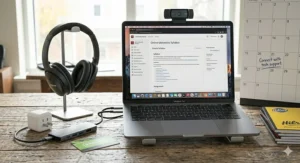
The JanSport Cool Student Backpack has earned over 8,300 reviews on Amazon with a five-star rating for good reason. This workhorse features a large main compartment (holds 5-6 textbooks easily), dedicated padded laptop sleeve (fits up to 15-inch), front utility pocket with organizer panel, and two side water bottle pockets. The 600-denier polyester fabric resists tears and water better than cheaper alternatives, crucial when you’re caught in unexpected rain or snow.
What separates this from other backpacks is the S-curve padded shoulder straps with breathable mesh—essential comfort when you’re wearing winter jackets and walking 20+ minutes between classes on sprawling Canadian campuses. The reinforced bottom panel prevents the dreaded “bottom blowout” that happens when overloaded with heavy Canadian textbooks (which, by the way, are often larger than their international counterparts due to publisher differences).
JanSport’s lifetime warranty is the real game-changer here. Canadian students regularly use this warranty—simply email photos of damage, and JanSport sends repair instructions or a replacement, no receipt required. This matters more in Canada where quality backpacks range from $60-$120 CAD, and buying cheap replacements every semester gets expensive fast.
One international student from India mentioned in reviews that this backpack survived four Canadian winters including a -40°C polar vortex in Winnipeg, and the zippers still work perfectly—impressive considering cheaper backpack zippers freeze and break in extreme cold.
Pros:
✅ Lifetime warranty (replacements/repairs free)
✅ Water-resistant 600D polyester survives Canadian weather
✅ Dedicated laptop sleeve protects expensive electronics
Cons:
❌ Limited colour choices compared to trendy brands
❌ No chest or waist strap for heavy loads
Price Range: Around $60-$75 CAD |
Best For: Students needing reliable, weather-proof storage for daily commuting
3. Language Translator Device (138+ Languages, Offline Capable)
Language barriers hit harder than most international students expect, especially outside major cities where English-French bilingualism is the norm. Even if your English is strong, encountering Quebec French, navigating government paperwork, or understanding regional slang can be challenging.
This AI-powered translator device supports 138 online languages with 98% accuracy and 0.5-second response time, plus 17 offline languages (including English, French, Mandarin, Spanish, Korean, Japanese, Arabic—covering most international student populations in Canada). The 3.5-inch HD touchscreen displays both audio and text simultaneously, which is crucial when you’re trying to understand complex academic vocabulary or technical terms that might have different meanings in Canadian vs. international English.
What makes this essential for Canadian students specifically is the offline French capability. While Toronto, Vancouver, and Calgary are predominantly English, federal government services, product labelling, and certain university programs require French comprehension. I’ve seen international students struggle with bilingual food labels, pharmacy instructions, and official university communications that arrive in both languages—this device eliminates that stress without data charges.
The photo translation feature (75 languages) is genuinely useful for Canadian-specific situations: scanning government forms at Service Canada offices, reading French-only bus schedules in Montreal or Ottawa, understanding bilingual product warranties, or deciphering provincial health insurance documents. The 1500mAh battery lasts 6-8 hours of continuous use, easily covering a full day of classes plus evening study sessions.
Canadian reviewers specifically mention using this for CRA (Canada Revenue Agency) tax forms, which all international students must file annually—these arrive in English and French, and the technical tax vocabulary often differs from what students learned in ESL classes. One University of British Columbia student mentioned it saved hours during their first tax season.
Pros:
✅ Works offline for 17 major languages (no data charges)
✅ Photo translation for documents, signs, menus
✅ Built-in noise cancellation works in loud campus cafeterias
Cons:
❌ Requires WiFi download for offline language packs initially
❌ Less accurate with heavy regional accents or slang
Price Range: Around $80-$120 CAD |
Best For: Students navigating bilingual environments or needing translation support beyond English
4. Five Star 5-Subject Notebook (College Ruled)
The humble notebook remains essential even in 2026’s digital-heavy classrooms. Many Canadian professors still ban laptops during lectures (distraction concerns), and STEM courses often require hand-drawn diagrams, chemical structures, or mathematical proofs that are faster to sketch than type.
The Five Star 5-Subject Notebook features 200 college-ruled pages divided into five sections with tabbed dividers, each with double pockets perfect for storing handouts, lab sheets, or assignment rubrics. The spiral binding uses a reinforced coil that won’t catch on other items in your backpack—critical when you’re cramming everything together during winter when you’re also carrying gloves, scarves, and an extra sweater.
What Canadian students appreciate most is the water-resistant plastic cover. Coffee spills happen (especially during 8 AM classes when jet lag hasn’t worn off), and the moisture-resistant cover has saved countless notes from disaster. The perforated pages tear cleanly along the spiral, important for professors who still collect physical homework submissions—yes, this still happens frequently in Canadian universities, particularly in humanities and social sciences.
The inside covers include reference tools: multiplication tables, grammar rules, conversion charts between metric and imperial (still useful since Canada uses both), and a class schedule grid. These seem trivial until you’re trying to remember whether 3.7 litres equals a gallon during a chemistry lab, or converting Fahrenheit to Celsius when winter weather forecasts bounce between both units.
One detail international students miss: Canadian letter-size paper (8.5 x 11 inches) differs from A4. If you brought hole-punched paper from home, it won’t fit Canadian binders properly. This Five Star notebook uses standard letter-size throughout, ensuring compatibility with Canadian binders and folders.
Pros:
✅ 5 subjects in one notebook reduces backpack clutter
✅ Water-resistant cover survives Canadian weather
✅ Divider pockets store loose handouts securely
Cons:
❌ Heavier than single-subject notebooks
❌ Can’t reorganize pages between sections
Price Range: Around $18-$25 CAD |
Best For: Students taking 4-5 courses who want consolidated note-taking
5. Texas Instruments TI-84 Plus CE Graphing Calculator
Calculator requirements shock most international students. Many Canadian universities—particularly in STEM programs—mandate specific graphing calculator models for exams, and the TI-84 Plus series dominates due to provincial curriculum standardization from high school.
The TI-84 Plus CE (Colour Edition) features a high-resolution backlit colour screen, rechargeable battery (no more scrambling for AAAs during finals), and MathPrint™ functionality that displays fractions, square roots, and other expressions exactly as they appear in textbooks. It stores up to 10 graphing functions simultaneously and includes built-in applications for statistics, calculus, and financial mathematics—covering most first and second-year university requirements.
What separates this from cheaper alternatives or international calculator brands is exam compatibility. Canadian professors specifically allow TI-84 series calculators during tests because they can’t connect to WiFi or store unauthorized notes (unlike smartphones). Many universities maintain “approved calculator” lists for exams, and the TI-84 appears on virtually every list from UBC to McGill to University of Toronto. Bringing a different brand might mean you can’t write exams, forcing a last-minute $150+ CAD purchase.
The colour-coded graphing is genuinely helpful for visual learners tackling multivariable calculus or complex statistical distributions. Canadian STEM courses often involve dense graphical analysis, and being able to distinguish between multiple functions at a glance (red, blue, green lines) reduces errors and speeds up problem-solving during timed exams.
Canadian pricing on TI-84 Plus CE typically runs $150-$180 CAD, which is actually comparable to or cheaper than prices in many countries once currency conversion and import duties are factored in. Amazon.ca frequently runs student discounts in August and January (back-to-school seasons), sometimes dropping prices to the $130-$140 range.
Pros:
✅ Approved for Canadian university exams across all provinces
✅ Rechargeable battery eliminates AAA battery costs
✅ Colour screen easier for complex graphing
Cons:
❌ Higher upfront cost than basic scientific calculators
❌ Learning curve if you’ve never used TI graphing calculators
Price Range: Around $150-$180 CAD |
Best For: STEM students in math, physics, engineering, or statistics programs
6. Avery Heavy-Duty View Binder with D-Rings (2-inch)
Binder organization might seem mundane, but Canadian university courses generate mountains of paper: syllabi, handouts, lab manuals, assignment rubrics, returned essays with feedback. Digital submissions don’t eliminate physical materials—they coexist—and disorganized papers lead to missed assignments and lost marks.
The Avery Heavy-Duty View Binder features D-ring mechanics that hold approximately 25% more paper than O-ring binders of the same size, while keeping all sheets perfectly flat against the back cover—crucial when you’re writing notes directly in your binder during lectures. The 2-inch capacity holds 475 sheets comfortably, enough for an entire semester of one course or a two-semester sequence like first-year calculus or introductory chemistry.
The durable polypropylene cover resists cracking even after months of Canadian backpack abuse—getting crushed under textbooks, exposed to temperature fluctuations between -30°C outdoors and +25°C indoors, or subjected to the moisture that inevitably seeps in during rainy spring semesters. The clear overlay pocket on the front and spine lets you customize with course information, making it easy to grab the right binder when you’re rushing between back-to-back classes.
What Canadian students specifically appreciate is the EZD ring mechanism that opens with one hand—important when you’re juggling coffee, a laptop bag, and winter gloves in hallways between classes. The locking rings close firmly with a satisfying click and have zero accidental openings even when the binder is stuffed to 80% capacity. I’ve watched cheaper binders explode open during backpack shuffles, scattering 200 pages across snowy sidewalks—not a mistake you want to make during midterm season.
The slant-ring design means pages lie completely flat when the binder is open, making in-binder writing comfortable rather than awkward. This matters more than it sounds—Canadian university lectures often move quickly, and fumbling with awkwardly arched pages costs valuable note-taking time.
Pros:
✅ D-rings hold 25% more paper than O-rings
✅ Crack-resistant cover survives Canadian temperature extremes
✅ One-handed opening for multi-tasking
Cons:
❌ Heavier than cheaper binders
❌ Higher initial cost (though lasts multiple years)
Price Range: Around $18-$25 CAD |
Best For: Students in paper-heavy courses (humanities, social sciences, labs)
7. Scotch Magic Tape 6-Pack with Dispensers
This might seem too basic to warrant inclusion, but invisible tape is surprisingly essential for Canadian students, and quality matters more than you’d expect. Canadian winters wreak havoc on cheap tape—adhesive fails in cold temperatures, and poor-quality tape yellows or becomes brittle, destroying carefully preserved notes or posters.
Scotch Magic Tape remains invisible on paper and won’t show through when photocopying (important for submitting assignments or sharing notes with study groups). The six-roll pack with individual dispensers means you can keep one at your desk, one in your backpack, one in your locker, and still have spares—crucial during end-of-semester poster presentation season when every campus store sells out.
What makes this specific to Canadian student needs is the adhesive formula that works across temperature ranges. During winter, you’ll frequently move between -20°C outdoor temperatures and +22°C heated buildings, sometimes within five minutes. Cheap tape either won’t stick properly after temperature shock, or becomes permanently bonded (impossible to reposition). Scotch Magic Tape maintains consistent adhesion through these fluctuations, critical for temporary mounts, repairing torn pages, or assembling group project materials.
Canadian university culture involves significant collaborative work—group presentations, joint lab reports, team projects—and you’ll find yourself constantly taping together poster boards, fixing ripped pages, or mounting printed materials. The matte finish accepts writing from pen, pencil, or marker, useful when annotating taped-together study materials or labelling group project components.
At around $15-$20 CAD for six rolls with dispensers, this provides roughly 18 months of moderate use—working out to about $1 per month for something you’ll use weekly. Amazon.ca pricing is typically 20-30% cheaper than campus bookstores, which charge premium prices for the same product.
Pros:
✅ Invisible on paper, photocopier-safe
✅ Temperature-stable adhesive for Canadian climate
✅ Matte finish accepts pen/pencil writing
Cons:
❌ Individual dispensers can break if dropped
❌ Not strong enough for heavy-duty repairs
Price Range: Around $15-$20 CAD for 6-pack |
Best For: All students for everyday repairs, mounting, and project assembly
Understanding Canadian School Supply Differences: What International Students Miss
Arriving in Canada, you’ll quickly discover that school supply shopping isn’t just about buying the same items in a new currency. The Canadian school system supplies guide reveals several unique considerations that catch international students off guard, costing time, money, and stress during those critical first weeks.
Paper Size Confusion (It’s Not A4)
Canadian schools use letter-size paper (8.5 x 11 inches or 21.6 x 27.9 cm), not the A4 standard (21.0 x 29.7 cm) used in most countries. This seemingly minor 0.6 cm width difference creates real problems. Binders, folders, and three-hole punches brought from home won’t align properly with Canadian paper. I’ve watched frustrated students try forcing A4-sized sheet protectors onto letter-size handouts, causing tears and wrinkles that make assignments look unprofessional.
The solution? Purchase all organizational supplies (binders, folders, hole punches) in Canada. A standard three-ring binder costs $15-$25 CAD at Amazon.ca or campus bookstores, and avoiding the paper-size headache is worth every dollar. If you’ve already brought A4 supplies, keep them for personal notes only and buy Canadian-standard items for coursework submissions.
Metric vs. Imperial: Canada Uses Both
Unlike most countries that fully committed to metric decades ago, Canada operates in a frustrating hybrid system. Scientific courses use metric exclusively (temperatures in Celsius, masses in grams, distances in metres), but daily life mingles both systems. Weather forecasts might mention Celsius officially but Fahrenheit in conversation. Recipes use cups and tablespoons. Heights appear in feet and inches. Weight lifters measure in pounds.
For school supplies, this means your ruler should display both centimetres and inches. Scientific calculators need Celsius-to-Fahrenheit conversion functions. Protractors showing both degree systems help in certain engineering courses. Most Canadian-sold supplies accommodate this reality—Five Star notebooks include conversion charts on inside covers, and graphing calculators from Canadian retailers come pre-programmed with dual-unit conversion functions.
Voltage Converter for Electronics: Non-Negotiable
Canada operates on 120V electricity while most countries use 220-240V. This isn’t just about wall socket shapes (easily fixed with a $5 adapter plug)—it’s about voltage conversion. Plug a 220V device into a Canadian 120V outlet with only a plug adapter, and it either won’t work or will work slowly. Plug a 120V device into a 220V outlet back home, and it will literally burn out.
Check every electronic device you’re bringing. Laptop chargers, phone chargers, and tablets are usually “dual voltage” (100-240V printed on the adapter brick)—these only need plug adapters. But hair straighteners, electric kettles, rice cookers, desk lamps, and most small appliances from home need voltage converters. Quality converters supporting 230W+ cost $35-$50 CAD, while high-wattage converters (for hair dryers or heating appliances) cost $80-$150 CAD.
My advice? Bring only dual-voltage electronics and purchase Canadian-voltage appliances locally. A decent kettle costs $25 CAD at Canadian Tire or Walmart—cheaper than a heavy-duty converter and more reliable long-term.
Bilingual School Supplies: When You Need Them
Canadian federal bilingualism means English-French labelling appears on all products, government documents, and official communications. In Quebec, French dominates. In Ottawa, both languages are equally common. In most other provinces, English prevails but French appears alongside it.
For school supplies, bilingual dictionaries (physical or digital) are incredibly helpful, especially during your first year. Even if you’re studying in English-dominant Toronto or Vancouver, you’ll encounter French: on provincial health cards, government tax forms, food packaging (all ingredients must appear in both languages by law), public transit signage, and pharmaceutical instructions.
Translation devices like the ones recommended earlier handle this seamlessly, but carrying a pocket English-French dictionary ($12-$18 CAD at Chapters/Indigo bookstores) provides backup when WiFi fails. Many international students underestimate how often they’ll encounter French in officially bilingual Canada, even outside Quebec.
Winter-Proof Everything: Supplies Need Climate Resistance
Canadian winters aren’t just cold—they’re aggressively hostile to paper, electronics, and organizational supplies. Temperatures dropping to -20°C or lower (common from December through February across most of the country) cause:
- Cheap plastic binders crack and shatter when flexed outdoors or after rapid temperature changes
- Ink in cheap pens freezes or becomes goopy, making writing impossible until they warm up
- Laptop batteries drain 20-30% faster in cold temperatures, and screens respond sluggishly if not warmed up
- Paper becomes brittle in extreme cold and dry indoor heating, tearing easily at hole-punches
- Tape adhesive fails when applied to cold surfaces, requiring you to warm materials first
This explains why Canadian-specific supplies cost slightly more—they’re engineered for temperature extremes. Polypropylene binders, archival-quality paper, cold-resistant ink formulations, and temperature-stable adhesives all add manufacturing costs, but they’re necessary investments. Buying the cheapest options available means replacing them mid-semester when winter hits full force.
What to Bring vs What to Buy in Canada: International Student Checklist
One of the smartest decisions you’ll make is understanding what school supplies for international students should travel with you versus what to purchase upon arrival. Getting this wrong means either hauling unnecessary weight across the ocean (paying luggage fees) or scrambling during your first week when courses have already started.
✅ Definitely Bring From Home:
Personal Electronics (If Dual Voltage):
Laptop computers, smartphones, tablets, and e-readers that display “100-240V” on their charging bricks are safe to bring. You’ll only need inexpensive plug adapters ($8-$15 CAD for a pack covering multiple outlet types). Canadian Apple Stores, Best Buy, and Canada Computers sell these, but bringing adapters from home saves a trip.
Specialized Writing Instruments:
If you have specific pen brands you love (Muji, Pilot G2, Stabilo), bring a semester’s supply. Canadian stores stock major brands, but niche favourites or region-specific items cost 2-3× more due to import markups. Pack 10-15 pens in your checked luggage—they weigh almost nothing and avoid frustration later.
Prescription Glasses/Contact Lenses:
Canadian optical services are excellent but expensive for international students (eye exams cost $80-$150 CAD without provincial health coverage). Bring backup glasses and a year’s supply of contact lenses. Prescription sunglasses are particularly important—Canadian winters mean intense sun glare off snow.
Favourite Comfort Items:
Small items that reduce homesickness matter more than people expect: family photos, lucky charms for exams, a beloved mug, favourite tea bags. These occupy minimal luggage space but provide enormous emotional value during stressful adjustment periods.
Documents & Credentials:
Physical copies of transcripts, diplomas, language test results (IELTS/TOEFL), vaccination records, and prescription documentation. Canada increasingly requires digital submissions, but physical backups prevent headaches when systems fail. Keep these in carry-on luggage, never checked bags.
❌ Skip Bringing—Buy in Canada Instead:
Notebooks, Binders, Folders:
These are heavy, bulky, and inexpensive in Canada. A Five Star 5-subject notebook costs $18-$25 CAD on Amazon.ca—comparable to prices globally, and you avoid lugging 2 kg of paper through airports. Canadian paper sizing (letter, not A4) means your home-country supplies likely won’t fit Canadian standards anyway.
Winter Clothing & Boots:
Counter-intuitively, buy winter gear in Canada rather than bringing it from warmer climates. Tropical/subtropical countries don’t manufacture clothing rated for -30°C, and inadequate winter gear leads to misery or frostbite. Canadian retailers (Sport Chek, Atmosphere, Mark’s) stock properly-rated parkas, boots, and gloves at reasonable prices ($80-$200 CAD for quality items). September arrivals have time to shop before winter hits.
Bedding & Towels:
Dorms and student housing use Canadian mattress sizes (Twin/Twin XL, Full, Queen), which differ from international standards. Bringing sheets from home means they won’t fit. Purchase bedding locally—IKEA, Walmart, and Amazon.ca sell complete twin XL bedding sets for $40-$80 CAD, lighter and cheaper than transporting your own.
Kitchen Appliances (Coffee Makers, Kettles, Rice Cookers):
Even dual-voltage appliances work poorly on Canada’s 120V—a 220V kettle on 120V takes 5-7 minutes to boil water instead of 1-2 minutes. Buy Canadian-voltage versions: Walmart sells electric kettles for $25-$35 CAD, rice cookers for $30-$50 CAD, and coffee makers for $25-$60 CAD. They’ll work properly and won’t blow fuses in residence buildings.
Textbooks:
Canadian universities increasingly use OpenStax free textbooks or require specific Canadian editions with bundled online access codes. Bringing international editions from home often means they’re incompatible with required online platforms. Wait until courses start, confirm required editions with professors, then rent or buy Canadian versions. Amazon.ca rents textbooks for 50-70% less than bookstore prices.

🤔 Situational—Decide Based on Your Needs:
Scientific Calculator:
If you already own a TI-84 Plus or TI-83 graphing calculator, bring it—they’re universal and expensive ($150+ CAD new). If you’re purchasing new, buy in Canada to ensure you get the correct model for Canadian exam standards. Basic scientific calculators (Casio fx-series) cost $15-$25 CAD locally and work fine for non-STEM courses.
Bilingual Dictionary (Physical Book):
Digital translation apps handle most needs, but a compact English-French pocket dictionary ($12-$18 CAD, weighs ~150g) provides backup when WiFi fails—common in rural areas, national parks during field trips, or during power outages in winter storms. Bringing one from home saves $12 but adds minimal value if you’re buying a translation device anyway.
Formal Clothing:
Business/formal attire for presentations, job fairs, or interviews. Canadian standards are similar globally (dress shirts, blazers, closed-toe shoes), but sizing runs larger than many Asian countries and smaller than US brands. If you have well-fitting professional clothes, bring them. If not, Canadian retailers (The Bay, Simons, Hudson’s Bay) stock professional wear at mid-range prices ($40-$150 CAD per piece).
Favourite Non-Perishable Foods:
Canada’s multicultural cities stock impressive international food selections, but specific regional specialties may be unavailable or 3-4× more expensive. Pack 2-3 kg of hard-to-find favourites (spices, instant noodles, sweets) to ease homesickness during your first month. After settling in, you’ll locate Asian supermarkets (T&T in major cities), Indian grocery stores (Patel Brothers), or Latin markets where you can restock.
Essential Cultural Adjustment Supplies: Beyond Standard School Items
Moving to Canada involves more than academic preparation—cultural adjustment requires its own toolkit that standard school supply lists overlook. These items don’t appear on university checklists, but they significantly impact your comfort and success during those challenging first months.
Temperature Management Tools
Canadian buildings are notoriously over-heated in winter (often 22-25°C indoors) while outdoor temperatures plummet to -15°C or colder. This 40-degree temperature swing happens multiple times daily as you move between classes, creating discomfort and health challenges. Pack or purchase:
- Layering-friendly clothing: Hoodies, cardigans, light sweaters you can remove easily in overheated lecture halls
- Reusable water bottle: Indoor heating causes dehydration; carry 1L+ capacity bottles ($15-$30 CAD for insulated versions that prevent condensation)
- Lip balm and hand cream: Central heating creates extreme dryness; Canadian pharmacies stock heavy-duty moisturizers ($8-$15 CAD) specifically formulated for winter conditions
- Portable phone charger: Cold weather drains batteries rapidly; 10,000mAh power banks ($25-$40 CAD) ensure your phone survives between indoor charging opportunities
The temperature shock genuinely affects international students from tropical/subtropical climates more than they anticipate. Having adjustment tools ready—rather than suffering through your first month before figuring this out—makes an enormous difference.
Social Connection Facilitators
Loneliness hits international students hardest during Canadian winters when daylight shrinks to 8-9 hours daily (November-February) and outdoor socializing becomes uncomfortable. Supplies that facilitate social connection aren’t frivolous—they’re mental health investments:
- Board games or card games: Small, portable games create social opportunities in residence common rooms; Canadian students appreciate international games they’ve never seen
- Portable Bluetooth speaker: Hosting small study group gatherings becomes easier with background music; $30-$60 CAD buys decent quality without annoying neighbours
- Coffee/tea supplies: Canadian culture revolves around coffee meetups; having a French press or nice tea selection in your room makes you the go-to study buddy destination
- Snacks from home to share: Food bridges cultural gaps better than almost anything; sharing unique treats from your home country sparks conversations and builds friendships naturally
These items cost relatively little ($50-$100 CAD total) but create disproportionate value by reducing isolation. International students who invest in social connection tools early report significantly better adjustment experiences and academic outcomes.
Documentation Organization System
Canadian bureaucracy generates staggering paper volumes: study permit renewals, tax forms (yes, students must file), provincial health insurance applications, housing contracts, banking documents, SIN (Social Insurance Number) paperwork, and university administrative forms. Losing critical documents causes expensive, time-consuming problems.
Create a physical filing system:
- Accordion folder or portable file box: $15-$25 CAD, labelled sections for categories
- Document scanner app: Adobe Scan (free) or CamScanner ($5/month) to digitize everything
- Cloud storage subscription: Google Drive (15GB free) or Dropbox (2GB free) for backup copies
- Portable USB drive: 64GB costs $15-$20 CAD; stores offline backup of all scanned documents
This seems excessive until you need to renew your study permit and can’t locate your original acceptance letter, or the CRA requests proof of tuition payments from eight months ago. Canadian government agencies don’t accept “I lost it” as an answer—they’ll re-issue documents for $50-$100 fees plus 4-6 week wait times.
Language Learning Continuity Tools
Even advanced English speakers encounter Canadian-specific challenges: regional accents (Newfoundland English sounds nothing like Toronto English), hockey/winter sports vocabulary that dominates casual conversation, Indigenous place names and cultural references, and Quebec French bleeding into English usage even outside Quebec.
Supplies supporting ongoing language development:
- Voice recorder for lectures: $30-$50 CAD standalone recorders, or use smartphone apps, for reviewing difficult concepts
- Flashcard system: Anki (free app) for building custom vocabulary from Canadian English you encounter
- Canadian news subscription: CBC (free) or Globe and Mail (student discount) to maintain reading comprehension
- Conversation exchange partner: Post on university forums offering your native language in exchange for English/French practice
The goal isn’t perfection—it’s continuous improvement. International students who actively work on Canadian English/French throughout their first year integrate much faster socially and academically than those who assume their pre-arrival language level suffices.
Navigating Canadian Curriculum Differences: Supply Implications
The Canadian school system supplies guide becomes clearer when you understand how Canadian curriculum structures differ from international approaches. These differences directly impact which supplies you’ll actually use regularly versus which gather dust on shelves.
Discussion-Based Learning Requires Different Tools
Canadian universities emphasize class participation, group discussions, and collaborative learning far more than lecture-and-test formats common in many countries. This pedagogical difference means:
You’ll need:
- Multiple highlighters ($10-$15 CAD for 8-pack) for colour-coding readings before class discussions
- Sticky notes (3M Post-it, $8-$12 CAD) for marking textbook passages you want to reference during seminars
- Larger notebooks with extra margin space for adding notes during group discussions
- Recording device or app for capturing nuances during debate-style classes (with professor permission)
You won’t need as much:
- Excessive quantities of blank paper for copying lecture notes verbatim (professors post slides online)
- Formal note-taking templates (Canadian classes are informal; rigid note systems feel out of place)
The shift from passive reception to active participation catches many international students off-guard. Canadian professors expect you to speak up, challenge ideas respectfully, and contribute to class knowledge construction—not merely absorb information silently.
Lab-Based Courses Generate Physical Deliverables
STEM courses in Canada involve significantly more hands-on lab work than theoretical instruction. Engineering students build physical prototypes. Biology students conduct dissections and field work. Computer science students complete project-based assessments. This means:
Essential supplies:
- Sturdy project portfolio folders ($8-$15 CAD) for storing large format work
- Camera/smartphone with good photo quality for documenting lab work
- USB drives (multiple) for transferring large project files between lab computers
- Weather-proof backpack pockets for protecting electronics during outdoor field work
Less critical:
- Excessive quantities of ruled notebooks (labs use specialized workbooks provided by departments)
- Formal lab coats from home (universities require specific colour/style; purchase locally)
Canadian lab safety standards are strict, often stricter than international equivalents. Universities won’t accept non-Canadian lab coats, safety glasses, or protective equipment—plan to purchase these locally when courses begin ($40-$80 CAD typically).

Writing-Intensive Assignments Need Citation Tools
Canadian academic integrity standards are rigorous, with zero tolerance for plagiarism (even unintentional). The citation expectations differ from some international systems:
Critical tools:
- Citation management software: Zotero (free), Mendeley (free), or EndNote ($120 CAD student license but often free through university libraries)
- Style guide reference: APA, MLA, Chicago—which you need depends on faculty; purchase physical copies ($15-$25 CAD) or use online resources
- Plagiarism checker subscription: Grammarly Premium ($12 CAD/month student rate) or Turnitin access through university
Optional but helpful:
- Writing centre appointments: Free at all Canadian universities; book weekly sessions during your first semester
- Peer review partnerships: Supplies to facilitate (coffee shop gift cards for swapping draft feedback sessions)
International students sometimes struggle with Canadian citation expectations because what constitutes “common knowledge” differs culturally. When in doubt, cite—over-citation carries zero penalty, while under-citation risks academic misconduct charges.
Seasonal Timing: When to Buy What in Canada
Amazon.ca pricing and availability fluctuate dramatically based on Canadian shopping seasons. Knowing when to buy school supplies for international students can save 30-50% compared to purchasing at the wrong time.
Late August: The Back-to-School Sweet Spot
Canadian retailers slash prices on school supplies during the last two weeks of August as elementary/secondary schools prepare to start. University students benefit from this timing even though most Canadian universities start mid-September:
Best deals:
- Binders, notebooks, folders: 40-60% off regular prices
- Writing instruments (pens, pencils, markers): Buy-one-get-one offers
- Backpacks: Previous year’s models discounted 30-50%
- Scientific calculators: $10-$20 CAD off regular prices
Strategy:
Arrive in Canada by August 20th if possible, giving you 2-3 weeks to shop sales before classes begin. Amazon.ca runs “Back to School” deals throughout August, but best prices appear August 15-30. Campus bookstores match these sales reluctantly, so shop online first.
What to skip:
Don’t buy winter clothing in August—selection is minimal and prices are highest. Wait until October when winter inventory arrives.
Mid-January: The Post-Holiday Clearance
After Christmas, Canadian retailers clear inventory to make room for spring stock. This creates the year’s second-best opportunity for school supply deals:
Best deals:
- Electronics (laptops, tablets, headphones): Boxing Day sales extend through January
- Organizational supplies (desk organizers, filing systems): 40-50% off
- Winter clothing and boots: 50-70% off as retailers clear seasonal inventory
- Previous semester textbooks: Used book market floods with supply
Strategy:
Winter semester students arriving in early January hit perfect timing. Those already in Canada should stock up on next year’s supplies and replacement winter gear while prices are lowest.
What to skip:
Summer clothing and sandals aren’t available yet, and buying them at premium online prices makes no sense when selection improves in April/May.
May-June: End-of-Year Textbook Gold Mine
As Canadian students finish spring semester exams, the used textbook market explodes with supply. International students arriving for summer semester or preparing for fall can find spectacular deals:
Best deals:
- Used textbooks: 60-80% off bookstore prices
- Dorm furniture: Graduating students sell everything (desks, lamps, mini-fridges) for 70-90% off
- Electronics: Graduating students liquidate laptops, tablets, printers at 40-60% discounts
- Course-specific supplies: Past students sell barely-used lab kits, art supplies, specialized equipment
Strategy:
Monitor university Facebook groups, Kijiji (Canadian Craigslist equivalent), and campus bulletin boards. Many universities host end-of-year “garage sales” where students sell belongings before moving out.
What to avoid:
Don’t buy textbooks until your course syllabi confirm editions required—professors often change required texts between years, and the wrong edition is worthless.
Frequently Asked Questions
❓ Can I use my home country's voltage converter continuously, or do I need Canadian electronics?
❓ Do Canadian universities require specific calculator brands, or can I bring any graphing calculator from home?
❓ Are bilingual school supplies actually necessary if I'm studying in English-speaking provinces like Ontario or British Columbia?
❓ What's the difference between Canadian letter-size and international A4 paper, and why does it matter?
❓ How much should I budget for school supplies in my first semester as an international student in Canada?
Conclusion: Setting Yourself Up for Canadian Academic Success
Choosing the right school supplies for international students in Canada isn’t just about checking boxes on a list—it’s about understanding how the Canadian school system supplies guide differs fundamentally from what you’re used to, and preparing accordingly. The voltage converter isn’t optional; it’s the difference between using your electronics safely versus creating fire hazards. The letter-size binder isn’t interchangeable with A4; it’s the standard your professors expect. The winter-proof backpack isn’t excessive; it’s survival equipment for eight months of harsh weather.
What surprises most international students is how these small decisions compound over months. Buying the wrong calculator in week one means struggling through exam restrictions all year. Skipping the translation device saves $100 initially but costs dozens of hours deciphering bilingual documents. Packing heavy notebooks from home wastes luggage allowance better spent on meaningful personal items, while costing more than buying locally anyway.
The smart approach? Arrive with dual-voltage electronics, essential documents, and personal comfort items. Purchase organizational supplies, winter gear, and Canadian-standard tools locally during late-August sales. Invest in quality temperature-resistant supplies that survive Canadian extremes rather than replacing cheap alternatives mid-semester. And recognize that cultural adjustment supplies—social facilitators, stress management tools, language development resources—matter as much as academic materials.
Your first semester in Canada brings enough challenges without fighting preventable supply headaches. Use this guide to make informed decisions, avoid common pitfalls, and focus your energy where it belongs: engaging with world-class education, building international friendships, and creating the experiences that make studying in Canada transformative. The voltage converter works silently in the background; the winter-proof backpack protects your materials effortlessly; the bilingual dictionary bridges language gaps instantly. These aren’t expenses—they’re investments in your success.
Recommended for You
- 7 Best Supplies for Commuter Students Canada 2026
- 7 Essential Nursing Student Supplies First Year Canada Guide 2026
- 7 MBA Student Supplies Canada Essentials Every Business School Student Needs (2026)
Disclaimer: This article contains affiliate links. As an Amazon Associate, I earn from qualifying purchases. If you purchase products through these links, we may earn a small commission at no additional cost to you.
✨ Found this helpful? Share it with your friends! 💬🤗
