
In This Article
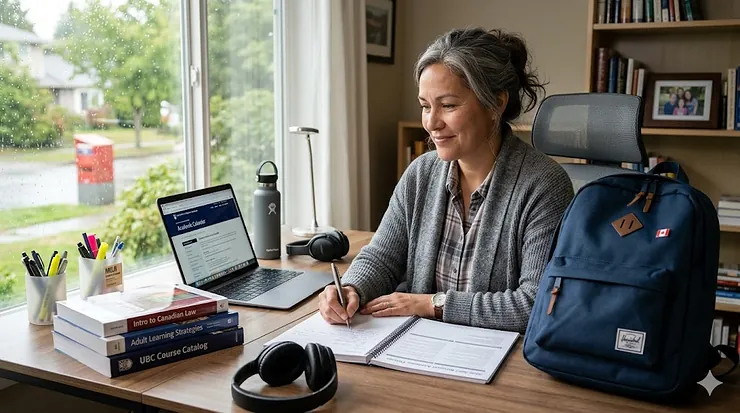
Walking into a classroom after a decade in the workforce feels different from your first day of university. Your priorities have shifted—you’re not shopping for trendy folders or cartoon-covered binders. You need back to school supplies for mature students that actually solve real problems: balancing work deadlines with assignment submissions, protecting your eyes during those late-night study sessions, and carrying professional-grade equipment without looking like you raided your teenager’s closet.
Canada’s adult education landscape is thriving. According to Statistics Canada’s research on adult learning, approximately 49% of Canadians aged 16 to 65 participated in some form of adult education and training. That’s millions of people juggling careers, families, and coursework simultaneously—and they need equipment that works as hard as they do. Whether you’re pursuing continuing education supplies, enrolled in night school study supplies, or setting up online learning supplies home office infrastructure for career change student essentials, this guide cuts through the noise to show you what actually matters.
What most buyers overlook about shopping for back to school supplies for mature students in Canada is that your needs differ fundamentally from traditional students. You’re not just attending class—you’re managing a home office, commuting in harsh Canadian winters, attending evening lectures after full workdays, and often studying in spaces shared with family. The professional re-training supplies and life-long learning tools you choose need to accommodate these realities, not fight against them. This article evaluates seven essential products available on Amazon.ca, each selected because they address specific challenges faced by non-traditional student needs in the Canadian context.
Quick Comparison: Top Picks at a Glance
| Product | Best For | Price Range (CAD) | Key Feature | Rating |
|---|---|---|---|---|
| MATEIN Travel Laptop Backpack | Daily commuters | $40-$55 | USB charging port | 4.5/5 |
| Lamare Academic Planner 2026 | Goal-oriented students | $25-$35 | Undated format | 4.7/5 |
| NSSIW Blue Light Glasses | Evening/online students | $12-$20 | Semi-rimless design | 4.2/5 |
| Amazon Basics Laptop Stand | Home office students | $35-$50 | Foldable & portable | 4.6/5 |
| SwissGear Gaming Backpack | Tech-heavy programs | $80-$110 | 17″ laptop capacity | 4.5/5 |
| BESIGN LS03 Stand | Desk-based learners | $45-$65 | Detachable design | 4.6/5 |
| Cyxus Blue Light Glasses | Budget-conscious students | $18-$28 | TR90 lightweight frame | 4.3/5 |
💬 Just one click — help others make better buying decisions too!😊
Top 7 Back to School Supplies for Mature Students — Expert Analysis
1. MATEIN Travel Laptop Backpack – The Commuter’s Workhorse
The MATEIN Travel Laptop Backpack dominates Amazon.ca’s professional backpack category for good reason—it’s built for adults who treat their laptop like a second brain. The water-resistant polyester fabric withstands Vancouver’s relentless rain and Toronto’s slushy spring transitions without soaking your electronics. What separates this from student backpacks is the built-in USB charging port connected to an internal cable. While the backpack doesn’t power itself, you slip a power bank inside and suddenly your phone charges while you’re rushing between the office and evening class—a game-changer when you’re fielding work emails between lectures.
The separate laptop compartment fits 15.6-inch machines comfortably, with enough padding to survive the TTC’s rougher rides or the jostling of crowded SkyTrain cars. Canadian reviewers consistently praise the metal zippers, which handle our temperature extremes better than plastic alternatives that crack in -20°C winter cold. The front compartment’s organizational pockets (pen slots, key hook, phone pocket) mean you’re not digging through a black hole when your professor asks for last week’s readings.
In my experience teaching adult learners, this backpack type succeeds because it doesn’t scream “student”—you can walk into a client meeting or board presentation without looking like you borrowed your kid’s school bag. The professional aesthetic matters when you’re managing dual identities as working professional and student.
Customer feedback from Canadian buyers: One Edmonton student noted the backpack survived two Alberta winters without the shoulder straps fraying—a common failure point in cheaper models. A Montreal MBA candidate mentioned fitting both her work laptop and tablet simultaneously, though she cautioned against overpacking (15+ pounds) during longer commutes.
Pros:
✅ Water-resistant fabric handles Canadian weather extremes
✅ USB port integration eliminates dead-phone panic
✅ Professional appearance transitions seamlessly between office and classroom
Cons:
❌ 15.6″ laptop limit excludes larger gaming or design laptops
❌ No dedicated tablet sleeve (requires creative packing)
Price & Verdict: Typically in the $40-$55 CAD range on Amazon.ca, this represents exceptional value for balancing work and school supplies needs. The durability justifies the cost—replacing a $20 backpack every semester costs more than investing in quality upfront.
2. Lamare Academic Planner 2026 – Beyond the Calendar
The Lamare Academic Planner 2026 understands something most planners don’t: adult students aren’t just tracking assignment due dates—they’re coordinating childcare pickups, work project deadlines, and study group sessions across multiple time zones for online programs. This undated weekly planner eliminates the waste of buying a new calendar mid-semester if you start classes in January, March, or any non-traditional enrollment period common in continuing education.
What elevates this from a simple calendar to a life-long learning tool is the integrated systems: habit trackers monitor whether you’re maintaining study consistency across hectic weeks, grade logs let you calculate GPA implications before final exams, and progress check-ins force honest self-assessment. The hardcover construction and thick paper withstand the abuse of being shoved into bags beside work binders and lunch containers—I’ve seen cheaper planners disintegrate by midterm when exposed to the realities of adult student life.
The two ribbon bookmarks seem minor until you’re juggling current week planning and long-term project timelines. Canadian students managing professional re-training supplies often use one bookmark for weekly spreads and another for monthly overviews, creating a quick-reference system that beats digital alternatives for spatial memory retention.
Canadian student insights: A Toronto nursing student highlighted using the habit tracker to monitor her clinical hours alongside coursework, while a Vancouver part-time law student mentioned the elastic band closure prevented her planner from exploding open when crushed between law textbooks in her bag.
Pros:
✅ Undated format accommodates non-traditional academic calendars
✅ Habit trackers and grade logs provide accountability systems
✅ Durable construction survives the chaos of adult student life
Cons:
❌ Weekly format may feel cramped for students with extremely busy schedules
❌ No pre-printed Canadian holidays (requires manual notation)
Price & Verdict: Priced around $25-$35 CAD on Amazon.ca, this competes favourably with generic planners while offering student-specific features. The undated format means you extract maximum value regardless of enrollment timing—crucial for the flexibility required in career change student essentials.
3. NSSIW Blue Light Blocking Glasses – The Screen Fatigue Solution
The NSSIW Blue Light Blocking Glasses address a problem traditional students don’t face: most mature students complete coursework after 8-10 hour workdays already spent staring at screens. Your eyes aren’t tired from Fortnite marathons—they’re exhausted from Excel spreadsheets, client presentations, and now, learning management systems. The semi-rimless design balances professional appearance with functionality, meaning you can wear them during late-afternoon Zoom meetings without looking like you’re about to DJ a rave.
These glasses filter blue light wavelengths emitted by laptops, tablets, and phones without the heavy yellow tint that distorts colour accuracy—essential if you’re studying graphic design, data visualization, or any field requiring precise visual work. Canadian night school study supplies rarely include vision protection, yet students taking evening classes after full work shifts benefit most from blue light reduction. The lightweight frame prevents the pressure headaches that develop when you’re wearing glasses for 12+ hour days (work computer → commute phone → study laptop).
What the spec sheet won’t tell you is that blue light glasses work best as part of a system. Pair them with screen breaks every 20 minutes and you’ll notice genuine fatigue reduction. Used alone while you grind through three chapters without moving, they help marginally. Canadian winters complicate this further—when sunset hits at 4:30 PM in December, you’re studying in artificial light for hours, compounding blue light exposure.
Canadian reviewer experiences: A Calgary accountant completing her CPA designation mentioned these reduced her end-of-day headaches during tax season study sessions, while a Halifax IT professional noted they helped but didn’t eliminate eye strain during his evening cybersecurity courses.
Pros:
✅ Minimal colour distortion maintains visual accuracy
✅ Professional appearance suitable for work-to-class transitions
✅ Lightweight construction prevents pressure fatigue
Cons:
❌ No prescription lens options (incompatible with vision correction needs)
❌ Effectiveness diminishes without complementary screen break habits
Price & Verdict: At $12-$20 CAD on Amazon.ca, these represent the most affordable intervention for screen-related fatigue. However, they’re a band-aid, not a cure—combine them with proper ergonomics and break discipline for genuine relief. Budget-conscious students should prioritize these over premium options since the core technology is largely standardized.
4. Amazon Basics Ergonomic Laptop Stand – The Posture Investment
The Amazon Basics Ergonomic Laptop Stand solves the hidden crisis of online learning supplies home office setups: most students hunch over kitchen tables or couches, creating posture disasters that manifest as neck pain, shoulder tension, and lower back problems by midterm. This adjustable aluminum stand elevates your laptop screen to eye level, forcing proper spinal alignment without requiring a standing desk investment. The hollow ventilation design prevents the overheating common when laptops sit directly on soft surfaces—critical during long study sessions when your machine is running statistical software, video conferencing, and seventeen browser tabs simultaneously.
What makes this specifically valuable for mature students is the foldable design. Unlike traditional students with dedicated dorm rooms, you’re studying wherever space exists—the dining table between dinner and bedtime, a corner of the bedroom, occasionally a coffee shop. This stand folds to 10 × 8.7 × 1.8 inches and weighs 1.7 lbs, fitting easily into most laptop bags. Canadian students dealing with limited condo space or shared living arrangements particularly appreciate equipment that stores efficiently.
The height adjustability (multiple locking positions) lets you customize screen height whether you’re using an external keyboard or typing directly on the laptop. However, the stand works best when paired with a separate keyboard and mouse—typing directly on an elevated laptop creates awkward wrist angles that defeat the ergonomic benefits. This represents an additional $30-$50 CAD investment, but it transforms your study setup from “technically functional” to genuinely comfortable.
Canadian student feedback: A Montreal master’s student mentioned this eliminated the shoulder pain she developed during her first semester of evening classes, while a Winnipeg distance learner noted it helped him maintain focus during 4-hour study blocks by reducing physical discomfort.
Pros:
✅ Elevates screen to proper eye level, preventing neck strain
✅ Foldable design accommodates space-constrained Canadian urban living
✅ Ventilation prevents laptop overheating during intensive tasks
Cons:
❌ Requires separate keyboard/mouse for optimal ergonomics (added cost)
❌ 15.6″ laptop size limit excludes larger machines
Price & Verdict: Typically $35-$50 CAD on Amazon.ca, this delivers exceptional ROI by preventing posture-related pain that could force study breaks or medical visits. The folding portability makes it suitable for students without dedicated study spaces—a common reality for adult learners balancing family obligations.
5. SwissGear Gaming Laptop Backpack – The Heavy-Duty Hauler
The SwissGear Gaming Laptop Backpack might carry “gaming” branding, but don’t let that fool you—this backpack excels for mature students in tech-heavy programs (engineering, architecture, data science) who carry substantial equipment loads. The 17-inch laptop compartment with 360° protection accommodates larger machines required for CAD work, video editing, or statistical modeling. The smart storage includes dedicated spaces for tablets, external hard drives, charging cables, and textbooks without creating the jumbled mess typical of single-compartment bags.
What separates this from the MATEIN option earlier is capacity and specialized organization. The ScanSmart design lets you open the laptop compartment flat for TSA/CATSA security checks—particularly valuable for students attending weekend intensives in other provinces or international conferences. The external USB port mirrors the MATEIN functionality, but the internal battery pack pocket is larger, accommodating high-capacity power banks needed for all-day campus sessions without outlet access.
Canadian winter performance deserves specific mention: the extra-thick padding on contoured shoulder straps with airflow technology prevents the sweat buildup common when you’re wearing a heavy coat plus a loaded backpack. The back panel’s Air-Flow system helps, though extreme cold (-30°C Alberta winters) still makes any backpack uncomfortable. The rear luggage extension handle strap is genius for students who combine business travel with coursework—wheel your suitcase through Pearson Airport with your study materials securely attached.
Canadian user insights: A Vancouver civil engineering student noted fitting his 17″ laptop, textbooks, steel water bottle, and lunch container simultaneously, though he mentioned the bag looks bulky when partially filled. An Ottawa graduate student doing monthly Toronto commutes praised the luggage strap during her train travels.
Pros:
✅ 17″ laptop capacity accommodates tech-heavy program requirements
✅ ScanSmart design streamlines Canadian airport security
✅ Specialized compartments prevent equipment tangling
Cons:
❌ Bulky appearance when not fully loaded
❌ Premium price point may exceed budget-conscious students’ comfort range
Price & Verdict: Priced in the $80-$110 CAD range on Amazon.ca, this represents the high end of student backpack investments. However, students in engineering, architecture, or media programs who destroy cheaper backpacks within months will find the durability justifies the cost. The specialized storage prevents the “laptop + brick of cables” chaos common in tech programs.

6. BESIGN LS03 Aluminum Laptop Stand – The Detachable Advantage
The BESIGN LS03 Aluminum Laptop Stand takes a different approach from the Amazon Basics option by emphasizing modularity. The detachable design means you can collapse this completely flat for transport, unlike fixed-angle stands that maintain permanent triangular shapes. Canadian students studying in library carrels, coffee shops, or rotating between home and office particularly appreciate equipment that packs efficiently. The aluminum construction provides the same heat dissipation benefits as the Amazon Basics stand, but the BESIGN model offers slightly more refined aesthetics—it looks like designer office equipment rather than utilitarian tech.
The stand accommodates 10-15.6 inch laptops, fitting most student machines. However, the detachable connection points require tightening periodically—the stand uses screws rather than permanent welds, and vibration during transport gradually loosens them. Keep a small screwdriver in your desk drawer and tighten quarterly to maintain stability. This minor maintenance requirement is the trade-off for the collapsed portability.
What most buyers miss about laptop stands is that positioning matters enormously. Place this stand at the back of your desk with an external keyboard in the ergonomic zone (elbows at 90° angles), and you’ve created a setup that rivals expensive ergonomic office furniture. Position it poorly—laptop front and centre, no external keyboard—and you’ve created an expensive bookend. The stand excels as part of a deliberate ergonomic system, not as a standalone solution.
Canadian student experiences: A Halifax MBA candidate mentioned the collapsed stand fitting in her slim briefcase for weekend study sessions at her parents’ home, while a Calgary distance learner noted the silver finish matched his MacBook Pro aesthetically (important when your study space doubles as your living room).
Pros:
✅ Detachable design collapses flat for maximum portability
✅ Premium aluminum construction offers refined aesthetics
✅ Compatible with 10-15.6″ laptop range covers most student machines
Cons:
❌ Screws require periodic tightening to maintain stability
❌ Higher price than comparable fixed-angle stands
Price & Verdict: Typically $45-$65 CAD on Amazon.ca, this commands a premium over the Amazon Basics alternative for the detachable convenience. Students who study in multiple locations or value aesthetics in shared spaces will find this worth the extra $10-$15 CAD. Those with dedicated home study areas might prefer the Amazon Basics’ fixed stability.
7. Cyxus Blue Light Blocking Glasses – The Lightweight Alternative
The Cyxus Blue Light Blocking Glasses combine TR90 plastic front frames with metal temples, creating a balance between durability and weight that the all-plastic NSSIW glasses can’t match. The lightweight construction prevents the pressure points that develop when you’re wearing glasses from your morning work meetings through midnight study sessions. The premium PC lenses filter blue light while maintaining natural colour clarity—essential for students in fields requiring colour accuracy (graphic design, medicine, any program involving data visualization).
The metal temple construction handles Canadian temperature swings better than pure plastic frames. Leave plastic glasses in a -25°C car overnight and they become brittle; bring them into a 22°C classroom and they fog instantly. The Cyxus metal-plastic hybrid adjusts to temperature changes more gracefully, reducing fog-up time when transitioning between extreme cold and heated indoor spaces—a daily reality for Canadian students from November through March.
These glasses prioritize all-day comfort over compact storage. The ergonomic frame structure with smooth edges and comfortable nose bridge works well for extended wear, but the frames don’t fold as compactly as some alternatives. If you’re constantly moving glasses in and out of bags, a hard case becomes mandatory to prevent bending the metal temples.
Canadian buyer feedback: A Toronto graphic design student mentioned the colour clarity advantage when evaluating design work compared to cheaper yellow-tinted glasses, while a Montreal night school student noted the comfortable nose bridge during her 4-hour Wednesday evening lectures.
Pros:
✅ TR90 and metal hybrid construction balances weight and durability
✅ Minimal colour distortion maintains visual accuracy for colour-sensitive work
✅ Ergonomic design suitable for all-day wear
Cons:
❌ Metal temples require hard case protection during transport
❌ Mid-range pricing without prescription lens options
Price & Verdict: Priced at $18-$28 CAD on Amazon.ca, these occupy the middle ground between budget options and premium blue light protection. Students in colour-sensitive programs (design, media, health sciences) will appreciate the accurate colour rendering. However, budget-conscious learners without colour-critical work might find the NSSIW glasses adequate at $12-$20 CAD.
Setting Up Your Adult Student Study Space: A Practical Guide
Creating effective online learning supplies home office infrastructure requires understanding that you’re not designing a dorm room—you’re building a productivity system that coexists with your existing life. Canadian mature students face unique space constraints: condos with no spare rooms, homes where the dining table serves triple duty, or situations where your “office” disappears into a closet each morning because the space converts to a playroom.
Step 1: Identify Your Primary Study Location(s) Survey your home honestly. Where do you actually study, not where Instagram would suggest you should? Most adult students cycle between 2-3 locations based on family schedules, noise levels, and available surface space. Mark these spots and equip each with portable essentials—a laptop stand that folds, noise-cancelling headphones that travel, a power bank that eliminates outlet dependency.
Step 2: Implement the Laptop Stand + External Keyboard System Invest in a proper laptop stand (Amazon Basics or BESIGN from our reviews) and pair it with a basic wireless keyboard and mouse (budget $30-$50 CAD total). This single change prevents 90% of posture-related study pain. Position the laptop stand so your screen tops at eye level, keyboard at elbow height, mouse within easy reach. Canadian students spending 15+ hours weekly on coursework will notice reduced neck and shoulder tension within two weeks.
Step 3: Create Visual Boundaries When your study space shares physical territory with living spaces, visual cues help your brain shift into “study mode.” This could be as simple as a specific desk lamp you only use for coursework, blue light glasses you wear exclusively while studying, or a particular playlist. These environmental triggers help mature students context-switch between “parent making dinner” and “student writing research papers”—a skill traditional students in dorms never need to develop.
Step 4: Winterize Your Setup Canadian winters affect productivity in ways students in milder climates never experience. Ensure your study location stays adequately heated (cold hands type poorly), position your workspace away from drafty windows, and keep screen-cleaning cloths handy for condensation that develops when bringing cold electronics indoors. Consider a small space heater for basement or garage study spots where central heating struggles.
Step 5: Manage Screen Time Systematically Use blue light glasses (NSSIW or Cyxus from our recommendations) as one layer of screen fatigue prevention, not your entire strategy. Implement the 20-20-20 rule: every 20 minutes, look at something 20 feet away for 20 seconds. Set phone alarms or use apps like Time Out (Mac) or EyeLeo (Windows). Canadian evening students finishing work at 5 PM and studying until 11 PM face 12+ hour screen days—managing this requires active systems, not just better glasses.

Real Student Profiles: Matching Supplies to Situations
The Toronto Condo Commuter: Sarah, Part-Time MBA While Working Full-Time
Sarah takes the GO Train from Oakville to downtown Toronto for evening MBA classes twice weekly. Her challenge isn’t finding supplies—it’s finding supplies that collapse, travel well, and transition seamlessly between her corporate office and business school.
Her essential kit: MATEIN backpack ($45 CAD) for professional appearance and USB charging during her commute; Lamare planner ($30 CAD) for coordinating work deadlines with case study due dates; NSSIW blue light glasses ($15 CAD) for reading case materials on her laptop during the train ride; Amazon Basics laptop stand ($40 CAD, stays at home) for weekend study sessions at her dining table.
Total investment: ~$130 CAD, deliberately avoiding redundancy. She keeps blue light glasses and the planner in her backpack always, swapping only her laptop and class materials. The foldable laptop stand stays home because her weekend study marathons matter more than portability.
Why this works for her situation: Sarah’s supplies prioritize portability and professional aesthetics because she moves between corporate and academic environments. The MATEIN backpack doesn’t look like a student bag in client meetings, while the Lamare planner’s professional design sits comfortably on her work desk alongside Moleskine notebooks.
The Vancouver Distance Learner: Michael, Career-Change Software Developer
Michael enrolled in an online full-stack development bootcamp while working reduced hours at his retail management job. He studies primarily from home (a one-bedroom apartment he shares with a roommate), occasionally at coffee shops when his roommate hosts guests.
His essential kit: SwissGear backpack ($95 CAD) for hauling his 17″ laptop, external monitor, and course materials during coffee shop relocations; BESIGN laptop stand ($55 CAD) for his primary desk setup; Cyxus blue light glasses ($25 CAD) for marathon coding sessions; Lamare planner ($30 CAD) for tracking bootcamp milestones and job application deadlines.
Total investment: ~$205 CAD, skewed toward ergonomic and tech-carrying solutions. The SwissGear backpack justifies its premium because Michael occasionally relocates his entire setup (laptop, monitor, cables, textbooks) to maintain study consistency during apartment disruptions.
Why this works for his situation: Michael’s program demands long screen hours (6-8 hour days during intensive phases), making the ergonomic laptop stand and quality blue light glasses essential health investments rather than optional accessories. The planner keeps him accountable during self-paced learning where traditional deadlines don’t exist.
The Calgary Evening Nursing Student: Priya, Balancing Family and Clinical Training
Priya works as a medical office administrator until 4 PM, picks up her two children from school, manages dinner and homework help, then attends evening nursing courses 6-10 PM three times weekly. Her challenge is extreme time compression—she studies during lunch breaks, between dropping kids at activities and picking them up, and late at night after household duties.
Her essential kit: MATEIN backpack ($45 CAD) that holds both nursing textbooks and her work laptop; NSSIW blue light glasses ($15 CAD) for reading course materials during lunch; Amazon Basics laptop stand ($40 CAD) for late-night study at her kitchen table; Lamare planner ($30 CAD) with habit tracker monitoring her clinical hour requirements alongside family schedules.
Total investment: ~$130 CAD, deliberately budget-focused because nursing school already strains finances. She chose the NSSIW glasses over Cyxus to save $10 CAD, the MATEIN backpack over SwissGear to save $50 CAD, and the Amazon Basics stand over BESIGN to save $15 CAD.
Why this works for her situation: Priya’s supplies emphasize portability and quick deployment because her study time exists in fragments. The backpack contains everything she needs to study productively during unexpected 30-minute windows, while the laptop stand transforms her kitchen table into an ergonomic workspace after her family goes to bed.
Common Mistakes When Buying Back to School Supplies for Mature Students
Mistake #1: Buying Based on Traditional Student Needs
The biggest error mature students make is purchasing supplies designed for 18-year-olds living in dorms. Traditional students need pencil cases and binder organizers; you need professional-looking equipment that works in both office and classroom contexts. That cartoon-covered planner might be $5 cheaper, but it looks ridiculous when your boss sees it during a meeting. Canadian adult students particularly struggle with this during back-to-school sales in August—retailers optimize for parents shopping for children, not 35-year-olds pursuing career changes.
The fix: Default to professional aesthetics. Choose black, grey, or navy backpacks over bright colours. Select planners with business-appropriate covers. Opt for tech accessories that look like office equipment, not student gadgets. The MATEIN and SwissGear backpacks from our recommendations exemplify this approach—they read “business professional” first, “student” second.
Mistake #2: Ignoring Canadian Climate Impact
Students accustomed to milder climates consistently underestimate how Canadian winters affect their supplies. Cheap backpack zippers crack in -20°C cold. Laptop batteries drain faster in extreme temperatures. Paper planners become difficult to write in when your fingers are numb from walking between buildings on campus.
The fix: Prioritize cold-weather durability. Choose backpacks with metal zippers (like the MATEIN and SwissGear options) over plastic. Keep electronics in insulated laptop sleeves during winter commutes. Select planners with hard covers that don’t warp when exposed to temperature swings. Consider where you’ll actually study during Canadian winters—will you walk across campus in February, or migrate to Tim Hortons near the parking lot?
Mistake #3: Skimping on Ergonomics While Overspending on Accessories
Mature students often drop $50 CAD on fancy pens and highlighters while refusing to invest in a $40 laptop stand. This priority inversion creates problems because ergonomic failures compound over time. The neck pain from hunching over a laptop on your kitchen table doesn’t manifest immediately—it builds across weeks until you’re taking ibuprofen daily and struggling to concentrate during lectures.
The fix: Invest in ergonomics first, aesthetics second. The Amazon Basics or BESIGN laptop stands from our recommendations prevent posture problems that could force you to miss classes. Blue light glasses reduce screen fatigue that makes evening study sessions miserable. These aren’t luxury purchases—they’re infrastructure that enables consistent study habits. Buy the $5 pen after you’ve set up a workspace that doesn’t hurt.
Mistake #4: Ignoring Amazon.ca Availability and Canadian Shipping Realities
Many product recommendations online reference Amazon.com inventory that either doesn’t ship to Canada or arrives with punishing duty fees and month-long delivery windows. Students in remote areas (Northern Ontario, rural Manitoba, Yukon) face even longer shipping times and limited free shipping thresholds.
The fix: Verify Amazon.ca availability before falling in love with a product. Check shipping estimates to your postal code—what arrives in two days to downtown Toronto might take three weeks to reach Thunder Bay. Prime membership ($99 CAD annually, or $49 CAD for students) often pays for itself in shipping savings if you’re ordering textbooks and supplies regularly. The products in this article were specifically verified on Amazon.ca to avoid this frustration.
Mistake #5: Buying Redundant Items Instead of Versatile Solutions
Traditional students can afford specialized single-purpose supplies because they live in dorms with storage space. Mature students juggling limited apartment square footage or shared family spaces need items that serve multiple functions. Buying a separate backpack for school, laptop bag for work, and gym bag for fitness creates redundancy that wastes money and closet space.
The fix: Choose versatile equipment that crosses contexts. The MATEIN backpack works for class, work, and weekend travel. The Lamare planner tracks both school assignments and work deadlines. Blue light glasses protect your eyes during work computer use and evening study sessions. This consolidation saves money while reducing the mental load of managing separate supply ecosystems.
Understanding Canadian Adult Education Regulations and Support
Canada’s approach to adult education and lifelong learning differs significantly from traditional degree programs in ways that affect your supply choices. According to Statistics Canada’s comprehensive Report on Adult Education and Training, adult learners in Canada span diverse educational contexts—from evening diploma programs at community colleges to weekend MBA intensives to fully online certification courses. This variety means your back to school supplies for mature students must accommodate evening classes, weekend sessions, and hybrid learning formats simultaneously.
Provincial differences matter. Quebec’s CEGEP system offers unique continuing education pathways requiring different academic calendars (hence the value of undated planners like the Lamare model). British Columbia’s robust distance learning infrastructure means more BC students need optimized online learning supplies home office setups. Ontario’s concentration of professional programs (MBA, law, medicine) creates demand for equipment supporting both corporate and academic environments.
Canadian tax implications provide hidden value. The Tuition Tax Credit allows students to deduct eligible tuition fees, and the Canada Student Loans Program extends to part-time students in many provinces. While supplies themselves aren’t deductible, managing your budget to maximize educational tax benefits means allocating funds differently than traditional students on fixed allowances. The $130-$205 CAD supply investments outlined in our student profiles become easier to justify when your educational expenses generate tax deductions.
Balancing Work and School Supplies: Budget Allocation Strategies
Mature students face a unique financial challenge: you’re earning income, paying for education, and maintaining existing household expenses simultaneously. Unlike traditional students who might receive parental support or live on minimal budgets in shared housing, you’re balancing mortgage/rent payments, family obligations, and professional wardrobe maintenance alongside textbook purchases.
The 5% Rule for Supply Investment
A practical framework: allocate approximately 5% of your first semester’s tuition toward back to school supplies for mature students. For a $3,000 CAD evening certificate program, this equals $150 CAD for supplies. For a $12,000 CAD part-time MBA, this becomes $600 CAD. This percentage-based approach scales your supply investment to your program’s demands—intensive professional programs requiring more equipment justify larger budgets, while certificate courses need minimal infrastructure.
Priority Spending Tiers
Tier 1 (Essential Infrastructure – 60% of budget): Laptop stand, quality backpack, blue light protection. These items prevent health problems and equipment damage that cost far more than the initial investment. For a $150 CAD budget, allocate $90 CAD here.
Tier 2 (Productivity Enhancement – 30% of budget): Planner, external keyboard/mouse, portable power bank. These improve study efficiency but aren’t strictly mandatory. Budget $45 CAD from a $150 allocation.
Tier 3 (Quality-of-Life Improvements – 10% of budget): Desk organization, better headphones, aesthetic upgrades. Nice to have but not critical to academic success. The remaining $15 CAD goes here.
Canadian Cost-Saving Strategies
Time your purchases around Amazon.ca sales cycles. Prime Day (July), Black Friday (November), and back-to-school promotions (August) offer 20-40% discounts on many items from our recommendations. The MATEIN backpack regularly drops from $55 CAD to $35 CAD during these events.
Consider Amazon Warehouse Deals for non-essential items. Open-box or customer-returned products carry discounts of 15-30% with full return protection. This works well for laptop stands and backpacks where cosmetic imperfections don’t affect function.
Leverage workplace benefits. Many Canadian employers offer professional development allowances ($500-$2,000 CAD annually) that technically cover work-related education supplies. If your evening business courses qualify for this funding, your laptop backpack and professional planner might too.
Long-Term Cost Analysis: Quality vs. Budget Options in CAD
Canadian students often face a false economy: buying cheap supplies that fail mid-semester creates replacement costs that exceed investing in quality upfront. Let’s analyze the total cost of ownership over a typical two-year part-time program.
Backpack Total Cost Comparison (2-Year Program)
Budget Option: Generic $25 CAD backpack replaced three times due to zipper failure, strap breakage, and water damage = $75 CAD total + inconvenience of emergency replacements during exam periods.
Quality Option: MATEIN backpack at $50 CAD lasting the full program + potential continued use afterward = $50 CAD total.
Savings: $25 CAD plus elimination of mid-semester replacement stress when your backpack explodes while carrying both work and school materials.
Laptop Stand Total Cost Comparison (2-Year Program)
No Stand Option: $0 upfront, but 18 months of poor posture leads to physiotherapy visits (3 sessions × $80 CAD = $240 CAD) covered partially by insurance, plus ongoing discomfort that reduces study efficiency.
Ergonomic Investment: Amazon Basics stand at $40 CAD preventing posture problems = $40 CAD total.
Savings: ~$200 CAD in avoided medical costs plus significantly improved study comfort enabling longer productive sessions.
Blue Light Glasses Total Cost Comparison (2-Year Program)
No Protection Option: $0 upfront, gradually worsening eye strain leads to optometrist visit ($120 CAD), potential prescription change, and reduced study productivity during evening sessions.
Protection Investment: NSSIW glasses at $15 CAD providing immediate eye strain relief = $15 CAD total.
Savings: Variable depending on individual eye sensitivity, but Canadian evening students report tangible comfort improvements worth the minimal investment.
Combined Quality Investment vs. Budget Approach
Quality Path: MATEIN backpack ($50) + Amazon Basics stand ($40) + NSSIW glasses ($15) + Lamare planner ($30) = $135 CAD upfront, lasts entire program, prevents ~$200 CAD in replacement/medical costs.
Budget Path: Cheap backpack ($25 × 3 replacements), no stand (physiotherapy costs), no glasses (optometrist visit), disposable planners ($12 × 4 semesters) = $123 CAD in supplies + $360 CAD in medical/replacement costs = $483 CAD total.
Two-Year Savings from Quality Investment: ~$348 CAD plus immeasurable stress reduction from not scrambling for emergency replacements during critical academic periods.
Features That Actually Matter (And Marketing Hype to Ignore)
Features Worth Paying For:
Water-resistant materials (backpacks): Canadian weather makes this mandatory, not optional. Spring slush, sudden rain, and snow all threaten your electronics. The $10-$15 CAD premium for water-resistant polyester (MATEIN, SwissGear) pays for itself the first time you survive an unexpected downpour.
Metal zippers and hardware: Plastic zippers fail in Canadian temperature extremes. The metal hardware on quality backpacks costs more to manufacture but survives -30°C winters without cracking.
Adjustable laptop stands: Fixed-angle stands force you to adapt to them; adjustable stands (Amazon Basics, BESIGN) adapt to your body dimensions and desk heights. The flexibility justifies the extra $5-$10 CAD.
Undated planners: For non-traditional academic calendars (starting January, March, June), undated formats eliminate waste. The Lamare planner’s undated structure works for the 60% of Canadian adult students enrolled in programs starting outside September.
Marketing Hype to Ignore:
“Military-grade” backpack claims: Unless you’re literally in the military, this is meaningless marketing. Focus on actual features (water resistance, zipper quality, padding thickness) rather than vague durability claims.
Excessive blue light blocking percentages: Some glasses claim “99% blue light blocking” which sounds impressive until you realize that blocks all blue wavelengths, including beneficial ones that regulate circadian rhythms. Look for “filtering harmful blue light” rather than “blocking all blue light.”
“Scientifically designed” ergonomic claims without specifications: Real ergonomic design provides adjustability and specific angle ranges. “Ergonomic” as a standalone adjective without measurements is marketing fluff.
Lifetime warranties on sub-$50 CAD products: Warranty claims require time, packaging, and shipping—often costing more in hassle than replacing a $30 item. Warranties matter on $200+ investments, not budget accessories.
Digital vs. Physical Planners for Adult Students: The Honest Comparison
The Lamare planner recommendation in this article deliberately chooses physical over digital, and that deserves explanation. Digital calendars (Google Calendar, Outlook, Notion) dominate professional life—so why recommend paper for adult students who already live digitally?
When Physical Planners Win (Majority of Mature Students):
Reduced screen fatigue: If you spend 8 hours daily on work computers, adding digital planning means more screen time. Physical planners provide a screen break while maintaining organization.
Spatial memory and retention: Research consistently shows handwriting information improves recall compared to typing. For students managing complex course material alongside work responsibilities, this memory advantage matters.
No battery/sync dependency: Physical planners never crash, require updates, or sync incorrectly between devices. Canadian students studying in remote areas or during commutes without connectivity appreciate this reliability.
Visual overview superiority: Flipping through a week or month spread provides context that digital screens struggle to match. Seeing your assignment due dates spatially arranged relative to work deadlines and family commitments aids strategic planning.
When Digital Planning Wins (Minority of Mature Students):
Intensive schedule modification needs: Students with constantly changing work schedules who need to reschedule study blocks multiple times weekly benefit from digital flexibility.
Collaboration-heavy programs: MBA students doing group projects across time zones need shared digital calendars for coordination.
Minimal desk space: Students without dedicated study areas who need to keep supplies minimal might prefer phone-based planning.
The Hybrid Approach (Recommended for Most):
Use digital calendars (Google Calendar, Outlook) for time-based appointments that need reminders—class sessions, work meetings, family commitments. These benefit from notification alerts and device synchronization.
Use a physical planner (Lamare) for task management, goal tracking, and weekly planning that requires reflection and strategic thinking. The act of writing “Complete Chapter 7 review” creates cognitive engagement that typing into a phone doesn’t match.
This dual approach lets you leverage each system’s strengths. Your phone prevents you from missing your 6 PM Thursday evening class; your paper planner helps you strategically allocate Sunday afternoon study time between three competing assignments.
Frequently Asked Questions
❓ Can mature students qualify for educational discounts on Amazon.ca or through student programs?
❓ What's the best way to organize supplies when you're studying in multiple locations like home, office, and library?
❓ How do I choose between investing in ergonomic supplies versus more course materials and textbooks?
❓ Are USB charging ports in backpacks actually useful or just marketing gimmicks for mature students?
❓ Should I buy supplies before my first class or wait to see what my program actually requires?
Conclusion: Investing in Your Educational Success
Your back to school supplies for mature students represent more than purchasing decisions—they’re infrastructure investments supporting your educational goals alongside existing professional and family commitments. The distinction matters because unlike traditional students who build their lives around academic schedules, you’re integrating education into an already-full existence. The $135-$205 CAD supply budgets outlined in our student profiles aren’t expenses; they’re tools enabling consistency when motivation wavers, preventing health problems that force academic breaks, and creating professional appearance standards that serve both classroom and workplace contexts.
Canadian mature students face unique challenges that amplify the importance of quality supplies. Our weather extremes demand durable materials; our urban housing constraints require portable, space-efficient equipment; our diverse educational landscape needs flexible systems accommodating non-traditional academic calendars. The products recommended in this article—from the MATEIN backpack’s water-resistant durability to the Lamare planner’s undated flexibility to the Amazon Basics stand’s foldable ergonomics—specifically address these Canadian realities rather than generic student needs.
The research is clear: adult education participation in Canada continues growing as career changes, skill upgrading, and lifelong learning become professional necessities rather than optional enrichment. You’re part of a massive cohort reshaping Canadian educational institutions—and your supply choices should reflect the sophisticated organizational systems, ergonomic awareness, and professional standards you bring to this endeavor. Start with the essentials, invest in quality over quantity, and remember that the best back to school supplies for mature students are the ones still functioning flawlessly when you walk across that graduation stage.
Recommended for You
- 7 Essential School Supplies for International Students in Canada 2026
- 7 Best Supplies for Commuter Students Canada 2026
- 7 Essential Nursing Student Supplies First Year Canada Guide 2026
Disclaimer: This article contains affiliate links. As an Amazon Associate, I earn from qualifying purchases. If you purchase products through these links, we may earn a small commission at no additional cost to you.
✨ Found this helpful? Share it with your friends! 💬🤗
