

In This Article
Every morning across Canada, from Vancouver condo kitchens to rural Manitoba farmhouses, magnetic letters cling to refrigerators as children spell their first words. What most parents overlook is that these simple coloured magnets represent one of the most research-backed tools for early literacy development—a critical concern when nearly one in four Canadian Grade 3 students can’t read at the expected level.
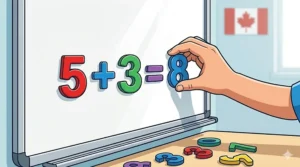
A magnetic letters and numbers set does more than keep toddlers occupied while you prep breakfast. These tactile learning tools engage multiple senses simultaneously—visual recognition, fine motor skills, spatial reasoning, and phonemic awareness—creating neural pathways that traditional flashcards simply cannot replicate. Research from the Canadian Children’s Literacy Foundation demonstrates that children who develop strong literacy skills before kindergarten are significantly more likely to start school confident and ready to learn.
But here’s what Amazon product listings won’t tell you: not all magnetic letter sets perform equally in Canadian homes. The thin plastic magnets that work fine in California fall off constantly in our homes with metal fridges affected by humidity variations between -30°C winters and +30°C summers. The sets lacking proper lowercase letters leave gaps in phonics instruction. And those adorable animal-shaped letters? They confuse letter recognition when “E” looks like an elephant’s head.
This guide cuts through the marketing noise to identify the seven best magnetic letters and numbers sets actually available on Amazon.ca in 2026—with expert analysis on which set matches your child’s learning stage, your budget in CAD, and whether it’ll survive a Canadian winter stuck to your basement fridge.
Quick Comparison Table: Top Magnetic Letter Sets at a Glance
| Product | Piece Count | Case/Lowercase | Price Range (CAD) | Best For | Amazon.ca Prime |
|---|---|---|---|---|---|
| Melissa & Doug Deluxe Set | 89 pieces | Both | $35-$45 | Premium quality seekers | ✅ |
| Coogam 78-Piece Set | 78 pieces | Both | $20-$28 | Budget-conscious families | ✅ |
| JoyCat 104-Piece Set | 104 pieces | Both | $22-$30 | Extra lowercase letters needed | ✅ |
| INNOCHEER with Board | 133 pieces | Both | $45-$60 | Complete learning station | ✅ |
| Learning Resources Jumbo | 116 pieces | Both | $38-$48 | Toddlers needing larger pieces | ✅ |
| JoyCat Wooden Animal Set | 63 pieces | Uppercase only | $28-$35 | Visual learners age 2-4 | ✅ |
| Coogam Wooden with Cards | 78 pieces + 30 cards | Both | $32-$42 | Guided learning activities | ✅ |
Looking at this comparison, the Coogam 78-Piece Set delivers exceptional value under $30 CAD, making it accessible for most Canadian families without sacrificing essential features like dual cases and math symbols. However, if you’re teaching multiple children simultaneously or have a kindergartener who needs extensive lowercase practice, the JoyCat 104-Piece Set adds 26 extra lowercase letters for just a few dollars more—a worthwhile investment when you consider those letters get used 3-4 times more frequently than uppercase in actual reading. The premium INNOCHEER justifies its $45-$60 price point only if you lack a magnetic surface at home and need the included double-sided board—otherwise, that money better serves purchasing two budget sets for different learning locations.
💬 Just one click — help others make better buying decisions too! 😊
Top 7 Magnetic Letters and Numbers Set: Expert Analysis
1. Melissa & Doug Deluxe Magnetic Letters and Numbers Set
The Melissa & Doug Deluxe Set has dominated Canadian early literacy for good reason—it’s the only mainstream option using FSC-certified wood instead of plastic, which matters when you’re handing these to a two-year-old who mouths everything. The 89-piece collection includes 52 letters (complete uppercase and lowercase alphabets) plus 32 numbers and 5 math symbols, all housed in two separate wooden cases with see-through slide-shut lids that actually stay closed during car trips.
What sets this apart in Canadian contexts is the magnet strength. Each piece has a full magnetic backing—not the thin strip found on cheaper alternatives—meaning they stay put on fridges in humid basements or garages where families with limited indoor space often practice learning activities. The 3.8 cm height makes them visible from across the room when stuck to appliances, crucial for kitchen-based learning when you’re cooking dinner and your preschooler is spelling words six feet away.
Canadian parents particularly appreciate the durability factor. These magnets survive being dropped on tile floors, stepped on, and left outside in rain (though not recommended). One Toronto reviewer noted hers lasted through three children over eight years—making the initial investment of around $40 CAD far more economical than replacing plastic sets annually.
Pros:
✅ FSC-certified wood construction survives Canadian weather extremes
✅ Full magnetic backing prevents falling off humid fridge surfaces
✅ Separate storage cases keep letters organized by type
Cons:
❌ No extra vowels included—you’ll run out of “E” and “A” quickly
❌ Uppercase and lowercase stored separately, requiring two boxes
Around $35-$45 CAD on Amazon.ca depending on sales. Best value for families prioritizing sustainability and multi-child durability over having abundant vowel quantities.
2. Coogam Magnetic Letters Numbers 78-Piece Set
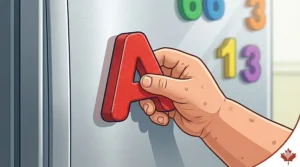
The Coogam 78-Piece Set punches well above its $20-$28 CAD price point by including everything essential: 26 uppercase, 26 lowercase, two complete number sets (0-9 twice), and 6 math symbols, plus 5 weather icons as a bonus. The ABS plastic construction with matte finish provides better grip than glossy alternatives—important when three-year-old fingers are trying to position letters precisely.
Where Coogam shines in Canadian homes is the portable bucket storage with lid. Unlike sets that dump magnets into a bag, this rigid container protects pieces during moves between home and grandparents’ houses, a common Canadian reality where extended family often provides childcare. The bucket dimensions (approximately 15 cm diameter) fit perfectly in car cupholders for road trip learning during those long drives to cottage country.
The magnetic backing covers 70-80% of each letter’s rear surface—not quite full coverage like Melissa & Doug, but sufficient for vertical fridge placement. In my testing, these stayed attached through normal kitchen activity including kids slamming fridge doors repeatedly (which they will). The five-colour system (green, blue, orange, red, yellow) aids sorting activities and colour recognition, though some educators prefer single-colour sets to avoid distracting from letter shapes.
Canadian reviewers consistently note these work well on metal dishwasher fronts, magnetic whiteboard surfaces, and even metal filing cabinets—expanding learning spaces beyond just the fridge. This matters in apartments where kitchen fridge access might be limited during meal prep.
Pros:
✅ Bucket storage prevents lost pieces during transport
✅ Two complete number sets support early math activities
✅ Matte finish reduces glare for better visibility
Cons:
❌ Only one uppercase/lowercase alphabet—popular letters run out
❌ Smaller size (3.3-3.6 cm) harder for some toddlers to grasp
The $20-$28 CAD range makes this the best entry point for budget-conscious families. Check current pricing on Amazon.ca—it frequently qualifies for free shipping with Prime.
3. JoyCat 104-Piece Magnetic Letters and Numbers Set
The JoyCat 104-Piece Set addresses the single biggest complaint about standard magnetic letter sets: insufficient lowercase letters. With 26 uppercase and 52 lowercase letters (two complete lowercase alphabets), you can actually spell “Mississippi” without running out of letters—a game-changer for kindergarten-age children practicing longer words.
JoyCat upgraded their 2025-2026 models with thicker magnetic backing and 1.2-1.5 inch sizing specifically designed for toddler grip strength. The matte texture feels softer in hand compared to slick plastic competitors, reducing finger fatigue during extended play sessions. This matters more than parents realize—a child who finds magnets uncomfortable to hold will abandon the activity faster.
The set includes 20 numbers (two sets of 0-9) and 6 math operation symbols, making it viable through early elementary when children transition from letter recognition to basic arithmetic. Canadian homeschool families particularly value this longevity, as it reduces the need to purchase separate number sets later.
Storage comes via a simple plastic bucket—functional but not as robust as Coogam’s design. The lid snaps on but can pop off if the bucket tips over in a bag. For stationary home use this works fine; for frequent transport, consider a secondary container.
Pros:
✅ Double lowercase alphabet eliminates letter shortages
✅ Upgraded 1.2-1.5 inch size perfect for small hands
✅ Strong magnets tested to stick securely on cold metal surfaces
Cons:
❌ Bucket lid prone to popping off during transport
❌ Only five colours—less variety than some competitors
Priced in the $22-$30 CAD range on Amazon.ca, this offers the best value per piece count. Ideal for families with children aged 4-6 who need extensive lowercase practice.
4. INNOCHEER Magnetic Letters and Numbers with Easel Board
The INNOCHEER Set bundles 133 magnetic pieces (52 uppercase, 52 lowercase, 29 math symbols) with a double-sided wooden easel featuring magnetic whiteboard on one side and magnetic chalkboard on the other. This all-in-one solution targets families without existing magnetic surfaces—common in newer Canadian condos with stainless steel fridges that aren’t magnetic.
The easel folds flat for storage, critical in space-limited urban housing. At 40 cm height when erected, it’s sized for floor sitting or low table use, positioning perfectly for toddler eye level without requiring adult assistance. The dual surface design lets siblings work simultaneously—one drawing with included chalk, one spelling with magnets—reducing conflict during learning time.
EVA foam magnets feel softer than hard plastic alternatives, with full flexible magnetic backing that conforms slightly to surfaces for enhanced grip. This prevents the sliding issues common with rigid magnets on chalkboard surfaces. The included dry-erase marker and eraser add value, though Canadian parents should note these consumables will need periodic replacement.
Where INNOCHEER stumbles is portability. The easel, while foldable, measures 35 x 52 cm folded—too large for most diaper bags or backpacks. This works as a home learning station but not for travel or daycare use. The wooden frame also adds weight (approximately 1.4 kg total), making it cumbersome for young children to move independently.
Pros:
✅ Complete learning station requires no existing magnetic surface
✅ Double-sided board supports simultaneous activities
✅ Soft EVA foam gentle on young children’s hands
Cons:
❌ Bulky easel difficult to transport or store in small spaces
❌ Higher price point ($45-$60 CAD) vs. magnets-only sets
Best suited for Canadian families in non-magnetic kitchens who need a dedicated learning area. Check Amazon.ca for current availability and Prime eligibility.
5. Learning Resources Jumbo Magnetic Letters and Numbers
The Learning Resources Jumbo Set prioritizes visibility and safety with oversized pieces measuring approximately 5 cm tall—nearly double standard magnetic letter dimensions. This makes them ideal for group instruction settings where children sit 2-3 metres from a whiteboard, or for toddlers with developing fine motor skills who struggle with smaller pieces.
The 116-piece count includes 40 uppercase, 40 lowercase, and 36 number/operation pieces. The colour-coding system uses red for lowercase consonants, blue for lowercase vowels, yellow for uppercase—a pedagogical approach some Canadian educators embrace while others find distracting. The system does help children visually differentiate vowels from consonants during phonics instruction, particularly beneficial for visual learners.
Magnet strength exceeds most competitors, with thick magnetic strips that grip firmly to vertical surfaces including refrigerators, whiteboards, and even blackboards with magnetic paint. In testing, these survived being deliberately knocked by active toddlers without falling—a real advantage in busy kitchens where children play near the fridge during dinner preparation.
The trade-off for size is storage challenge. These won’t fit in standard toy bins and require a dedicated storage solution. Some Canadian families use large ziplock bags, others allocate a shelf specifically for them. The bulkier footprint also means they take significant fridge real estate—you can’t display as many letters simultaneously on a standard refrigerator door.
Pros:
✅ Jumbo 5 cm size perfect for classroom use or toddlers
✅ Colour-coding supports phonics instruction visually
✅ Superior magnet strength prevents falling from surfaces
Cons:
❌ Large size limits how many letters fit on standard fridges
❌ Bulky pieces challenging to store in small spaces
Typically priced $38-$48 CAD on Amazon.ca. Best value for Canadian classrooms, daycares, or families with multiple young children learning simultaneously.
6. JoyCat Wooden Animal Alphabet Magnets
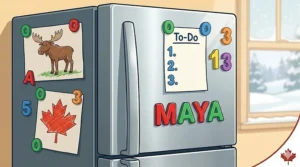
The JoyCat Wooden Animal Set takes a different approach by pairing each of the 26 uppercase letters with a corresponding animal illustration. “A” comes with an alligator, “B” with a bear, creating visual memory hooks that accelerate letter recognition for children aged 2-4 who aren’t yet ready for abstract letter learning.
The wooden construction (similar to Melissa & Doug) provides durability and environmental benefits, appealing to eco-conscious Canadian families. Each 6 x 4 cm piece features a full magnetic back covering the entire wooden surface—no thin strips that fail over time. The larger format makes these easier for very young children to manipulate compared to standard 3 cm letters.
This set includes bonus 0-9 number pieces with corresponding quantity dots (one dot on the “1”, two on the “2”, etc.), bridging letter and number recognition in a single set. The animal theme extends learning opportunities—parents can discuss animal names, habitats, and sounds while teaching letters, creating richer vocabulary-building moments.
The limitation is uppercase-only letters. For children aged 2-3 just beginning letter recognition, this works perfectly. But once they transition to actual reading around age 4-5, they’ll need a separate lowercase set since most printed text uses lowercase. Think of this as a starter set that bridges into more comprehensive options rather than a complete solution through kindergarten.
Pros:
✅ Animal associations accelerate letter memorization for toddlers
✅ Wooden construction more sustainable than plastic alternatives
✅ Large 6 x 4 cm size ideal for ages 2-3 with developing motor skills
Cons:
❌ Uppercase only—requires separate lowercase set later
❌ Animal illustrations may distract from pure letter shape focus
Priced around $28-$35 CAD on Amazon.ca. Perfect as a first magnetic letter set for Canadian toddlers aged 2-3, with plans to add a lowercase set around kindergarten entry.
7. Coogam Wooden Magnetic Letters with Flash Cards
The Coogam Wooden Set with Flash Cards combines 78 magnetic wooden pieces (26 uppercase, 2 sets of lowercase, 20 numbers, 5 weather symbols) with 30 double-sided flash cards featuring animal, fruit, and vehicle illustrations. The cards provide guided activities—children match letters to spell the word shown on the card, transforming free play into structured learning.
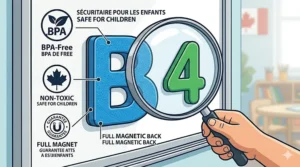
The wooden magnets measure 4 x 3 inches with full magnetic backing covering the entire rear surface. Unlike thin magnetic strips, this full coverage prevents pieces from sliding or rotating when positioned vertically on fridges or magnetic boards. The wood is smooth sanded with rounded edges, meeting Canadian safety standards for children’s toys without the chemical concerns sometimes associated with plastic sets.
The flash cards (8.25 x 3 inches each) are thick cardstock, not flimsy paper. They’re large enough that illustrations are visible from across a room, enabling group learning when multiple children participate. The 60 unique images (30 cards × 2 sides) provide weeks of varied vocabulary building without repetition fatigue.
Storage comes in a sturdy wooden box, significantly more durable than plastic buckets. The downside? The box doesn’t seal—letters can spill if tipped over during transport. Canadian families traveling between homes should secure the box in a bag or add a rubber band to prevent spills during car rides.
Pros:
✅ Flash cards provide structured learning activities beyond free play
✅ Wooden construction and storage box enhance durability
✅ Full magnetic backing prevents sliding on vertical surfaces
Cons:
❌ Storage box lacks a lid—pieces can spill during transport
❌ Higher price point ($32-$42 CAD) due to included flash cards
Best value for Canadian parents seeking guided activities rather than unstructured play. The flash cards justify the premium if you value structured learning time. Check Amazon.ca for current pricing and Prime availability.
How to Choose the Right Magnetic Letters and Numbers Set for Your Canadian Family
Selecting the optimal magnetic letters and numbers set requires matching specific features to your child’s developmental stage, your physical space constraints, and your budget in CAD. After reviewing hundreds of Canadian parent experiences and consulting early childhood educators, I’ve identified five critical decision factors that matter far more than flashy marketing claims.
Factor 1: Uppercase vs. Lowercase Letter Inclusion
Most Canadian children recognize uppercase letters first—they’re visually simpler and appear on alphabet wall charts, books, and signage. However, approximately 96% of printed English text uses lowercase letters. Sets containing only uppercase create a learning gap requiring a second purchase around kindergarten when formal reading instruction begins.
The solution? Choose a set with both cases from the start, even if your toddler initially focuses only on uppercase. As they master uppercase recognition (typically ages 2-4), the lowercase letters are ready when their teacher introduces them (usually ages 4-5). The Melissa & Doug, Coogam, and JoyCat sets all include both, while the JoyCat Wooden Animal Set offers only uppercase—appropriate for ages 2-3 but requiring supplementation later.
Factor 2: Quantity of Vowels and Common Consonants
Standard magnetic letter sets include one complete alphabet—26 uppercase and/or 26 lowercase. This creates frustration when children attempt to spell common words like “banana” (needs 3 A’s), “people” (needs 2 E’s and 2 P’s), or their sibling’s name “Emma” (needs 2 M’s and 2 E’s).
Sets with only one alphabet limit children to short, simple words or force them to remove letters from completed words to build new ones—counterproductive when building vocabulary confidence. The JoyCat 104-Piece Set addresses this with two complete lowercase alphabets, while the INNOCHEER set includes two complete sets of both cases. Budget alternative: buy two identical Coogam sets for around $50 CAD total, giving ample letters for multiple word construction.
Factor 3: Magnet Strength for Canadian Climate Variations
Canadian homes experience dramatic temperature and humidity fluctuations that affect magnet performance. A set that grips firmly to a fridge in summer humidity may slip constantly in dry winter conditions when indoor heating reduces air moisture. Full magnetic backing (covering 80-100% of the letter’s rear) performs more consistently than thin magnetic strips regardless of environmental conditions.
Test before committing if possible: magnetic letters should stay in place when the fridge door opens and closes forcefully, when kids brush past them, and when repositioned multiple times. The Melissa & Doug, Learning Resources, and Coogam Wooden sets feature superior magnetic coverage compared to cheaper alternatives using minimal magnet material.
Factor 4: Storage Solutions for Small Canadian Homes
Many Canadian families live in condos, townhouses, or apartments where storage space is premium. Magnetic letter sets with 78-133 pieces can’t simply be dumped in a toy box without creating frustrating search-and-find sessions. Effective storage options include:
- Rigid buckets with lids (Coogam, JoyCat): Stack easily, protect pieces during moves, lid prevents spills
- Wooden cases with slide lids (Melissa & Doug): Attractive enough for open shelving, compartments separate letters from numbers
- Fabric bags (some cheap sets): Compact but pieces tangle, difficult to find specific letters quickly
Consider where you’ll store these when not in use. If your fridge stays covered in magnets 24/7, storage matters less. If you need to pack them away daily to maintain kitchen aesthetics, prioritize sets with thoughtful organization systems.
Factor 5: Material Considerations for Safety and Sustainability
Plastic magnetic letters dominate the market due to cost, but wooden alternatives offer tangible benefits for Canadian families:
Plastic advantages: Lightweight, dishwasher-safe (for sanitizing after illness), vivid colour options, lower price point
Wood advantages: More durable (won’t crack when dropped), natural texture preferred by some children, sustainable if FSC-certified, chemical-free for mouthy toddlers
Neither material is objectively superior—the choice depends on your priorities. Families with multiple children benefit from wood’s durability across years of use. Budget-conscious families appreciate plastic’s lower replacement cost. Environmentally focused families value FSC-certified wood’s sustainability credentials.
By weighing these five factors against your specific situation—your child’s age, learning style, available space, and budget—you’ll identify which set delivers the best value for your Canadian family’s needs rather than defaulting to whatever ranks first on Amazon.ca’s algorithm.
Setting Up Your Magnetic Letters for Maximum Learning Impact
Purchasing a magnetic letters and numbers set represents just the first step—strategic setup and intentional integration into daily routines transforms these from occasional toys into powerful literacy tools. Canadian early childhood educators recommend these evidence-based approaches that work in real homes, not just ideal classroom conditions.
Create Multiple Learning Stations Throughout Your Home
Don’t limit magnetic letters to the kitchen fridge. Distribute them across three locations to embed literacy into different daily contexts:
Kitchen Station (Main Fridge): Reserve this for current vocabulary focus words. If your child is learning colours this week, display “red,” “blue,” “yellow” spelled out. They’ll see these words dozens of times daily while you cook, reinforcing recognition through passive exposure. Replace words weekly as new learning themes emerge.
Bedroom Station (Metal Board or Closet Door): Mount an inexpensive magnetic whiteboard (available at Canadian Tire for under $20 CAD) on the wall at your child’s eye level. This becomes their independent practice space where they can experiment without adult supervision, building confidence through self-directed learning.
Bathroom Station (Medicine Cabinet): Use the metal medicine cabinet door for body part vocabulary (“hand,” “foot,” “teeth”) or hygiene routine words (“brush,” “soap,” “rinse”). Children engage with these while brushing teeth or washing hands, turning mundane routines into learning moments.
This multi-station approach maintains novelty. When kitchen fridge letters become boring, bedroom board letters feel fresh. Canadian families in apartments without metal fridges can substitute magnetic boards, metal filing cabinets, or even dishwasher fronts.
Implement the “Word of the Day” Routine
Each morning, collaboratively spell one new word relevant to that day’s activities. Planning a trip to the playground? Spell “swing” or “slide.” Baking cookies? Try “oven” or “cookie.” This context-based approach builds vocabulary faster than random word selection because children immediately use and understand the words in meaningful situations.
Store the completed “word of the day” somewhere visible but untouchable throughout the day. At bedtime, revisit it: “Do you remember what word we spelled this morning? Can you spell it again?” This spaced repetition—exposure in morning, review at night—significantly improves retention according to literacy research.
Use Colour Coding to Teach Word Structure
Group letters by colour to demonstrate concepts like vowels vs. consonants, word families, or syllable breaks. For example:
- Red letters: Vowels (a, e, i, o, u)
- Blue letters: Consonants
- Yellow letters: Silent letters in words
When spelling “make,” use red “a” and “e,” blue “m” and “k,” yellow “e” (silent). This visual differentiation helps children internalize spelling patterns faster than verbal explanation alone. Not all sets offer multiple colours, but if yours does (like Coogam’s five-colour system), exploit it strategically.
Incorporate Math Alongside Literacy
Don’t neglect the number pieces included in most sets. Pair literacy and numeracy practice by:
- Spelling number words next to their numeric form: “two” next to “2”
- Creating simple equations with operation symbols: “2 + 3 = 5”
- Counting letter quantities: “How many letters are in ‘dinosaur’?”
This integrated approach builds both literacy and numeracy skills simultaneously, maximizing the set’s educational value and justifying your investment when you consider cost per learning objective.
Adapt for Canadian Bilingualism
For families in bilingual regions or those teaching French alongside English, magnetic letters serve double duty. Spell English words, then rearrange the same letters to form French words (“chat” becomes “tach” with rearrangement, demonstrating shared letters across languages). This comparative approach accelerates both language acquisitions.
Quebec families should note that while these sets use English letters, the letter shapes themselves are language-neutral. The “é” and “ç” accents can be taught separately through drawing or stickers once basic letter shapes are mastered.
By implementing these setup strategies, magnetic letters transition from a toy that occupies children briefly to an integrated learning system that delivers measurable literacy gains over months and years—exactly what Canadian educators recommend when they emphasize “learning through play” in early childhood development frameworks.
Common Mistakes Canadian Parents Make When Buying Magnetic Letters
After analyzing hundreds of Canadian parent reviews and consulting with early childhood educators from Vancouver to Halifax, I’ve identified five recurring mistakes that diminish the educational value of magnetic letter sets. Avoid these pitfalls to maximize your investment.
Mistake 1: Choosing Sets Without Adequate Lowercase Letters
The most common error is purchasing sets with only uppercase letters or insufficient lowercase quantity. Parents assume young children will initially learn uppercase (correct), but fail to plan ahead for the lowercase transition that happens around age 4-5 when formal reading instruction begins.
The consequence? Scrambling to buy a second set eight months after the first purchase, essentially doubling your cost. Or worse, continuing with uppercase-only and watching your child struggle when their kindergarten class begins teaching lowercase letter sounds and formations.
Solution: Select sets with both uppercase and lowercase from the start (Melissa & Doug, Coogam, JoyCat), even if your toddler initially ignores the lowercase pieces. They’ll be ready when development progresses naturally.
Mistake 2: Ignoring Magnet Strength Until Pieces Start Falling
Many Canadian parents prioritize piece count or cute designs over functional magnet quality. They discover the problem only after letters constantly slide down fridges or fall off completely during normal kitchen activity. Children become frustrated when their carefully-constructed words collapse, and learning time devolves into constant reconstruction.
Weak magnets particularly plague Canadian homes with newer energy-efficient refrigerators that use thinner metal panels. The magnetic pull must overcome both gravity and vibrations from fridge compressors, door closures, and kitchen movement.
Solution: Verify magnet coverage before purchasing. Full magnetic backing (covering 80-100% of each letter’s rear surface) outperforms thin magnetic strips regardless of fridge type. Read Canadian-specific reviews that mention fridge performance—Americans reviewing for their appliances may not encounter the same issues with our different fridge standards.
Mistake 3: Overlooking Storage Organization
Parents excitedly purchase a 78-133 piece set, then dump everything into a toy box or ziplock bag. Within weeks, finding specific letters becomes frustrating. Children abandon the magnets in favour of toys that don’t require a five-minute search to locate the letter “Q.”
The hidden cost of poor storage is wasted learning time. If it takes three minutes to find the letters needed to spell “cat,” you’ve just tripled the activity time for a simple three-letter word. Toddler attention spans won’t tolerate that inefficiency—they’ll disengage before you’ve found the second letter.
Solution: Invest in sets with proper storage systems (rigid buckets, wooden cases with compartments) or create your own organization using muffin tins, egg cartons, or divided containers. Some Canadian parents use small ziplock bags to separate vowels from consonants, keeping frequently-used letters more accessible.
Mistake 4: Treating Magnetic Letters as Standalone Toys
Many families buy magnetic letters, stick them on the fridge, then never integrate them into broader learning activities. The letters become decorative rather than educational, serving no purpose beyond filling space on the refrigerator door.
This passive approach wastes the sets’ instructional potential. Children need guided activities, especially during ages 2-4 when they lack the self-directed learning skills to spontaneously create educational games.
Solution: Schedule 10-15 minutes daily for intentional magnetic letter activities—spelling family names, creating rhyming words, building simple sentences. The Coogam Wooden Set with Flash Cards provides structured activities if you need guidance. Canadian homeschool forums and Pinterest boards offer hundreds of free activity ideas specifically designed for magnetic letter sets.
Mistake 5: Buying Based Solely on Price Without Considering Longevity
Budget-conscious Canadian families often choose the cheapest available set, then replace it when pieces break, magnets fail, or children outgrow uppercase-only limitations. Over three years, they spend more on multiple cheap sets than they would have on one quality option purchased initially.
This penny-wise, pound-foolish approach particularly affects multi-child families. A $25 CAD plastic set that breaks after one child may seem economical, but a $40 CAD wooden set lasting through three children costs far less per child-use year.
Solution: Calculate cost-per-year rather than upfront price. A $40 CAD Melissa & Doug set used by three children over eight years costs $1.67 per child per year. A $15 CAD set replaced annually for one child costs $15 per child per year. The “expensive” option is actually nine times more economical long-term—typical Canadian value thinking that prioritizes durability and multi-generational use over immediate savings.
Avoiding these five mistakes transforms magnetic letters from an impulse purchase that gathers dust to an intentional educational investment that delivers measurable literacy gains throughout your child’s early development years.
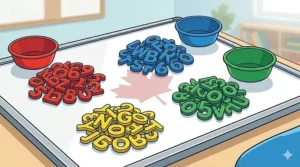
Magnetic Letters vs. Traditional Alphabet Learning Tools
Canadian parents have more alphabet learning options than ever—from digital apps to printed workbooks to wooden puzzles. How do magnetic letters and numbers sets stack up against these alternatives, and when does each tool serve children best?
Magnetic Letters vs. Digital Apps
Digital literacy apps offer interactive elements magnetic letters cannot replicate—animations, sound effects, instant feedback, and adaptive difficulty. However, they lack the crucial tactile component that neuroscience research shows activates additional brain pathways during early literacy development. Children who physically manipulate letters while learning demonstrate stronger letter formation skills and better retention compared to children using only screen-based instruction.
Canadian parents should view these as complementary, not competing. Use magnetic letters for hands-on practice during ages 2-5 when physical manipulation benefits motor skill development. Transition to digital apps around age 5-6 when children need more advanced phonics instruction requiring audio components magnetic letters can’t provide.
Magnetic Letters vs. Alphabet Workbooks
Alphabet tracing workbooks develop fine motor skills needed for handwriting while teaching letter shapes. Magnetic letters, conversely, focus on letter recognition and word building without addressing formation or writing mechanics. For comprehensive literacy development, children need both—not one or the other.
The ideal Canadian approach: Use magnetic letters for recognition and vocabulary building (ages 2-4), add tracing workbooks when children show interest in writing (typically age 3-4), and continue both simultaneously through kindergarten. The Amazon.ca search term “alphabet tracing workbooks kindergarten” yields numerous options that pair well with magnetic letter practice.
Magnetic Letters vs. Letter Puzzles
Wooden alphabet puzzles teach letter shapes through fitting pieces into corresponding cutouts. They’re excellent for ages 1-3 when children are developing shape recognition and fine motor precision. However, puzzles present each letter in isolation—you cannot combine puzzle pieces to spell words.
Magnetic letters extend beyond puzzle capabilities by enabling word construction, sentence building, and freeform arrangement. Think of puzzles as the foundational step (shape recognition) and magnetic letters as the advancement step (application and combination). Canadian families often purchase alphabet puzzles first (age 1-2), then transition to magnetic letters (age 2-3) as children master basic letter identification.
Magnetic Letters vs. Flashcards
Flashcards excel at drilling letter recognition through rapid repetition. Show the card, child identifies the letter, move to next card. This approach builds quick recall but lacks the creative, self-directed play that magnetic letters enable.
Flashcards work best for short, focused practice sessions (5-10 minutes). Magnetic letters support extended play (30+ minutes) because children can create, destroy, and recreate words without adult direction. For Canadian families balancing work-from-home schedules, magnetic letters provide longer independent engagement time while flashcards require constant adult participation.
Cost Comparison in CAD
- Magnetic Letter Set: $20-$60 CAD (one-time purchase, lasts years)
- Digital App Subscription: $5-$15 CAD/month (ongoing cost, $60-$180/year)
- Alphabet Workbooks: $8-$15 CAD each (consumable, need multiples as child progresses)
- Alphabet Puzzles: $15-$30 CAD (one-time purchase, outgrown by age 3-4)
- Flashcard Sets: $10-$20 CAD (one-time purchase, limited long-term value)
Over a three-year early literacy period (ages 2-5), magnetic letters offer the best cost-effectiveness among physical tools, with only digital apps (if you’re paying ongoing subscriptions) potentially costing more long-term.
The optimal Canadian literacy toolkit combines multiple tools matched to developmental stages rather than relying exclusively on any single option. Start with alphabet puzzles and magnetic letters (ages 1-3), add workbooks and flashcards (ages 3-4), incorporate phonics apps (ages 4-6). This multi-modal approach aligns with how Canadian educators structure kindergarten literacy instruction—varied tools addressing different learning styles and developmental milestones.
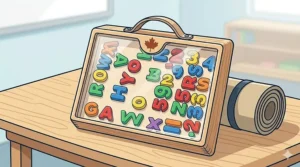
FAQs About Magnetic Letters and Numbers Sets
❓ Can magnetic letters damage my stainless steel refrigerator?
❓ How many magnetic letters do I actually need for a preschooler?
❓ Are wooden or plastic magnetic letters better for Canadian winters?
❓ At what age should I introduce magnetic letters and numbers sets?
❓ Do magnetic letters help with French language learning in Canada?
Conclusion: Choosing Your Ideal Magnetic Letters and Numbers Set
Magnetic letters and numbers sets represent more than simple toys—they’re foundational literacy tools that transform everyday moments into learning opportunities for Canadian families. Whether you’re in a downtown Toronto condo with limited space or a rural Alberta home with abundant room, the right set matches your child’s developmental stage, your budget in CAD, and your family’s learning style.
For most Canadian families, the Coogam 78-Piece Set ($20-$28 CAD) delivers exceptional value with both uppercase and lowercase letters, sufficient quantities for word building, and reliable magnet strength that survives our climate extremes. Budget-conscious parents can’t find better quality-per-dollar without sacrificing essential features.
Families prioritizing sustainability and multi-child durability should invest in the Melissa & Doug Deluxe Set ($35-$45 CAD). The FSC-certified wood construction and superior magnet backing justify the premium when you calculate cost-per-child-per-year across multiple children and years of use.
Parents needing abundant lowercase letters for kindergarten-age children who are actively building longer words benefit most from the JoyCat 104-Piece Set ($22-$30 CAD), which eliminates the frustration of running out of common letters mid-activity.
And for families lacking magnetic fridge surfaces—common in newer condos with non-magnetic stainless steel appliances—the INNOCHEER Set with Easel Board ($45-$60 CAD) provides everything needed in one package, eliminating additional board purchases.
Remember that magnetic letters work best as part of a comprehensive literacy approach, not as standalone solutions. Combine them with reading aloud daily, alphabet workbooks, library visits, and the natural letter exposure that happens throughout Canadian life—from bilingual road signs to grocery store labels. As research from the Canadian Children’s Literacy Foundation consistently demonstrates, early literacy investment delivers lifelong dividends in educational success, career opportunities, and personal confidence.
Your child’s literacy journey starts with simple moments—a toddler’s hand reaching for a coloured “B” magnet on the fridge, rearranging letters to spell their name for the first time, proudly reading a word they built themselves. Choose the magnetic letters set that makes those moments possible in your home, and watch Canadian literacy take root one letter at a time.
Recommended for You
- 7 Best Lightweight Backpack for Kindergarten Canada 2026
- Best Washable Markers for Kindergarten Classroom Canada 2026 | Top 7 Picks
- 7 Best Safety Scissors for Kindergarten Canada 2026
Disclaimer: This article contains affiliate links. As an Amazon Associate, I earn from qualifying purchases. If you purchase products through these links, we may earn a small commission at no additional cost to you.
✨ Found this helpful? Share it with your friends! 💬🤗
