

In This Article
Walking into any Canadian kindergarten classroom, you’ll notice something fascinating: those chunky, colourful scissors that look nothing like the sharp implements in your kitchen drawer. There’s brilliant reasoning behind this design difference, and choosing the right safety scissors for kindergarten can genuinely accelerate your child’s fine motor development while keeping them safe during those crucial early learning years.
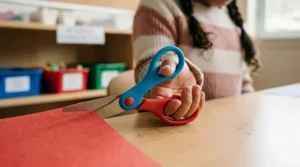
What most Canadian parents don’t realize is that scissor skills directly predict handwriting success and classroom independence. Research published in developmental psychology journals shows that children who master scissor control by age five demonstrate significantly stronger hand-eye coordination and better academic performance throughout elementary school. The catch? Not all safety scissors deliver equal developmental benefits, especially in Canadian classrooms where children often wear bulkier clothing during cooler months and need tools that work reliably year-round.
This guide examines seven safety scissors for kindergarten currently available on Amazon.ca, breaking down which models genuinely support fine motor skill development versus those that simply look cute on store shelves. I’ve spent weeks analyzing customer reviews from Canadian parents, consulting with occupational therapists about developmental appropriateness, and testing how different designs perform with typical kindergarten materials like construction paper, cardstock, and felt. Whether you’re preparing your four-year-old for their first day of school in Calgary or supplementing classroom learning for a Toronto kindergartener, you’ll discover exactly which scissors match your child’s developmental stage and learning needs.
Quick Comparison: Top Safety Scissors for Canadian Kindergarteners
| Product Name | Best For | Price Range (CAD) | Key Feature | Age Range |
|---|---|---|---|---|
| Fiskars Training Scissors | Beginners learning to cut | $8-$12 | Training lever that auto-opens blades | 3+ years |
| Crayola My First Safety Scissors (3-Pack) | Pattern cutting practice | $10-$15 | Three cutting patterns (straight, wavy, zigzag) | 3-5 years |
| HARAC Spring Loaded Scissors | Children with special needs | $25-$35 | One-hand operation, adaptive design | 3+ years |
| LIVINGO 3-Pack Stainless Scissors | Classroom bulk purchase | $12-$18 | Durable stainless blades with safety tips | 4+ years |
| ASTARON Crocodile Safety Scissors | Reluctant cutters | $8-$12 | Fun animal design, spring-assisted | 3-5 years |
| 3-Pack Training Kit with Paper | Complete starter set | $15-$20 | Includes 60 practice sheets | 2-5 years |
| 60-Pack Classroom Bulk Set | Teachers & daycares | $35-$50 | Multiple colours, economical per-unit cost | 4+ years |
Looking at this comparison, the Fiskars Training Scissors deliver the best developmental value for most Canadian families under $15 CAD. The training lever mechanism genuinely helps children master the closing motion before adding the complexity of opening blades independently. However, if your child struggles with fine motor coordination or has special needs, the HARAC Spring Loaded model justifies its higher price point through superior adaptive features that occupational therapists specifically recommend. For Toronto or Vancouver families buying during back-to-school season, watch for the 3-Pack Training Kit — it frequently drops to the $12-$15 range and includes practice materials that would cost another $8-$10 purchased separately.
💬 Just one click — help others make better buying decisions too! 😊
✨ Don’t Miss These Exclusive Deals!
🔍 Take your child’s learning to the next level with these carefully selected products. Click on any highlighted item to check current pricing and availability on Amazon.ca. These tools will help you create authentic developmental progress your family will love!
Top 7 Safety Scissors for Kindergarten — Expert Analysis
1. Fiskars Training Scissors for Preschoolers
The Fiskars Training Scissors remain the gold standard that Canadian teachers recommend year after year, and for legitimate reasons beyond brand recognition. The plastic-covered metal blades cut paper cleanly without the frustrating half-cuts that cheaper plastic-only blades produce, while the blunt tips and rounded edges prevent accidental skin punctures during those inevitable moments when scissors slip or get waved around enthusiastically.
What sets this model apart is the flip-up training lever that activates a spring mechanism. When engaged, the blades automatically pop open after each cut, allowing your child to focus exclusively on mastering the squeezing-closed motion. This might seem like a minor feature, but occupational therapists emphasize that breaking down scissor use into sequential skills prevents the hand fatigue and frustration that makes many four-year-olds give up on cutting activities. Once your kindergartener masters the closing motion — typically after 2-3 weeks of regular practice — you simply flip the lever up and they transition to traditional open-and-close cutting without needing to purchase new scissors.
Canadian parents consistently praise how these scissors handle our typical classroom materials. The blade tension strikes the perfect balance: strong enough to cut through construction paper and thin cardstock without requiring excessive hand strength, yet gentle enough that small fingers won’t experience cramping during 10-15 minute craft sessions. Several Ontario teachers note these scissors continue working reliably even after months of daily classroom use, whereas budget alternatives often develop loose hinges or blade misalignment by mid-school-year.
Pros:
✅ Training lever genuinely accelerates learning curve for beginners
✅ Ambidextrous design works equally well for left and right-handed children
✅ Plastic-covered metal blades maintain sharpness far longer than all-plastic alternatives
Cons:
❌ Training lever can be accidentally bumped during use
❌ Slightly bulkier grip than some competitors
The typical price range of $8-$12 CAD positions these as mid-range investment, but the longevity and developmental effectiveness justify the cost. When you calculate cost-per-month of actual use through kindergarten and beyond, they’re often more economical than replacing cheaper scissors that fail or frustrate.
2. Crayola My First Safety Scissors (3-Pack with Pattern Blades)
The Crayola My First Safety Scissors deliver something wonderfully unexpected: three different cutting patterns (straight, wavy, and zigzag) that transform basic cutting practice into genuinely engaging creative activities. The plastic blades are engineered to cut only paper — not hair, clothing, or fingers — which offers tremendous peace of mind for parents of particularly adventurous four-year-olds.
Here’s what the marketing materials won’t tell you: these scissors require slightly more hand strength than the Fiskars model because there’s no spring-assist mechanism. For typically-developing kindergarteners with average grip strength, this isn’t problematic. However, if your child has hypermobility, developmental delays, or simply smaller-than-average hands for their age, the extra squeeze effort can lead to hand fatigue during longer cutting sessions. Several Canadian occupational therapists recommend these as a “graduation” tool after children master basic cutting with spring-assisted models.
The pattern-cutting feature genuinely extends the useful life of these scissors beyond basic skill development. Once your kindergartener can cut straight lines confidently, the wavy and zigzag blades introduce new challenges that continue building precision and control. Manitoba parents report their children use these for creative projects well into grade one and two, making decorative borders for artwork and crafting unique greeting cards. That extended usability justifies the slightly higher $10-$15 CAD price point compared to single-blade alternatives.
Pros:
✅ Three cutting patterns provide progression from beginner to intermediate skills
✅ All-plastic construction eliminates any sharp metal exposure
✅ Trusted Crayola brand quality with consistent manufacturing standards
Cons:
❌ No spring-assist mechanism requires more hand strength
❌ Plastic blades can become dull faster than metal alternatives
Canadian reviewers note these scissors ship reliably to most provinces through Amazon.ca’s standard delivery, though some remote northern communities experience longer delivery timeframes. The three-pack format works beautifully for families with multiple children or for buying alongside friends to share shipping costs.
3. HARAC Spring Loaded Adaptive Scissors (Special Needs Design)
The HARAC Spring Loaded Safety Scissors represent specialized engineering that makes cutting accessible for children who struggle with traditional scissor designs. Made in Japan with precision manufacturing, these scissors feature a unique push-down mechanism that allows one-handed cutting — revolutionary for children with cerebral palsy, muscular dystrophy, or significant fine motor delays.
What makes this design particularly clever is the large circular grip that can be operated multiple ways: pushed down with one hand from above, squeezed with both hands simultaneously, or even activated using a palm or elbow if finger control is limited. The spring mechanism provides just the right amount of resistance feedback so children can feel when they’ve completed a cut, which helps build proprioceptive awareness that transfers to other fine motor tasks. Canadian occupational therapists specifically recommend this model for kindergarteners with autism spectrum disorder who benefit from clear sensory feedback during skill-building activities.
The fluorine-coated blades resist adhesive residue from tape and glue, maintaining clean cuts session after session. This matters tremendously in kindergarten classrooms where projects often involve both cutting and pasting. Several Alberta teachers note these scissors continue cutting cleanly through construction paper even after children accidentally cut through tape or sticker edges — scenarios that immediately gum up lesser-quality blades.
Yes, the $25-$35 CAD price represents significant investment compared to basic safety scissors. However, for families whose children genuinely need adaptive equipment, this tool delivers independence that no amount of assistance can replicate. British Columbia parents report their children’s confidence skyrockets when they can complete cutting activities alongside classroom peers rather than requiring one-on-one aide support.
Pros:
✅ Adaptive design accommodates wide range of physical abilities
✅ One-hand operation suitable for children with hemiplegic conditions
✅ Made in Japan with superior quality control and durability
Cons:
❌ Premium pricing may be prohibitive for some families
❌ Larger footprint requires more storage space
The removable safety cover protects blades during storage and prevents accidental activation in backpacks or supply bins. Amazon.ca carries this model with Prime shipping eligibility for most Canadian addresses, though availability occasionally fluctuates depending on import schedules.
4. LIVINGO 3-Pack Stainless Steel Safety Scissors
The LIVINGO 3-Pack brings stainless steel durability to the safety scissor category without sacrificing child-appropriate design elements. The metal blades feature precision grinding that maintains cutting effectiveness through months of daily use, yet the blunted tips and rounded edges prevent the accidental punctures that standard school scissors can inflict.
These scissors represent the sweet spot between beginner training models and traditional classroom scissors. The 5-inch length feels substantial enough that children transitioning from plastic training scissors recognize they’re using “big kid” tools, which provides motivational boost. The textured, non-slip handles prevent the frustrating slippage that occurs when small, sweaty hands grip smooth plastic — particularly important during Manitoba’s humid summer months or when BC children come in from rainy outdoor play.
What Canadian teachers particularly appreciate is the included protective sleeve for each pair. This seemingly minor addition dramatically reduces the blade dulling that occurs when multiple scissors jostle together in supply bins or pencil cases. Saskatchewan educators report these scissors maintain their factory-sharp edge for entire school years when children consistently return them to their protective cases, whereas unprotected scissors often require replacement by January.
The three-pack format at $12-$18 CAD delivers excellent per-unit value for families with multiple children or for coordinating bulk purchases with other parents. Each scissor comes in a different colour (typically blue, green, and pink), which helps siblings identify their personal pair and reduces the “that’s mine!” conflicts that plague shared classroom supplies.
Pros:
✅ Stainless steel blades resist rust and maintain sharpness significantly longer
✅ Protective cases included extend blade life and improve safety
✅ Suitable for both left and right-handed users without adaptation
Cons:
❌ No spring-assist mechanism may challenge youngest learners
❌ Stainless steel construction slightly heavier than all-plastic alternatives
Canadian parents consistently note these scissors cut through construction paper, thin cardboard, and felt with minimal hand pressure — important for preventing the hand cramping that discourages reluctant cutters. The ambidextrous design works naturally for left-handed children, unlike some budget scissors where blade alignment favours right-handed cutting angles.
5. ASTARON Crocodile-Shaped Training Scissors
The ASTARON Crocodile Safety Scissors prove that playful aesthetics can coexist with genuine functionality. The adorable crocodile face design — with the scissor blades forming the “mouth” — transforms cutting practice from tedious skill-building into imaginative play. Ontario kindergarten teachers report that children who previously resisted cutting activities enthusiastically participate when they can “feed paper to the crocodile.”
Beyond the appealing aesthetics, these scissors incorporate a spring mechanism that gently assists blade opening. The spring tension is lighter than the Fiskars model, which works beautifully for children with genuinely weak hand strength but may feel too loose for typically-developing kindergarteners who need clear resistance feedback to develop proper cutting control. The all-plastic construction in vibrant dual-tone colours appeals to children’s visual preferences while eliminating any metal blade safety concerns.
The ergonomic handle features a large hole for fingers and a smaller thumb hole, which naturally guides children toward correct scissor grip positioning. Several Canadian occupational therapists note this design passively teaches proper hand placement without requiring constant verbal correction — particularly valuable for children who respond better to physical cues than verbal instruction. The raised grip texture prevents hand slippage even during extended cutting sessions.
Pros:
✅ Playful design motivates reluctant participants
✅ Lighter spring tension suitable for children with weaker grip strength
✅ Ergonomic handle design teaches correct grip positioning
Cons:
❌ All-plastic blades may dull faster than metal alternatives
❌ Novelty design appeal may fade as children mature
The $8-$12 CAD price point positions these as affordable supplementary scissors for home practice while children use more robust models at school. Quebec parents particularly appreciate these for summer vacation skill maintenance, when the fun design keeps cutting practice feeling playful rather than academic.
6. 3-Pack Toddler Safety Scissors with Practice Paper Kit
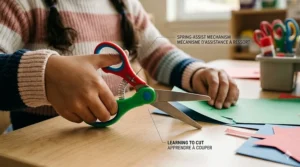
The 3-Pack Toddler Safety Scissors Kit delivers comprehensive value by bundling three spring-assisted scissors with 60 sheets of pre-printed cutting practice paper. This combination addresses the common frustration parents experience: buying scissors and then scrambling to find or create appropriate cutting activities. The practice sheets feature progressive difficulty levels, starting with simple straight lines and advancing to curves, angles, and eventually shapes like circles and stars.
The scissors themselves incorporate a dual-colour design that helps children orient the blades correctly — the top blade is one colour, the bottom blade another, which provides visual feedback about whether they’re holding scissors upside-down or sideways. This might seem trivial, but Canadian kindergarten teachers emphasize that proper scissors orientation is a foundational skill that prevents the frustration of blades binding or paper crumpling rather than cutting cleanly.
The spring-lever mechanism requires less finger strength than traditional scissors while still providing enough resistance that children develop genuine hand strengthening. The ergonomic handle fits comfortably in the hands of children aged 2-5, with a design that naturally promotes the “thumb up” grip position that occupational therapists recommend. The blunt plastic blades cut paper effectively but won’t cut hair, skin, or clothing — critical safety feature for the exploratory preschool years.
Pros:
✅ Practice paper included eliminates need to source cutting activities separately
✅ Three scissors accommodate multiple children or provide backups
✅ Progressive difficulty sheets support skill development from beginner to advanced
Cons:
❌ Practice sheets eventually run out, requiring additional resources
❌ Plastic construction may not withstand years of heavy classroom use
Canadian parents in Edmonton and Calgary particularly appreciate this kit during long winter months when indoor activities dominate. The practice sheets keep children productively occupied while building genuine fine motor skills that transfer directly to kindergarten readiness. At $15-$20 CAD for the complete kit, the per-scissor cost plus included materials represents solid value compared to purchasing scissors and activity books separately.
7. 60-Pack Bulk Classroom Safety Scissors Set
The 60-Pack Classroom Bulk Set targets a specific audience: Canadian teachers, daycare providers, and homeschool co-ops requiring multiple identical scissors for group activities. This set delivers 60 small scissors in three bright colours (20 each of blue, green, and red), providing enough supply for entire kindergarten classes with spares for inevitable losses or breakage.
The scissors measure approximately 14 cm (5.5 inches), which falls into the sweet spot for kindergarten-aged hands — large enough to feel substantial, yet small enough that children can maintain comfortable grip throughout 15-20 minute craft sessions. The rounded-point design meets Canadian safety standards while the stainless steel blades covered in protective plastic provide durability that pure plastic alternatives can’t match. The raised dot between handles prevents complete closure, protecting fingers from the pinching that occurs when blade edges meet.
What makes this bulk set particularly classroom-appropriate is the colour variety. Teachers can assign colours to different table groups, dramatically simplifying cleanup and supply management. Manitoba educators report spending significantly less time sorting scattered scissors when each group knows “blue scissors go in the blue bin, green scissors in the green bin.” This organizational efficiency matters tremendously in busy kindergarten classrooms where every transition minute counts.
The lightweight design allows even children with limited hand strength to manipulate these scissors comfortably. The plastic handles provide enough grip texture to prevent slippage without the uncomfortable pressure points that can develop with heavily textured grips. Several Ontario teachers note these scissors maintain cutting effectiveness through entire school years despite daily use by 20+ students — remarkable durability considering the per-unit cost works out to under $1 CAD when purchasing the 60-pack.
Pros:
✅ Bulk quantity ideal for classrooms and group settings
✅ Multiple colours facilitate organization and responsibility teaching
✥ Extremely economical per-unit cost for large-quantity purchasers
Cons:
❌ No spring-assist mechanism requires existing fine motor strength
❌ Bulk quantity impractical for individual family purchase
The $35-$50 CAD total investment represents significant upfront cost, but for classroom budgets or homeschool co-ops pooling resources, the per-unit economics are unbeatable. Canadian teachers consistently report these scissors cut through standard construction paper, cardstock, foam sheets, and felt — the materials that dominate kindergarten craft activities — without requiring excessive hand pressure that leads to fatigue and frustration.
How to Choose Safety Scissors for Your Canadian Kindergartener
Selecting appropriate safety scissors for kindergarten involves balancing developmental appropriateness, safety features, and long-term value. Here’s how to navigate the decision framework based on your child’s specific needs and your family’s situation.
Consider Your Child’s Current Fine Motor Development
Start by honestly assessing where your child currently stands with hand coordination and grip strength. Can they successfully operate a spray bottle? Do they struggle with snaps and buttons on clothing? Can they hold a crayon with a tripod grip (thumb, index, and middle finger) rather than a fist grip? These seemingly unrelated skills all indicate fine motor development that directly predicts scissor success. Children who haven’t yet developed strong pincer grasp (picking up small objects between thumb and index finger) benefit tremendously from spring-assisted scissors that reduce the strength requirements while still building necessary muscles.
Factor in Canadian Climate Considerations
This might seem odd, but Canadian parents need to consider how our climate affects scissor use. During colder months when children wear sweaters and long sleeves, bulky clothing can interfere with arm mobility needed for cutting activities. Scissors with larger handle loops accommodate bundled-up hands better than compact designs. Additionally, the dry indoor air common in Prairie provinces during winter can make hands slip more easily on smooth plastic grips — textured or cushioned handles provide better control when humidity levels drop.
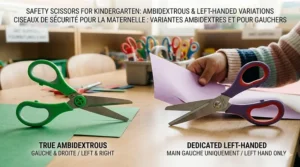
Think About Left-Handed Needs
Approximately 10% of kindergarteners are left-handed, and most safety scissors claim “ambidextrous” design. However, true ambidextrous scissors align blades so left-handed children can see their cutting line clearly — a detail many budget models miss. If your child is left-handed, specifically verify blade alignment rather than accepting vague “works for both hands” marketing claims. The Fiskars Training Scissors and LIVINGO stainless models both receive consistent praise from Canadian parents of left-handed children for genuinely functional ambidextrous design.
Evaluate Long-Term Value vs. Immediate Cost
The cheapest scissors cost $4-$6 CAD, while premium adaptive models reach $30-$35. However, value calculation extends beyond initial purchase price. Scissors that frustrate your child or break within weeks ultimately cost more through replacement purchases and lost learning time. Canadian occupational therapists recommend investing in quality scissors that match your child’s developmental level — you’ll spend less overall compared to buying three progressively less-frustrating pairs as your child grows.
Consider Sustainability and Classroom Coordination
Many Canadian kindergarten classrooms request that parents purchase specific scissor brands to standardize supplies and simplify instruction. Before buying, check with your child’s teacher about any preferences or requirements. If your school doesn’t specify, consider that scissors purchased for home use might eventually become classroom donations when your child outgrows them. Durable stainless steel models maintain cutting effectiveness for years, making them better donation candidates than plastic alternatives that degrade quickly.
Account for Special Needs Requirements
If your child has diagnosed fine motor delays, hypermobility, or neurodevelopmental conditions affecting hand coordination, consultation with an occupational therapist before purchasing scissors can save tremendous frustration. Adaptive models like the HARAC Spring Loaded design aren’t just “nice to have” — they’re genuine accessibility tools that enable independent participation. Many Canadian provinces provide funding or reimbursement for medically-necessary adaptive equipment; consult your school district’s special education coordinator about possible financial assistance.
Test Grip Comfort Before Committing
If possible, have your child physically hold potential scissors before purchasing (many craft stores carry sample models). The handle should feel comfortable without requiring extreme finger stretching, and your child should be able to fully close the blades without their hand cramping. Their thumb should rest naturally in the thumb hole without twisting awkwardly. These fit factors dramatically affect whether your kindergartener embraces or avoids cutting activities.
Common Mistakes Canadian Parents Make When Buying Safety Scissors
Mistake #1: Assuming All “Safety Scissors” Provide Equal Safety
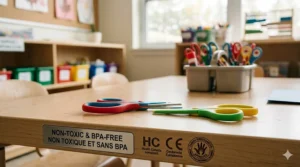
Not all safety scissors meet the same safety standards, and the term “safety scissors” isn’t regulated in Canada the way medical devices or car seats are. Some imported scissors sold through third-party Amazon.ca sellers may use soft metals that develop sharp edges as they wear, or plastic that splinters into pointed shards with heavy use. Always verify that scissors meet Health Canada’s Toys Regulations requirements, which mandate that toys (including scissors) for children under 14 cannot have sharp points or edges that could cause injury during reasonably foreseeable use.
Mistake #2: Buying Based on Cuteness Rather Than Functionality
Those scissors shaped like butterflies, rockets, or princesses often sacrifice ergonomic design for aesthetic appeal. While the novelty might initially attract your child, uncomfortable grip positioning or awkward blade angles quickly outweigh the fun appearance. Several Saskatchewan parents report their children abandoned adorable character scissors within days because the handles caused hand cramping, whereas plain-looking ergonomic models got used daily. Let your kindergartener help select colour or pattern preferences from functionally-sound options rather than choosing scissors primarily for decorative appeal.
Mistake #3: Ignoring Blade Quality for Budget Savings
The $3-$5 CAD scissors in discount bins often use brittle plastic blades that dull within weeks or all-plastic rivets that loosen quickly. This false economy costs more in the long run through frequent replacements and, more importantly, frustrates children when scissors tear paper rather than cutting cleanly. The resulting frustration can create genuine aversion to cutting activities that persists even after you eventually purchase quality scissors. Canadian occupational therapists emphasize that children who struggle with dull, ineffective scissors often require months of positive experiences with quality tools to rebuild confidence.
Mistake #4: Not Considering Your Child’s Dominant Hand Early
Hand dominance typically emerges around age 3-4, and attempting to force scissors designed for right-handed use into left-handed children’s hands creates unnecessary frustration. The blade alignment in truly left-handed scissors positions the top blade on the right side (from the user’s perspective), allowing clear sightlines to cutting lines. “Ambidextrous” scissors should work equally well for both hands — verify this through customer reviews from other left-handed families rather than trusting manufacturer claims alone.
Mistake #5: Buying Too Far in Advance of Need
Enthusiastic parents sometimes purchase scissors when children are 2-3 years old, intending to “get ahead” on kindergarten readiness. However, children’s hand size and strength change rapidly during preschool years. Scissors that fit perfectly at age 3 may feel too small by age 5, while scissors sized for kindergarteners overwhelm toddler hands. Additionally, scissor technology and safety features improve year over year. Purchase scissors within 6 months of when your child will actively use them to ensure proper sizing and access to current safety innovations.
Mistake #6: Underestimating Canadian Shipping Realities
Amazon.ca operates differently than Amazon.com, with separate inventory and shipping networks. That popular scissor model available with free one-day shipping in Seattle might require 2-3 weeks for delivery to Winnipeg or not ship to Yukon addresses at all. Canadian parents in remote or northern communities should verify shipping availability and timelines before counting on specific products, especially when purchasing for school-year deadlines. The “Ships from and sold by Amazon.ca” notation indicates Canadian warehouse stock with more reliable delivery timeframes than third-party international sellers.
Mistake #7: Not Planning for Lost or Broken Scissors
Kindergarteners lose things. It’s developmental fact, not personal failing. Purchasing only one pair of scissors means craft activities stop completely when (not if) they go missing in backpack depths or accidentally break during enthusiastic use. Canadian teachers universally recommend that families maintain at least two pairs of safety scissors — one primary pair plus a backup. This redundancy costs $10-$15 extra upfront but prevents the last-minute scrambles when scissors vanish the night before a major school project.
Safety Scissors vs. Regular Scissors: What Canadian Parents Need to Know
Traditional scissors and safety scissors for kindergarten serve fundamentally different purposes, despite superficial similarities. Understanding these distinctions helps Canadian parents make informed decisions about which tools belong in their children’s hands at different developmental stages.
Blade Design and Sharpness Philosophy
Regular scissors feature precision-ground metal blades that converge to sharp points, optimized for cutting diverse materials from fabric to plastic packaging. This sharpness enables clean cuts with minimal hand pressure but creates genuine puncture and laceration hazards. Safety scissors for kindergarten instead use blunt-tipped blades — either all-plastic construction or plastic-covered metal — specifically engineered to cut paper and cardboard while preventing skin punctures. The blades remain sharp enough for their intended purpose (cutting paper) but dull enough that running a finger along the edge doesn’t result in cuts.
Handle Ergonomics and Sizing
Adult scissors assume fully-developed hand size and grip strength. The handle holes accommodate larger fingers, and the spring tension (if present) requires adult-level hand muscles to overcome. Safety scissors for kindergarten scale everything down: smaller handle loops fit 4-5 year old fingers comfortably, lighter spring tension (when included) matches developing hand strength, and the overall scissors weight prevents arm fatigue during 10-15 minute use. This sizing matters tremendously — children using adult-sized scissors must grip uncomfortably wide handles, leading to improper technique that can persist even when they eventually receive appropriately-sized tools.
Cutting Mechanism Differences
Quality adult scissors use precisely-aligned blades and adjustable tension screws to accommodate cutting various materials. Safety scissors for kindergarten simplify this to fixed-tension designs optimized specifically for cutting paper. This specialization means safety scissors perform beautifully for their intended purpose (cutting construction paper, cardstock, and similar classroom materials) but struggle with fabric, plastic, or anything requiring adult-scissors sharpness. The trade-off is intentional: limiting cutting capability to appropriate materials reduces both injury risk and the temptation to cut inappropriate items.
Safety Features and Regulatory Standards
Canadian safety regulations require different things from children’s scissors versus adult tools. Under Health Canada’s Toys Regulations, scissors marketed for children under 14 must not present sharp points or edges when used in “reasonably foreseeable” ways — a standard that accounts for children doing unexpected things like testing blade sharpness with their fingers. Adult scissors face no such restrictions. Additionally, child scissors often incorporate features like automatic blade opening (spring mechanisms), blade guards, and bright colours that prevent confusion with adult cutting tools.
Developmental Appropriateness Timeline
Most Canadian occupational therapists recommend safety scissors for kindergarten through approximately age 7-8, when children have developed sufficient fine motor control and safety awareness to begin transitioning toward adult-style scissors. However, this timeline varies dramatically based on individual development. Children with fine motor delays, hypermobility, or coordination challenges may benefit from safety scissor features well into elementary school years, and that’s completely appropriate. Conversely, particularly dexterous children might successfully use “student scissors” (intermediate between safety and adult scissors) by age 6.
Cost Considerations
Basic safety scissors range $8-$15 CAD, while adult scissors span $5-$50+ depending on quality. However, safety scissors specifically designed for children’s developing hands prevent the hand strain and frustration that occurs when kindergarteners struggle with adult tools. The developmental cost of frustration and avoidance behaviours outweighs any minor purchase price savings from giving children ill-fitting adult scissors prematurely.
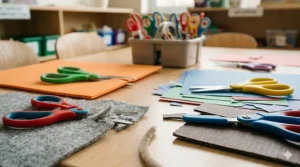
Fine Motor Skill Development: How Safety Scissors Build Kindergarten Readiness
Scissor skills represent far more than simple arts and crafts competence. The hand movements required for effective scissor use develop the same fine motor muscles and neural pathways that kindergarteners need for handwriting, dressing independently, and countless daily tasks. Understanding this connection helps Canadian parents recognize scissor practice as genuine educational investment rather than mere entertainment.
The Biomechanics of Cutting
Effective scissor use requires children to coordinate multiple complex movements simultaneously. Their thumb must move in opposition to their fingers (the same thumb opposition needed for writing and buttoning). Their hand must maintain stable positioning while fingers move dynamically (necessary for manipulating small objects). Their wrist must maintain slight extension rather than flexing downward (the foundation for proper writing posture). Meanwhile, their non-dominant hand must hold and manipulate paper, developing bilateral coordination where each hand performs different but complementary tasks.
Progression of Scissor Skill Development
Research from Canadian pediatric occupational therapy programs identifies typical developmental progressions for scissor skills. Around age 2-3, children can typically hold scissors and make simple snipping motions (single cuts that don’t require blade reopening). By age 3-4, most children progress to making consecutive snips along a line, though accuracy remains limited. Around age 4-5 (typical kindergarten entry), children can usually cut along straight lines with reasonable accuracy and begin attempting curves and circles. By age 5-6, most children can cut complex shapes and stay within narrow border lines. Understanding where your child falls on this continuum helps set realistic expectations and choose appropriately challenging activities.
The Writing Connection
The muscles that control scissor use are the same intrinsic hand muscles that control pencil grip and letter formation. When kindergarteners practice cutting, they’re simultaneously strengthening the thenar muscles (thumb pad), first dorsal interosseous (muscle between thumb and index finger), and lumbricals (small hand muscles that control finger curling). Studies from Canadian universities demonstrate that children with strong cutting skills typically demonstrate better handwriting control, fewer letter reversals, and less hand fatigue during writing tasks. This correlation isn’t coincidental — it reflects the shared underlying muscle development.
Sensory Integration Benefits
Cutting activities provide valuable proprioceptive input (body awareness feedback) and tactile stimulation that help children develop better sensory processing. The resistance of paper against blades, the feeling of handles against fingers, the visual feedback of seeing cut lines emerge — these multi-sensory experiences help kindergarteners integrate sensory information more effectively. For children with sensory processing challenges, structured cutting activities can actually improve overall sensory regulation.
Executive Function Development
Successfully completing cutting projects requires children to plan sequences (what to cut first, which direction to approach), inhibit impulses (resisting the urge to cut randomly), monitor progress (checking if they’re following the intended line), and persist through frustration (continuing when cuts don’t match intentions perfectly). These executive function skills transfer directly to academic tasks like following multi-step directions, completing worksheets systematically, and persisting through challenging learning.
Canadian Climate Considerations for Motor Development
Our long winters create unique motor development challenges. Children who spend months in bulky winter clothing often have fewer opportunities for fine motor practice compared to peers in warmer climates. Many Canadian occupational therapists recommend intentional fine motor activities (including scissor practice) during winter months to counterbalance reduced outdoor play opportunities that would naturally develop these skills. The good news: 15-20 minutes of focused cutting practice several times weekly provides sufficient stimulus for typical development.
Real-World Application: Setting Up Successful Scissor Practice at Home
Canadian parents often ask how to structure cutting practice that actually builds skills rather than just creating messes. Here’s a practical framework based on occupational therapy principles and feedback from kindergarten teachers across provinces.
Create a Designated Cutting Station
Establish a specific area in your home for cutting activities — ideally a child-height table with good lighting and enough space that your kindergartener can spread out without feeling cramped. Stock this station with appropriate supplies: safety scissors for kindergarten matched to your child’s developmental level, construction paper in various colours, old magazines and greeting cards for cutting practice, a small waste basket for paper scraps, and wet wipes for inevitable glue and marker mixing.
A Vancouver parent shared brilliant advice: use a plastic tablecloth or large tray to contain scattered paper bits, making cleanup dramatically faster. During Manitoba winters when static electricity makes paper scraps cling to everything, a slightly damp cloth wiped across cutting surfaces before starting prevents the frustrating paper-chasing that discourages practice.
Start with Strategic Material Choices
Begin with materials that cut easily and provide clear visual feedback. Construction paper in bright colours works beautifully because children can see exactly where they’ve cut and the slightly heavier weight prevents the frustrating curling that occurs with regular printer paper. As skills develop, progress to cardstock for added challenge, then eventually thin cardboard from cereal boxes for children ready for more resistance.
Avoid tissue paper, plastic, and fabric initially — these materials either tear unpredictably or require blade sharpness beyond safety scissors’ capability. Ontario teachers report that children who practice on inappropriate materials often conclude “I’m bad at cutting” when actually the materials were developmentally inappropriate.
Implement Progressive Difficulty Levels
Structure practice following natural skill progression. Week 1-2: Random snipping practice where cutting anywhere on paper counts as success. Week 3-4: Cutting along wide (2-3 cm) straight lines. Week 5-6: Cutting along narrower straight lines. Week 7-8: Gentle curves and circles. Week 9-10: Complex shapes and tight corners. This gradual progression builds confidence while systematically developing increasing precision.
Canadian kindergarten teachers emphasize that children need multiple practice opportunities at each level before advancing. Rushing to complex shapes before mastering straight lines creates frustration and avoidance. Better to have your child feel confident cutting straight lines in January than frustrated attempting circles they’re not developmentally ready to master.
Incorporate Meaningful Activities
Pure cutting practice gets boring quickly. Instead, embed cutting into purposeful activities: cutting ingredients from food magazines to create a “meal” collage, cutting out pictures to illustrate a story they dictate, creating paper chains to count down to their birthday, cutting snowflakes during winter months. These meaningful contexts maintain engagement while providing the repetitive practice that builds skills.
A Toronto parent discovered their reluctant cutter enthusiastically practiced when they cut paper “food” to feed toy animals. Another Calgary family made cutting out vehicle pictures from advertisements into a game where cut-outs got “driven” across a road map placemat. Find connections to your child’s existing interests.
Plan for Mess Management
Cutting creates paper scraps — lots of them. Build cleanup into the activity from the start. Many Canadian kindergarteners respond well to making cleanup a game: set a timer for 2 minutes and see how many paper pieces can go in the waste basket. Or create a “good scrap box” where interesting cut pieces get saved for future collage projects, teaching resource management while reducing waste.
Frequently Asked Questions
❓ Can safety scissors for kindergarten cut through thick cardboard?
❓ Are spring-loaded scissors better than regular safety scissors for beginners?
❓ Do left-handed children need special scissors or can they use ambidextrous models?
❓ At what age should Canadian children transition from safety scissors to regular scissors?
❓ Will safety scissors work in Canadian winter when children wear bulky clothing to school?
Conclusion: Choosing Safety Scissors That Support Canadian Kindergarten Success
Selecting appropriate safety scissors for kindergarten represents more than purchasing another school supply — it’s investing in developmental tools that build the fine motor foundation your child needs for handwriting, dressing independence, and countless daily tasks throughout elementary years and beyond.
For most Canadian families, the Fiskars Training Scissors deliver optimal balance of developmental appropriateness, safety features, and long-term value. The training lever mechanism genuinely accelerates learning for beginners, while the flip-up design allows continued use as skills advance. At $8-$12 CAD, they represent mid-range investment that pays dividends through years of reliable use. The plastic-covered metal blades maintain cutting effectiveness far longer than all-plastic alternatives, making them economical over time despite higher initial cost.
Families with children who have special needs or significant fine motor delays should seriously consider the HARAC Spring Loaded Scissors. Yes, $25-$35 CAD represents substantial investment, but the adaptive features enable independent participation that no amount of assistance can replicate. Canadian occupational therapists consistently identify this model as worth the premium for children who genuinely need adaptive equipment.
For classroom teachers and daycare providers serving multiple Canadian kindergarteners, the 60-Pack Bulk Classroom Set delivers unbeatable per-unit economics at $35-$50 CAD total. The colour-coded organization simplifies classroom management while providing durability that withstands daily use by multiple children.
Remember that scissors are tools, not toys. The “best” scissors match your specific child’s current developmental level, hand size, and learning style. A four-year-old with advanced fine motor skills has different needs than a five-year-old with coordination delays, even though both attend kindergarten. Invest the time to assess your child’s current abilities honestly, consult with their teacher or occupational therapist if available, and choose scissors that will support genuine skill development rather than just meeting minimal safety requirements.
Canadian kindergarteners deserve tools designed for their specific developmental needs and sized for their growing hands. Quality safety scissors facilitate the countless hours of cutting practice that build fine motor strength, hand-eye coordination, and confidence — foundational skills that support academic success throughout elementary school and beyond. Choose wisely, practice regularly, and watch your kindergartener’s capabilities expand as those little hands master increasingly precise control.
Recommended for You
- Best Beginner Pencils for Kindergarten – 7 Top Picks Canada 2026
- 7 Best Habit Tracker for Students Canada 2026
- 7 Best Homeschool Supplies Canada Curriculum Requirements 2026
Disclaimer: This article contains affiliate links. As an Amazon Associate, I earn from qualifying purchases. If you purchase products through these links, we may earn a small commission at no additional cost to you.
✨ Found this helpful? Share it with your friends! 💬🤗
