
In This Article
It’s 11:40 p.m., your defence is in four days, and you’ve just realized nobody warned you that “submit your thesis” sometimes still means walking into a bindery with a stack of paper and a knot in your stomach. Choosing the right binding and printing supplies for thesis submission isn’t glamorous, but it’s the one task on your checklist that can’t be fixed with a quick email to your supervisor — once it’s printed wrong, it’s printed wrong.
Here’s the 40-second version: binding and printing supplies for thesis submission generally means three things — acid-free, archival-grade paper heavy enough to survive decades on a library shelf; a binding method (comb, wire, spiral, or thermal) that matches your department’s expectations; and an understanding of what your university and Library and Archives Canada actually require, since most Canadian grad schools now handle the official record electronically while leaving physical binding decisions to you.
This guide walks through seven real products available on amazon.ca, spanning budget comb binders to archival cotton paper, and explains — with actual specs, not marketing fluff — what each one means for the document you’re about to hand over to a committee that has read a thousand theses and will absolutely notice if yours looks like it was assembled in a panic. Because, let’s be honest, some of them were.
Quick Comparison Table
| Product | Type | Best For | Price Range (CAD) |
|---|---|---|---|
| Fellowes Helios 30 Thermal Binding Machine | Thermal binder | Polished, glued-spine final copies | C$200–C$260 |
| TIANSE 21-Hole Comb Binding Machine | Comb binder | Best value all-in-one starter kit | C$70–C$95 |
| Amazon Basics Comb Binding Machine | Comb binder | Budget-friendly first-time users | C$75–C$100 |
| RAYSON TD1202 3:1 Wire Binding Machine | Wire (double-loop) binder | Professional lay-flat committee copies | C$150–C$210 |
| MAKEASY Spiral Coil Binding Machine | Spiral coil binder | Frequent-use, flexible-opening drafts | C$90–C$135 |
| Southworth 100% Cotton Thesis Paper | Archival paper | True archival-grade final submission | C$25–C$40 |
| HP Premium32 Laser Paper (32 lb) | Heavyweight paper | Everyday drafts and committee copies | C$15–C$25 |
Looking at the spread above, the pattern is pretty clear: paper choice and binding method are two separate decisions, not one purchase, and most students end up buying from at least two rows on this table. The Fellowes Helios 30 Thermal Binding Machine and RAYSON TD1202 3:1 Wire Binding Machine sit at the top of the price range because they produce library-shelf-ready spines, while the TIANSE 21-Hole Comb Binding Machine and Amazon Basics Comb Binding Machine are the sensible choice if you only need a handful of committee copies that will get recycled after the defence. On the paper side, the Southworth 100% Cotton Thesis Paper earns its higher price with genuine archival composition, whereas HP Premium32 Laser Paper is the workhorse you’ll use for every draft leading up to that final copy.
💬 Just one click — help others make better buying decisions too!😊
Top 7 Binding and Printing Supplies for Thesis Submission: Expert Analysis
1. Fellowes Helios 30 Thermal Binding Machine — glued spine with no visible comb or coil
The standout here is the finish: a heat-activated glue strip seals your pages into a spine that looks like a professionally printed book rather than an office report, and that alone changes how a committee perceives the document before they’ve read a word.
The machine handles up to 300 sheets with a binding cycle of one to three minutes after a roughly four-minute heat-up, and its HeatShield barrier keeps the heating plate from becoming an accidental hazard on your desk. In practice, that capacity comfortably covers most master’s theses and mid-length dissertation chapters bound individually, though a 400-page doctoral manuscript will likely need to be split into two volumes or bound at a copy shop instead.
Based on the spec comparison with comb and wire alternatives, this is the pick for anyone who wants their submission copy to look permanent rather than assembled — it’s the closest a desktop machine gets to a real bindery finish, which matters if your department still expects a bound hard copy for the committee or the library. Reviewers consistently report that the audio-visual ready/done indicators make it easy to avoid overheating a thin document, though several also note the thermal covers are a separate purchase and add to the real cost.
Pros:
- ✅ Produces a genuine glued-spine, book-like finish
- ✅ Handles up to 300 sheets in one binding cycle
- ✅ HeatShield barrier reduces burn risk during use
Cons:
- ❌ Thermal covers sold separately, adding to total cost
- ❌ Not ideal for documents needing to lie flat when open
At around C$200–C$260, this sits at the premium end of desktop binding, and for a one-time thesis submission it’s worth it primarily if your program explicitly wants a bound physical copy rather than a comb or wire finish.
2. TIANSE 21-Hole Comb Binding Machine — best value bundle with starter combs included
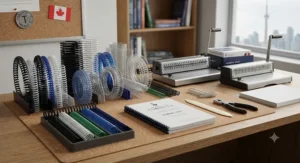
What jumps out immediately is that this one ships with a 100-piece starter kit of 3/8-inch comb spines, so you’re not stuck ordering supplies separately before your first bind.
Specs-wise, it punches through documents and binds up to 450 sheets with 21 holes sized for Letter, A4, or A5 paper — more than enough margin for even a lengthy dissertation chapter bound on its own. The adjustable margin control matters more than it sounds: get it wrong and your holes either tear through the text block or leave the spine loose enough that pages start slipping out mid-defence.
Here’s what most buyers overlook about comb binding specifically — it’s removable and re-insertable, meaning you can pop the comb open, swap in a corrected page after your supervisor catches a typo, and reclose it without rebinding the whole document. That flexibility is genuinely useful during the multiple-draft phase before your final submission. Reviewers frequently mention the punch handle requires a firm, single motion to avoid jamming, which tracks with the mixed reports on cheaper comb binders generally.
Pros:
- ✅ Includes 100 comb spines, ready to use immediately
- ✅ Binds up to 450 sheets — enough for full chapters
- ✅ Reopenable comb allows easy page corrections
Cons:
- ❌ Punch handle needs a firm, deliberate motion
- ❌ Plastic comb spine looks less formal than glued options
Priced in the C$70–C$95 range, this is the strongest value pick if you’ll be binding multiple drafts for committee review before your final copy goes out.
3. Amazon Basics Comb Binding Machine — reliable budget entry point for first-time binders
The standout advantage is simplicity: this is a no-frills comb binder built for someone who’s never bound a document before and doesn’t want to learn a new piece of equipment under deadline pressure.
It punches up to 12 pages at a time and binds documents up to 350 sheets, which covers the vast majority of master’s theses without issue. The manual hole-punch mechanism is intentionally basic — fewer adjustable settings mean less that can go wrong, though it also means less precision if your paper stock is unusually thick, like the archival cotton sheets covered later in this guide.
On paper this means a slightly narrower use case than the TIANSE model above, and that’s a fair trade for the lower price. What most first-time users overlook is that comb binding in general — regardless of brand — reads as “office report” rather than “bound book,” so if your department cares about presentation formality, this is better suited to internal drafts than a final library copy. Aggregated buyer feedback describes it as dependable for occasional use but notes the punch mechanism can feel less sturdy under repeated daily use, which is a reasonable trade-off for a machine most students will use only a handful of times total.
Pros:
- ✅ Straightforward operation with minimal learning curve
- ✅ Binds up to 350 sheets, enough for most theses
- ✅ Compact enough for a shared apartment or dorm desk
Cons:
- ❌ Fewer adjustable settings than higher-end comb binders
- ❌ Punch mechanism feels less robust under heavy repeat use
At roughly C$75–C$100, it’s the lowest-commitment way to bind a draft copy without investing in features you’ll only use once.
4. RAYSON TD1202 3:1 Wire Binding Machine — double-loop wire finish that lies fully flat
The immediate standout is functional, not cosmetic: wire-bound documents open completely flat and can fold back 360 degrees, which matters enormously when a committee member is flipping between your methodology chapter and your appendix during your defence.
The TD1202 punches up to 12 sheets at a time with a 120-sheet binding capacity, offering 32 square holes on a 3:1 pitch for Letter-size paper, plus adjustable margins at 3, 5, and 7 millimetres to fine-tune how close the wire sits to your text block. Reviewers describe the built-in wire closer as one of the more reliable features in this price bracket, since a poorly closed wire loop is the single most common failure point in DIY wire binding.
Based on the spec comparison with comb binding, the double-loop wire finish reads as noticeably more professional and durable — the wire doesn’t crack or split the way plastic combs eventually do, and it survives repeated shipping or mailing to external examiners far better. What the spec sheet won’t tell you, but reviewers note, is that swapping wire colours (typically black or white) lets you subtly match your document to departmental expectations, something comb binding options rarely offer at this price point.
Pros:
- ✅ Opens fully flat with 360-degree page rotation
- ✅ Built-in wire closer reduces loose-loop failures
- ✅ Adjustable margins fine-tune the bind-to-text distance
Cons:
- ❌ 120-sheet capacity limits it to shorter documents
- ❌ Wire spines cost more per unit than plastic combs
Expect to pay in the C$150–C$210 range, which positions it as the professional middle ground between a basic comb binder and a full thermal system.
5. MAKEASY Spiral Coil Binding Machine — flexible lay-flat option built for repeat use
What stands out first is the 4:1 pitch electric coil inserter — instead of manually threading a plastic coil through punched holes by hand, the machine spins it in for you, which is a genuine time-saver if you’re binding several drafts back to back.
It punches 12 sheets per pass with 46 fully disengaging pins, letting you customize the punch pattern for shorter documents like individual chapters or a standalone appendix, and it ships with 100 pieces of 5/16-inch coil plus a pair of pliers for trimming the ends cleanly. The disengaging pins are the detail that matters most in practice: fixed-pin punches force you to punch the full pattern every time, while adjustable pins mean you’re not wasting holes on a slim 20-page abstract.
Here’s the honest trade-off — spiral coil binding is durable and genuinely lies flat, similar to wire, but it has a more casual, “workbook” visual character than wire or thermal binding, so it tends to suit working drafts and internal committee copies rather than a formal library submission. Reviewers commonly mention that trimming coil ends neatly takes a bit of practice with the included pliers, and a slightly uneven cut is a common first-timer mistake worth budgeting a few practice sheets to avoid.
Pros:
- ✅ Electric coil insertion saves significant hand-binding time
- ✅ Disengaging pins customize punch length per document
- ✅ Coil allows full 360-degree flat opening
Cons:
- ❌ Visual finish reads more casual than wire or thermal
- ❌ Trimming coil ends neatly takes some practice
Priced around C$90–C$135, it earns its keep if you expect to bind several drafts throughout your writing process rather than a single final copy.
6. Southworth 100% Cotton Thesis Paper — genuine archival-grade cotton fibre stock
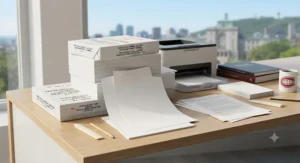
The standout feature is right in the name: this is 100% cotton fibre paper, not wood-pulp paper with an “archival” label slapped on it, and that compositional difference is exactly what long-term document permanence depends on.
At 20 lb (75 gsm) with a wove finish, it’s watermarked and acid-free, and Southworth includes a date-code in the watermark specifically to help verify document authenticity over time — a detail that matters if your institution or an external examiner ever needs to confirm you’re looking at an original rather than a later reprint. Cotton fibre resists the yellowing and brittleness that wood-pulp paper develops within a few decades, which is precisely why historical archives and legal document specialists lean on cotton stock in the first place.
Based on the spec comparison with standard copy paper, this is the product to reach for specifically when a department or library requests an archival paper copy for long-term physical storage — not for your working drafts, where the cost difference isn’t justified. What most buyers overlook is that cotton paper feeds slightly differently through some laser printers than wood-pulp stock; running a short test print before committing your full manuscript avoids a costly reprint. Aggregated reviewer sentiment consistently praises the crisp, substantial feel of the sheet, with occasional notes about compatibility issues on older printer models.
Pros:
- ✅ True 100% cotton fibre for genuine archival durability
- ✅ Acid-free composition resists long-term yellowing
- ✅ Watermarked with date-code for authenticity verification
Cons:
- ❌ Premium price per sheet compared to standard paper
- ❌ May feed differently on some older printer models
At around C$25–C$40 for 250 sheets, this is the one splurge worth making for the single final archival copy, even if you print every draft before it on cheaper stock.
7. HP Premium32 Laser Paper (32 lb) — heavyweight everyday paper with genuine acid-free construction
The standout here is the balance it strikes: at 32 lb with 100 brightness, it’s noticeably heavier and whiter than standard 20 lb copy paper without stepping up to full archival cotton pricing.
ColorLok technology improves toner adhesion and drying speed, which practically means fewer smudges when you’re printing figures, tables, or grayscale charts under a tight deadline, and the acid-free formulation genuinely slows yellowing over time — useful for the multiple full-manuscript printouts most students go through during revisions. It’s also FSC-certified, which matters if your department has any sustainability procurement guidance for printed submissions.
What the spec sheet won’t tell you, but reviewers note, is that the heavier stock noticeably reduces the “see-through” effect when your committee is reading double-sided pages, a small but real readability improvement over thin copy paper. This is the paper to use for every full-manuscript printout before your final copy — professional enough to hand your supervisor without apology, but not so expensive that reprinting after their track-changes feels painful. Aggregated feedback highlights the smooth, presentation-grade surface, with a small number of reviewers noting it runs slightly thicker than expected for some older printer trays.
Pros:
- ✅ Heavyweight 32 lb stock reduces double-sided show-through
- ✅ Acid-free formulation resists yellowing over time
- ✅ ColorLok technology improves toner drying and clarity
Cons:
- ❌ Thicker stock may need tray adjustment on older printers
- ❌ Heavier than necessary for casual internal drafts
At roughly C$15–C$25 per ream, it’s the sensible everyday choice for the dozen-plus full printouts most theses go through before the final bind.
Your Thesis Printing and Binding Workflow: A Step-by-Step Setup Guide
Getting this right isn’t complicated, but it does reward doing things in the correct order. Start by confirming your department’s actual physical-copy requirement — many Canadian programs, as Library and Archives Canada explains, now only require an electronic PDF for the official Theses Canada record, meaning a bound paper copy may only be needed for your supervisor or committee, not for archival deposit.
Once you know how many bound copies you actually need, print your working drafts on standard heavyweight paper like the HP Premium32 Laser Paper — save the Southworth 100% Cotton Thesis Paper exclusively for the version that’s actually going to committee or the library. A common first-30-days mistake is printing the whole manuscript on archival stock before the content is finalized, which is an expensive way to discover a formatting error on page 140.
For binding, test your chosen machine — whether that’s the TIANSE 21-Hole Comb Binding Machine or the RAYSON TD1202 3:1 Wire Binding Machine — on a handful of scrap sheets first, adjusting margin settings until the punch pattern sits cleanly without nicking your text block. Maintenance is minimal: keep the punch mechanism free of paper dust, and store spare combs or coils somewhere you won’t lose them between drafts.
Real-World Scenarios: Matching Supplies to Your Thesis Situation
Consider a master’s student in the humanities, budget-conscious and only needing two committee copies before an electronic-only final submission. That profile fits the Amazon Basics Comb Binding Machine paired with HP Premium32 Laser Paper — inexpensive, fast, and entirely adequate for internal review copies that won’t live on a shelf.
Now picture a PhD candidate in engineering whose department explicitly requires a bound library copy alongside the digital deposit. That situation calls for the RAYSON TD1202 3:1 Wire Binding Machine or Fellowes Helios 30 Thermal Binding Machine on Southworth 100% Cotton Thesis Paper — the added cost is justified because this copy is meant to last decades, not one defence.
Finally, imagine a part-time distance student juggling multiple chapter drafts sent back and forth with a remote supervisor over several months. The MAKEASY Spiral Coil Binding Machine suits that rhythm well, since its flat-opening, reusable-coil format tolerates frequent rebinding of revised chapters without wearing out.
Common Thesis Printing Problems and How to Solve Them
The most frequent issue is printer jams or streaking on heavier paper stock — solution: run a manufacturer-recommended cleaning cycle before switching from standard to 32 lb or cotton paper, and always test a single sheet first. Second is discovering your final copy has a formatting error only after binding — solution: never bind your absolute final print until your supervisor has signed off on a printed-and-reviewed draft, not just a PDF.
Third, comb or coil spines that feel loose after a week of handling — solution: this usually means the punch margin was set too wide; rebind with a slightly narrower margin setting, using the TIANSE 21-Hole Comb Binding Machine‘s adjustable guide as an example of what to look for. Fourth, running out of covers or spines mid-project — solution: always order 20–30% more binding supplies than your page count strictly requires, since defective spines and practice binds eat into your stock faster than expected. Fifth, paper yellowing on copies meant for long-term storage — solution: this is precisely the problem archival cotton paper like the Southworth 100% Cotton Thesis Paper solves, so reserve it for any copy meant to outlive the defence itself.
How to Choose Binding and Printing Supplies for Thesis Submission
- Confirm your department’s actual requirement first — a bound paper copy, an electronic-only PDF, or both, since this single fact determines almost every other purchase.
- Separate “draft paper” from “final paper” budgets — heavyweight standard paper for working printouts, archival cotton only for the copy that matters long-term.
- Match the binding method to how the document will be used — flat-opening wire or coil for reference-heavy documents, glued thermal spines for a book-like final copy.
- Check your printer’s compatibility with heavier stock — not every home or campus printer handles 32 lb or cotton paper cleanly without adjustment.
- Budget for consumables, not just the machine — combs, coils, wire spines, and thermal covers are ongoing costs layered on top of the equipment itself.
- Order supplies with buffer stock — practice binds and the occasional misprint mean you’ll use more spines and sheets than your page count alone suggests.
- Verify formatting rules before you print anything final — margin, font, and pagination requirements affect how many pages you’ll actually be binding.
Thesis Printing Paper Requirements Canada: What Your University Actually Wants
Paper requirements vary by institution, but most Canadian graduate schools converge on similar fundamentals: standard Letter-size (8.5″ x 11″) pages, a minimum font size around 10–12 points, and margins wide enough to accommodate binding — typically a wider left margin of around 1.25 to 1.5 inches. The University of Toronto’s School of Graduate Studies formatting guidelines, for example, specify a left margin of at least 1¼ inches specifically to leave room for binding without cutting into text.
Weight and quality expectations are typically looser than font and margin rules, since most institutions now process the official electronic PDF rather than mandating a specific paper stock. Where a department does specify paper, it’s usually simply “acid-free” or “archival quality” for any copy destined for long-term physical storage — language that maps directly onto products like Southworth 100% Cotton Thesis Paper rather than standard copy paper. Reviewers consistently note that checking your specific graduate unit’s checklist — not just the general university page — catches details that differ department to department, since formatting enforcement is often delegated locally.
University Submission Formatting Rules Across Canadian Institutions
While every Canadian university sets its own formatting checklist, the underlying pattern is remarkably consistent because most participate in the same national program. As the University of Guelph’s general regulations note, binding of any paper copies is explicitly the student’s own responsibility, separate from the electronic submission process that gets reviewed by the graduate office.
Common threads across institutions include: a required electronic PDF submitted through the university’s repository or ProQuest’s ETD system; a signed licence agreement permitting Library and Archives Canada to harvest the record; strict rules against including personal identifiers like student numbers in the final document; and, for a growing number of programs, no formal physical-copy requirement at all beyond whatever your own department or supervisor prefers. What most students overlook is that the physical binding decision — comb, wire, thermal, or none — is almost always a local departmental custom rather than a university-wide policy, so a quick email to your graduate coordinator saves guesswork.
✨ Don’t Miss These Exclusive Deals!
🔍 Take your thesis submission prep to the next level with these carefully selected binding and printing supplies. Click on any highlighted item to check current pricing and availability. These tools will help you create a polished, professional final copy your committee — and future self — will appreciate!
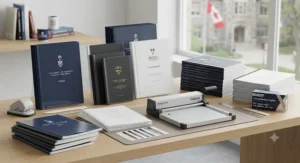
Binding Methods Comparison: Comb vs Wire vs Thermal vs Spiral
| Method | Opens Flat? | Reopenable/Editable? | Formality Level | Best For |
|---|---|---|---|---|
| Comb (TIANSE, Amazon Basics) | No | Yes, fully | Casual-office | Working drafts, committee review copies |
| Wire (RAYSON) | Yes, 360° | No (permanent) | Professional | Final committee or reference copies |
| Spiral coil (MAKEASY) | Yes, 360° | No (permanent) | Casual-professional | Frequently revised drafts |
| Thermal (Fellowes Helios 30) | No | No (permanent) | Most formal | Book-style final submission copy |
Reading this table against your own timeline, the trade-off is really between flexibility and formality: comb binding wins on editability during the drafting phase, while wire and thermal binding win on appearance and durability for whatever copy is genuinely final. Spiral coil sits in between, offering the flat-opening convenience of wire without quite matching its polished look, which is why it suits students binding and rebinding chapters repeatedly over a semester rather than producing a single formal copy.
Archival Paper for Thesis Submission: Why Archival-Quality Paper Matters
Archival-quality paper isn’t a marketing buzzword — it refers to specific compositional properties, primarily acid-free and lignin-free construction, that prevent the slow yellowing and brittleness ordinary wood-pulp paper develops within a few decades. Cotton fibre paper, like the Southworth 100% Cotton Thesis Paper featured above, achieves this naturally because cotton doesn’t contain the lignin that causes standard paper to degrade, which is also why conservators and archivists have long relied on cotton-based stock for documents intended to survive centuries rather than years.
For most students, the practical question isn’t whether archival paper is “better” — it clearly is for longevity — but whether your specific submission actually needs it. If your department only requires an electronic PDF, archival paper is arguably unnecessary spending. If your program still expects a bound copy destined for a department library shelf or special collection, the modest premium on cotton stock is genuinely worth paying, since that copy may realistically sit untouched for thirty or more years before anyone opens it again.
Common Mistakes When Buying Binding and Printing Supplies for Thesis Submission
The single most common mistake is buying binding supplies before confirming whether a physical copy is even required — plenty of students purchase a full comb binding kit only to learn their program is fully electronic. A close second is underestimating page count when selecting a machine’s sheet capacity, which leaves you stuck mid-project with a 200-page dissertation and a binder rated for 120 sheets.
Printing the final archival copy before the content is fully locked down is another expensive habit — track changes and last-minute committee edits are common enough that it’s worth resisting the urge to print on premium cotton paper until your supervisor has given final written approval. Finally, students frequently forget that binding supplies like combs, coils, and wire spines are consumables, not one-time purchases — budgeting only for the machine itself is a mistake that surfaces the moment you need a second or third bound copy.
Long-Term Cost & Maintenance: Binding Machine ROI for Grad Students
A comb or spiral binder in the C$75–C$135 range pays for itself quickly if you’re binding more than two or three documents total across your drafting process, since campus print shops typically charge per-copy binding fees that add up fast over a multi-year degree. The RAYSON TD1202 3:1 Wire Binding Machine and Fellowes Helios 30 Thermal Binding Machine sit at a higher upfront cost, but for students producing multiple formal copies — for a committee, an external examiner, and a personal archive copy — the per-use cost drops quickly below what a bindery would charge for each one individually.
Maintenance across all these machines is genuinely minimal: keep punch mechanisms clear of paper dust, store unused combs, coils, or covers away from humidity, and periodically test-punch scrap paper if a machine has sat unused for months, since punch pins can occasionally stick. None of these machines require professional servicing for the volume a typical graduate student produces, which means the primary ongoing cost is simply consumables — spines, coils, wire, and paper — rather than the equipment itself.
Frequently Asked Questions
❓ Does Library and Archives Canada require a bound paper copy of my thesis?
❓ What is the best binding method for a final thesis submission copy?
❓ Do Canadian universities require archival-quality paper for thesis submission?
❓ How many pages can a typical comb binding machine handle?
❓ What paper weight is best for printing thesis drafts before the final copy?
Conclusion
Binding and printing supplies for thesis submission aren’t the part of grad school anyone dreams about, but getting them right is one of the few remaining tasks where a bit of upfront research genuinely saves you a stressful, expensive redo. The honest takeaway from comparing all seven products above is that there’s no single “correct” purchase — a humanities master’s student submitting electronically has very different needs than a PhD candidate whose department still expects a shelf-ready bound copy.
If you only remember three things: confirm your actual requirement before buying anything, keep draft paper and archival paper as separate budgets, and pick your binding method based on how the document will actually be used, not just how it looks in the store listing. Whether you land on the budget-friendly Amazon Basics Comb Binding Machine or invest in the Southworth 100% Cotton Thesis Paper and RAYSON TD1202 3:1 Wire Binding Machine for a copy meant to outlast your degree, the goal is the same: a final document that looks like it deserves the years of work behind it.
✨ Don’t Miss These Exclusive Deals!
🔍 Take your thesis submission prep to the next level with these carefully selected binding and printing supplies. Click on any highlighted item to check current pricing and availability. These tools will help you create authentic, professional results your committee will appreciate!
Recommended for You
- Planner for University Students Canada: 7 Top Picks (2026)
- Textbook Highlighter and Sticky Note Set for University Top 7
- 7 Best Mini Fridge for Dorm Room Picks: Canada 2026 Guide
Disclaimer: This article contains affiliate links. As an Amazon Associate, I earn from qualifying purchases. If you purchase products through these links, we may earn a small commission at no additional cost to you.
✨ Found this helpful? Share it with your friends! 💬🤗
