
In This Article
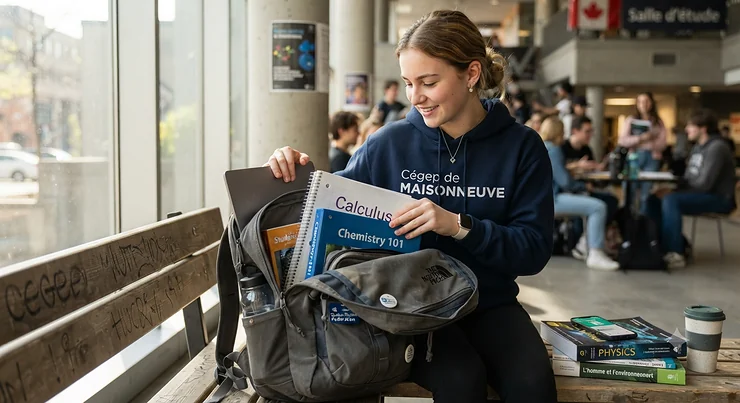
A backpack for CEGEP students is a durable, weather-ready daypack sized to carry a laptop, binders, and winter layers between classes, built with padded ergonomic straps and enough structure to survive a Quebec winter without falling apart by February. If that sounds oddly specific, it’s because CEGEP life is oddly specific. You’re not quite in high school anymore, hauling a single subject binder between four walls you know by heart. You’re also not in university yet, where half your “classroom” might be a laptop at a coffee shop. You’re somewhere in between — sprinting between the metro and a lecture hall, then across a windswept campus courtyard, then down into a basement cafeteria that smells like poutine and printer toner.
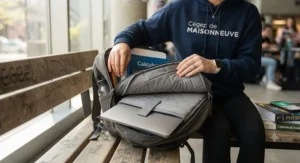
That in-between life is hard on gear. A flimsy bag that looked fine in September starts fraying by the first real snowfall, and a poorly padded strap that felt okay for a week of light classes becomes genuinely painful once you’re lugging a laptop, three textbooks, and a thermos of coffee across icy sidewalks in Montreal, Quebec City, or Sherbrooke. This guide breaks down seven real, currently available backpacks — from budget classics to purpose-built ergonomic packs — and explains, in plain terms, why each one earns (or loses) its spot for students moving through the CEGEP system.
Quick Comparison Table
| Backpack | Best For | Price Range (CAD) | Laptop Fit |
|---|---|---|---|
| JanSport Big Student | Budget-conscious daily use | Around C$55-C$65 | 15″ |
| MATEIN Travel Laptop Backpack | Rainy/slushy commutes on a budget | Around C$45-C$60 | 15.6″ |
| Fjällräven Kånken Laptop 15 | Winter commutes and back comfort | C$140-C$160 range | 15″ |
| Osprey Daylite Plus | Lightweight, ergonomic daily carry | Around C$100-C$115 | Up to 15″ |
| Herschel Little America | Style-conscious students | C$90-C$110 range | 15″ |
| The North Face Borealis | Heavy course loads, durability | C$130-C$150 range | 15″ |
| Carhartt 21L Classic | Rough winters, hard on gear | C$75-C$95 range | 15″ |
Looking at this lineup, there’s no single “best” bag — there’s a best bag for your specific commute. Students walking or biking through slush every day should weight water resistance heavily, while students juggling five heavy textbooks a semester should prioritize the Osprey Daylite Plus or The North Face Borealis for their structured comfort systems. Budget matters too: the JanSport Big Student and MATEIN Travel Laptop Backpack both sit comfortably under C$65, while the Fjällräven Kånken Laptop 15 asks you to pay a premium for its cult status and Scandinavian-grade materials.
💬 Just one click — help others make better buying decisions too!😊
Top 7 Backpacks for CEGEP Students: Expert Analysis
1. JanSport Big Student — the campus classic that refuses to quit
The reason the JanSport Big Student shows up in every “best college backpack” list, year after year, is almost boring: it just works. Its roughly 34-litre main compartment swallows binders, a lunch, and a change of gym clothes without looking stuffed, and the padded 15-inch laptop sleeve sits toward the back panel where a drop is least likely to do damage. The S-curve shoulder straps aren’t fancy, but they’re wide enough to avoid digging into your collarbone during a long walk from the parking lot.
Based on the spec comparison with pricier rivals, what stands out here is the sheer cost-per-year math — this bag is famous for surviving four full years of daily abuse, which very few C$60 products can claim. It’s the right call for a first-year CEGEP student who doesn’t yet know their program’s specific gear demands (art supplies versus lab binders versus a laptop-heavy course load) and wants one dependable bag while they figure that out. Reviewers consistently note the lifetime warranty as the deciding factor, alongside an unusually high volume of five-star ratings for a bag in this price bracket, though a notable minority mention the fabric picking up pilling after a couple of winters of salt and slush.
Pros:
- ✅ Backed by a lifetime warranty most rivals don’t offer
- ✅ 34L capacity swallows a full course load easily
- ✅ Long track record of surviving 4+ years of daily use
Cons:
- ❌ Basic foam padding, no real back-ventilation channel
- ❌ Not marketed as water-resistant, despite handling light rain fine
At around C$55-C$65, the JanSport Big Student remains the safest first purchase for any CEGEP student who hasn’t settled into a routine yet — check current price before you buy, since retailers rotate colours and bundle deals often.
2. MATEIN Travel Laptop Backpack — best water-resistant pick under C$60
The MATEIN Travel Laptop Backpack was designed for airports, which turns out to be a nice coincidence for CEGEP students, since airport carry-ons and campus daypacks demand almost the same things: a dedicated 15.6-inch laptop compartment, a front organizer for cards and cables, and fabric that survives a downpour on the sprint between the bus stop and the building entrance.
What most buyers overlook about this model is that its high-density, water-repellent polyester shell does real work in a Quebec winter — slush kicked up from a passing car or snow melting off a backpack left in a locker room won’t soak straight through to your notes. The separate laptop sleeve, padded on both sides, is a genuine upgrade over single-layer sleeves at this price. This is the pick for a student commuting by bus or metro in rough weather who can’t justify spending C$150 on outerwear-grade materials but still wants real protection. Reviewers consistently report strong satisfaction with the anti-theft back pocket and the USB charging port pass-through, while a smaller number flag the shoulder straps as thinner than they’d like for heavier loads over 20 pounds.
Pros:
- ✅ Genuinely water-repellent high-density polyester shell
- ✅ Padded laptop compartment fits up to 15.6-inch devices
- ✅ Anti-theft back pocket useful on crowded transit
Cons:
- ❌ Shoulder straps feel thin under consistently heavy loads
- ❌ Interior organization is basic compared to premium rivals
In the C$45-C$60 range, the MATEIN Travel Laptop Backpack is arguably the single best value on this list for students who face rain and slush more often than snowbanks — check current price and colour availability before ordering.
3. Fjällräven Kånken Laptop 15 — designed to prevent back pain, built for the cold
Here’s what most marketing copy won’t tell you: the Kånken shape wasn’t dreamed up by a design team chasing a trend. It was created in Sweden specifically to reduce back problems in schoolchildren carrying heavy loads, and that origin still shapes the Kånken Laptop 15 today. The boxy silhouette keeps weight centred and close to your spine instead of sagging away from your back, which matters enormously once you’re carrying a laptop plus a full binder through an icy CEGEP parking lot.
On paper this means a 16-litre capacity, a padded 15-inch laptop sleeve, and a Vinylon F shell that resists water without a chemical coating — practical for a student who refuses to own an umbrella. Reviewers consistently praise the durability of the fabric and the classic look that somehow hasn’t aged in decades, though several also note it’s water-resistant rather than fully waterproof, meaning a genuine Montreal slush-storm can eventually soak through if you’re stuck outside for an hour. This is the pack for students who’ve been told by a physio or chiropractor to watch their posture and who value a design literally built around that concern over one built around capacity.
Pros:
- ✅ Boxy shape keeps weight centred against the back
- ✅ Water-resistant Vinylon F fabric wipes clean easily
- ✅ Decades-long reputation for surviving daily wear
Cons:
- ❌ Water-resistant only — not waterproof in prolonged storms
- ❌ Premium price for a relatively modest 16L capacity
Priced in the C$140-C$160 range, the Fjällräven Kånken Laptop 15 costs more than most picks here, but for a student prioritizing posture and long-term comfort, the value case is about your back, not just your books.
4. Osprey Daylite Plus — the lightest, most ergonomic daily carry
Osprey built its name on backcountry packs, and the ergonomic thinking from that world shows up clearly in the Osprey Daylite Plus. At roughly one pound empty, it’s dramatically lighter than most laptop-oriented rivals, yet the AirScape-style mesh back panel and sternum strap combination do more to distribute weight evenly than bags twice the price.
Here’s what the spec sheet won’t tell you, but reviewers note repeatedly: the 20-litre main compartment, panel-style opening, and internal sleeve (fitting devices up to 15-16 inches depending on your laptop’s case) make packing and unpacking dramatically faster between classes than a top-loading bag. That matters more than it sounds on a five-minute passing period. This is the right call for a student whose CEGEP program is light on physical textbooks but heavy on laptop use — someone in social sciences or communications rather than a lab-heavy technical program hauling manuals. Reviewers consistently highlight the sternum strap and ventilated panel as standout comfort features, while a smaller set mention the shoulder straps themselves run thinner than Osprey’s hiking-focused packs.
Pros:
- ✅ Exceptionally lightweight at roughly one pound
- ✅ Ventilated back panel reduces sweat on long walks
- ✅ Sternum strap noticeably improves load stability
Cons:
- ❌ Shoulder straps thinner than Osprey’s hiking packs
- ❌ 20L capacity can feel tight with bulky winter gear inside
At around C$100-C$115, the Osprey Daylite Plus rewards students who value comfort and organization over raw capacity — check current price, since Osprey occasionally rotates colourways that sell out fast.
5. Herschel Little America — the style pick that still does the job
The Herschel Little America built its reputation on looking good, and it still does — the striped signature liner and mountaineering-inspired silhouette haven’t dated the way a lot of “trendy” 2010s backpacks have. But underneath the aesthetic, there’s a genuinely useful 15-inch fleece-lined laptop sleeve, a hidden zip front pocket with a key clip, and roughly 25 litres of capacity depending on the version you buy.
Based on the spec comparison, the Little America sacrifices a bit of structural rigidity compared to the Osprey or North Face options — the drawcord-and-magnetic-strap closure system is elegant, but it isn’t as fast to access as a simple zippered main compartment when you’re digging for a charger between classes. This is the pick for a student who spends real time deciding how their gear looks and wants a laptop bag that could also double as a weekend or travel pack. Reviewers consistently praise the material quality and unique striped lining, though a meaningful share mention mixed feelings about the shoulder strap padding holding up over multiple winters of heavy daily use.
Pros:
- ✅ Distinctive design that still doubles as travel luggage
- ✅ Fleece-lined 15-inch laptop sleeve protects against scratches
- ✅ Air mesh back padding adds real breathability
Cons:
- ❌ Drawcord closure is slower to access than a zippered main bay
- ❌ Some owners report strap padding wearing thin over time
In the C$90-C$110 range, the Herschel Little America is the choice for a CEGEP student who wants their backpack to look as considered as their outfit — check current price and colour before ordering, since popular shades sell out first.
6. The North Face Borealis — built for the heaviest course loads
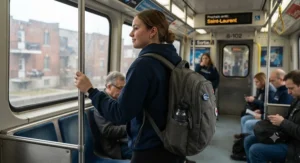
If your CEGEP program means science labs, thick reference manuals, and a laptop you genuinely can’t afford to damage, The North Face Borealis is engineered for exactly that reality. Its roughly 28-litre capacity comes with a padded 15-inch laptop compartment, a separate tablet sleeve, and — critically — an airflow back panel with a sternum strap, which matters enormously once your bag actually weighs something.
What most buyers overlook about this model is how much its bungee cord lash system and multiple external attachment points add real flexibility: strap on wet boots after a snowstorm, or a rolled-up jacket once the temperature swings mid-afternoon, without cramming everything into the main compartment. This is the bag for a technical-program student — nursing, engineering technology, science — who’s carrying genuinely heavy loads five days a week and needs the comfort system to match. Reviewers consistently describe the Borealis as one of the most durable options in its price class, holding up through years of daily abuse, though a portion note the exterior fabric can look worn faster than the internal structure actually is.
Pros:
- ✅ Airflow back panel and sternum strap ease heavy loads
- ✅ External bungee lash system adds flexible carrying capacity
- ✅ Reputation for surviving years of daily heavy use
Cons:
- ❌ Bulkier profile than minimalist alternatives on this list
- ❌ Exterior fabric can show cosmetic wear before it actually fails
At C$130-C$150, the North Face Borealis sits at the premium end here, but for a student whose backpack genuinely needs to work as hard as they do, the value case holds up.
7. Carhartt 21L Classic Laptop Backpack — toughest pick for a rough Quebec winter
Carhartt didn’t build its name on backpacks — it built it on work clothes that survive job sites — and that DNA is obvious in the Carhartt 21L Classic. Its water-repellent Rain Defender finish is a genuinely useful feature for a Quebec winter commute, not a marketing bullet point: it’s the same treatment used on Carhartt’s workwear, and it noticeably beads water rather than absorbing it.
Based on the spec comparison, the padded 15-inch laptop sleeve and roughly 21-litre capacity land it squarely between the JanSport and North Face options in both size and price, which makes it a smart middle-ground pick. This is the right call for a student who is, in the manufacturer’s own framing, “hard on their gear” — someone who tosses their bag on wet pavement, drags it through a crowded metro car, or leaves it in a snowbank while shovelling out a car. Reviewers consistently point to the ruggedness of the build and the Rain Defender coating as standout strengths, with the main criticism being that the padding, while durable, isn’t as plush as the Osprey or Herschel options over a long day of carrying.
Pros:
- ✅ Rain Defender water-repellent finish genuinely works
- ✅ Rugged construction built for daily abuse
- ✅ Mid-size 21L capacity fits most course loads comfortably
Cons:
- ❌ Padding is durable but less plush than premium rivals
- ❌ Fewer organizational pockets than tech-focused competitors
In the C$75-C$95 range, the Carhartt 21L Classic is the pick for students who’d rather buy something built like a work boot than something built to look pretty — check current price, as this model occasionally sees seasonal discounts through winter.
Top 7 Products Comparison
| Backpack | Capacity | Water Resistance | Standout Strength | Best For |
|---|---|---|---|---|
| JanSport Big Student | ~34L | Light rain only | Lifetime warranty | Budget-first students |
| MATEIN Travel Laptop Backpack | ~25L | Water-repellent shell | Anti-theft pocket | Wet, budget commutes |
| Fjällräven Kånken Laptop 15 | 16L | Water-resistant | Back-friendly boxy shape | Posture-conscious students |
| Osprey Daylite Plus | 20L | Light water resistance | Ventilated back panel | Light, laptop-first loads |
| Herschel Little America | ~25L | Light water resistance | Fleece-lined sleeve | Style-focused students |
| The North Face Borealis | ~28L | Water-resistant coating | Airflow + sternum strap | Heavy technical course loads |
| Carhartt 21L Classic | 21L | Rain Defender coating | Rugged, work-grade build | Students hard on gear |
Scanning this table, capacity and comfort systems trade off almost predictably against price: the Fjällräven Kånken Laptop 15 deliberately sacrifices litres for posture-friendly weight distribution, while the North Face Borealis goes the opposite direction, maximizing capacity and structure for students who simply carry more. If your CEGEP schedule is laptop-and-notebook light, the smaller packs are more than enough; if you’re hauling lab manuals or textbooks five days a week, the extra capacity earns its bulk.
Practical Usage Guide: Setting Up Your Backpack for CEGEP Life
Getting a good backpack is half the battle — setting it up correctly is the other half, and it’s the part most students skip entirely. Start by adjusting both shoulder straps so the bottom of the bag sits at roughly waist level, not sagging down near your hips; a bag riding too low forces your shoulders to compensate by rounding forward, which defeats the purpose of even the best ergonomic strap design. If your pick has a sternum strap, like the Osprey Daylite Plus or North Face Borealis, actually use it — clipped at chest height, it pulls weight inward and off your shoulder tops almost immediately.
For the first 30 days, resist the urge to carry “just in case” items. A common mistake is treating a backpack like a locker on your back, packing every binder for every possible class instead of what’s actually on today’s schedule. Pack heaviest items — laptop, largest textbook — closest to your spine and centred vertically, not at the bottom where they pull the whole bag backward. For water-resistant models like the MATEIN Travel Laptop Backpack or Carhartt 21L Classic, a quick monthly wipe-down of the exterior with a damp cloth prevents road salt from working into the fabric’s coating over a Quebec winter, which is when most premature water-resistance failures actually happen. Zippers deserve occasional attention too — a dry cloth and a dab of zipper lubricant every couple of months keeps YKK-style zippers, common across this entire list, gliding instead of sticking mid-rush between classes.
Real-World Scenarios: Which CEGEP Student Are You?
Picture Maude, a first-semester social sciences student at a Montreal CEGEP who takes the metro every day and carries a laptop, a notebook, and not much else. Her ideal pick is the Osprey Daylite Plus — light, laptop-focused, and comfortable enough that she barely notices it during a 25-minute commute. Now picture Karim, enrolled in a nursing technique program that means lab manuals, a stethoscope case, and a laptop, five days a week, rain or shine. For him, the North Face Borealis‘s structure and capacity are worth the extra bulk, since his load simply doesn’t fit comfortably in a smaller bag.
Then there’s Élise, a budget-conscious first-year student who bikes to campus and genuinely doesn’t know yet which program she’ll settle into. The JanSport Big Student makes sense for her — inexpensive enough to not be a big loss if her needs change, and durable enough to last regardless. Finally, consider Thomas, who’s dealt with lower-back discomfort since a growth spurt in high school and has been told by a physiotherapist to watch his posture. The Fjällräven Kånken Laptop 15‘s centred, boxy weight distribution was quite literally designed with someone like him in mind. None of these students are wrong to choose differently — the “best” backpack for CEGEP is really a question of which of these four profiles you’re closest to.
Problem → Solution: Fixing Common Backpack Headaches
Problem: Shoulder pain after a full day of classes. This usually comes down to uneven strap length or a bag riding too low. Adjust both straps evenly, and if your pack has one, use the sternum strap — the Osprey Daylite Plus and North Face Borealis both include one for exactly this reason.
Problem: A soaked laptop sleeve after a slushy commute. Cotton-canvas bags absorb water fast; a genuinely water-repellent shell like the MATEIN Travel Laptop Backpack or Carhartt 21L Classic‘s Rain Defender coating solves this at the source, rather than relying on a laptop sleeve alone.
Problem: Zippers freezing shut in extreme cold. Metal zipper pulls can genuinely seize below about -20°C. A light silicone-based lubricant applied before the deep-winter stretch prevents this, and it’s a five-minute fix most students never think to do until it’s already a problem.
Problem: A bag that “used to fit everything” suddenly doesn’t. This is almost always a sign your course load has genuinely changed — check whether you’re now carrying a second laptop charger, a heavier textbook, or gym gear that wasn’t part of your first-semester routine, and consider whether a larger-capacity option like the North Face Borealis actually fits your current life better than your first-year pick did.
Problem: A strap that’s started to fray at the stitching. This is common on budget bags after two or three winters. Most premium options here, including the JanSport Big Student‘s lifetime warranty, cover exactly this kind of wear — check your bag’s warranty terms before buying a replacement.
How to Choose a Backpack for CEGEP Students
- Start with your program’s actual load. A technical program with lab manuals needs more structure and capacity than a laptop-only pre-university schedule.
- Prioritize water resistance if you walk, bike, or bus to campus. A Quebec winter commute punishes any bag that only claims to handle “light rain.”
- Check the laptop compartment’s real fit, not just its advertised size. A 15-inch sleeve can still feel tight with a bulky laptop case attached.
- Test the strap system, even virtually. Look for wide, padded straps and, ideally, a sternum strap if you’ll be carrying more than about 15 pounds regularly.
- Decide how much you value looks versus structure. Style-forward bags like the Herschel Little America trade some rigidity for aesthetics; structured bags like the North Face Borealis do the reverse.
- Factor in your budget realistically over four years, not one semester. A slightly pricier bag with a warranty can outlast two cheaper replacements.
- Weigh your loaded bag once it’s packed. Health experts generally recommend keeping a loaded backpack within a reasonable share of body weight to avoid strain — more on that below.
Backpack for CEGEP Students vs. the Traditional Book Bag
| Feature | Modern Backpack for CEGEP Students | Traditional Book Bag / Messenger Bag |
|---|---|---|
| Weight distribution | Two straps, often with sternum support | Single shoulder strap |
| Laptop protection | Dedicated padded sleeve | Usually none or minimal |
| Weather resistance | Increasingly common (Rain Defender, Vinylon F) | Rare |
| Long-term posture impact | Lower risk when worn correctly | Higher risk of uneven strain |
The single-strap messenger bag still has fans for a reason — it’s fast to sling on and off between short walks — but it concentrates all of a load’s weight on one shoulder, which chiropractic guidance consistently flags as a driver of uneven muscle strain over time. For a CEGEP student walking or biking daily rather than making short trips between meetings, a two-strap backpack with a real laptop sleeve is simply the more sustainable choice across a full semester, let alone a full program.
Water-Resistant Backpack for CEGEP Campus Commute
A water-resistant backpack for CEGEP campus commute isn’t a luxury feature in Quebec — it’s closer to a necessity for roughly five months of the year. Between slush kicked up by passing cars, snow melting off your shoulders in a heated classroom, and the occasional freezing rain event that catches everyone off guard, an unprotected bag effectively becomes a sponge sitting against your back.
The distinction worth understanding here is between “water-resistant” and “waterproof.” Materials like the Fjällräven Kånken Laptop 15‘s Vinylon F or the Carhartt 21L Classic‘s Rain Defender coating shed light-to-moderate moisture effectively but aren’t designed to be submerged or left in standing water. For genuinely heavy, sustained exposure — say, a 20-minute walk in freezing rain — a fully sealed shell like the MATEIN Travel Laptop Backpack‘s high-density polyester performs more consistently. Reviewers consistently note that both approaches beat an untreated canvas or cotton bag by a wide margin, which soaks through in minutes and can transfer moisture directly to a laptop sleeve.
Backpack Brands Sold on Amazon.ca for Students
Students shopping backpack brands sold on Amazon.ca have more legitimate options than the algorithm’s endless scroll of unfamiliar names might suggest. JanSport and The North Face represent the “campus classic” end of the spectrum — decades of reputation, wide size ranges, and easy-to-find replacement parts. Herschel and Fjällräven sit at the design-forward end, where you’re paying partly for materials and partly for a recognizable look that holds resale value if you ever want to sell it secondhand. Osprey, despite its outdoor-gear roots, has quietly become a strong campus pick thanks to genuinely thoughtful ergonomics. Carhartt and MATEIN round things out at the value-and-durability end — less about status, more about surviving daily abuse without costing a full week’s grocery budget.
The wider CEGEP system itself is unique in Canada — Quebec is the only province with this two-year college structure between high school and university — and understanding that context matters when comparing advice aimed at general “college backpacks,” since a typical CEGEP schedule, term length, and campus layout can differ meaningfully from a university elsewhere in the country.
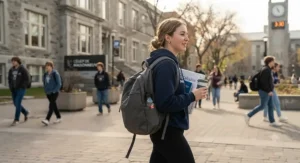
Lightweight Backpacks for CEGEP Students with Back Pain Concerns
For students already managing back discomfort, the backpack itself becomes part of the treatment plan, not just a school supply. The Canadian Chiropractic Association recommends keeping a loaded backpack within roughly 10 percent of body weight, packed with the heaviest items closest to the spine and centred rather than sagging toward the bottom. That guidance points squarely toward lightweight, structured options: the Osprey Daylite Plus, at roughly one pound empty, gives you the most room under that weight budget before you’ve even packed anything, while the Fjällräven Kånken Laptop 15‘s boxy shape keeps whatever weight you do carry centred against your back rather than pulling backward.
What most buyers overlook here is that strap width matters almost as much as total pack weight — a narrow strap concentrates the same load onto less surface area of the shoulder, which is exactly what wide, padded straps on the Osprey and JanSport models are designed to prevent. If back discomfort is a genuine, ongoing concern rather than an occasional ache, it’s worth a conversation with a physiotherapist or chiropractor about your specific posture and carrying habits, since a bag alone can’t fully offset an underlying issue.
Laptop Compartment Size: What Actually Matters
Laptop compartment size sounds simple until you’re standing in an aisle trying to remember whether your machine is 13, 14, or 15 inches — and whether that measurement includes your case. Here’s the practical rule: always size up from your laptop’s screen measurement if you use a hard case or sleeve inside the compartment, since a “15-inch” sleeve is often a tight, exact fit rather than a generous one. The Osprey Daylite Plus advertises up to 15-16 inches depending on the source, but Pack Hacker’s testers found it can flex to fit a 15-inch MacBook Pro despite an official 14-inch rating — a useful reminder that advertised sizes are approximate, not guaranteed.
Beyond raw size, padding placement matters more than most students realize. A sleeve positioned against the back panel, as in the Herschel Little America and JanSport Big Student, protects your laptop from an impact if you set the bag down hard, since your back-facing panel takes the hit first. A sleeve positioned at the front of the main compartment offers less protection in exactly that scenario. If you’re carrying a particularly expensive or fragile laptop, that placement detail is worth checking before you buy, not after a first drop teaches you the hard way.
Ergonomic Straps: Features That Actually Matter (And Those That Don’t)
Marketing copy loves the word “ergonomic,” but not every strap feature that claims the label actually changes how a bag feels after three hours of carrying it. What actually matters: strap width (wider genuinely reduces shoulder pressure), a curved or S-shaped strap contour that follows your body rather than cutting straight across it, a sternum strap for loads over roughly 15 pounds, and a back panel with some ventilation channel so you’re not arriving to class with a sweat-soaked shirt in April.
What doesn’t matter nearly as much as the marketing suggests: exact denier count of the fabric (a 600D and 900D bag feel identical in daily use to most students), and decorative stitching patterns that get marketed as “structural.” The Osprey Daylite Plus and North Face Borealis both include genuine sternum straps and ventilated panels, which is why they consistently outperform style-first bags on long-haul comfort, even though a bag like the Herschel Little America might win on looks. If you’re comparing two bags and can’t decide, prioritizing the boring-sounding features — strap width, sternum strap, back ventilation — over aesthetic details will serve your shoulders better over four years.
Campus Commute in Winter: Staying Safe and Dry
A Quebec winter commute brings its own specific set of challenges that a summer-focused product review would never mention. Temperatures below -20°C can make metal zipper pulls genuinely stiff or prone to sticking, which is why a light zipper lubricant before the coldest months is worth the five minutes it takes. Reflective elements or lighter colours also matter more than students expect, given how early darkness falls in a Quebec winter afternoon — a detail worth considering if your commute includes walking near traffic.
Layering is part of the equation too: as Concordia University’s Student Success Centre advises new students, giving yourself extra time to navigate snow and ice is as important as the gear itself, and a backpack that’s simple to sling on and off quickly — rather than fussy with buckles — helps when you’re bundled in mittens and a scarf. Bags with a genuinely water-repellent shell, like the Carhartt 21L Classic or MATEIN Travel Laptop Backpack, also reduce the risk of your notes and electronics absorbing moisture during the walk between an unheated bus shelter and a warm classroom, where condensation can be surprisingly harsh on paper and cables alike.
Long-Term Cost & Maintenance
A backpack’s real cost isn’t the sticker price — it’s the sticker price divided by how many semesters it actually survives. A C$55 JanSport Big Student that lasts a full four-year DEC program works out to roughly C$14 a year, a genuinely hard number for pricier bags to beat on cost-per-use alone. But that math shifts once you factor in replacement risk: a C$140 Fjällräven Kånken Laptop 15 that also lasts four years, thanks to its more durable Vinylon F shell and lack of trend-driven redesigns, ends up costing about C$35 a year — more expensive, but not dramatically so, and arguably worth it if its back-friendly shape prevents even one physiotherapy visit down the line.
Maintenance costs are modest across this whole list but not zero. Occasional zipper lubricant, the rare seam repair kit for a stress point near a shoulder strap attachment, and periodic exterior cleaning to keep road salt from working into a water-resistant coating are the main ongoing expenses, typically totalling under C$20 a year for any of these seven picks. The single biggest cost-saving habit is simply not overloading the bag past its intended capacity, which is the most common reason zippers and seams fail early regardless of brand or price point.
Common Mistakes When Buying a CEGEP Backpack
The most common mistake is buying based purely on looks without checking laptop compartment fit — a beautiful bag that’s genuinely too tight for your specific laptop-plus-case combination becomes a daily frustration fast. A close second is ignoring water resistance entirely because the purchase happens in August, when a Quebec winter feels a long way off; by January, that decision looks very different. Students also frequently underestimate how much their course load will actually weigh once binders, a laptop, and a water bottle are all packed together, buying a bag sized for what they’re carrying on the tour day rather than a typical Tuesday in November.
Another frequent misstep is skipping the strap adjustment entirely and wearing a bag exactly as it comes out of the box, which almost never fits correctly without tightening. Finally, some students buy the cheapest option available without checking for any warranty coverage, then face a full replacement cost when a strap fails mid-semester — a risk the JanSport Big Student‘s lifetime warranty specifically protects against, and worth checking for on any bag you’re considering.
Frequently Asked Questions
❓ What size backpack do I need for CEGEP?
❓ Is a water-resistant backpack necessary for Quebec winters?
❓ What laptop compartment size should I look for?
❓ Do ergonomic straps really make a difference?
❓ How much should my CEGEP backpack weigh when packed?
Conclusion
Choosing a backpack for CEGEP students isn’t really about finding one “correct” bag — it’s about matching a bag’s actual strengths to your actual commute, program, and body. A budget-first student on a light course load is well served by the JanSport Big Student‘s proven reliability, while a technical-program student hauling lab manuals daily will get more genuine value from the North Face Borealis‘s structure and capacity. Students facing a wet or icy commute should weight water resistance heavily, whether that means the MATEIN Travel Laptop Backpack‘s budget-friendly shell or the Carhartt 21L Classic‘s work-grade Rain Defender coating. And for anyone managing back discomfort, the Osprey Daylite Plus and Fjällräven Kånken Laptop 15 both offer genuine, research-informed reasons to prioritize weight distribution over raw capacity.
Whichever you choose, the underlying advice stays the same: adjust the straps properly, don’t overpack past what a typical day actually requires, and treat water resistance as a real feature rather than a nice-to-have once a Quebec winter sets in. A good bag, worn correctly, should become invisible — something you stop noticing entirely by October, precisely because it’s doing its job.
✨ Ready to Find Your Perfect Campus Companion?
🔍 Take your CEGEP commute to the next level with a backpack built for real Quebec winters, not just a September photo op. Click on any highlighted pick above to check current pricing and availability, and give your shoulders — and your laptop — the protection they’ve been missing.
Recommended for You
- 7 Best Planners for High School Graduates Going to University (2026)
- 7 Best Laptop Backpacks for CEGEP Commute in 2026
- 7 Best High School Graduation Gifts in 2026
Disclaimer: This article contains affiliate links. As an Amazon Associate, I earn from qualifying purchases. If you purchase products through these links, we may earn a small commission at no additional cost to you.
✨ Found this helpful? Share it with your friends! 💬🤗
