
In This Article
Somewhere between your third coffee and your fourth flight of stairs at Berri-UQAM, you’ll figure out the truth: a backpack is not a backpack. It’s infrastructure. If you’re hunting for a laptop backpack for CEGEP commute life — the kind that survives a packed Orange Line car, a rain-soaked bus shelter, and a backpack-eating locker — you already know the stakes are higher than they look on a shopping page. A cheap zipper failing at Lionel-Groulx station isn’t a minor inconvenience; it’s your semester’s notes scattered across a platform.
This guide skips the fluff you’d get from a generic “top backpacks” listicle. Every product here was chosen because it actually solves a problem CEGEP students run into: laptops that need real shock protection, straps that hold up under six months of daily wear, and pockets that keep a USB-C cable from vanishing into a black hole. We looked at real specifications, real aggregated review sentiment, and the kind of practical trade-offs nobody puts in the marketing copy. Public transit use has been climbing fastest among younger riders in the Montreal area, with the 20-to-44 age bracket making up a disproportionate share of all transit users, according to CBC News reporting on Montreal-area transit ridership — which means more students than ever are packing a laptop onto a bus or metro car every single day, and the backpack they choose actually matters. If you’re new to the CEGEP system, you’ll quickly notice how much of student life happens in transit between campus, home, and everything in between.
We’ll walk through seven real, currently available options spanning budget to premium, then dig into the analysis that Amazon listings never bother with: how to choose one, which mistakes cost people the most money, and what “anti-theft” actually means once you’re standing shoulder-to-shoulder with strangers on a rush-hour bus.
Quick Comparison Table
| Backpack | Best For | Laptop Fit | Price Range (CAD) |
|---|---|---|---|
| Tzowla Anti-Theft Laptop Backpack | Tightest budget | 15.6″ | under C$45 |
| Matein Travel Laptop Backpack | Budget + charging port | 15.6″ | C$40-C$55 |
| Pacsafe Metrosafe X 25L | Serious theft deterrence | 15″-16″ | C$190-C$230 |
| Thule EnRoute Backpack 23L | All-day comfort | 15″ | mid-C$100s |
This snapshot only scratches the surface, but it answers the question most people actually type into Google first: what’s the cheapest option that won’t fall apart, and what’s the one built like a tank? Budget picks like the Tzowla Anti-Theft Laptop Backpack and Matein Travel Laptop Backpack get the job done for a single semester of light use, while something like the Pacsafe Metrosafe X 25L is built for someone who’s already had a bag slashed open on a crowded platform and isn’t interested in a repeat performance. The Thule EnRoute Backpack 23L sits in between — not the cheapest, not the most armoured, just consistently comfortable for the kind of person who walks fifteen minutes to the bus stop every day of the week.
💬 Just one click — help others make better buying decisions too!😊
Top 7 Laptop Backpacks for CEGEP Commute: Expert Analysis
Choosing a laptop backpack for CEGEP commute routines really comes down to three things: how well it protects your laptop, how it holds up to being crammed onto a bus rack or dropped on a metro platform, and whether it’s actually comfortable enough that you’ll keep using both straps instead of slinging it over one shoulder like it’s a purse. Below are seven real, currently sold products that hit different points on the budget-to-premium spectrum.
1. Tzowla Anti-Theft Laptop Backpack — cheapest option with a built-in lock
The standout here is the actual metal lock loop sewn into the main zipper — a detail most budget bags skip entirely. That means you can loop a small padlock through it and step away from your bag in the library or on a GO-style regional train without your stomach dropping.
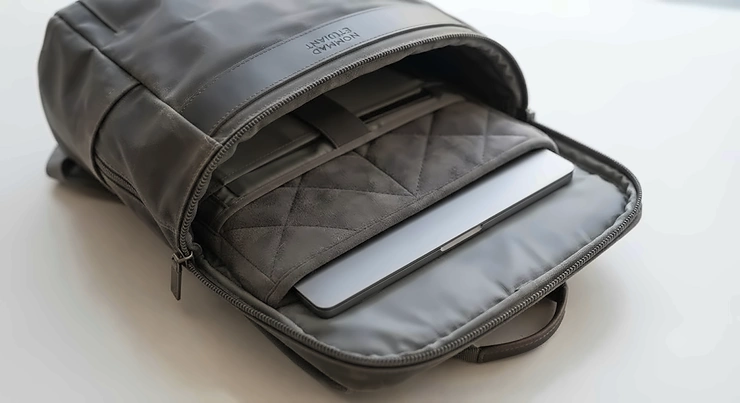
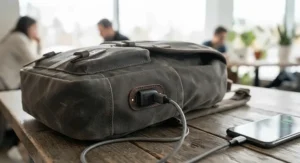
The Tzowla is water-resistant, includes a USB charging port, and is built as a 15.6-inch computer backpack, which in practice means a padded interior sleeve rather than just a soft pocket — the laptop rides suspended off the bottom seam, so a hard landing on pavement doesn’t transfer straight into your motherboard. Based on the spec sheet, the fabric is a polyester weave rather than a true ballistic nylon, so it trades some long-term abrasion resistance for a genuinely low price point.
This is the pick for a first-year student who isn’t sure yet whether they’ll even like CEGEP life on transit, or who’s replacing a bag that just died and needs something functional by Monday. It’s not going to survive four years of daily abuse, but it will comfortably survive one or two.
Reviewers consistently report the zippers feeling solid for the price and the charging port cable being a nice touch for topping up a phone mid-commute, though a recurring theme in aggregated feedback is that the shoulder straps get noticeably less comfortable once the bag is loaded past its comfortable capacity.
Pros:
- ✅ Built-in lock loop for platform and library safety
- ✅ USB charging port for topping up a phone
- ✅ Genuinely low entry price for a first backpack
Cons:
- ❌ Straps thin out under a fully loaded bag
- ❌ Polyester shell wears faster than nylon over years
Priced under C$45 at the time of research, the Tzowla Anti-Theft Laptop Backpack is hard to argue with as a one-semester stopgap or a genuinely tight-budget pick — check current price for the latest availability.
2. Matein Travel Laptop Backpack — best budget pick for the daily grind
What stands out about the Matein Travel Laptop Backpack is how much it borrows from pricier “business travel” bags while staying in bargain-bin territory — the anti-theft back-panel pocket alone is usually a feature reserved for backpacks twice the price.
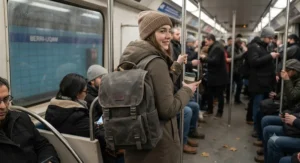
It’s marketed with a water-resistant build and USB charging port, and is designed to fit a 15.6-inch notebook, with the laptop compartment sitting against the wearer’s back — a small but genuinely smart anti-theft detail, since a pickpocket has to reach through your body to get at it on a packed bus. What most buyers overlook about this model is that the “slim” profile isn’t just cosmetic; it makes squeezing past someone in a crowded metro aisle noticeably easier than with a bulkier daypack.
This is a strong fit for anyone doing a genuinely long commute — say, an hour-plus door to door involving a transfer or two — who wants organization without paying premium-brand prices.
Deal-tracking data shows this model has repeatedly sold in the roughly C$25-C$30 (USD equivalent) range during promotions, though full retail sits higher; either way, it consistently lands as one of the most-reviewed budget laptop backpacks on the market, and the sheer review volume is itself a form of honest evidence — a lot of people have put this bag through a lot of commutes.
Pros:
- ✅ Back-panel laptop pocket adds real pickpocket resistance
- ✅ Slim profile handles crowded aisles well
- ✅ Enormous review base gives confidence in durability
Cons:
- ❌ Front organizer pockets are shallow for bulkier chargers
- ❌ Water resistance doesn’t hold up in heavy, sustained rain
Expect a price in the C$40-C$55 range depending on colour and current promotions — check current price before buying, since this one moves in and out of deals often.
3. tomtoc UrbanEX-T65 Laptop Backpack — best organized tech compartment
The standout feature is the split-capacity layout: a 20-litre bag divided into a 15-litre main compartment and a 5-litre front pocket, which sounds like a spec-sheet number until you realize it means your laptop, charger, and notebooks each get their own zone instead of tangling together at the bottom of one giant cave.
The suspended, padded laptop pocket with soft lining and thick bottom cushioning is built to handle a 15.6-inch laptop plus a tablet, and the whole shell is Cordura ballistic 840D nylon — a material genuinely developed for military gear, not just marketing language borrowed from it. Based on the spec comparison with the budget bags above, this is a meaningful step up in tear resistance; Cordura shrugs off the kind of scuffing that happens when a bag gets tossed under a bus seat daily for months.
This is the backpack for the CEGEP student who’s tired of digging through one main pocket to find a charger buried under a water bottle. If backpack organization for tech accessories is your actual priority — separate homes for cables, a mouse, a phone, and a laptop rather than one communal junk drawer — this is built specifically around that problem.
Aggregated reviewer sentiment consistently praises the dedicated accessory pocket for keeping small electronics from disappearing, while a recurring complaint is that the front pocket, while well organized, isn’t huge — heavy textbook days may require the main compartment to pick up the slack.
Pros:
- ✅ Dedicated electronics pocket ends the cable-hunt problem
- ✅ Military-grade Cordura shell resists daily abrasion
- ✅ U-shaped shock padding protects laptop corners specifically
Cons:
- ❌ Front organizer pocket is compact for bulky items
- ❌ Heavier empty weight than ultra-slim budget bags
At a price typically landing in the C$70-C$90 range, the tomtoc UrbanEX-T65 Laptop Backpack earns its position as the mid-tier organization specialist — check current price for the current colourway lineup.
4. SWISSGEAR 1900 ScanSmart TSA Laptop Backpack — toughest build for rough winters
What earns this bag its spot is the ScanSmart laptop compartment design — it includes RFID protection and a tablet pocket, and is built for a 17-inch laptop, meaning the whole panel folds flat for airport-style security screening, which doubles as an easy way to show a laptop to a bus driver or security guard without unpacking the entire bag.
Here’s what the spec sheet won’t tell you, but Swiss-engineering heritage brands tend to deliver in practice: the shell fabric on this line is noticeably thicker than most budget competitors, which matters a lot once a Montreal winter enters the picture. Road salt, slush, and getting dropped on wet pavement are a routine part of a CEGEP commute from November through March, and a flimsier bag shows wear fast under that treatment.
This is the pick for a student in a science, engineering, or CS program hauling a heavier 17-inch laptop who needs a bag that survives literal winter weather abuse, not just gentle indoor use.
Reviewers consistently note that the exterior fabric resists the kind of fraying that shows up on cheaper packs after a single winter, though a common complaint in user reviews is that the 17-inch footprint feels bulky for anyone with a smaller frame navigating tight bus aisles.
Pros:
- ✅ RFID-protected compartment guards cards and student ID
- ✅ Fits full 17-inch laptops for engineering-heavy programs
- ✅ Fabric holds up noticeably better through winter wear
Cons:
- ❌ Bulkier profile can feel large on a crowded bus
- ❌ Heavier empty weight adds up on long walking commutes
Typically priced in the C$90-C$120 range, the SWISSGEAR 1900 ScanSmart TSA Laptop Backpack is a solid mid-tier investment for anyone carrying serious hardware — check current price, as SWISSGEAR runs frequent seasonal promotions.
5. Thule EnRoute Backpack 23L — best all-round comfort for long commutes
The Thule EnRoute’s standout is the padded back panel with an actual airflow channel — a detail that sounds minor until you’re power-walking to catch a bus in a July heatwave and your back isn’t a sweaty mess by the time you arrive.
The 23-litre version weighs about 2 pounds (0.9 kilograms), with a laptop compartment sized at roughly 10.4 x 1.2 x 15.2 inches, built from bluesign-approved 400D nylon with YKK zippers — bluesign approval specifically means the fabric was manufactured under strict environmental and chemical-safety standards, which is a genuine quality signal rather than greenwashing. The larger 26L version adds a sternum strap and side compression straps to help balance the load, a feature that matters more than it sounds like it should once you’re carrying textbooks plus a laptop for eight hours straight.
Based on the spec comparison with the SWISSGEAR above, the Thule trades a bit of raw durability for meaningfully better ergonomics — the padded, ventilated back panel and YKK zippers (widely regarded as the industry’s most reliable zipper hardware) make this the bag you reach for on the days your commute feels endless.
What most buyers overlook about Thule specifically is the brand’s Swedish design pedigree translating into unusually thoughtful small details, like mesh exterior side pockets that stretch to hold a water bottle, power brick, or umbrella — exactly the kind of thing a transit commuter reaches for without wanting to dig through the main compartment.
Pros:
- ✅ Ventilated back panel genuinely reduces sweat on warm days
- ✅ YKK zippers are the gold standard for daily reliability
- ✅ Side mesh pockets keep a water bottle within reach
Cons:
- ❌ Premium pricing compared to budget-tier alternatives
- ❌ 15-inch laptop compartment won’t fit larger 17-inch machines
Sitting in the mid-C$100s at the time of research, the Thule EnRoute Backpack 23L rewards anyone willing to spend a bit more for comfort that compounds over months of daily wear — check current price and colour availability.
6. Herschel Little America Mid-Volume — most stylish, and a homegrown Canadian brand
The standout feature is the brand story as much as the bag itself: Herschel Supply Co. was founded in Vancouver, and the Little America silhouette remains its flagship — a detail that resonates with a Canadian audience shopping specifically for something that isn’t another anonymous overseas brand.
The Mid-Volume version holds 17 litres, measures about 16 inches high and 10.75 inches wide, and includes a padded, fleece-lined laptop sleeve fitting up to a 15-inch machine, plus a front pocket with a hidden zipper and key clip that doubles as light anti-theft protection. Here’s what the spec sheet undersells: the fleece lining isn’t just a soft-touch detail, it actively cushions against the kind of fine scratches a laptop picks up from being slid in and out of a sleeve daily — something a bare nylon-lined pocket won’t do.
This is the pick for a CEGEP student who wants a bag that looks like it belongs at a coffee shop as much as a lecture hall, and who’s carrying a lighter 13-to-15-inch laptop rather than a heavier gaming or engineering rig.
Aggregated review sentiment is consistently positive on the classic look and comfortable straps, though a recurring critique is limited interior pocket count beyond the two side water-bottle pouches and one main compartment, meaning small-item organizers need to bring their own pouch for loose cables.
Pros:
- ✅ Fleece-lined sleeve protects laptop finish, not just impact
- ✅ Front key-clip pocket adds everyday anti-theft convenience
- ✅ Recognizable, durable style that isn’t just a gym bag look
Cons:
- ❌ Limited interior pockets for cable and accessory organization
- ❌ Drawcord-and-magnet closure is slower to access than a zipper
Generally priced in the C$140-C$170 range, the Herschel Little America Mid-Volume is a premium lifestyle pick backed by a real Canadian design legacy — check current price, as colourways shift seasonally.
7. Pacsafe Metrosafe X 25L — best true anti-theft security
The standout here isn’t subtle: this bag was engineered from the ground up as an anti-theft backpack for CEGEP students and city commuters alike, not a regular backpack with a lock bolted on as an afterthought.
The Metrosafe X includes a padded laptop sleeve, a padded tablet sleeve, an RFID-safe pocket with a key clip and card slots, a zippered fast-access pocket, a hidden back pocket, and two side pockets, and the zips are lockable while the anchor strap is cut-resistant, letting you physically secure the bag to a fixed object — genuinely useful on a long bus layover or when you need to leave a bag momentarily in a busy common room. The shell is made from recycled polyester that’s water-resistant and easy to wipe clean, a nice bonus for anyone who cares about the sustainability angle alongside the security one.
Based on the spec comparison with every other bag on this list, the Metrosafe X is the only one purpose-built around theft deterrence as its primary design goal rather than a secondary feature — the RFID pocket alone addresses a real, documented risk. According to the Financial Consumer Agency of Canada’s overview of credit card fraud, contactless credit cards allow purchases up to a certain amount without a PIN, which is exactly the kind of tap-payment exposure an RFID-blocking pocket is designed to reduce.
This is the pick for anyone who’s had a bag rifled through on a crowded platform, or who simply doesn’t want to think about it again. It’s also, frankly, overkill for a student doing a five-minute walk to a quiet suburban CEGEP campus — the security investment pays off most on longer, denser urban routes.
Reviewers consistently highlight the peace of mind from the lockable zippers and the surprisingly low-key styling that doesn’t scream “expensive bag, please steal me,” while a common complaint in user reviews is that the security hardware adds noticeable weight compared to simpler daypacks.
Pros:
- ✅ RFID-blocking pocket protects cards from contactless skimming
- ✅ Lockable zippers and cut-resistant anchor strap
- ✅ Recycled, wipeable, water-resistant shell material
Cons:
- ❌ Heaviest empty weight of any bag on this list
- ❌ Premium price point compared to organization-focused rivals
Typically sitting in the C$190-C$230 range, the Pacsafe Metrosafe X 25L is the splurge pick for students who treat bag security as a non-negotiable — check current price, since Pacsafe’s security-focused line often runs limited colour drops.
Setting Up Your Backpack for the CEGEP Grind: A Practical Usage Guide
Getting a new bag right on day one saves you weeks of low-grade annoyance. Start by packing heaviest items — textbooks, a water bottle, a laptop charger brick — closest to your back and centred vertically, not sagging toward the bottom seam; this keeps the bag’s centre of gravity close to your spine instead of pulling you backward with every step off the bus. Load your laptop into its dedicated sleeve before anything else goes into the main compartment, since forcing it in around already-packed items is exactly how corners get cracked.
In the first thirty days, the most common mistake is treating the exterior pockets as junk drawers. Assign each pocket a job — keys always in the same spot, transit card in a specific slip pocket — so you’re not patting yourself down at the fare gate while a line forms behind you. With ridership among younger commuters continuing to climb across the Montreal region, fumbling at a turnstile during rush hour is more than an inconvenience; it’s a small daily stress that a well-organized bag genuinely eliminates.
Packing habits matter for more than convenience, too. The Canadian Chiropractic Association’s backpack guide recommends keeping a loaded bag’s total weight to a reasonable share of your body weight and packing the heaviest items closest to your back — advice that applies just as much to a CEGEP student hauling a laptop and textbooks as it does to a younger student, and one more reason a well-organized bag beats a single overstuffed compartment.
For maintenance, wipe down the shell monthly with a damp cloth, especially through salt-heavy winter months, and empty the bottom seam of grit every few weeks — that grit is what slowly wears through the fabric from the inside. Check zipper pulls for fraying threads every couple of months; catching a loose thread early is a five-second fix, while ignoring it usually ends in a zipper that won’t close halfway through a semester.
Which Backpack Fits Your CEGEP Life? Three Commuter Scenarios
If you’re a first-year student commuting fifteen minutes by bus with a light course load, a budget pick like the Tzowla Anti-Theft Laptop Backpack or Matein Travel Laptop Backpack genuinely covers your needs without overspending on features you won’t use yet.
If you’re doing a longer, multi-transfer commute — metro plus a bus connection, easily 45 minutes to an hour each way — comfort stops being optional. This is where the Thule EnRoute Backpack 23L earns its price tag; the ventilated back panel and load-balancing straps are the difference between arriving fine and arriving with a sore neck five days a week.
If you’re commuting through a busier downtown corridor with frequent platform crowding, or you’ve simply had a bad experience with a rifled-through bag before, the Pacsafe Metrosafe X 25L is worth the investment. Security features that feel like overkill on a quiet route become genuinely reassuring on a packed one.
Backpack Organization for Tech Accessories: Solving the Cable Chaos
Every CEGEP student eventually hits the same problem: a tangle of charging cables, a mouse, maybe a portable hard drive, all mixed into one compartment with textbooks. The fix isn’t more space — it’s dedicated space. Look specifically for a backpack organization for tech accessories layout with a padded electronics sub-pocket separate from the main cavity, ideally with small elastic loops or mesh dividers for individual cables.
The tomtoc UrbanEX-T65 Laptop Backpack solves this most directly, with its front pocket built specifically to separate small electronics from bulkier items. The Pacsafe Metrosafe X 25L takes a similar approach but adds security on top, with its RFID-safe slip pocket doing double duty for cards and small accessories.
A simple trick that works with any bag on this list: buy a cheap zippered pouch and treat it as your dedicated “cable kit,” always living in the same pocket. It turns any backpack into an organized one and means you never have to dump the entire bag onto a bus seat looking for a charger.
How to Choose a Laptop Backpack for CEGEP Commute
- Confirm your laptop’s screen size first. A 13-inch ultrabook fits comfortably in almost any sleeve on this list; a 17-inch gaming or engineering laptop narrows your options fast, since not every bag’s compartment stretches that far.
- Prioritize a suspended, padded sleeve over a simple pocket. A sleeve that keeps the laptop off the bottom seam absorbs shock from drops far better than fabric alone.
- Weigh the empty bag before you weigh what’s inside it. A heavier shell like the SWISSGEAR eats into your comfortable carrying capacity faster than a lighter one like the Herschel.
- Decide how seriously you need anti-theft features. A downtown, high-density commute justifies RFID blocking and lockable zips; a quieter suburban route usually doesn’t.
- Check strap width and back-panel padding, not just laptop protection. A poorly padded strap causes more day-to-day discomfort than a slightly less padded laptop compartment ever will.
- Factor in Quebec winters. Fabric that resists salt stains and slush soaking through matters more here than in a milder climate.
- Think in semesters, not just dollars. A C$40 bag that needs replacing twice a year can cost more over four years than one solid C$130 bag that lasts the whole program.
Common Mistakes When Buying a Laptop Backpack for CEGEP Commute
The single most common mistake is buying based on looks alone and only discovering the laptop compartment is a thin, unpadded pocket after the first bump. Always check whether the listing specifically mentions a padded, suspended sleeve — vague listings that just say “laptop pocket” are a red flag.
A second frequent mistake is ignoring capacity math. Buyers often choose a bag sized for a laptop alone, then discover it can’t handle a laptop plus a binder plus a lunch, and end up overstuffing the main compartment in a way that strains both the zippers and their own shoulders.
A third mistake, especially relevant for a padded laptop sleeve backpack for public transit, is skipping strap-width comparison entirely. Two bags can advertise “padded straps” while one uses genuinely thick foam and the other uses a thin layer that flattens within weeks — reading actual reviewer comments about long-term strap comfort catches this before you buy, since spec sheets alone won’t tell you.
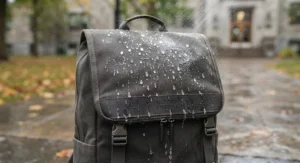
Finally, plenty of buyers overlook water resistance until the first real rainstorm. “Water-resistant” is not “waterproof,” and a bag with only a light coating will still let a laptop compartment get damp during a sustained downpour at a bus stop with no shelter.
Laptop Backpack vs Regular Backpack for Metro and Bus Commuting
A regular backpack — the kind built for gym gear or hiking — usually treats a laptop as an afterthought, if it accommodates one at all. There’s rarely a suspended, padded sleeve, which means the laptop absorbs shock directly from whatever else is packed around it. On a bus that hits a pothole, or a metro platform where the bag gets set down harder than intended, that difference matters enormously.
| Feature | Laptop Backpack | Regular Backpack |
|---|---|---|
| Dedicated padded sleeve | Yes, standard | Rare or absent |
| Organized tech pockets | Usually yes | Usually no |
| Anti-theft features | Often available | Almost never |
| Weight when empty | Slightly heavier | Often lighter |
| Best for metro and bus commuting | Strongly recommended | Only for light loads |
Looking at the comparison above, the trade-off is fairly simple: a laptop backpack adds a bit of weight and cost in exchange for meaningfully better protection and organization. For metro and bus commuting specifically — where a bag gets set on the floor, jostled against poles, and squeezed through crowded doors — that trade-off consistently favours the purpose-built option. A regular backpack only makes sense if you’re not actually carrying a laptop most days, which, if you’re reading this, probably isn’t you.
✨ Ready to stop worrying about a device sliding around loose? Check current pricing on a purpose-built laptop backpack before your next commute.
What to Expect: Real-World Performance of a Padded Laptop Sleeve Backpack for Public Transit
Specs on a page don’t capture what actually happens on a commute, so here’s the translation. A genuinely padded laptop sleeve backpack for public transit means your laptop survives being set down on a concrete platform, jostled while you grab a pole with your free hand, and occasionally taking a light knock from another rider’s bag — all without you thinking twice about it.
What the spec sheet won’t tell you, but daily riders consistently report, is that suspended sleeves (where the laptop hangs slightly above the bottom seam rather than resting directly on it) make the single biggest real-world difference. A dropped bag transfers most of its impact into that bottom seam first; a suspended design buys your laptop a few extra milliseconds of cushioning before the shock reaches it.
Laptop protection also depends heavily on how full the rest of the bag is. An overstuffed main compartment pressing against the laptop sleeve from the side reduces the sleeve’s ability to flex and absorb impact — packing a bag sensibly is a genuinely free upgrade to whatever laptop protection your backpack already offers.
Anti-Theft Backpack Features That Actually Matter for CEGEP Students
Not every “anti-theft” label means the same thing, and it’s worth knowing which features do real work versus which ones are mostly marketing language.
Lockable zippers matter most in situations where you’re stepping away from your bag briefly — a library table, a shared common room — since a small padlock through the zipper pulls genuinely deters casual opportunists, even if it wouldn’t stop someone determined with tools.
RFID-blocking pockets matter specifically because of contactless payment cards. Crowded public spaces like transit systems make it easier for someone with a scanner to get close without being noticed, which is exactly the scenario an anti-theft backpack for CEGEP students is designed around — a five-minute metro ride standing shoulder-to-shoulder with strangers.
Slash-resistant fabric matters more on longer, denser urban routes than on a quiet fifteen-minute bus ride, since bag-slashing theft is opportunistic and thrives on crowd cover. A back-panel laptop compartment — where the laptop sits against your body rather than the outward-facing side — is arguably the single most useful low-cost anti-theft feature, since it requires a thief to physically reach past you rather than simply unzip an outer pocket.
What doesn’t matter nearly as much as marketing suggests: bright warning labels or aggressive “theft-proof” branding on the bag itself. A genuinely secure bag doesn’t guarantee nothing gets stolen — it offers meaningful peace of mind rather than an ironclad guarantee, and drawing extra attention to a bag as a target isn’t actually a security feature.
Long-Term Cost & Maintenance
Thinking in total cost of ownership changes the math considerably. A C$45 budget bag that needs replacing every eight months across a two-year CEGEP program could mean buying three bags — roughly C$135 total, plus the hassle of transferring everything each time. A single C$150 mid-to-premium bag that lasts the full program, with basic maintenance, often works out to similar or lower total spend, while sparing you the annoyance of a mid-semester bag failure.
Maintenance costs are genuinely minimal across every bag on this list — a damp cloth wipe-down, occasional zipper-pull lubrication with a dab of graphite or silicone spray, and keeping the bottom seam free of grit. None of these bags require the kind of specialty cleaning that eats into a student budget. The real cost driver is replacement frequency, which is exactly why durability-focused picks like the Thule EnRoute Backpack 23L or SWISSGEAR 1900 ScanSmart TSA Laptop Backpack often work out cheaper over a full program than repeatedly replacing a budget bag.

Frequently Asked Questions
❓ What size laptop backpack do I need for CEGEP?
❓ Is an anti-theft backpack actually worth it for a student?
❓ How much should I spend on a laptop backpack for CEGEP commute use?
❓ Does a padded laptop sleeve backpack for public transit really protect against drops?
❓ What's the best backpack for metro and bus commuting specifically?
Conclusion
There’s no single “best” laptop backpack for CEGEP commute life — there’s a best one for your commute, your program’s hardware demands, and how much peace of mind you actually need on a crowded platform. If you’re testing the waters with a shorter route and a lighter course load, the Tzowla Anti-Theft Laptop Backpack or Matein Travel Laptop Backpack will genuinely carry you through a semester without regret. If comfort on a long, multi-transfer commute is your priority, the Thule EnRoute Backpack 23L consistently earns its higher price tag. And if you’ve already learned the hard way that a crowded metro car isn’t always friendly to unattended zippers, the Pacsafe Metrosafe X 25L is built specifically for you.
Whatever you choose, the underlying principle stays the same: a laptop backpack is one of the few purchases that quietly affects your entire day, every single day, for as long as you own it. Spend the extra ten minutes comparing specs now, and you’ll spend a lot less time thinking about your bag later — which, frankly, is the whole point.
✨ Don’t Miss These Exclusive Deals!
🔍 Take your CEGEP commute to the next level with one of the seven backpacks covered above. Click through to check current pricing and availability, and pick the one that actually matches how — and how far — you travel every day.
Recommended for You
- 7 Best High School Graduation Gifts in 2026
- Waterproof Lab Notebook for High School: 7 Picks for 2026
- Lab Notebook for High School Chemistry: 7 Picks for 2026
Disclaimer: This article contains affiliate links. As an Amazon Associate, I earn from qualifying purchases. If you purchase products through these links, we may earn a small commission at no additional cost to you.
✨ Found this helpful? Share it with your friends! 💬🤗
